+86 13638632902
 Jason@cleanroomequips.com


 MENU
MENUcompanies like











Need a Negative Pressure Hardwall Cleanroom solution?
Deiiang provides professional Negative Pressure Hardwall Cleanroom solutions
Specifications & Models
Containment & Airflow
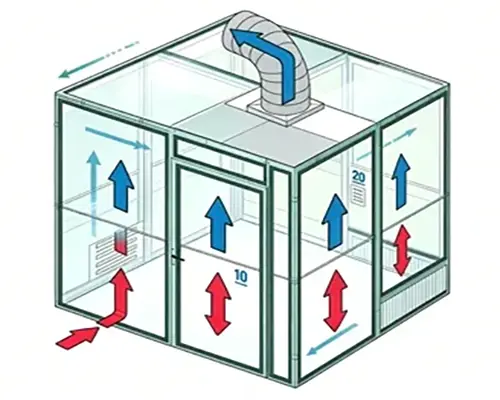
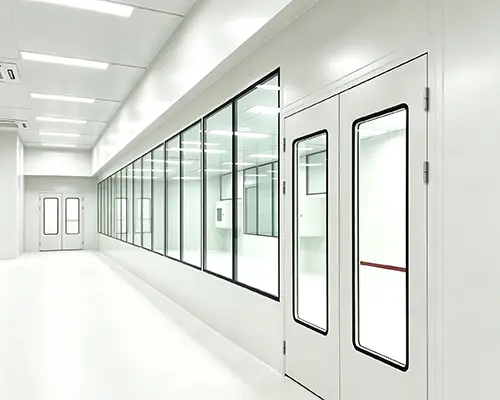
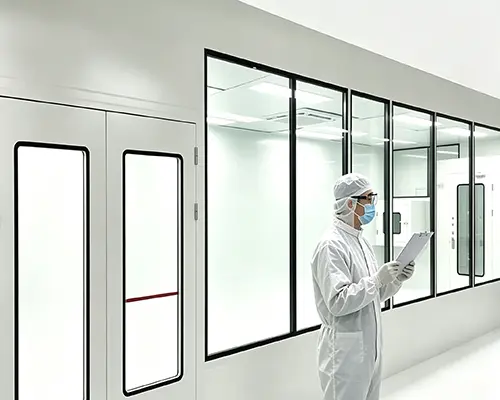
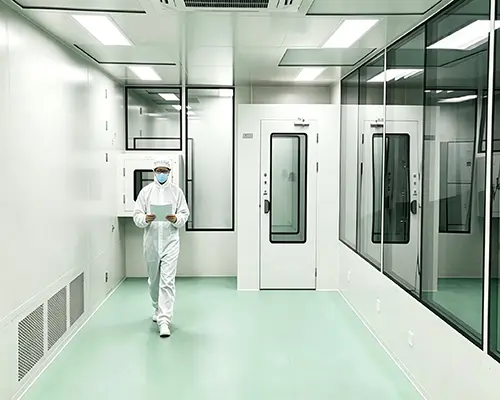
Negative Pressure Hardwall Cleanrooms utilize a controlled pressure cascade and inward airflow to allow systems to better contain airborne particles in a designated area. Each system is designed according to the process, potential material hazards, room layout, and applicable regulations.
Negative Pressure Control
Negative Pressure: Negative Pressure is used to hold a pressure differential within the contained room of approximately -10 to -20 Pa compared to adjacent areas, based on the risk assessment and project specifications.
Pressure Cascade: Air flows from surrounding less contaminated areas to the contained room in order to minimize the outward movement of airborne contaminants.
Air Balance: Maintaining a slight negative pressure in the contained room is achieved by maintaining exhaust airflow greater than supply airflow.
Airflow & Filtration
Supply Air: Air filtration can be upgraded to H14 HEPA filter if the process requires a higher level of cleanliness.
Airflow Pattern: Return or exhaust air outlets are located in strategic positions to improve room sweeping and minimize stagnant zones.
Exhaust Treatment: Exhaust systems may be designed to include HEPA, safe-change, or bag-in/bag-out filters as appropriate.
Safety & Monitoring
Pressure Control: Real-time status on room operating conditions is provided by a pressure monitoring control system that includes a differential pressure sensor. An alarm is provided to operators when pressure exceeds the design limits.
HVAC Interlocks: Supply and exhaust systems are designed with automatic interlocks to maintain the desired pressure relationship.
Sealing of Enclosure: A continuous pressure differential is maintained in the system by sealing hardwall panels, windows, joints, and service penetrations.
Design & Verification
Volume and velocity of final design airflow. Number of air changes and pressure setpoint. Grade of filters, and treatment of final design exhaust. These parameters are decided on the basis of the assessment of possible risk associated with the project. Performance can be verified by measurement of airflow rate, testing for differential pressure, testing integrity of HEPA filters, counting and measuring the size of particles, testing alarms, and performing study to visualize airflow using agreed qualification scope and relevant requirements of ISO 14644.
Note: HEPA filters are able to remove particles from air, but they do not remove all chemicals or vapors. Systems that incorporate hazardous air pollutants (VOCs), corrosive or toxic gases, or potent substances may require the use of activated carbon, scrubbers, safe-change filters, or other engineered containment systems. The final design of the containment system should be reviewed by a qualified individual based on the properties required for the material, occupational exposure limits, and local regulations.
Process Configurations

Powder handling consists of weighing, sampling, and dispensing. The cleanroom configuration may include inward airflow, local extraction, and dedicated exhaust at source. Particle migration can be further limited by the incorporation of airlocks and controlled transfer devices. Final containment should be based on the toxicity of the material, the quantity and batch (if applicable), and occupational exposure limits.

Sample processing in laboratories may include the preparation of samples for analysis, as well as the performance of analyses, and research involving potentially dangerous materials. Laboratory configurations may contain personnel airlocks, pass-through chambers, and constant pressure differentials, as well as systematic primary containment devices, such as fume hoods or biosafety cabinets.

Chemical processing involves the removal of contaminants, including, but not limited to, particulate matter. Process control is achieved using exhausted air and inward airflow with source capture. The primary control of particulate matter is achieved using HEPA filtration. VOCs, corrosive gases, and toxic vapors may require the use of other controls, such as activated carbon or wet scrubbers.

Pharmaceuticals or toxic compounds that present a greater safety concern may require multiple pressure zones and closed processing equipment. Exhaust filters should be safe-change. If justified in the containment assessment, the hardwalls may be separated for waste segregation, bag-in/bag-out, and decontamination. Room-level negative pressure should not be relied upon as primary containment for potent materials.

Configure a hardwall cleanroom using negative pressure. Negative pressure and balancing of air supplies and exhausts induce a controlled airflow from surrounding areas into the contained room. The goal for the contained room is to achieve room pressure differentials that are anywhere from -10 to -20 Pascal, with the actual target pressure differentials being determined for each individual case. Considerations should be made for airlock arrangements, the effect of door openings on the system, and the recovery of the system before a pressure cascade operating range is adopted.

Negative pressure and balanced exhaust. The negative pressure system is optimized with HEPA filtration. The system comprises of duty and standby fans, monitoring, and a safe filter change. The HEPA filter, the location of discharge, and the exhaust treatment are determined by the contaminant, process flow, environmental, and local regulations and not just by the cleaning level.

Controlled flow of personnel and materials. A defined flow of personnel and materials can be constructed using personnel and material airlocks, pass-through boxes, and waste outlets. Pressure disruptions are limited by operating procedures and door interlocks. The final layout should separate the flow of clean materials, contaminated materials, and waste based on the process risk assessment.

Monitoring and confirmation of performance. Adaptable, configurable monitoring of differential pressure, airflow, filter status, temperature, and relative humidity with alarm and HVAC interlocks. Commissioning and qualification may be done using the ISO 14644 methods and may include particle counting, smoke visualization, recovery testing, HEPA filter integrity testing, airflow measurement, pressure testing, and verification.
Validation & Delivery
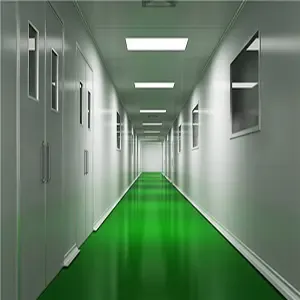
Pharmaceutical Powder Handling
Requirement: Powders dispensed or sampled may become airborne and require containment.
Configuration: Migration of particles may be limited by the use of negative-pressure airlocks, local exhaust filtration, and dedicated exhausted filtration. The final controls will be determined by the risks posed by the material, acceptable exposure levels, and the volume of material processed.
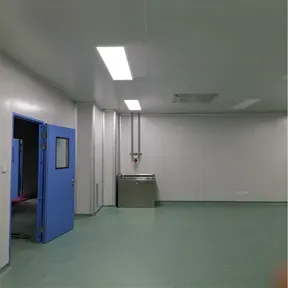
Laboratory Sample Processing
Requirement: Inward airflow may be needed to protect adjacent areas during sample preparation and testing.
Configuration: Integration of interlocked doors, pass boxes, and exhaust systems, as well as pressure monitoring, can be used to balance the airflow of the room. Airflow should be complementary to that of a fume hood or a biosafety cabinet.
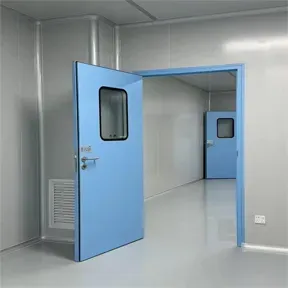
Chemical & VOC Operations
Requirement: Chemical processes that produce particles, along with gases and vapors, require safe capture and discharge.
Configuration: Source capture and dedicated exhaust, along with the use of appropriate duct materials, can be employed. Control of particles can be achieved with HEPA filters; control of VOCs can be achieved with scrubbers or activated carbon.
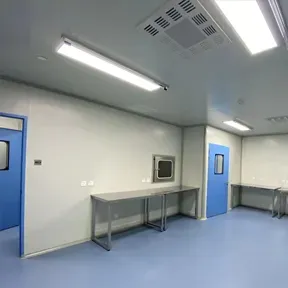
Potent Compound Containment
Requirement: Controls must be implemented for the exposure of personnel, for cleaning and maintenance, and for the removal of waste of potentially active materials.
Configuration: Closed transfer systems with controlled pressure zones, and bag-in/bag-out filtration can be employed. Closed equipment and isolators can be used for higher risk processes.
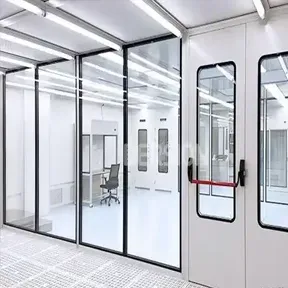
Engineering Controls & Verification
Supply and exhaust air are balanced to maintain inward airflow. Typical pressure differentials are −10 to −20 Pa, subject to project design and verification.
Exhaust systems may include H13 or H14 HEPA filters, safe-change housings, and standby fans, as determined by the process hazard identification. Personnel air locks, pass boxes, and waste routes provide pressure relationships and reduce conflicting traffic. Safe operation is supported by pressure sensors, alarms, and HVAC interlocks. Testing may include pressure, airflow, HEPA integrity, and particle counting.
Engineering notice: The final specifications will be determined by material hazards, exposure limits, process conditions, and local regulations. HEPA filtration captures particles, but does not remove gas or VOCs.
FAQ
A Negative Pressure Hardwall Cleanroom creates an inward airflow to keep airborne particles, powders, and process contaminants contained. It is used in a variety of applications including pharmaceutical processing, lab work, and hazardous material handling. Containing adjacent areas is of primary importance in each of these examples. The final containment strategy should be determined by a documented process and risk assessment.
Deiiang Negative Pressure Hardwall Cleanrooms can be built to achieve ISO Class 5 to Class 8, per ISO 14644-1, based on the process, occupancy, and equipment load, as well as the airflow and filtration system design. The class is confirmed during the design of the project and is validated by particle-count testing upon completion of the project.
Negative pressure is maintained by balancing supply and exhaust air flows in such a way that cleaner air is drawn from adjacent areas into the room. For typical applications and risk assessments, a pressure differential of -10 to -20 Pa is typical. For continuous monitoring, differential pressure sensors with local displays and alarms can be supplied, along with supply and exhaust air interlocks.
Negative pressure is achieved via supply air filtration through H13 or H14 HEPA filters, which are selected based on the required process cleanliness. The dedicated exhaust system can contain HEPA filtration, bag-in/bag-out housings, safe-change arrangements, and/or other treatment options for specific risks. Exhaust air should not be recirculated unless a risk assessment, in conjunction with the applicable regulations, supports that decision.
Handover documentation typically includes final as-built drawings, operating manuals, certificates for calibrated instruments, and records for the material/equipment provided. Examples of qualification testing may include determination of airborne particle concentrations to comply with ISO 14644-1, testing of HEPA filter integrity, measurements of airflow volume and room differential pressure, checks of temperature and relative humidity, recovery tests, and airflow visualization studies, as stipulated in the project specifications.
Preventive maintenance recommendations, replacement of pre-filters and HEPA filters, checks of pressure and airflow, and testing of alarms, as well as support for the periodic requalification of cleanrooms, are maintenance services offered by Deiiang. The aforementioned maintenance services are performed based on the operating conditions of the facility, the contamination risk, the filter loading, the applicable standards, and the quality management system of the facility.