+86 13638632902
 Jason@cleanroomequips.com


 MENU
Cleanroom Testing
Cleanroom product testing is essential for ensuring that products manufactured or handled in a cleanroom environment meet stringent cleanliness and quality standards. This process is critical in industries such as pharmaceuticals, biotechnology, electronics, and aerospace, where contamination can compromise product integrity and safety.
Testing the performance of cleanroom purification equipment is crucial to ensuring that the cleanroom environment meets the required cleanliness standards. Purification equipment, such as HEPA filters, ULPA filters, air handling units, and other HVAC components, plays a vital role in maintaining the appropriate air quality and cleanliness levels.
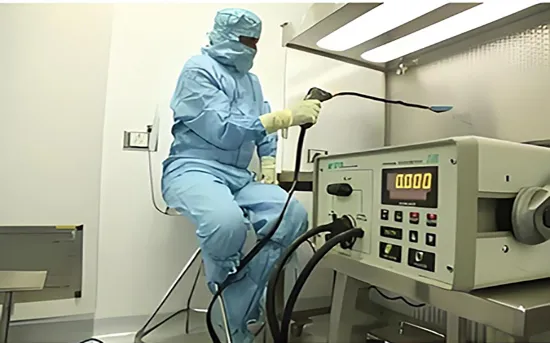
HEPA and ULPA Filter Testing
Purpose: To verify the efficiency of filters in removing particles from the air.
Methods:
DOP or PAO Test: Use Dioctyl Phthalate (DOP) or Poly Alpha Olefin (PAO) aerosols to challenge the filter and measure its efficiency. The test measures the particle count before and after the filter.
Penetration Testing: Assess the penetration rate of particles through the filter to ensure it meets the required efficiency (e.g., 99.99% for HEPA filters).
Airflow and Velocity Testing
Purpose: To ensure that the airflow rates and velocities are within the specified limits for cleanroom operations.
Methods:
Anemometer Measurements: Use handheld anemometers to measure the airflow velocity at various locations in the cleanroom, particularly at the filter face and in critical areas.
Air Change Rate Calculation: Calculate the air change rate (ACH) by measuring the total airflow and the cleanroom volume.
Pressure Differential Testing
Purpose: To maintain the required pressure differentials between the cleanroom and adjacent areas, preventing contamination ingress.
Methods:
Manometer Measurements: Use digital or mechanical manometers to measure pressure differentials relative to surrounding areas.
Monitoring Systems: Implement continuous monitoring systems to track pressure differentials during operation.
Temperature and Humidity Control
Purpose: To ensure that temperature and humidity levels are maintained within specified limits, as they can affect particle behavior and equipment performance.
Methods:
Data Loggers: Use temperature and humidity data loggers to record environmental conditions over time.
Spot Checks: Conduct periodic checks using calibrated thermometers and hygrometers.
Microbial Monitoring
Purpose: To assess the effectiveness of purification equipment in controlling microbial contamination.
Methods:
Active Air Sampling: Use air samplers to measure microbial counts in the cleanroom.
Settled Plate Methods: Employ settle plates to capture viable organisms in the cleanroom environment.
Smoke or Tracer Gas Testing
Purpose: To visualize airflow patterns and ensure that the airflow is directed correctly to maintain cleanliness.
Methods:
Smoke Tests: Introduce smoke (or fog) into the cleanroom to observe airflow patterns and identify any dead spots or areas of turbulence.
Tracer Gas Tests: Use tracer gases like sulfur hexafluoride (SF₆) to assess airflow and verify that it aligns with design specifications.
| ||||||||||||||||||||||||||||||||||||||||||||||||||||||||||||||||||||||||||||||||||||||||||||||||||
Our Equipment
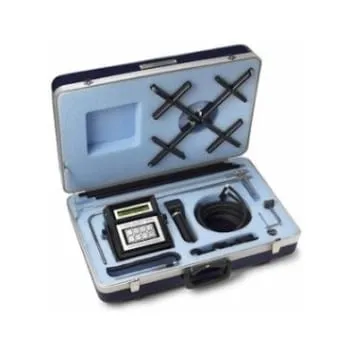
Shortridge 860C Air Data manometer with Velgrid for individual hepafilter flow measurement
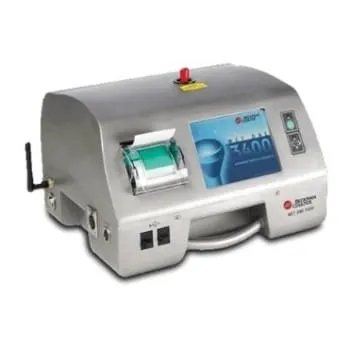
Hach 3413 particle counter
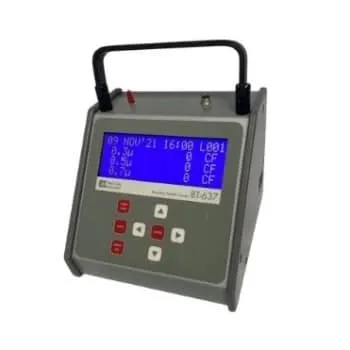
Met One BT 637 particle counter with temperature and humidity
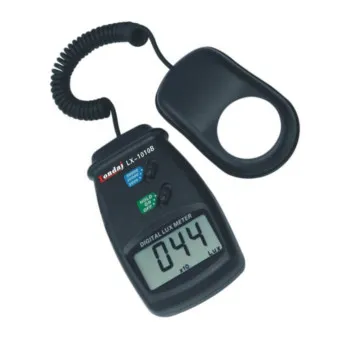
Tondaj LX1010B digital light meter
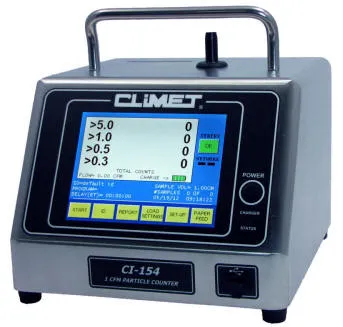
Climet 150T laser particle counte
 |  |  |  |  |

AZMuZJIbQJY?t=10
FAQ
-
Q:How can you evaluate the performance of the filtration systems?
A:Measuring effectiveness of filtration systems is crucial because this is the only way to guarantee the integrity of cleanrooms as well as quality of products used in sensitive environments. This proactive approach ensures compliance with rules and permits companies to enhance performance as well as safety level.
-
Q:Tell about the DOP testing procedure.
A:DOP (Dioctyl Phthalate) testing procedure is one of the most common test methods to analyze efficiency of HEPA (High-Efficiency Particulate Air) or ULPA (Ultra-Low Penetration Air) filters. DOP test measures the effectiveness of a filter in capturing particles and is widely used in cleanrooms, laboratories as well as pharmaceutical manufacturing facilities.
-
Q:What is the purpose of DOP testing?
A:DOP (Dioctyl Phthalate) testing is primarily used to validate HEPA (High-Efficiency Particulate Air) or ULPA (Ultra-Low Penetration Air) filters in important settings. It aims to prove that filter performance is high enough to be used in different facilities adhering to the appropriate clean air requirements.
-
Q:How would you test how efficient HEPA filter is?
A:There are many standardized methods to test efficiency of HEPA (high-efficiency particulate air) filter, including DOP (dioctyl phthalate) test, which is widely used among them.