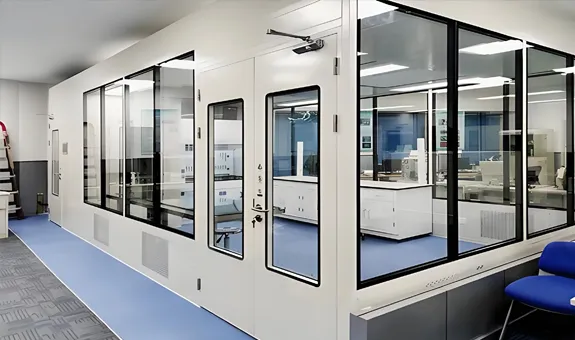
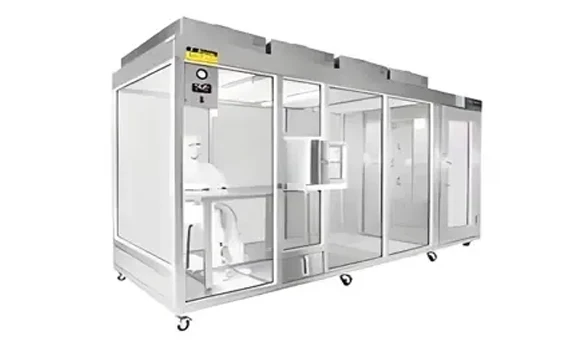
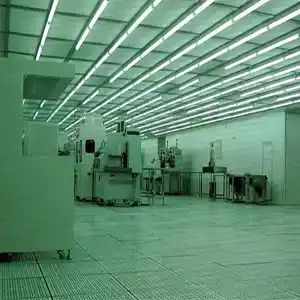
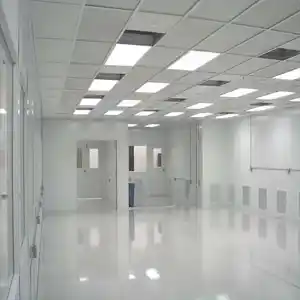
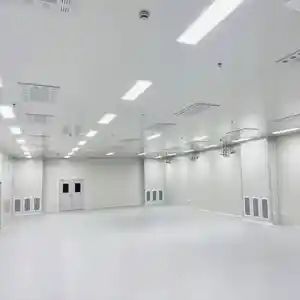
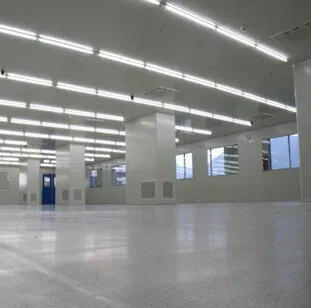
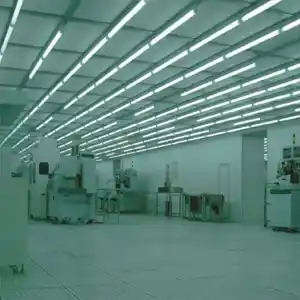
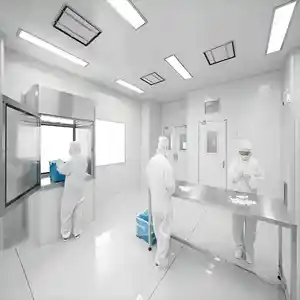
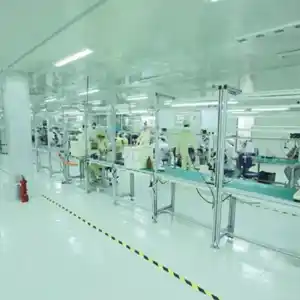
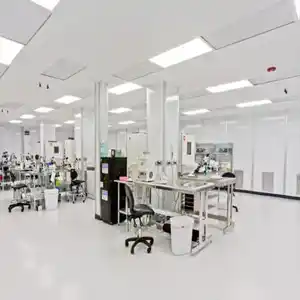
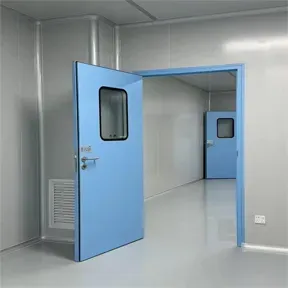
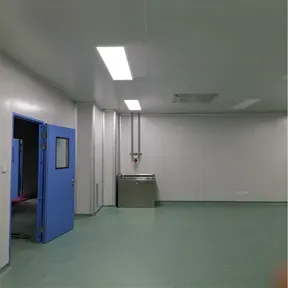
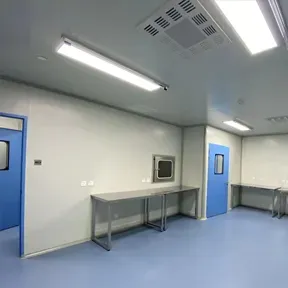
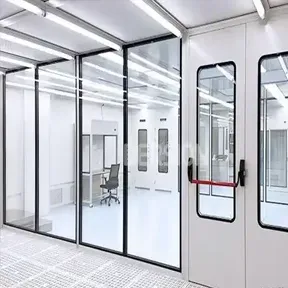
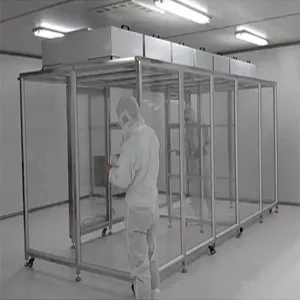
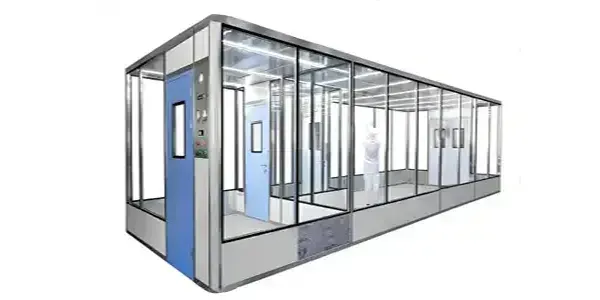
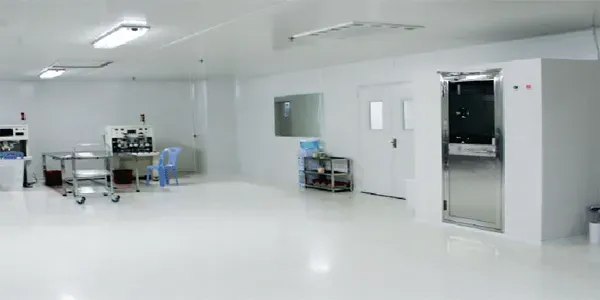
Deyang™ modular cleanrooms fully comply with ISO 14644 standards, covering cleanliness levels from ISO 5 to 8. They are widely used in electronics, optics, food, pharmaceuticals, semiconductors, and related fields.
Utilizing a splicing and screw-fixed assembly method, the entire system significantly reduces installation costs and greatly accelerates construction speed. Furthermore, the structure supports easy disassembly, reassembly, and relocation, and is reusable, avoiding unnecessary waste.
Our professional team provides one-stop, customized modular cleanroom solutions to meet your specific needs.
Deiiang is a professional manufacturer of modular cleanrooms with significant product advantages.

These modular cleanroom units allow you to expand or rearrange the space at any time to meet changing production needs. You are no longer bound by fixed cleanrooms, avoiding long construction periods and waste of initial investment.

All wall panels come pre-made, plus plug-and-play utility setups. Installation is completed much faster than traditional builds, so your production lines won’t sit idle and you can launch products sooner.

Finely regulated airflow, HEPA/ULPA filters, and fully sealed joints ensure that the cleanliness level consistently meets relevant ISO classes, reducing contamination risks in critical processes.

Double-layer glass magnesium oxide rock wool sandwich panels, intelligent fan speed control, and an optimized HVAC layout significantly reduce energy consumption. Operating costs are far lower than a standard permanent cleanroom.

Every modular cleanroom design and its documentation is aligned with GMP, ISO, and FDA requirements. On-site qualification, third-party testing, and audit checks become far less troublesome and more predictable.

Every material and equipment component is secured using screws and accessories. When replacing HEPA filters, there is no need to dismantle the cleanroom ceiling—simply push the FFU upwards and remove the HEPA filter directly.
Our modular cleanrooms are designed around your specific industry and production process. Layout and materials are customized according to the required cleanliness level, ensuring your key process needs are solved in one integrated solution.

Our modular cleanroom solutions ensure core cleanliness parameters meet standards, while delivering strong cost control. With our own production facilities and a complete supply chain, we provide a more competitive total cost than traditional cleanroom builds.


Modular cleanrooms work almost like plug-and-play clean areas for production. His panel structure is designed for easy installation. The interlocking slots and aluminum profile "中"-shaped connectors fit together perfectly, eliminating the need for screws. It's like assembling building blocks—installation and disassembly are incredibly convenient. If the room needs alteration or expansion, it can be directly assembled.
Traditional cleanrooms are disposable, with installations that are fixed in place and cannot be disassembled at all; installation is also not a simple process.Though sturdy and reliable, they need far more time to design, build and validate. If modifications are needed later, such as changes to wall panels or ceilings, even partial alterations may require the removal and rebuilding of many other areas.Overall, modular cleanrooms bring unmatched speed, scalability and compliance for today’s fast-evolving manufacturing scenarios.

Deiiang modular cleanrooms for Pharmaceutical / Health Care. Fast installation, easily extendable and robust contamination protection for aseptic filling, weighing and packaging in accordance with GMP.

For the production of implants, catheters and disposables Deiiang offers modular cleanrooms for repeated ISO-class conditions. A clean assembly area and variable design of the cleanroom enable an optimal room concept which can be readjusted quickly in case of changes in the product mix.

Deiiang modular cleanrooms help to combat the production of dust and the transfer of microbes and cross contamination in the production of creams and makeup for the Cosmetics & Personal Care industry. By supporting stable quality, clean filling lines and audit readiness our modular cleanrooms are the ideal solution for your needs.

Deiiang can provide the most cost effective modular cleanroom solutions for ultra‑fine particle control for wafer, IC chip and electronics assembly and other production processes. Deiiang provides easy to use modular cleanroom, scalable bays, fast and easy maintenance, and can design clean air flow to support specific processes, such as lithography, wire bonding, etc.

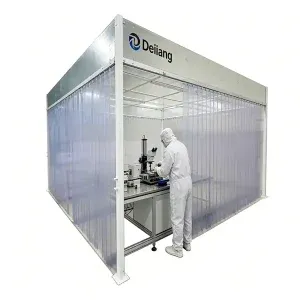
Deiiang ESD‑safe clean booths with HEPA FFUs, grounded frames and pass boxes add local ISO control for lithography, inspection and packaging inside existing fabs and workshops.

For coating, stacking and packing of lithium batteries, Deiiang’s modular cleanrooms for production of new energy battery parts provide the required level of moisture and particle control. They also help minimize safety risks. They allow rapid scale up of capacity as needed.
| ISO Class | Maximum Particles/m³ | FED STD 209E Equivalent | |||||
|---|---|---|---|---|---|---|---|
| ≥0.1μm | ≥0.2μm | ≥0.3μm | ≥0.5μm | ≥1μm | ≥5μm | ||
| ISO 1 | 10 | 2 | |||||
| ISO 2 | 100 | 24 | 10 | 4 | |||
| ISO 3 | 1,000 | 237 | 102 | 35 | 8 | Class 1 | |
| ISO 4 | 10,000 | 2,370 | 1,020 | 352 | 83 | Class 10 | |
| ISO 5 | 100,000 | 23,700 | 10,200 | 3,520 | 832 | 29 | Class 100 |
| ISO 6 | 1,000,000 | 237,000 | 102,000 | 35,200 | 8,320 | 293 | Class 1,000 |
| ISO 7 | 352,000 | 83,200 | 2,930 | Class 10,000 | |||
| ISO 8 | 3,520,000 | 832,000 | 29,300 | Class 100,000 | |||
| ISO 9 | 35,200,000 | 8,320,000 | 293,000 | Room Air | |||
| ISO Class | ACH (Air Changes Per Hour) |
|---|---|
| ISO 3 | 360 - 540 |
| ISO 4 | 300 - 540 |
| ISO 5 | 240 - 480 |
| ISO 6 | 50 - 60 |
| ISO 7 | 30 - 40 |
| ISO 8 | 15 - 25 |
To start, simply select a manufacturing process and upload a 3D CAD file.
Within a few hours we'll send you design for manufacturability (DFM) analysis and real-time pricing.
Once you review your quote and place your order, we'll start the manufacturing process. We also offer finishing options.
Our digital manufacturing process allows us to produce parts in as fast as 1 day.
| Grade | China GMP / Europe GMP | ISO 14644-1 | FED STD 209E | |||||
|---|---|---|---|---|---|---|---|---|
| Static | Dynamic | |||||||
| ≥0.5μm | ≥5μm | ≥0.5μm | ≥5μm | Static | Dynamic | Static | Dynamic | |
| A | 3,520 | 20 | 3,520 | 20 | ISO 5 | ISO 5 | 100 | 100 |
| B | 3,520 | 29 | 352,000 | 2,900 | ISO 5 | ISO 7 | 100 | 10,000 |
| C | 352,000 | 2,900 | 3,520,000 | 29,000 | ISO 7 | ISO 8 | 10,000 | 100,000 |
| D | 3,520,000 | 29,000 | - | ISO 8 | - | 100,000 | - | |
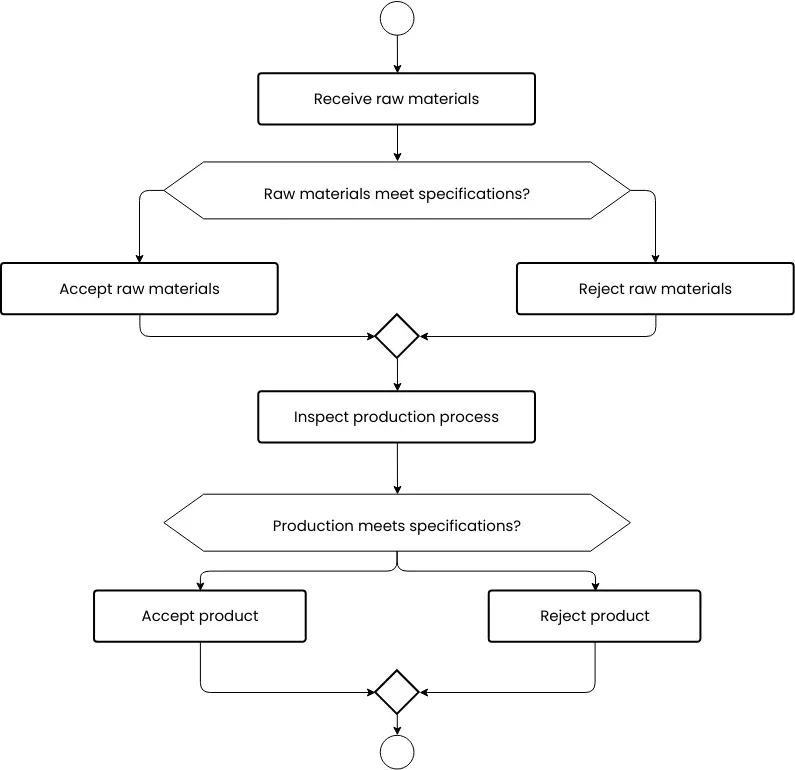
Deiiang Cleanrooms Quality Control Flowchart


When precision is paramount, choosing the right controlled environment is a critical business decision. Deiiang offers more than just a cleanroom; we provide a scientifically engineered solution tailored to your specific industry needs. Here is why Deiiang stands out as the partner of choice for professionals worldwide:
1. Tailored Material Expertise
We understand that different industries require different contamination control strategies. That is why we offer a versatile range of structural options designed for specific applications:
Hardwall Modular Cleanrooms: Constructed with robust aluminum profiles and high-clarity acrylic panels, offering superior durability and a rigid structure ideal for long-term static environments.
Softwall Modular Cleanrooms: Featuring aluminum profiles with anti-static PVC curtains, providing an economical and flexible solution perfect for spot-cleaning or enclosing specific machinery.
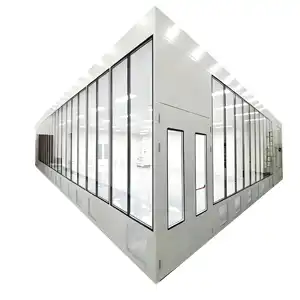
Sandwich Panel Cleanrooms: Utilizing premium handmade glass-magnesium rock wool sandwich panels, delivering exceptional thermal insulation and fire resistance for rigorous pharmaceutical or electronic manufacturing standards.
2. Engineering Authority & Design
Your project is backed by our professional design team. We don’t just sell products; we engineer workflows. Our experts analyze your space and requirements to create a layout that optimizes airflow and efficiency, ensuring you meet ISO standards without guesswork.
3. Unbeatable Value & Cost-Efficiency
We believe high standards shouldn’t come with prohibitive costs. Deiiang leverages advanced manufacturing processes to offer an industry-leading price-to-performance ratio. You get top-tier contamination control that fits within your operational budget.
4. Global Reach with Speed
Time is money in manufacturing. We utilize efficient fast-shipping logistics networks to deliver globally. Our streamlined supply chain ensures your cleanroom arrives on schedule, minimizing downtime and accelerating your project timeline.
5. Simplified User Experience (Plug-and-Play)
Complex construction shouldn't be a barrier. Our modular design philosophy emphasizes "Simple Installation." The pre-engineered modular assembly allows for quick setup with minimal tools, reducing installation costs and allowing your team to focus on what they do best—production.
Choose Deiiang for a cleanroom solution that combines technical expertise with practical, cost-effective design.
From Design to Delivery: Our Professional Process
Service Flowchart - Requirements Analysis -> Professional Design -> Production -> Global Shipping -> Modular Installation
1. Professional Design Team
Many clients are often confused about layout. Deiiang has a professional design team that will provide you with the optimal layout plan free of charge, based on your site plan and process flow, ensuring reasonable airflow and maximizing space utilization.
2. Efficient Global Shipping
To address the time-sensitive challenges of overseas sourcing, we have optimized our logistics channels, utilizing efficient express shipping services directly to major ports worldwide. We scientifically pack all components to minimize shipping volume, saving on freight costs and ensuring safe arrival of goods.
Unlike traditional drywall construction, Deiiang's modular systems allow for 70% faster installation and 100% material recovery during relocation.
Modular construction offers faster project delivery, improved quality control, and greater cost certainty compared to traditional construction. Because modules are manufactured in a controlled factory environment, weather delays are minimized, materials are used more efficiently, and consistent standards are easier to maintain.
In addition, modular construction provides superior flexibility and scalability. Buildings can be expanded, relocated, or reconfigured with less disruption, making modular solutions ideal for projects that require speed, adaptability, and long-term operational efficiency.
If you're worried about installation, Deiiang's design will put your mind at ease. Our products utilize a true "building block" modular assembly concept. All profiles and panels are prefabricated in the factory.
On-site installation only requires simple bolt connections and plug-ins according to the drawings. No cutting, no welding, and not even hiring an expensive professional cleanroom construction team. Even ordinary skilled workers can complete the assembly in a very short time, significantly reducing your hidden construction costs.
There's absolutely no need to worry. The Deiiang modular cleanroom installation method is extremely simple; it's all modular assembly, and even an average person could assemble it after watching the installation videos.
If you do encounter any problems during installation, we can provide remote video guidance via WhatsApp to resolve them.
Of course, if the project is large, involves many pieces of equipment, and is complex, we can arrange for technical support to obtain a business visa and provide on-site guidance.
A modular clean room operates by creating a controlled environment that minimizes contamination and maintains specific cleanliness levels. This is achieved through a combination of advanced engineering, air filtration, and strict operational protocols.
Air Filtration System
Central to the functionality of a modular clean room is its air filtration system. High-Efficiency Particulate Air (HEPA) or Ultra-Low Penetration Air (ULPA) filters are used to remove airborne particles, ensuring that the air quality meets industry standards. The filtered air is circulated throughout the room, maintaining a sterile environment.
Positive Pressure Control
Modular clean rooms often operate under positive pressure. This means that the air pressure inside the clean room is higher than that outside, preventing external contaminants from entering. Controlled airflow is carefully managed to maintain this pressure differential.
Temperature and Humidity Control
Maintaining specific temperature and humidity levels is crucial for many clean room applications. Modular clean rooms are equipped with HVAC systems that regulate these parameters, ensuring optimal conditions for processes and product integrity.
Flexibility and Customization
One of the primary benefits of modular clean rooms is their flexibility. They can be easily customized and reconfigured to meet specific operational needs. This adaptability allows businesses to scale up or down based on production demands or changes in technology, making them suitable for a wide range of applications.
Quick Installation
Modular clean rooms are designed for rapid assembly, which significantly reduces construction time compared to traditional clean rooms. This quick installation process minimizes downtime for businesses, allowing them to begin operations sooner and respond swiftly to market changes.
Cost-Effectiveness
These clean rooms often represent a more economical solution than conventional construction methods. Lower labor costs, reduced construction time, and the ability to relocate or expand the facility contribute to overall cost savings for businesses, improving return on investment.
Typical costs range from $100 to $200 per sq. ft. depending on your ISO class. For example, upgrading from ISO 8 to ISO 7 increases HVAC load by approx 30%. (Use real data!)
1. Pharmaceuticals
The pharmaceutical industry relies heavily on clean rooms for the manufacture of sterile products, including injectable medications, vaccines, and biologics.
2. Biotechnology
Biotech companies use clean rooms for research, development, and production processes, particularly in the creation of biologics, gene therapies, and cell cultures.
3. Semiconductors
The semiconductor manufacturing industry requires clean rooms to produce microelectronics and integrated circuits.
4. Medical Devices
Clean rooms are necessary for the design and manufacturing of medical devices, such as implants, diagnostic equipment, and surgical instruments.
5. Aerospace
In the aerospace industry, clean rooms are used for the assembly and testing of sensitive components and systems, such as avionics and propulsion systems.
6. Research Laboratories
Academic and industrial research laboratories often use modular clean rooms for experiments that require controlled environments, such as materials science, microbiology, and nanotechnology research.
7. Optics
In the optics industry, clean rooms are essential for the manufacturing of lenses, mirrors, and other optical components that require precision and cleanliness to ensure quality performance.
1. Frame Structure Design
Design the modular cleanroom using interlocking panels of aluminum or stainless steel for durability and easy installation. Ensure the frame allows for airtight seals, easy maintenance, and flexibility for future modifications or expansions. The structure should support doors, windows, and FFUs while providing structural integrity.
2. Purification System Design
The purification system integrates FFUs with HEPA/ULPA filters to ensure clean airflow, designed to maintain unidirectional flow (laminar flow) for particle containment. Air handling units (AHUs) supply conditioned air, while positive pressure prevents contamination. Air exchanges per hour (ACH) must be designed based on cleanroom classification.
3. Cleanliness, Temperature, and Humidity Control
Maintain cleanliness by adhering to ISO class standards, using HEPA/ULPA filters for air quality. Control temperature within 18-24°C and humidity between 30%-60% with HVAC systems. Sensors continuously monitor and adjust environmental factors to ensure optimal conditions for production or research.
We integrate Direct Expansion (DX) AHUs for tight humidity control and EC Fan Filter Units (FFUs) to reduce energy consumption by 40%.
Modular cleanroom panels are pre-fabricated, interlocking wall components used to construct cleanroom environments. These panels are made from materials such as aluminum, stainless steel, or composite materials to ensure durability, cleanability, and contamination control. The panels are designed to be easily assembled, disassembled, and reconfigured, offering flexibility for the cleanroom’s size and layout. The design allows for quick installation and modification without significant downtime.
The panels often feature airtight seals to maintain positive pressure within the cleanroom, preventing external contaminants from entering. They can be customized with features like windows, doors, and integrated systems for air filtration. Modular panels are designed to meet specific cleanroom classifications (ISO 5, ISO 7, etc.) and provide an efficient, scalable solution for industries requiring stringent environmental controls, such as pharmaceuticals, biotechnology, and electronics manufacturing.
A central control system that provides real-time data, allowing operators to ensure compliance with cleanroom standards. HEPA/ULPA filter efficiency, air changes per hour (ACH), and airflow patterns are also monitored to maintain the required air quality and cleanliness levels.
In addition to physical sensors, modern cleanroom monitoring systems often include automated alarms and data logging to alert operators if any parameters fall outside acceptable ranges. This data is critical for maintaining regulatory compliance, ensuring product quality, and preventing contamination. Remote monitoring and automated control can further enhance system efficiency by allowing for 24/7 oversight and quick adjustments to environmental conditions when necessary.
The classifications of clean areas in modular cleanrooms are based on the ISO 14644-1 standard, which defines cleanroom classifications according to the maximum allowable concentration of airborne particles. These classifications range from ISO 1 (the cleanest) to ISO 9 (the least clean), with each class specifying the particle count per cubic meter at a specified particle size (typically 0.5 microns). The higher the ISO number, the more particles are allowed in the air. For instance, an ISO 5 cleanroom allows fewer particles than an ISO 7 cleanroom, making it suitable for applications requiring a higher level of contamination control.
Common modular cleanrooms include: hard wall modular cleanrooms, soft wall modular cleanrooms, sandwich panel modular cleanrooms.
Flexible and customizable design: Modular cleanrooms are composed of prefabricated modules, which can be flexibly customized in layout, size and configuration as needed, making it easy to expand or reduce according to different needs.
Quick installation and disassembly: Due to the use of prefabricated panels and standardized design, the assembly process of modular cleanrooms is quick and easy, reducing construction time and easy to disassemble and reorganize.
High-efficiency air filtration system: Equipped with HEPA or ULPA filters to ensure that particulates in the air are effectively removed and the air quality in the cleanroom meets strict cleanliness standards.
Easy to maintain and clean: Modular cleanrooms use smooth, non-porous materials (such as stainless steel or aluminum alloy), making the surface easy to clean and easy to access components such as air filters and lighting equipment during maintenance.
Compliance with industry standards and specifications: Modular cleanrooms can be designed according to international standards such as ISO 14644 to ensure that the specified cleanliness level is achieved. They are widely used in industries such as pharmaceuticals, semiconductors, and electronics to meet strict production and research requirements.
These features make modular cleanrooms an efficient, flexible and economical solution in different environments.
FFU intelligent distributed control system is mainly used in large clean rooms, which can easily realize on-site decentralized control and centralized unified management functions. It can flexibly control the start and stop and speed regulation of FFU fans. The control system uses partition control technology to solve the problem of limited 485 drive capacity, and can control thousands of fans at most.
The computer is composed of professional FFU monitoring software. The software is divided into main interface and sub-interface. The main interface displays the FFU system distribution map and partition map. The main interface can directly control the partition switch. Click the main interface to enter the sub-interface to view the FFU status of each partition and control each FFU control unit. The FFU group control system for thousand-level purification plants is a highly integrated automation product.
The FFU group control system of the purification plant has the following characteristics:
It can conveniently realize the start, stop and speed regulation functions of multiple FFUs and partition control of FFUs;
It can monitor the working current of any FFU to determine whether it is no-load or overload fault;
It can set the number of fans in a certain area (each area has a maximum of 60 control units);
It can query the operating status of a fan in the entire clean room;
Overload protection function: when overload occurs, automatic remote alarm;
When the computer is in standby mode, the FFU host can independently control the system operation.