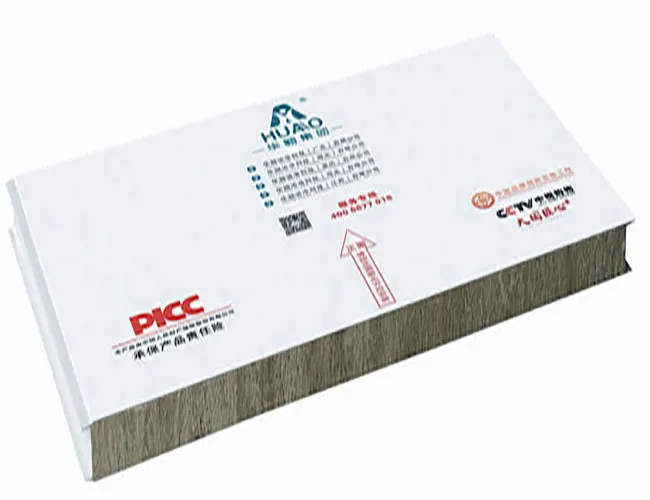
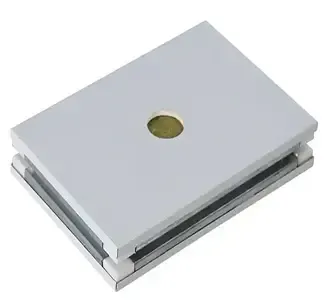
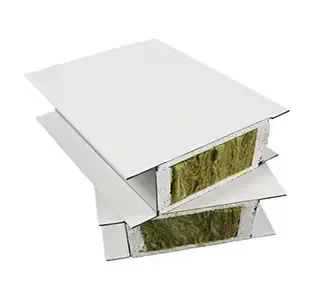
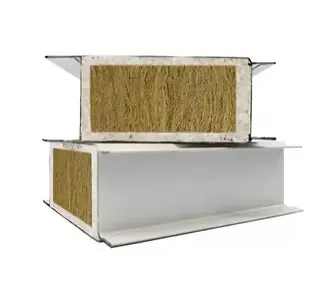
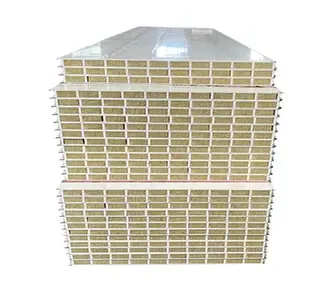
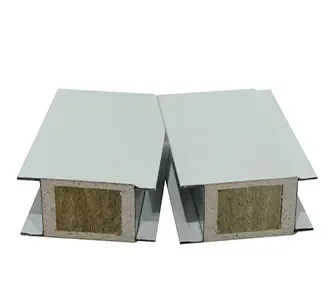
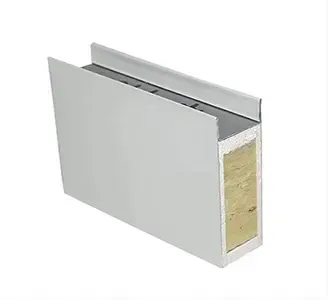
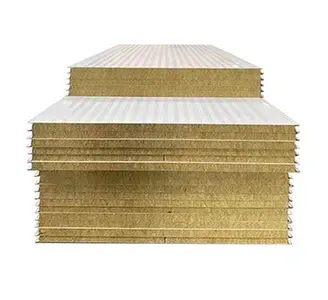
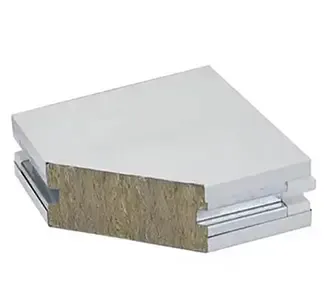
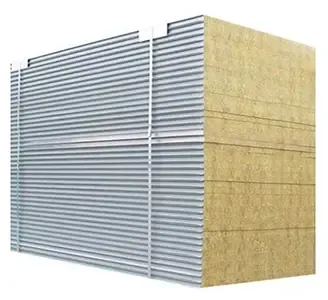
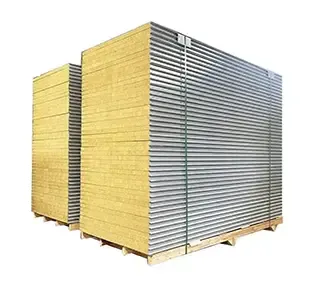
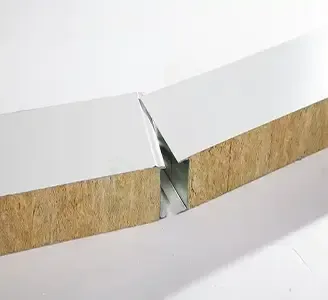
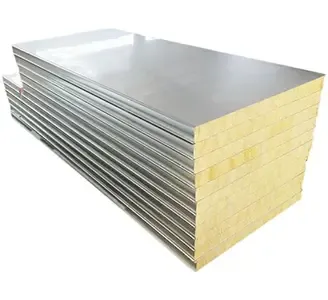
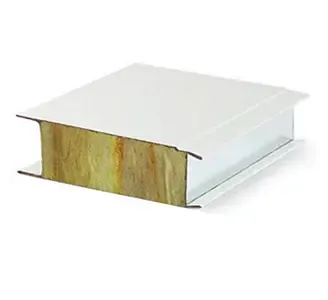
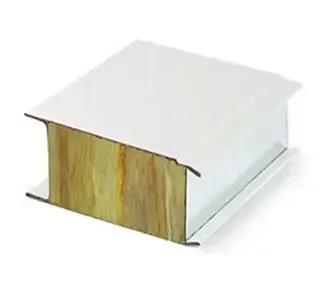
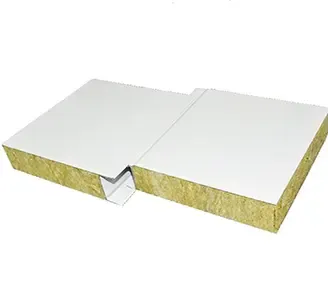
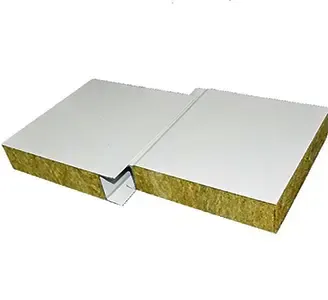
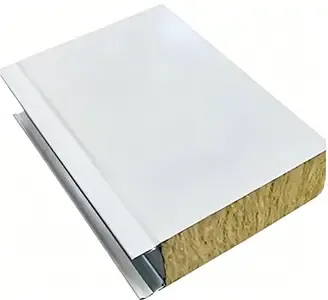
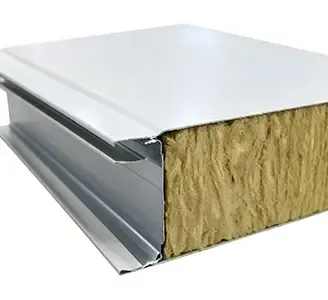
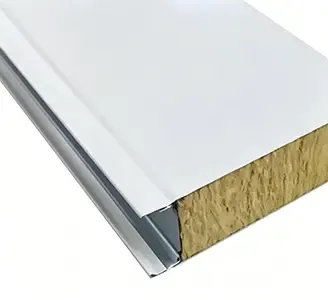
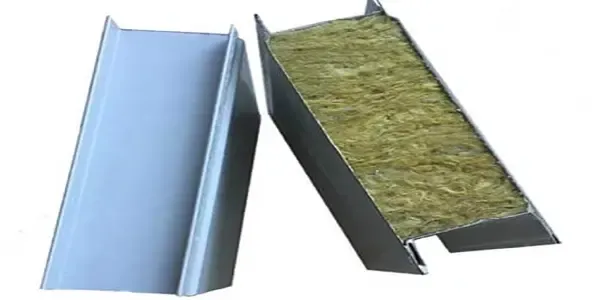
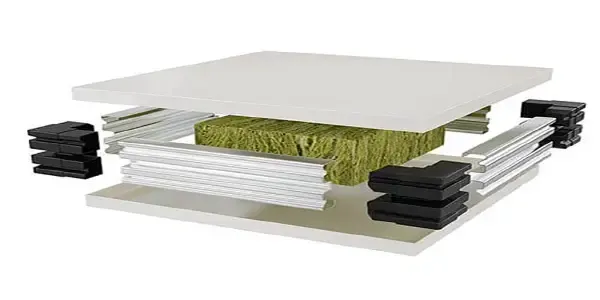
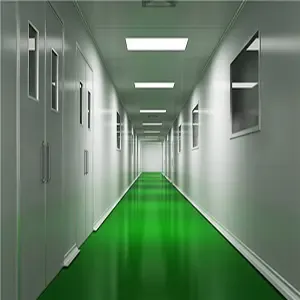
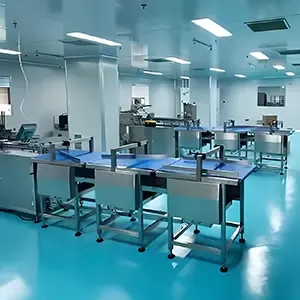
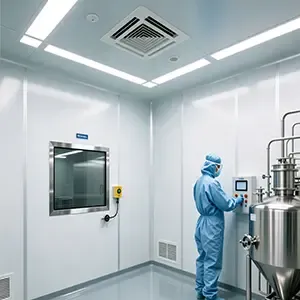
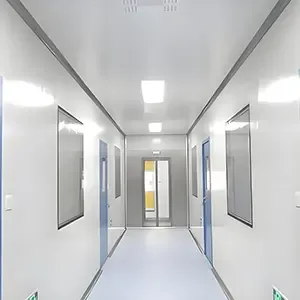
Deiiang’s rock wool cleanroom panels suit facilities that value fire resistance, heat retention and noise control above all else. We fill each board with Class A non-combustible rock wool. Fibers stand vertical to the steel skin, plus staggered dense strips run the full length. This build delivers strong load support, walls and ceilings stay stiff and steady for years. Noise leakage between clean zones and hallways drops drastically thanks to this core layout. Improved thermal performance also takes strain off your HVAC units and cuts running power costs.Our interlocking mouth-style splice cuts installation time sharply. Seams fit snug with no messy gaps left behind. It’s a versatile pick for GMP aisles, packaging workshops and mechanical service rooms. Any industrial cleanroom needing fire safety, quiet working conditions and lower energy use will benefit from this panel system.
Our professional team will provide you with customized cleanroom RockWool Panel system solutions to meet your specific needs.


To start, simply select a manufacturing process and upload a 3D CAD file.
Within a few hours we'll send you design for manufacturability (DFM) analysis and real-time pricing.
Once you review your quote and place your order, we'll start the manufacturing process. We also offer finishing options.
Our digital manufacturing process allows us to produce parts in as fast as 1 day.


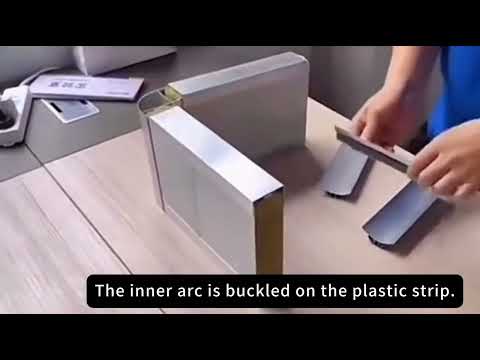
cleanroom RockWool sandwich panel vs. Cleanroom RockWool handmade panel
Cleanroom RockWool sandwich panel
Machine‑made, fixed sizes, very consistent and cost‑effective. Best for large, straight cleanroom walls and ceilings where layout is regular.
Cleanroom RockWool handmade panel
Manually assembled, highly customizable for doors, windows, corners, and special details. More labor, usually higher cost, but better fit in complex areas.
Both can meet cleanroom and fire standards if materials and sealing are qualified – the choice mainly depends on whether you need speed and economy (sandwich) or flexibility and custom details (handmade).
Deiiang is a professional supplier and manufacturer of cleanroom building materials, providing you with one-stop integrated solutions for cleanroom building materials.
| Parameter | Specification |
|---|---|
| Effective Width | 980 mm |
| Thickness | 50 mm | 100 mm |
| Density (kg/m³) | 80 | 140 |
| Length | Custom |
| Structure and Application | Splicing of mouthpiece |
| Steel Plate Thickness | 0.376 mm | 0.426 mm | 0.476 mm |
| Steel Plate Material | Painted Steel | SS304 |
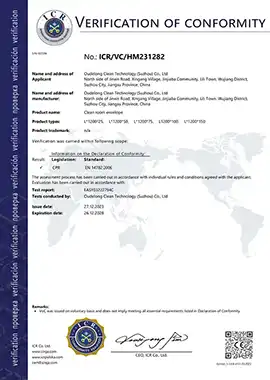
Clean room envelope CE Certification
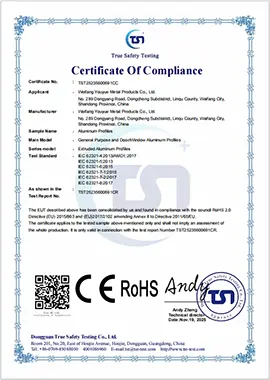
Aluminum Profiles CE Certification
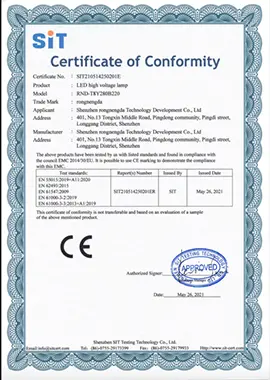
LED high voltage lamp CE Certification
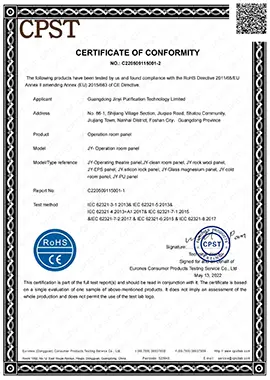
Operation room panel CE Certification
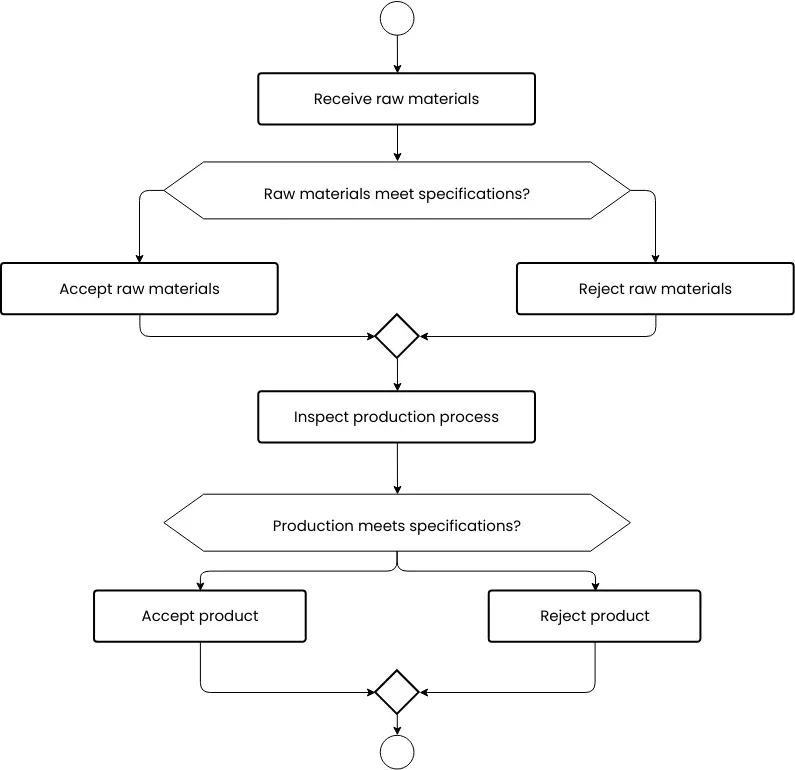
Deiiang RockWool Panel Quality Control Flowchart

Main equipment & structures: 12-month warranty from site acceptance; max 18 months after shipment if delayed by Buyer.
Consumables (HEPA filters, seals, sensors): 6-month limited warranty from shipment.
Extended 1–3 year maintenance contracts available at extra cost.
24-hour remote troubleshooting via email/WhatsApp/video call
Free genuine spare parts for manufacturing defects
Digital operation & maintenance manuals and ISO 14644 guidance
Remote installation, commissioning and calibration support
Free control system firmware upgrades
Normal wear of consumables
Improper operation, unstable power or off-spec usage
Unauthorized disassembly/modification or third-party repair
Collision, flood, fire, natural disasters and post-delivery transport damage
Neglect of routine maintenance
Lost serial numbers or missing purchase documents
Indirect losses including production downtime and profit loss
Buyer covers all round-trip flights, visa, accommodation, local transport and daily allowances.
Overtime/holiday service incurs extra charges.
Post-warranty on-site service includes spare part fees + engineer service charge.
Lifetime supply of original spare parts at factory price after warranty.
Default EXW factory; Buyer bears all international shipping and customs taxes.
Defective goods return: Buyer pays outbound freight; Deiiang covers replacement delivery freight (tax excluded).
Submit written claim with order info, photos/videos within 10 days of fault discovery.
Technical team replies within 24 working hours with solutions.
Stop faulty equipment operation to avoid secondary damage, or warranty will be invalidated partially or fully.
One-time repair: Spare part cost + remote/on-site service fee
Annual maintenance package: Priority support, spare parts discount, regular system calibration
Custom technical training (online free; factory offline training at Buyer’s expense)
General inquiries: Reply within 12 working hours
Emergency production halt issues: Response within 4 working hours
Service quotation: Issued within 48 working hours
Warranty non-transferable without Deiiang’s written approval.
Disputes shall be resolved via negotiation; failing that, arbitrated in China CIETAC.
These terms apply unless otherwise agreed in formal sales contracts.
A cleanroom RockWool Panel is a non‑combustible mineral wool core panel specifically designed for clean environments, not just a regular insulation board. Compared with ordinary sandwich panels, a cleanroom RockWool Panel focuses on three things: fire resistance, low particle emission, and easy‑to‑clean steel surfaces.
In practice, the core still provides thermal and acoustic insulation, but the panel joints, sealants, and surface coatings are selected to work with ISO 14644 and GMP cleanroom requirements, as well as common fire classifications such as EN 13501‑1 A2‑s1,d0 (depending on project design and local codes).
Thickness is mainly driven by three factors: required U‑value, fire rating, and noise control. In many cleanrooms, 50 mm RockWool Panels are fine for internal partitions where temperature difference is small and fire requirements are moderate.
For high‑risk areas, plant perimeters, or noisy equipment rooms, 75–100 mm RockWool Panels often perform better. As a rule of thumb, thicker cleanroom RockWool Panels reduce heat loss and improve sound insulation, but we always size them based on your local building code and HVAC calculation, not just “thicker is better”.
Yes. Properly designed RockWool cleanroom panels are widely used in pharmaceutical and biotech facilities worldwide. The mineral wool core is non‑combustible, and the steel skins can be finished with smooth, low‑porosity coatings that support ISO 14644 and EU‑GMP/US‑FDA cleaning routines.
RockWool is inherently non‑combustible, so RockWool Panels are usually chosen when fire safety is a priority. Depending on panel thickness, density, and steel gauge, a RockWool Panel wall can help achieve typical fire resistance ratings such as 1 hour or 2 hours, subject to tested system data.
For critical paths and escape routes, we usually recommend using tested fire‑rated RockWool Panel assemblies, following standards like EN 13501 or relevant national codes. We can share typical test reports and design recommendations during the project design phase so you and your fire consultant can make an informed decision.
From a fire safety point of view, RockWool Panels are generally safer than PU or PIR cores because mineral wool is non‑combustible, while organic foams can contribute fuel in a fire. Many fire consultants and insurers still prefer RockWool in high‑risk zones, especially in pharma, chemical, and high‑tech plants.
In terms of durability, RockWool cores are stable at higher temperatures and are less affected by most cleaners used in cleanrooms. However, PU/PIR can offer slightly better thermal performance at the same thickness. We often recommend RockWool Panels where fire and long‑term robustness matter more than saving a few millimeters of insulation thickness.
In most cases, yes. Our cleanroom RockWool Panels are designed as modular elements, with standard widths and tongue‑and‑groove or concealed‑fastener joints that can connect to common cleanroom wall and ceiling systems.
Before we produce your panels, we usually review your existing layout, ceiling suspension details, and interface with cleanroom doors and windows. Based on that, we can adjust panel thickness, joint profiles, and steel thickness so that the new RockWool Panel sections tie into your current structure cleanly and without creating dust traps.
The steel skins of a RockWool Panel are designed for routine wipe‑down with common cleanroom disinfectants. In practice, most users clean with non‑abrasive cloths and approved chemicals following their internal SOPs and GMP or ISO 14644 guidelines.
To keep your cleanroom RockWool Panels in good condition, we recommend: avoiding hard impacts, repairing sealant damage quickly, and checking joints and corner trims during annual shutdowns. If a panel is heavily damaged, it is usually easier and safer to replace it than to attempt on‑site “patching” in a critical area.
To prepare a realistic proposal, we usually need: layout drawings, room heights, target cleanroom classes, and any fire or acoustic requirements. It also helps if you tell us whether you prefer standard cleanroom RockWool sandwich panels only, or a mix of sandwich and handmade RockWool Panels around doors and windows.
With this information, we can propose panel thickness, RockWool density, steel thickness, and surface coating, and then provide a detailed RockWool Panel quotation that includes accessories such as tracks, trims, sealants, and optional cleanroom doors and windows.
Yes, this is one of the advantages of RockWool as a core material. Compared with many foam cores, a RockWool Panel generally offers better sound absorption and sound‑blocking performance at similar thickness.
For noisy equipment rooms, compressors, or busy corridors, using thicker or higher‑density cleanroom RockWool Panels can noticeably reduce noise transmission. We can provide typical acoustic data or help your acoustic consultant choose the right panel build‑up for your target dB reduction.
Yes. In addition to standard cleanroom RockWool sandwich panels, we also supply Cleanroom RockWool handmade panels for non‑standard details such as door reveals, window surrounds, corners, and service shafts.
For high‑risk or aseptic zones, we can combine fire‑rated RockWool Panels, stainless steel surfaces, and special trims to reduce dust traps and support aggressive cleaning. During design, our team reviews each critical interface so your RockWool Panel system is not only compliant on paper, but also practical to install, clean, and maintain over the long term.
Define Your Cleanroom Class and Room Function
Start with ISO class (or GMP Grade) and what happens in each room: compounding, filling, packaging, warehouse, corridor, technical room, etc. Critical process zones and sterile areas usually need higher‑grade cleanroom RockWool Panels, tighter joints, and more attention to interfaces than support spaces.
Check Fire Rating, Codes, and Insurance Requirements
Ask your fire consultant or insurer what fire resistance you need for walls, ceilings, and escape routes. Then match RockWool Panel thickness, density, and steel gauge to tested systems (e.g. 1‑hour or 2‑hour fire rating). In many regulated facilities, RockWool Panels are preferred over foam cores for their non‑combustible behavior.
Choose Thickness, Density, and Steel Thickness Together
Don’t pick thickness in isolation. For each zone, balance thermal performance, acoustic control, fire rating, and structural stiffness. For example, 50 mm standard‑density RockWool Panels may suit internal partitions, while high‑density, thicker RockWool Panels and heavier steel skins are better for high‑risk or tall walls.
Decide on Surface Material by Cleaning and Chemical Load
In dry, low‑corrosion areas, coated steel RockWool Panels are usually sufficient and economical. Where you have strong disinfectants, high humidity, or wash‑down, consider SS304‑faced RockWool Panels. Always confirm that the coating system is compatible with your validated cleaning agents and SOPs.
Plan Interfaces: Doors, Windows, and MEP Penetrations
The weak points in any cleanroom envelope are joints and openings. When selecting cleanroom RockWool Panels, check that the supplier can provide matching cleanroom doors, flush windows, corner details, and sealed MEP penetrations. This avoids on‑site improvisation that can create leakage and cleaning problems.
Combine Sandwich Panels with Handmade Panels Where Needed
Use standard cleanroom RockWool sandwich panels for most walls and ceilings to control cost and speed up installation. In complex areas—door reveals, window surrounds, corners, shafts—specify Cleanroom RockWool handmade panels. A supplier experienced with both types can keep the finish consistent and compliant.