wap_menu MENU
X
Trusted by
companies like
FLIR Logo 1
electrolux Logo 3
abb Logo 4
bmw Logo 5
i-dent Logo 6
SINOPEC Logo 7
CATL Logo 8
INOVANCE Logo 9
EVE Logo 10
HONDA Logo 11
FOXCONN Logo 12

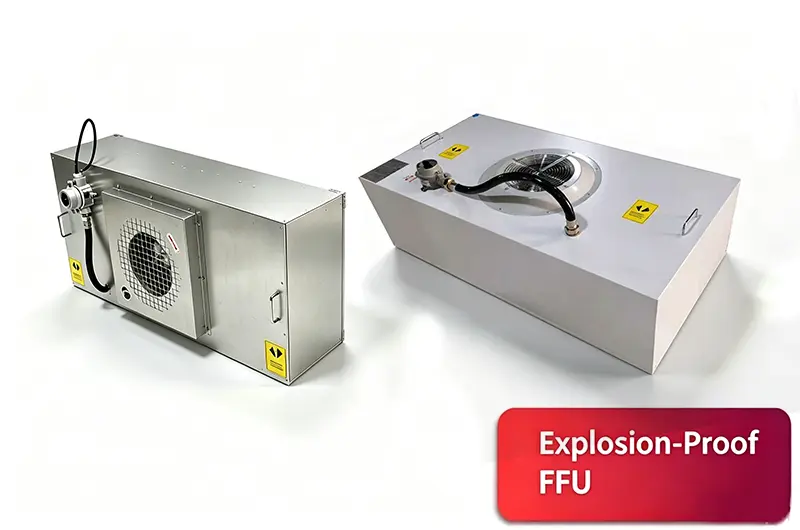
Explosion-Proof FFU

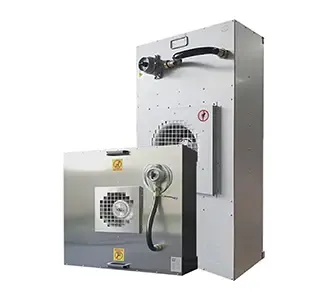
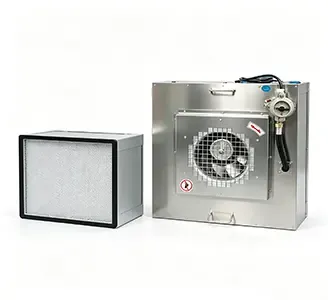
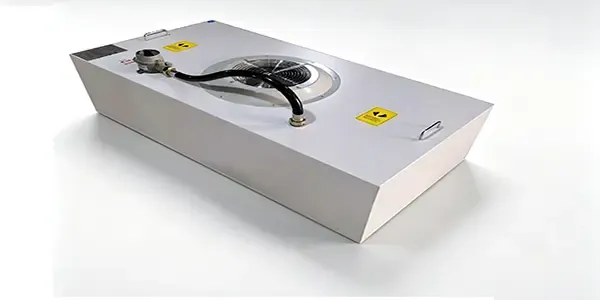
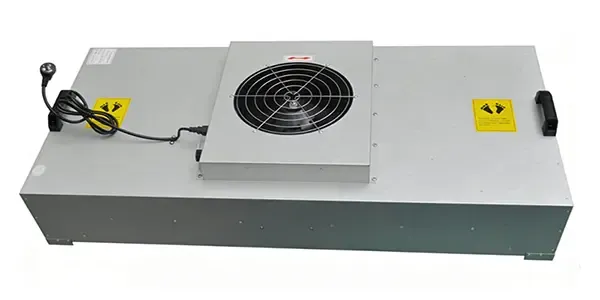
Deiiang Explosion-Proof FFU are deployed in areas containing flammable gas and/or dust, where normal FFUs are prohibited. The FFU provides explosion safety and cleanroom filtration for battery, pharmaceutical and chemical applications.SS304 casings resist corrosion. Airflow hits 200–2000 CFM; HEPA and ULPA filters handle strict particle control.

Wide voltage support, diverse control systems and flexible sizing allow easy fitting for new facilities and upgrades.

/uploads/allimg/20260730/1-260I012003V26.webp

Need an Explosion-Proof FFU Overall Solution?

Our expert team delivers one-stop, customized cargo air shower systems to fit your cleanroom layout, cargo size, and cleanliness requirements.

Types of Cargo Air Shower Systems

Explore a complete range of cargo air showers and tunnel systems for pallets, trolleys, and bulk materials, engineered for high-velocity air jets, low leakage, and reliable particle removal at every entry point to your critical environment.
Explosion-proof FFU
Explosion-proof FFU
Fan filter unit for hazardous explosive areas
Send inquiry Now
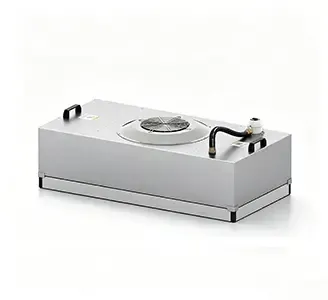
stainless steel explosion proof FFU
Explosion-proof FFU with stainless steel housing
Send inquiry Now
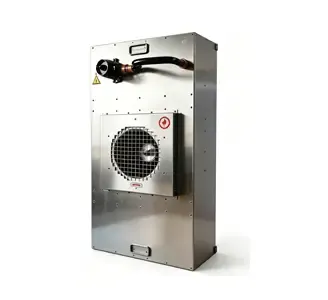
SS304 explosion proof FFU
Explosion-proof FFU made of SS304 material
Send inquiry Now
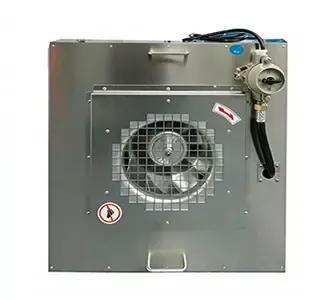
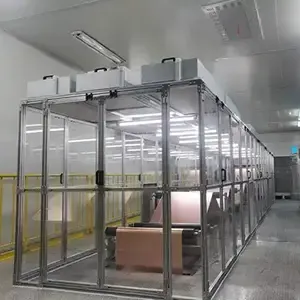
cleanroom explosion proof FFU
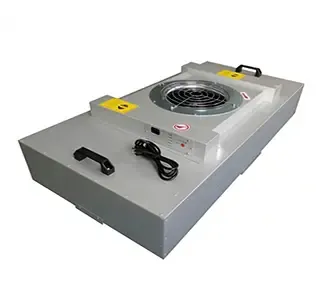
Explosion-proof FFU for cleanroom applications
Send inquiry Now
HEPA explosion proof FFU
Explosion-proof FFU equipped with HEPA filter
Send inquiry Now
0.3–0.5 ms airflow explosion proof FFU
0.3–0.5 m/s airflow explosion proof FFU
Explosion-proof FFU with 0.3–0.5 m/s air velocity
Send inquiry Now

Product Feature

Deiiang explosion-proof FFUs are engineered for hazardous cleanrooms and solvent or chemical areas, combining certified explosion protection, stable airflow, and high-efficiency filtration.

Certified Explosion Protection

Designed for explosive atmospheres, with explosion-proof motors and electrical components to reduce ignition risk in hazardous zones.

SS304 Stainless Housing

Robust SS304 shell withstands corrosion. Easy wipe-down, perfect for pharma, chemical and electronics cleanrooms.

HEPA 99.99% Filtration

Fitted HEPA reaches 99.99% efficiency on 0.3μm particles and fulfills the high demands of cleanrooms, especially those with explosion-proof FFU.

Stable 0.3–0.5 ms Airflow
Stable 0.3–0.5 m/s Airflow

Controlled face velocity ensures a constant and smooth airflow to safeguard products and processes.

Low Noise Operation
Low Noise Operation

The low noise fan design provides comfort for staff over extended periods of time, delivering a noise output of 55-63 dB.

High External Static Pressure

Our products are able to maintain reliable airflow with ductwork, grilles and loaded filters. External static pressure up to 190 Pa.

Flexible DC  AC Options
Flexible DC / AC Options

Choose DC or AC motors for your project, in order to meet specific requirements or to increase energy efficiency.

Multiple Size & Air Volume

Airflow spans 500–2000 m³/h. Standard sizes suit ceiling grids and straightforward production line upgrades.

ABOUT

Learn More About Deiiang Explosion-Proof FFU

Aerial view of Deiiang Company
SCROXWAIPgU

Certificate

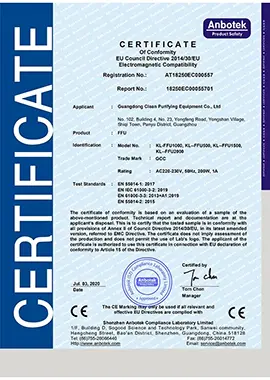
Deiiang™ FFU CE-Certification

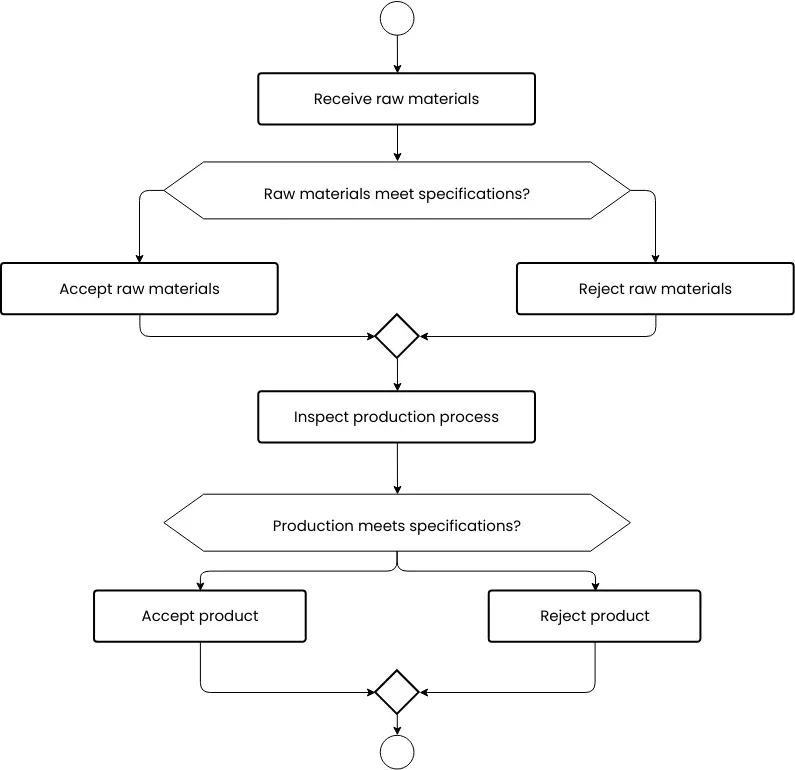
Deiiang Explosion-Proof FFU Quality Control Flowchart

traffic-cone-quality-control-flowchart.webp

Response within 24 hours

Technical Resources

Total 0 resources

Industry Applications

Pharma Hazardous Compounding

Pharma Hazardous Compounding

The Explosion-Proof FFU, while maintaining steady ISO cleanroom standards, also satisfies GMP requirements and explosion safety requirements for weighing hazardous material and for solvent-based processing.

Send inquiry Now
Chemical & Petrochemical Plants

Chemical & Petrochemical Plants

The Explosion‑Proof FFU is designed to provide clean air for solvent stations and for areas such as drum loading areas. The unit is able to reduce the risk of ignition and complies with regulations such as ATEX and IECEx zone regulations.

Send inquiry Now
Battery & New Energy Lines

Battery & New Energy Lines

Explosion-Proof FFU sustains 0.3–0.5 m/s airflow in mixing and coating sections. Essential for environments with flammable powders and solvents.

Send inquiry Now
Paint & Coating Workshops

Paint & Coating Workshops

Working within strict fire standards, Explosion-Proof FFU optimizes spraying conditions. It boosts surface finish in VOC-heavy coating spaces.

Send inquiry Now
Laboratories & Research Centers

R&D Labs & Pilot Plants

Our Compact Explosion-Proof FFU is easy to integrate into your lab or into your trial equipment. It is perfect for testing of unknown flammable dust or vapors in your formulas.

Send inquiry Now
Medical & Diagnostic Production

Medical & Diagnostic Production

The Explosion-Proof FFU keeps clean production areas using alcohols and disinfectants. It fulfills the requirements for hazardous areas as well as for audits.

Send inquiry No

How to Work With Us

Requirements Consultation

Submit Requirements

Provide your site dimensions, required ISO class, and industry-specific needs (GMP, ESD, etc.) to our experts.

Technical Proposal

Custom Technical Proposal

Receive a detailed design proposal within 24 hours, including airflow strategies, material lists, and transparent pricing.

Precision Manufacturing

Modular Production

We manufacture your modular panels, HVAC units, and FFUs with strict QC to ensure full compliance with ISO 14644 standards.

Installation & Validation

Global Shipping & Setup

Fast global logistics followed by onsite installation guidance and performance validation to get you operational quickly.

The difference between Explosion‑Proof FFU and Standard Cleanroom FFU

Explosion‑Proof FFU
Explosion-Proof FFU
VS
Standard Cleanroom FFU

FFUs designed to be explosion-proof or for a standard cleanroom both filter air. However, they are designed to deal with different types of risks. Explosion-proof FFUs prevent ignition in presence of flammable substances, while standard cleanroom FFUs are only designed to remove particles in safe areas.

Explosion-Proof FFU

  • Main purpose: Areas with flammable gases, solvents or explosive dust to prevent any sparks which may create a hazardous atmosphere.

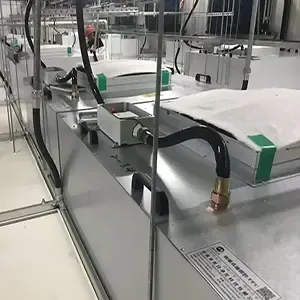
  • Construction: The motor, wiring, and junction box are explosion‑protected so that even in a fault condition they are far less likely to act as an ignition source.

Standard Cleanroom FFU

  • Main purpose: Electronics, pharma, hospitals, and labs with clean air requirement and no presence of explosive vapors or combustible dusts.

  • Cost & efficiency: Usually cheaper, lighter, and more energy‑efficient because there is no explosion‑proof structure. If you just need high‑grade clean air with no explosion risk, a standard FFU is the more economical choice.

Customer feedback reflects our value—take a look at what our customers say about our products and services.

We recently installed Deiiang explosion-proof FFUs in our solvent handling rooms. The commissioning was very straightforward and the full documentation was provided. The safety team were also very impressed with the quality of the build and the wire work.

Daniel K., Project Engineer, Chemical Plant (Germany)

The stainless steel Explosion-Proof FFU units fit perfectly into the ceiling grid. Airflow is stable, noise is acceptable, and the SS304 finish is easy to wipe down after construction.

Wang Hui, Cleanroom Contractor (China)

Deiiang cleanroom Explosion-Proof FFU modules are installed above our hazardous compounding area. The explosion proof FFU modules provide very stable particle counts and pressure readings.

Laura P., QA Manager, Pharma (Italy)

For our coating line we selected the explosion proof FFU’s operating with airflow 0.3–0.5 m/s. Uniform velocity is generated in the work zone. Clear labels and EX markings are appreciated by the team.

Tom S., EHS & Facilities, Battery Plant (USA)

Low noise Explosion-Proof FFU units are doing well in our control room. They keep the area clean, comply with the requirements for hazardous areas, and replacing filters is easy for the technicians.

Mohammed A., Maintenance Supervisor, Oil & Gas (UAE)


Frequently Asked Questions (FAQ)
When would I need an Explosion‑Proof FFU over a normal FFU?

You need an Explosion‑Proof FFU when you work in a hazardous area, which is officially designated as such, for example a Zone 1/2 area or a Class I/II area, Division 1/2, according to IEC 60079, ATEX or NFPA guidelines. This would apply to a solvent dispensing room, a battery coating line, a chemical weighing and mixing room, etc. API, ink production areas, etc. are also possible. Note that in a room designated by your safety engineer as a hazardous area, a normal FFU would not be acceptable.

Which certifications should an Explosion‑Proof FFU have?

Confirm room dimensions, target ISO standard and required Air Changes per Hour (ACH) for your particular application.

What filtration levels can a Deiiang Explosion‑Proof FFU provide?

We provide HEPA filters (99.97% @ 0.3 μm, e.g. ISO 4, ISO 5) or ULPA filters (up to 99.999% @ 0.1 μm, e.g. ISO 3, GMP class 5 and 6) in our Explosion-Proof FFU. The special design of fan and electrical parts affects the overall design of the Explosion‑Proof FFU, but the filtration performance is on the same level as for our cleanroom FFUs, which are provided with factory test reports for IQ/OQ (Installation, Qualification and Performance) testing and third party validation.

How do I size and select the right Explosion‑Proof FFU model?

Confirm the room dimensions, target ISO standard, and required Air Changes per Hour (ACH) for your application. We then calculate the required unit airflow and total quantity of air required to meet your application requirements (typically averaging 0.3–0.5 m/s or 1.1–1.9 ft/s average face velocity). The required external static pressure, hazardous zoning, and power requirements can then be used to select the most suitable motor, housing material (SS304/SS316), and control options. Please provide the layout, P&ID, and relevant hazard classification documents to Deiiang, and we can complete the required sizing together.

What housing materials are recommended for Explosion-Proof FFU?

For most pharmaceutical and fine-chemical applications, the cleanability of our Explosion-Proof Stainless Steel Fan Fixtures made from SS304 material is optimal while also being cost efficient. In very aggressive or coastal applications, or where strong disinfectants and/or very corrosive vapors are present, SS316 would be recommended.

How are Explosion-Proof FFU powered and controlled in a hazardous area?

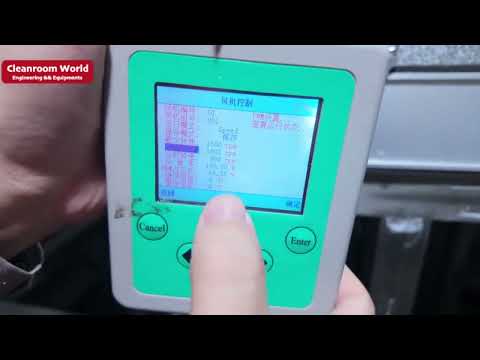
Explosion-Proof FFU can run off typical industrial voltages (i.e. 220–480 V, 50/60 Hz). Local or BMS/SCADA control is possible. Within hazardous zones explosion‑proof or intrinsically safe components can be used as necessary. Non‑rated control equipment is typically located outside of the hazardous area where possible. Speed control, alarm feedback and status signals are included and designed in line with customer’s electrical design and local codes as applicable.

What maintenance and documentation do Explosion‑Proof FFUs need?

The routine maintenance of explosion-proof Fixed Frame and Laminar Flow Cabinets comprises of changing the filters, checking the airflow, checking of the gaskets, fasteners and cable connections for any possible damage. The above-mentioned verifications and inspections are carried out as per the internal Standard Operating Procedures (SOPs) of the Deiiang Fixed Frame and Laminar Flow Cabinets and as per the international standards such as ISO 14644 (Cleanrooms) and IEC 60079 (Explosion proof equipment). Deiiang supports maintenance, quality assurance and safety personnel by providing datasheets, explosion-proof certificates, wiring diagrams and test reports from the factory for the equipment throughout its lifetime.

How to choose Explosion-Proof FFU?

1. Confirm Hazardous Area Classification

Zone classification: Is your project classified as Zone 0, 1 or 2, or as Class I or II areas? Which gas/dust groups apply in each space, and what explosion‑proof rating is required? This will define which motor types and electrical enclosures are allowed for your Explosion-Proof FFUs.


2. Define Cleanliness & Filtration Level

Outline the required cleanliness (ISO/GMP class) and refer to relevant test methods. Select HEPA (99.97% @ 0.3 μm) or ULPA (99.999% @ 0.1 μm) for the Explosion-Proof FFU, and make sure leak‑test evidence and third‑party reports are available to support FFU qualification.


3. Match Airflow & Static Pressure

Calculate the CFM/m³/h per Explosion-Proof FFU from room area and required air changes per hour (e.g. room area × air changes / number of FFUs). Check external static pressure in ductwork, grilles, and filter boxes, then choose an FFU whose adjustable blower can keep 0.3–0.5 m/s face velocity at those pressures.


4. Select Housing Material & Corrosion Resistance

SS316 is recommended where aggressive cleaning agents or corrosive vapors are present. SS304 is the usual choice for pharma and chemical cleanrooms. For any Explosion-Proof FFU, focus on weld quality, surface finish, and cleanability of the stainless‑steel housing.


5. Choose Motor & Control Mode

Select AC, DC/EC, or specialized motors according to energy efficiency, noise level, and control needs. Decide whether each Explosion‑Proof FFU will be managed by local manual control, local automatic control, or integrated BMS/SCADA control for single units and groups.


6. Check Power Supply & Integration

Verify site power (e.g. 110–480 V, 50/60 Hz), panel design, and cable routes. Confirm Explosion-Proof FFU dimensions for ceiling grids, equipment tops, and retrofit spaces (for example 2' × 2', 2' × 4', or customized sizes) to simplify installation.


7. Evaluate Documentation & Compliance Support

Adequate documentation for an Explosion‑Proof FFU should include datasheets, explosion‑proof certificates, wiring diagrams, FAT reports, and IQ/OQ support. This level of detail makes design reviews, safety approvals, and audits much easier for your team.

Home

PHONE

Email

Inquiry