wap_menu MENU
X
Trusted by
companies like
FLIR Logo 1
electrolux Logo 3
abb Logo 4
bmw Logo 5
i-dent Logo 6
SINOPEC Logo 7
CATL Logo 8
INOVANCE Logo 9
EVE Logo 10
HONDA Logo 11
FOXCONN Logo 12

Sterile Room Products | Clean, Controlled & Contamination-Free

Sterile Room Core Specifications
ISO 14644 Cleanliness ClassificationGMP / cGMP Compliance
HEPA / ULPA Filtration EfficiencyTemperature & Humidity Control
Air Change Rate (ACH)Room Pressure Differential
Airborne Particle ControlMicrobiological Contamination Control
Sterilization & Disinfection CompatibilityCorrosion-Resistant Surface Materials

Fastest, Most Comprehensive Sterile Room Manufacturer.

25+ Years,       700M Parts,
300K Clients
100% of Fortune 100 Auto Companies.
100
Auto Leader.

Applicable Industries and Scenarios

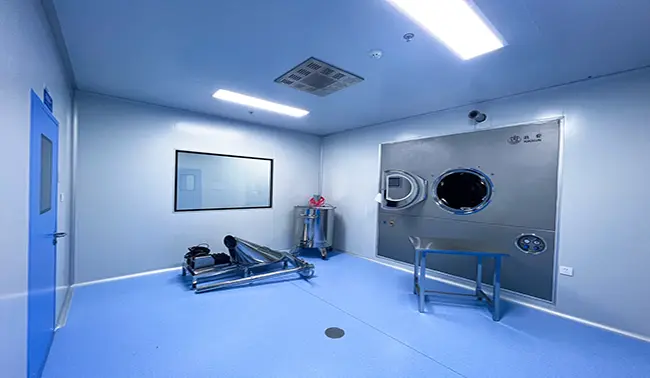
Applicable to pharmaceutical aseptic and non-sterile manufacturing, biological products, cell and gene therapy, aseptic filling, solid dosage forms, laboratories, and supporting areas. Typical grade mapping: EU GMP Grade A/B/C/D ↔ ISO Class 5/7/8. Final classifications and control strategies should be determined through process-specific risk assessment and applicable regulatory requirements.

Microbial contamination icon

Microbial & Cross-Contamination

Viable microorganisms may enter sterile areas through personnel, raw materials, equipment, surfaces, or airflow. Without effective zoning, filtration, and contamination-control measures, microorganisms and cross-contaminants can compromise product sterility, patient safety, and batch release.

Cleaning validation icon

Cleaning & Disinfection Validation

Detergent residues, disinfectant residues, microorganisms, or traces from previous batches may remain on walls, floors, equipment, and other critical surfaces. Inadequate validation can result in ineffective decontamination, unreliable sampling results, regulatory observations, and production delays.

Personnel gowning icon

Personnel Behavior & Gowning

Personnel are a major source of particles and microbial contamination in sterile rooms. Improper gowning, unnecessary movement, incorrect material transfer, or poor aseptic technique can disrupt airflow and release contaminants into critical processing zones.

Data integrity icon

Environmental Monitoring & Data Integrity

Sterile-room operations require reliable monitoring of viable particles, non-viable particles, pressure, temperature, and humidity. Monitoring gaps, manual entry errors, missing audit trails, or delayed alarms can obscure environmental excursions and create compliance risks under GMP and 21 CFR Part 11 requirements.

HVAC icon

HVAC & Pressure Differential Drift

Unstable airflow, filtration performance, or pressure differentials between adjacent rooms may cause airflow reversal and contaminant ingress. Even temporary deviations can compromise cleanroom classification, weaken sterile barriers, and result in investigations or batch rejection.

Raw material bioburden icon

Raw Material & Component Bioburden

Raw materials, packaging components, garments, tools, and single-use systems may introduce microorganisms, endotoxins, or particles into controlled areas. Risk-based supplier qualification, incoming inspection, controlled transfer, and appropriate microbiological testing are essential for reducing contamination risks.

Our Sterile Room Solution

Sterile HVAC & HEPA Filtration

Sterile HVAC & HEPA Filtration

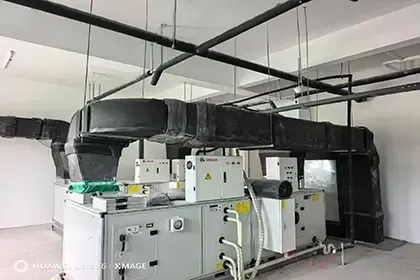
Deiiang’s engineered solutions of HVAC systems and filtration systems aim to maintain constant conditions in a sterile room. These solutions include control of airflow, terminal HEPA filtration and precise control of environment, thereby preventing large amount of airborne particles and microbial contamination in facilities for production of pharmaceuticals, biotechnology, health care and aseptic processing.

Learn More
  • Multi-stage filtration with terminal H13/H14 HEPA filters, providing at least 99.97% efficiency at 0.3 μm

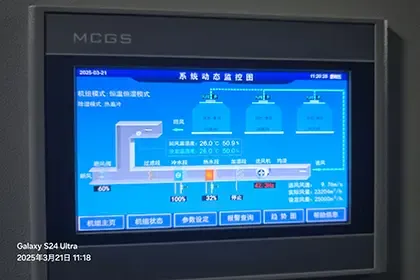
  • Precise temperature, relative humidity, and pressure-differential control with real-time alarms

  • Support for Unidirectional or mixed airflow designs for different rooms and different levels of process risk.

  • Airflow visualization, HEPA integrity testing, air-change verification, and system commissioning support.

Sterile HVAC & HEPA Filtration
Hygienic Materials & Aseptic Construction

Hygienic Materials & Aseptic Construction

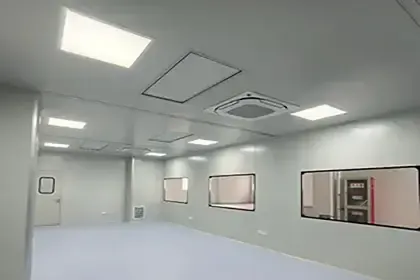
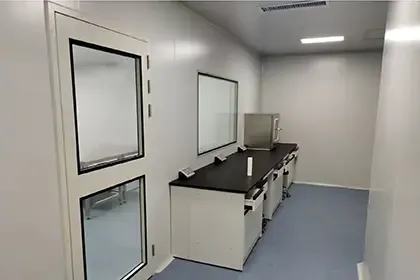
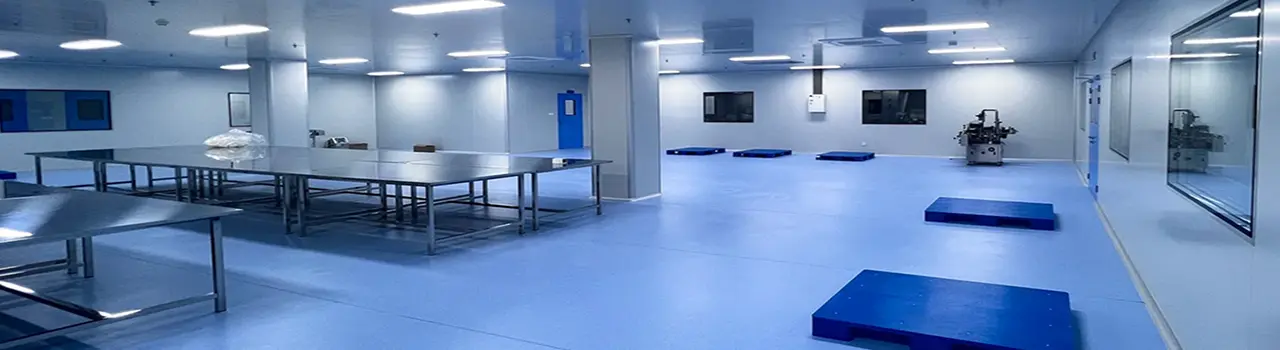
Deiiang applies hygienic construction principles to create smooth, sealed, and easy-to-disinfect sterile-room interiors. Walls, ceilings, floors, doors, and service penetrations are engineered to minimize particle accumulation, microbial growth, and inaccessible cleaning areas while supporting long-term operation under repeated sanitation cycles.

Learn More
  • Non-shedding wall and ceiling panels with smooth, corrosion-resistant, and disinfectant-compatible surfaces

  • Seamless flooring with coved wall-to-floor transitions to eliminate dirt- and microorganism-trapping joints

  • Flush-mounted doors, windows, lighting, and utility connections for easier cleaning and disinfection

  • Airtight panel joints and sealed penetrations designed to maintain pressure integrity and aseptic performance

Hygienic Materials & Aseptic Construction
Personnel, Material Flow & Airlock Control

Personnel, Material Flow & Airlock Control

Deiiang develops personnel and material-flow strategies that reduce cross-contamination risks throughout sterile operations. Our layouts incorporate controlled zoning, gowning rooms, airlocks, pass boxes, and interlocking access systems to maintain separation between clean and less-clean areas.

Learn More
  • Segregated personnel and material routes designed to prevent crossover between clean and contaminated flows

  • Gowning and de-gowning areas arranged in accordance with the required cleanliness transition sequence

  • Interlocked personnel airlocks, material airlocks, and pass boxes to protect room pressure and sterility

  • Clearly defined clean, transitional, and support zones with controlled access and operating procedures

Personnel, Material Flow & Airlock Control
Environmental & Microbial Monitoring

Environmental & Microbial Monitoring

Deiiang provides integrated environmental monitoring systems for continuous oversight of critical sterile-room conditions. The system helps operators track particles, pressure, temperature, humidity, and microbiological risks while maintaining reliable records for quality review, deviation investigation, and regulatory audits.

Learn More
  • Continuous monitoring of airborne particles, room pressure differentials, temperature, and relative humidity

  • Viable monitoring strategies covering active air sampling, settle plates, surface sampling, and personnel monitoring

  • Configurable alarms, trend analysis, and real-time dashboards for rapid identification of environmental deviations

  • Secure data recording, audit trails, report generation, and BMS integration to support GMP data integrity

Environmental & Microbial Monitoring.webp
Contamination Control & Sterilization

Contamination Control & Sterilization

Deiiang develops risk-based contamination-control strategies for routine sterile-room operation, cleaning, disinfection, and decontamination. Our solutions combine validated procedures, compatible equipment, and effective microbial-control measures to protect critical processes and reduce contamination-related production risks.

Learn More
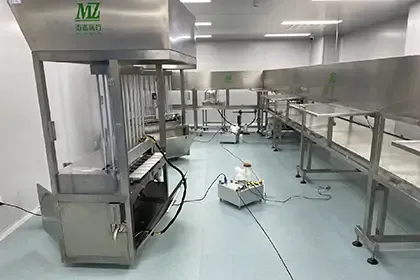
  • Validated cleaning and disinfection programs using rotating disinfectants and sporicidal agents where required

  • Equipment and room layouts designed to minimize hard-to-clean areas and support repeatable sanitation procedures

  • Optional VHP or other room bio-decontamination systems for controlled microbial reduction

  • Contamination Control Strategy support covering cleaning validation, recovery testing, operator practices, and ongoing verification

Contamination Control & Sterilization.webp

Technical Resources

Total 0 resources

Fastest, Most Comprehensive Sterile Room Manufacturer.

25+ Years,       700M Parts,
300K Clients
100% of Fortune 100 Auto Companies.
100
Auto Leader.

Sterile Rooms are specialized controlled environments designed to minimize microbial, particulate, and cross-contamination during the production of sterile pharmaceuticals, biologics, medical devices, and other contamination-sensitive products. These facilities integrate HEPA filtration, controlled airflow, pressure differentials, environmental monitoring, and validated cleaning procedures to protect product sterility, ensure patient safety, and comply with GMP, ISO 14644, and relevant regulatory requirements.

Learn more about Deiiang cleanrooms

Frequently Asked Questions (FAQ)
What is a sterile room?

A room in which all contaminating organisms are excluded is known as a sterile room. Such a room is used for manufacturing process in which products are required to be free from adventitious microorganisms. Usually, pharmaceutical and allied products are manufactured under such conditions.

What are the factors which need to be maintained in a sterile room?

Several factors have to be controlled in a sterile room. They are as follows:

  • Quality of air: Level of particulate matter and other contaminants in the air has to be maintained at acceptable level.

  • Surface contamination: All surfaces in the room should be free from contaminating organisms.

  • Equipment and utensils: All equipment and utensils should be free from contaminating organisms.

What are the important elements of a sterile room?

Several elements are incorporated in a sterile room to achieve and maintain sterility. These elements are as follows:

  • Air filtration: HEPA or ULPA filters are used to remove contaminating organisms from air.

  • Maintaining a balance: Various parameters such as temperature, humidity and pressure have to be maintained at a level which prevents contamination.

  • Sterilization: Achieving and maintaining sterility of equipment and utensils used in the room.

What are the important elements of aseptic technique?

Several elements combine to achieve a sterile environment. These are as follows:

  • Management of air: Removal of airborne contaminants.

  • Sterilization: Achieving and maintaining sterility of equipment and environment.

  • Personnel: Personnel should be adequately trained in aseptic techniques and dress code should be strictly enforced.

What is the difference between a clean room and a sterile room?

Both clean rooms and sterile rooms are specially designed to keep the environment free from contaminants. The difference is in the type of contaminants controlled for. Clean rooms control for larger particles and smaller and larger microorganisms while a sterile environment is one that is free of all microorganisms. For example, the semiconductor industry uses clean rooms, while pharmaceutical manufacturing that involves the preparation of injectable drugs uses sterile rooms.

What are some examples of industries that use sterile rooms?
  • Healthcare: Infection control during surgical procedures; prevention of cross-contamination during the handling of infectious materials.

  • Pharmaceutical: Production of sterile drug products.

  • Biopharmaceutical: Cell-culture based manufacturing.

  • Food: Processing of low moisture food products.

What are some methods of air management in a sterile room?

Air management is important in maintaining a sterile environment. Air is filtered using HEPA filters and is then directed to the room in a unidirectional or horizontal flow. Positive pressure is provided to ensure that air flows from a clean area to a less clean area.

What is the relationship between the control of air pressure and the containment of contaminants in a sterile room?

The relative pressure of a given space is determined by the relationship of that space to adjacent rooms. For example, if area A has a lower pressure relative to area B, then air will flow from area B to area A. Relative to a sterile environment, area A is less contaminated than area B. In a sterile room, it is important to keep the pressure lower than the adjacent room to ensure that the microorganisms do not enter the sterile area.

What is the recommended frequency of cleaning a sterile room?

Because spores can survive for long periods of time, daily cleaning of a sterile room is required. Critical areas, which include the surfaces of work areas, should be cleaned on a weekly basis. Monthly cleaning of all areas of the room should be performed. Routine inspections and audits should be performed to ensure that the standards and procedures for cleaning the room are being met.

What are the by-products of maintaining a sterile room?

Most difficulties with maintaining a sterile room are caused by the inability to control the outside environment. This is typified by spores or other undesirable organisms that may enter a sterile room. Personnel must be trained to strictly adhere to the procedures for gowning and the use of equipment. Failure to adhere to these procedures may result in contamination. Equipment and system failures may occur despite the best efforts at planned and unplanned maintenance of the HVAC and air filtration systems.

Home

PHONE

Email

Inquiry