+86 13638632902
 Jason@cleanroomequips.com

 MENU
MENUcompanies like











How to Work With Us

Submit Requirements
Provide your site dimensions, required ISO class, and industry-specific needs (GMP, ESD, etc.) to our experts.

Custom Technical Proposal
Receive a detailed design proposal within 24 hours, including airflow strategies, material lists, and transparent pricing.

Modular Production
We manufacture your modular panels, HVAC units, and FFUs with strict QC to ensure full compliance with ISO 14644 standards.

Global Shipping & Setup
Fast global logistics followed by onsite installation guidance and performance validation to get you operational quickly.
Specifications and Models
Features and advantages
Application scenarios
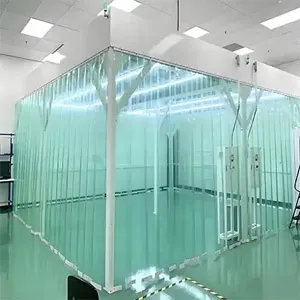
Semiconductor & Wafer Processing
Pain Point: Electrostatic discharge and sub-micron particles generated during wafer handling, probing, inspection and packaging can damage sensitive devices, attract contaminants and significantly reduce production yields.
Solution: Deiiang Anti-static Softwall Cleanrooms combine H14 HEPA filtration with ESD-safe PVC curtains featuring a surface resistance of 10⁶–10⁹ Ω. Grounded frames, static-dissipative flooring and optional ionizers create localized ISO 5–ISO 8 clean zones without costly hardwall construction.
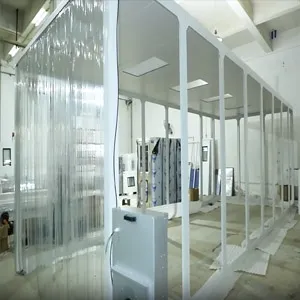
Electronics & PCB Assembly
Pain Point: Static electricity generated by operators, tools and packaging materials can cause immediate or latent damage to integrated circuits, printed circuit boards, sensors and other ESD-sensitive components.
Solution: Modular Deiiang Anti-static Softwall Cleanrooms provide static-dissipative curtains and flooring, equipotential bonding and dedicated ESD grounding. Optional ionizing bars maintain balanced charge levels, while HEPA-filtered airflow controls particles during assembly, testing, soldering and rework.
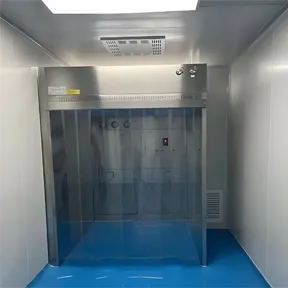
Lithium Battery & Energy Storage
Pain Point: Airborne particles and accumulated electrostatic charge can contaminate electrodes and separators, disrupt precision assembly and increase the risk of defects during battery cell production.
Solution: Deiiang Anti-static Softwall Cleanrooms create controlled local environments for electrode processing, cell assembly, inspection and packaging. ESD-safe enclosures, grounded structural frames and optional humidity control promote rapid static decay, while FFUs continuously remove airborne contamination.
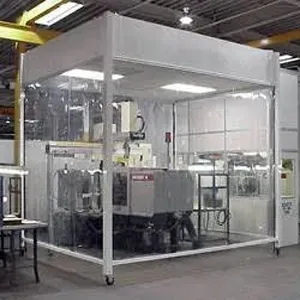
Precision Optics & Laser Technology
Pain Point: Electrostatic charge attracts fine particles to lenses, optical coatings, laser components and precision sensors, causing coating defects, alignment errors and inaccurate sub-micron measurements.
Solution: Deiiang Anti-static Softwall Cleanrooms use clear, non-yellowing ESD-safe PVC curtains and low-vibration EC/DC FFUs to provide a clean and stable processing environment. Optional ionizers neutralize residual static charge during coating, alignment, calibration and inspection.
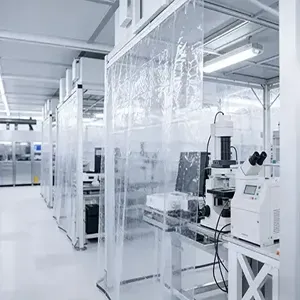
Medical Electronics & Precision Devices
Pain Point: Implantable electronics, diagnostic sensors and precision medical devices require simultaneous control of particulate contamination and ESD, while permanent cleanrooms are difficult to adapt to changing production lines.
Solution: Deiiang modular Anti-static Softwall Cleanrooms combine HEPA-filtered airflow, smooth non-shedding surfaces and integrated ESD protection. The enclosure can be expanded, reconfigured or relocated with minimal interruption and configured to support ISO 14644-1, FDA and GMP requirements.
Display, LED & Microelectronics Manufacturing
Pain Point: Dust attraction and electrostatic discharge during display-module, LED and microelectronic assembly can cause dead pixels, bonding defects, contamination and premature component failure.
Solution: Deiiang Anti-static Softwall Cleanrooms deliver uniform filtered airflow over assembly and inspection stations. Dissipative curtains, ESD flooring and grounded equipment control static accumulation, while the modular structure can be quickly adapted to production-line changes.
Aerospace & Defense Electronics
Pain Point: High-value avionics, navigation systems and defense electronics are highly sensitive to electrostatic discharge and particulate contamination during assembly, integration, testing and maintenance.
Solution: Deiiang Anti-static Softwall Cleanrooms establish localized ESD-protected clean zones around critical workstations. Grounded frames, static-dissipative materials and HEPA-filtered airflow protect sensitive assemblies without requiring disruptive permanent cleanroom construction.
R&D Laboratories & Pilot Production
Pain Point: Laboratories and pilot production lines often require temporary particle and ESD control, but permanent cleanroom construction is expensive, time-consuming and difficult to adapt to evolving projects.
Solution: Portable Deiiang Anti-static Softwall Cleanrooms can be rapidly installed, expanded and relocated. They provide reusable contamination-control zones with configurable cleanliness levels, integrated grounding and optional particle, humidity and static-voltage monitoring.
As-built inspection
As-built inspection for Anti-static Softwall Cleanrooms: verify specified ISO 14644-1 particle counts, HEPA filter integrity, airflow pattern and velocity, air change rate, differential pressure, temperature and relative humidity. Confirm ESD-safe curtain and flooring resistance, grounding continuity, equipotential bonding, static decay time and ionizer balance using calibrated instruments. Check sampling locations, smoke-flow visualization, enclosure seals, electrical safety and complete validation documentation.
Use calibrated particle, airflow and ESD test instruments
Stabilize the FFU and ESD systems for at least 24 h
Verify ISO 14644-1 particle counts at correct sampling locations and heights
Test HEPA integrity, airflow velocity, ACH and smoke-flow patterns
Measure curtain and flooring resistance against the specified ESD range
Confirm grounding continuity and equipotential bonding
Verify static decay time and ionizer balance at critical workstations
Record door, FFU, HVAC, humidity and occupancy conditions
Inspect curtain overlaps, enclosure seals and electrical safety
Repair and retest failures; document results, calibrations and approvals
FAQ
Deiiang Anti-static Softwall Cleanrooms can be designed for ISO 5–ISO 8 cleanliness classifications in accordance with ISO 14644-1. ESD-control measures can be specified and verified using applicable IEC 61340-5-1 and ANSI/ESD S20.20 principles. Final compliance depends on the approved design, operating conditions, validation scope and project-specific regulatory requirements.
ESD risks are controlled through anti-static PVC curtains, conductive or static-dissipative flooring, grounded metal frames, equipotential bonding and dedicated grounding points. Where required, ionizers can be installed at critical workstations. Typical project targets include surface resistance of 10⁶–10⁹ Ω, static decay time of no more than 2 seconds and ion balance within ±35 V, subject to the approved user requirement specification.
As-built testing can include airborne particle counting in accordance with ISO 14644-1, HEPA filter integrity testing, airflow velocity and air-change measurements, smoke-flow visualization, differential-pressure verification and temperature/RH monitoring. ESD testing can include curtain and flooring resistance, resistance-to-ground, grounding continuity, static decay and ionizer balance. Tests are performed with calibrated instruments, and project-specific reports can be supplied.
Deiiang Anti-static Softwall Cleanrooms can be configured for ISO Class 5, ISO Class 6, ISO Class 7 or ISO Class 8 applications. Fan filter units fitted with H13 or H14 HEPA filters are selected according to the required cleanliness level, room dimensions, process heat load and occupancy. Airflow quantity, FFU coverage and filter arrangement are engineered for each application rather than based on a single standard configuration.
Anti-static Softwall Cleanrooms are commonly used for semiconductor handling, PCB assembly, electronic component testing, display and LED production, lithium-battery processes, precision optics, aerospace components, medical electronics and research laboratories. The appropriate cleanliness and ESD-control levels are determined by component sensitivity, process risks and the customer’s quality requirements.
A typical design may maintain a temperature of 20–24°C, relative humidity of 45–60% and positive pressure of approximately 10–20 Pa. Actual setpoints depend on the process, local climate, personnel load and host HVAC system. Humidity control is especially important because very dry conditions can increase electrostatic charging, while excessive humidity may affect products and equipment.
Anti-static curtains and flooring should be cleaned with compatible, non-insulating products under a documented maintenance procedure. Grounding connections, curtain resistance, floor resistance-to-ground and ionizer performance should be inspected and tested at risk-based intervals. Damaged curtain strips, loose bonding conductors and saturated pre-filters should be repaired or replaced promptly, with all maintenance and retest results recorded.
Yes. Depending on the agreed project scope, Deiiang can provide approved drawings, equipment specifications, material data sheets, HEPA filter certificates, particle-count reports, airflow and pressure records, ESD test results, instrument calibration certificates and operation and maintenance manuals. Documentation packages can also include installation records, deviation and corrective-action records, and final handover summaries to support internal or third-party audits.
Yes. The modular structure can be customized for room dimensions, cleanliness class, FFU quantity, curtain configuration, ESD flooring, lighting, ionization, access control and monitoring requirements. Subject to site conditions and engineering review, the cleanroom can also be relocated, expanded or reconfigured as production requirements change. Requalification is recommended after changes that may affect airflow, cleanliness or ESD performance.
Deiiang provides project-specific cleanroom engineering that integrates particle control, airflow management and ESD protection. Each system can be supported by documented design criteria, traceable components, installation guidance, calibrated performance testing and maintenance recommendations. Customers should review the proposed technical specifications and validation scope against their process risks, applicable standards and regulatory obligations before approval.
Learn More About Deiiang Softwall Cleanrooms
- Video
- Data Sheet
- Certificates & Gallery
- Quality Control
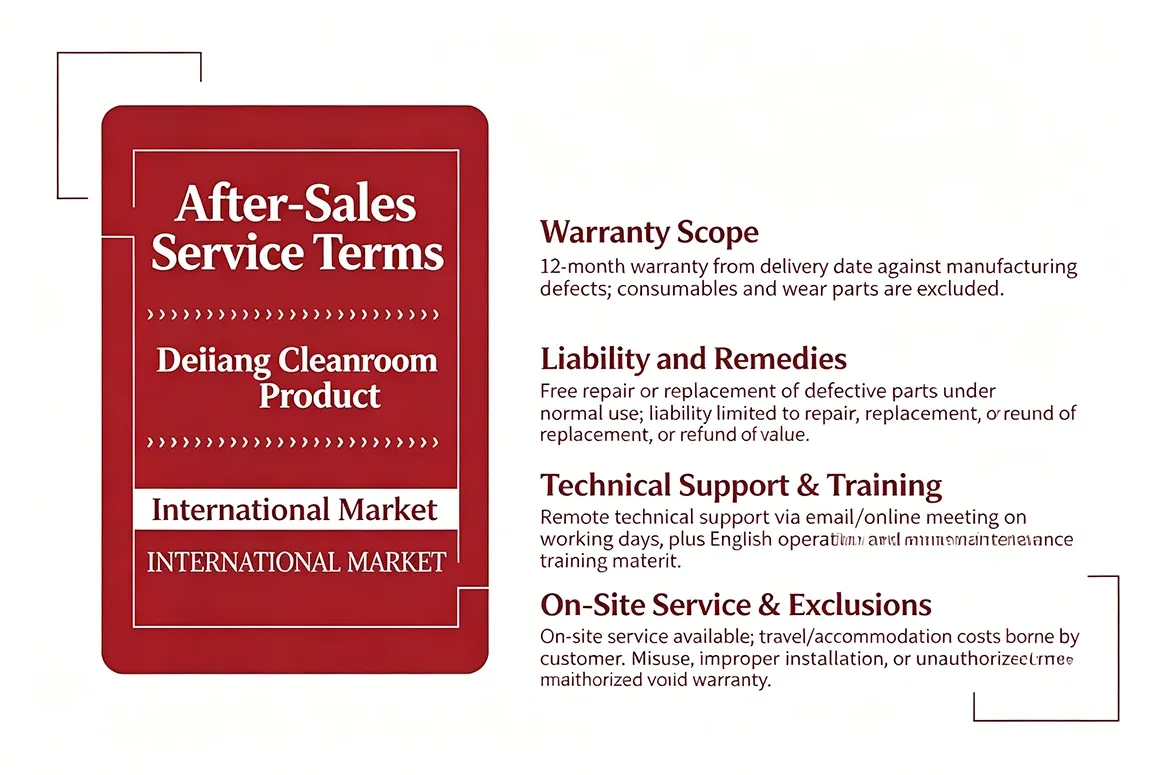
- After-Sales Service
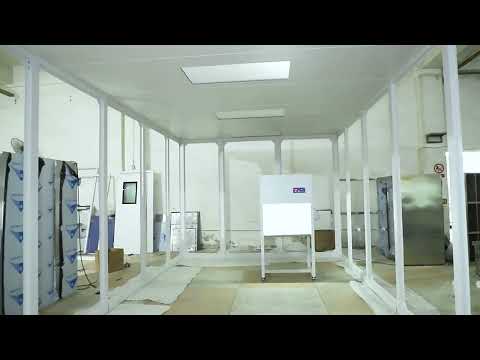
Ventilation Times (ACH)
| ISO Class | ACH (Air Changes Per Hour) |
|---|---|
| ISO 3 | 360 - 540 |
| ISO 4 | 300 - 540 |
| ISO 5 | 240 - 480 |
| ISO 6 | 50 - 60 |
| ISO 7 | 30 - 40 |
| ISO 8 | 15 - 25 |
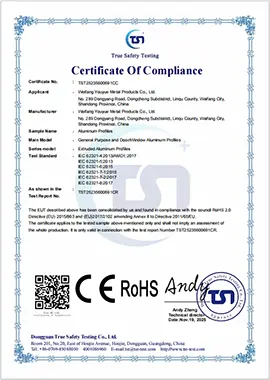
Aluminum Profiles CE
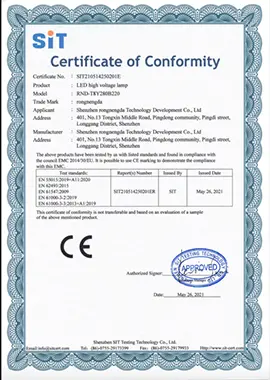
LED high voltage lamp CE
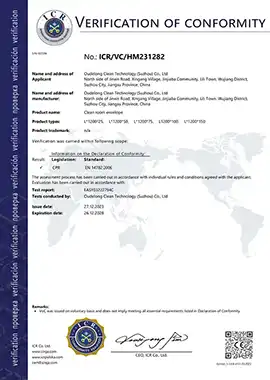
Cleanroom envelope CE
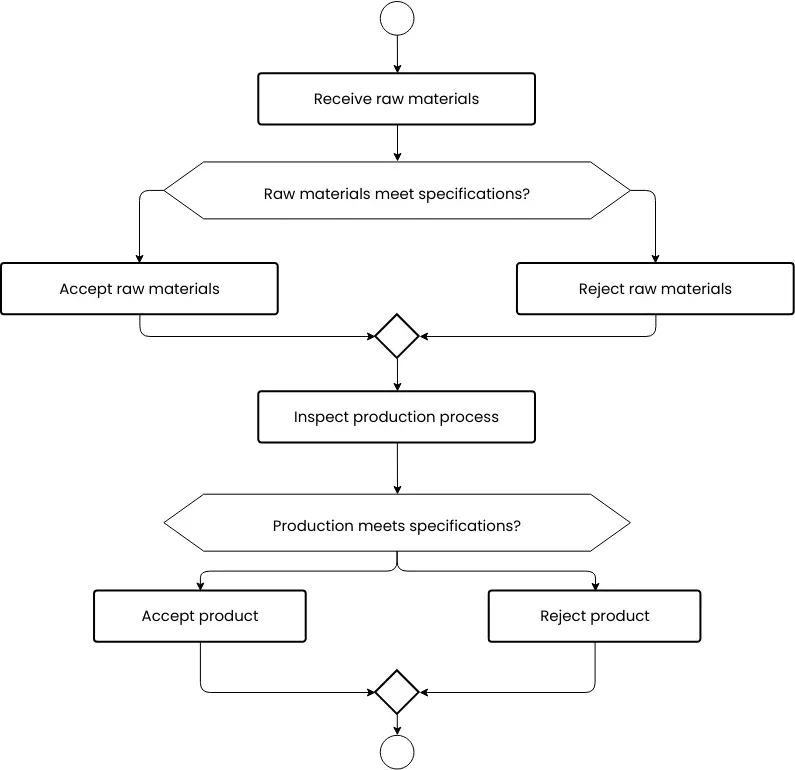
Deiiang Softwall Cleanrooms Quality Control Flowchart