+86 13638632902
 Jason@cleanroomequips.com


 MENU
MENUX
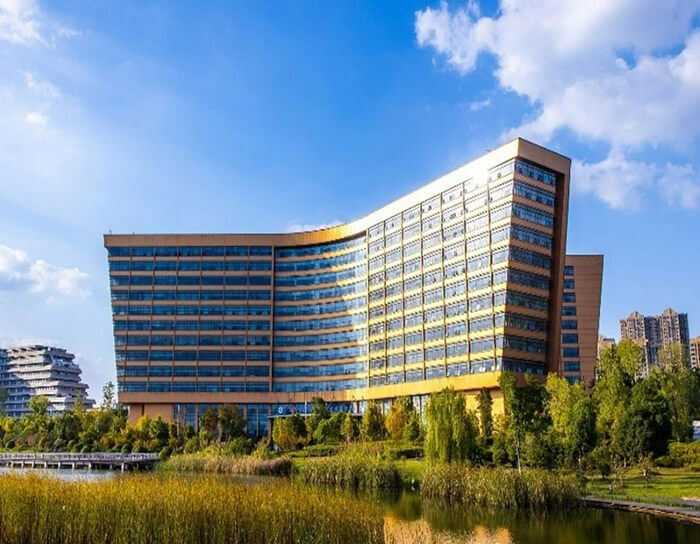
Deiiang™ undertakes the construction of the Enshi Luxshare Precision Industrial Park Electronic Connectors and Intelligent Components Class 10,000 Clean Booth Project, with a total construction area of approximately 7,000 square meters. It serves as the core capacity carrier for the park's high-end precision manufacturing for consumer electronics and automotive electronics. The project adopts a "background class 10,000 + localized class 1,000" clean classification scheme, rapidly adding capacity through a large-area clean booth within an existing plant while meeting the stringent control requirements for micro-particles, temperature, and humidity in precision manufacturing. Through full-process BIM simulation, zoned isolation construction, and modular installation, a high-standard delivery with "zero interference" to the active production facility was achieved, helping Luxshare Precision improve process yield and capacity flexibility for products such as camera modules and precision connectors.

Enshi Luxshare Precision is an important production base of Luxshare Precision Industry Co., Ltd. in Central China, specializing in the R&D and manufacturing of high-end precision components such as electronic connectors, intelligent components, and camera modules. As a globally leading electronic manufacturing service provider, Luxshare Precision has extremely high requirements for the cleanliness, stability, and intelligence level of its production environment. Enshi Luxshare Precision is committed to providing high-quality, high-reliability precision components to leading customers in consumer electronics, automotive electronics, and other fields through continuous technological investment and lean manufacturing.
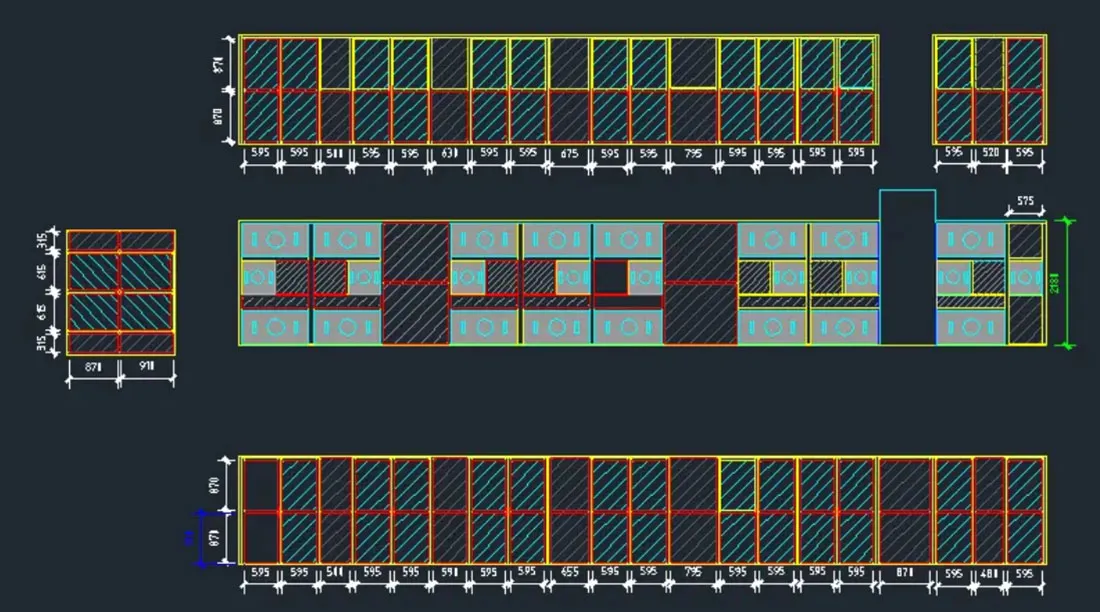
The Enshi Luxshare Precision Electronic Connectors and Intelligent Components Class 10,000 Clean Booth Project is located within the already operational Enshi Luxshare Precision Industrial Park, with a total construction area of approximately 7,000 square meters. It is the core expansion project for the park's high-end precision manufacturing for consumer electronics and automotive electronics. The project planning phase faced three major challenges: adding clean capacity within an existing plant, minimizing interference with active production lines, and meeting high-precision environmental indicators (main area class 10,000, core workstations class 1,000, temperature and humidity 22±2℃/45%–65%). The Deiiang team conducted multiple on-site surveys jointly with Luxshare's process, equipment, and quality departments, adopting a planning approach of "existing plant condition constraints + process requirements backward deduction." They meticulously calculated floor height, loads, beam clearance, power and cooling capacity margins, and delineated the layout of class 10,000 clean areas and class 1,000 ultra-clean workstations according to the process requirements of different product lines such as camera modules and precision connectors, while reserving space for future line expansion.
Core challenge: Add clean capacity inside an already operational plant without disrupting existing lines. Three pain points: ① interference minimization; ② strict environment specs (class 10k main area, local class 1k at critical stations, 22±2°C, 45‑65% RH); ③ balance high cleanliness & stability with investment/operation cost.
Approach: “Existing building constraints + process‑driven deduction” — multiple site walks with Luxshare’s process, equipment & QA teams. Calculated ceiling height, loads, beam clearance, power & cooling margins; pre‑verified FFU layout, electrical trays, process piping. Zoned the clean area according to camera module & precision connector requirements, forming a “class 10k background + local class 1k” scheme, with reserved interfaces for future line expansion.
Outcome: A clear roadmap that respects the existing structure while enabling high‑grade clean production.
Core principle: “Yield‑centric, stability as foundation, maintenance‑friendly as constraint.” For dust‑sensitive processes (camera modules, connectors), we adopted “background class 10k + local vertical‑flow class 1k” — FFU + HEPA modules for the 10k shell, plus vertical laminar flow hoods over critical stations to create ISO 6 zones.
Technical difficulty: Limited beam height & varying equipment heights — risk of airflow short‑circuit and dead zones. We used BIM to simulate FFU arrangement, filter sizes, equipment heights, and suspension points; “corridor section” analysis helped balance layout and airflow without major structural changes.
Result: Optimized unidirectional flow from ceiling to critical workstations, ensuring low‑turbulence, high‑cleanliness zones exactly where needed.
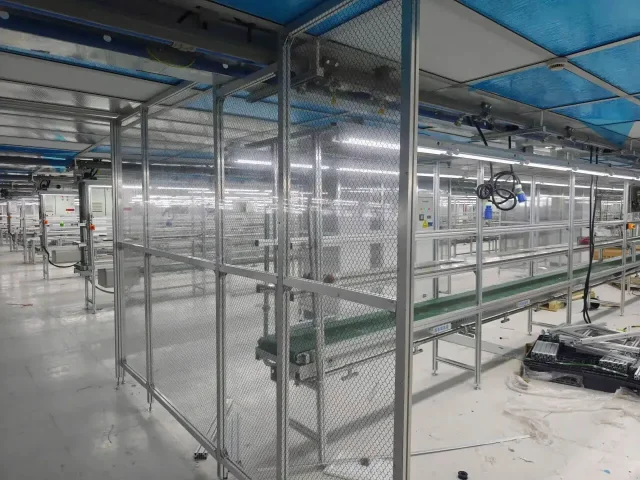
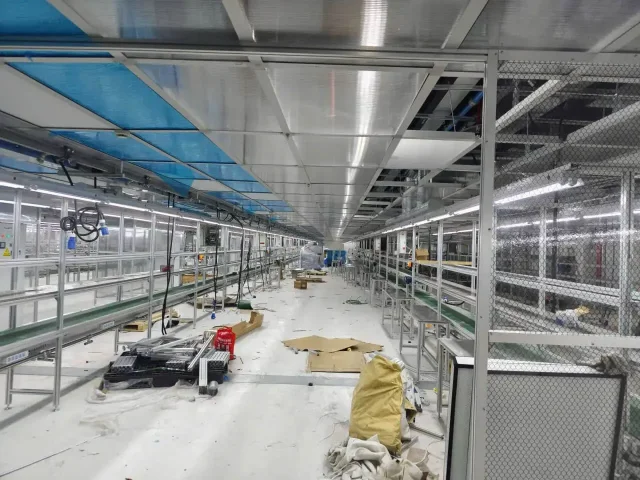
Challenges: Inside a live factory — noise/dust/personnel control; multiple disciplines (steel structure, clean panels, FFU/HEPA, HVAC ducts, electrical trays, process piping, ESD, monitoring) interweaving in the same space.
Strategy: “Zoned isolation, night shifts, mock‑up first, BIM‑guided.” Physical barriers & separate access; strict dust control; key works scheduled at night/weekends. BIM clash detection defined installation sequence and maintenance space beforehand. Mock‑ups for panel joints, HEPA frames, flooring, anti‑condensation — approved by Luxshare before mass rollout.
Modular approach: FFU & lighting installed in standardized modules with clear tagging and pre‑planned cabling, making future maintenance and replacement efficient.
Result: On‑time delivery with zero production interruption, meeting all cleanliness and stability targets.
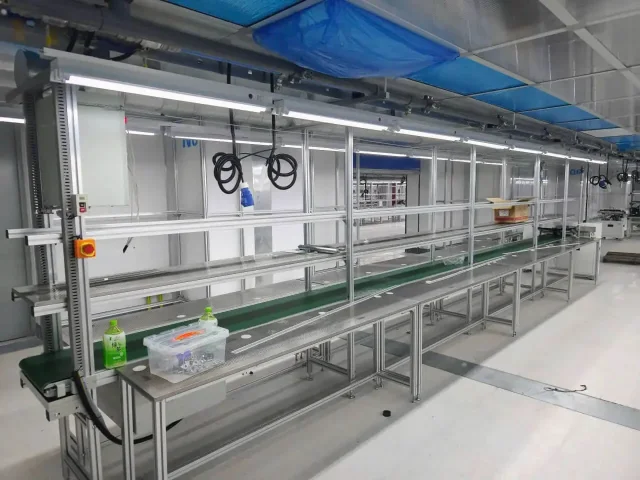
Post‑construction verification: All cleanliness classes (ISO 7 background, ISO 6 local) achieved; temperature 22±1.5°C, humidity 50‑60% RH. Production yield improved by 3.2% in first month. The facility now serves as a benchmark for high‑precision electronics manufacturing in central China.