+86 13638632902
 Jason@cleanroomequips.com


 MENU
MENUcompanies like











Need a Five-in-One Particle & Gas Meter solution?
Deiiang provides professional Five-in-One Particle & Gas Meter solutions
Specifications & Models
Three Count Channels, Two Mass Channels, One Body
Three Count Channels, Two Mass Channels, One Body
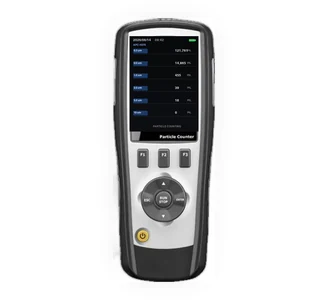
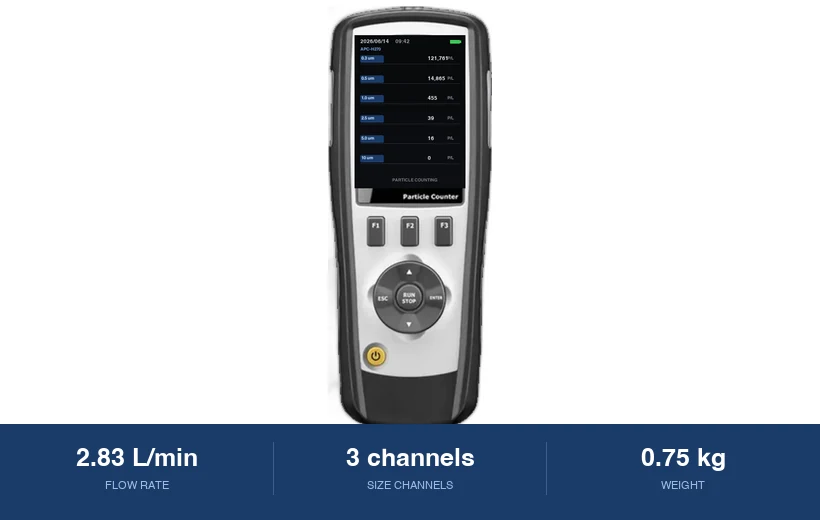
Not every airborne problem is particulate. The H270 puts three particle channels and two mass channels alongside electrochemical formaldehyde and carbon monoxide sensors on the same sample path, then adds temperature and humidity.
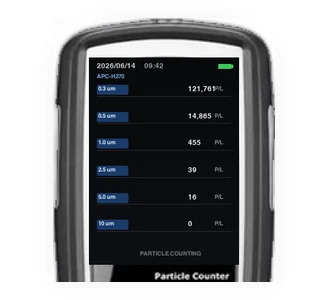
- Particle counting — 0.3 / 0.5 / 5.0 μm, plus PM2.5 and PM10 as mass concentration.
- Gas sensors — HCHO and CO electrochemical cells, field-replaceable without recalibrating the optical bench.
- Climate — temperature, humidity, dew point and wet bulb, all timestamped with the same record.
Five parameter sets in one record is the point: merging three instruments’ logs afterwards is where investigations lose their thread.
Air Quality Complaints Need More Than Particles
Air Quality Complaints Need More Than Particles
A room can be particle-clean and still smell of new furniture. New-build handover, finish emissions and occupational hygiene complaints usually involve gases and climate as much as counts.
- Flow — 2.83 L/min ± 5% for the particle channels.
- Typical use — new-build handover, indoor air quality complaints, furniture and finish emissions, occupational hygiene.
- Alarms — a threshold can be set per gas channel, so the instrument warns before the reading is written down.
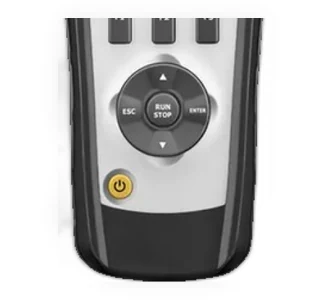
The backlit display carries an audible alarm per sensor, which matters when the operator is working in a ceiling void rather than looking at a screen.
One Record, Five Answers
One Record, Five Answers
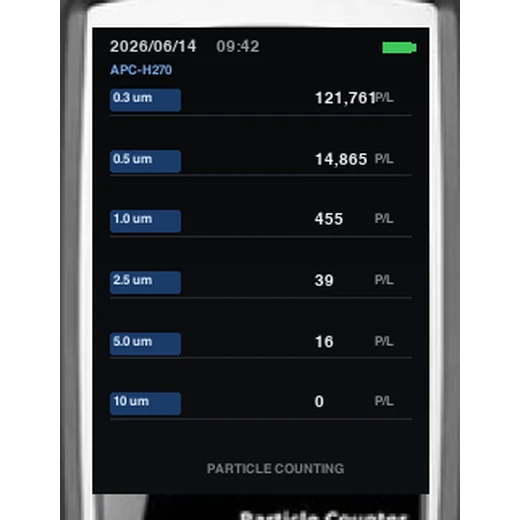
Ten thousand records, each holding particle, gas and climate data under one timestamp. Export it and the columns line up, which is not true of three separate instruments and three separate clocks.
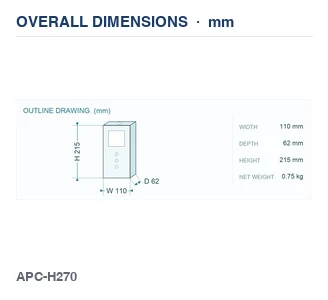
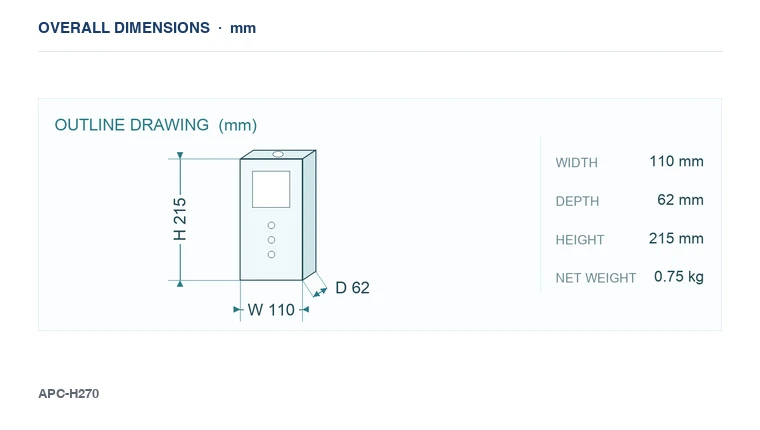
- Body — ABS + PC, IP54, 215 × 110 × 62 mm at 0.75 kg.
- Battery — 7.4 V / 3,500 mAh, six hours.
- Standards — ISO 14644-1 and ISO 21501-4 for the counting channels, with PSL calibration on the optical bench.
Gas cells are consumables and are treated as such: replace the cell, keep the calibration of the particle bench untouched.
FAQ
Formaldehyde by electrochemical cell and carbon monoxide by electrochemical cell, on the same sample path as the particle channels. It also reports PM2.5 and PM10 as mass, plus temperature, humidity, dew point and wet bulb. Five parameter sets, one record.
Because the particle count is not the headline on this instrument. It carries 0.3, 0.5 and 5.0 μm plus the two mass channels, which is enough to establish whether the problem is particulate at all before the gas readings are interpreted.
It is replaced in the field, and the optical bench does not need recalibrating afterwards. Gas cells are consumables with their own certificates; the particle calibration is a separate item and stays untouched.
Yes, a threshold per gas channel, with an audible alarm. In practice that matters when the operator is in a ceiling void or behind a partition and cannot watch the display.
It is when the three instruments have three clocks. A single record with one timestamp means the formaldehyde reading and the particle count describe the same minute of the same visit, which is the only way a complaint investigation holds together.
New-build handover, indoor air quality complaints, furniture and finish emissions, and occupational hygiene. Rooms that are particle-clean and still smell of new carpet are the classic case.