+86 13638632902
 Jason@cleanroomequips.com


 MENU
MENUcompanies like











Need a Handheld Particle Counter with Printer solution?
Deiiang provides professional Handheld Particle Counter with Printer solutions
Specifications & Models
Six Channels, Printed Where You Sample
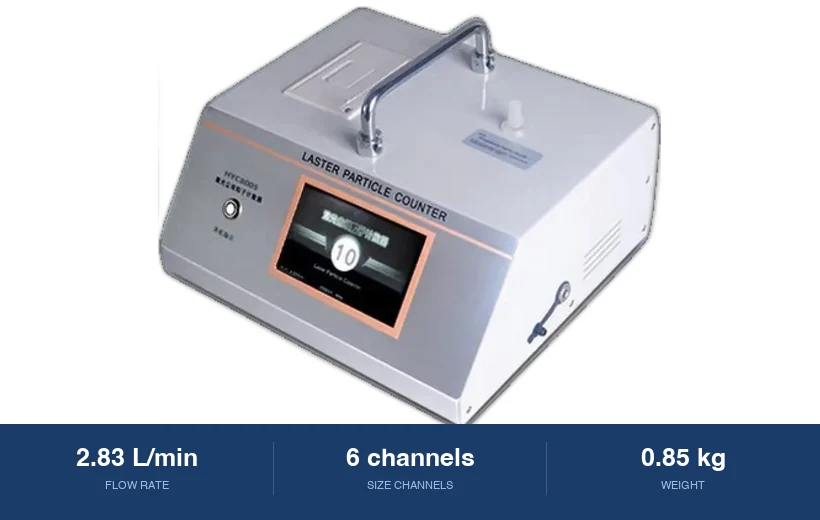
Six Channels, Printed Where You Sample
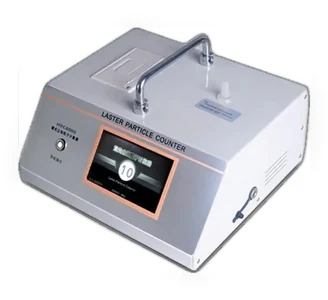
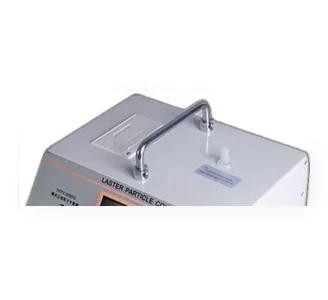
The H220 is the version to hand to a validation engineer. The record is produced at the sampling location, signed on the spot and cannot be edited afterwards, which removes the step where a number is copied from a screen into a batch record by hand.
- Print head — rated for 50 km of paper, roughly a year of audit printing before service.
- Fixed layout — site, room, operator and ISO class are printed in the positions the QA procedure expects.
- Six channels — 0.3 to 10 μm, with the ISO class verdict computed on board.
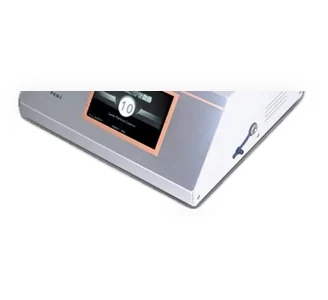
The 4.3″ display is large enough to read counts at arm’s length, which matters when the instrument is inside a downflow booth and the operator is outside it.
Sample, Print, Sign, Then Move On
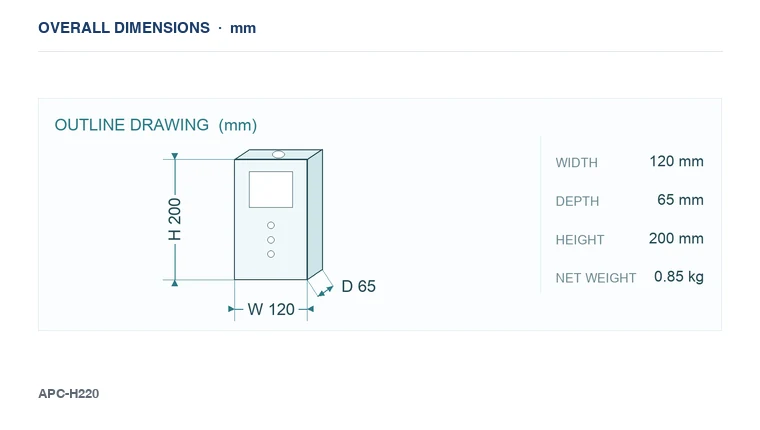
Sample, Print, Sign, Then Move On
Printing at the point of sample is not a convenience feature. It is what turns a reading into a record: the person who took the sample signs the paper that came out of the instrument, in the room, before anything can be retyped.
- Flow — 2.83 L/min ± 5%, the standard 0.1 CFM rate for ISO 14644-1 work.
- Where it is specified — GMP batch records, validation and qualification, customer audits and cleanroom handover.
- Charging — direct from mains, no external cradle to lose.
USB export of the same record set in CSV keeps the electronic and paper trails describing the same events.
100,000 Records and Eight Hours of Power
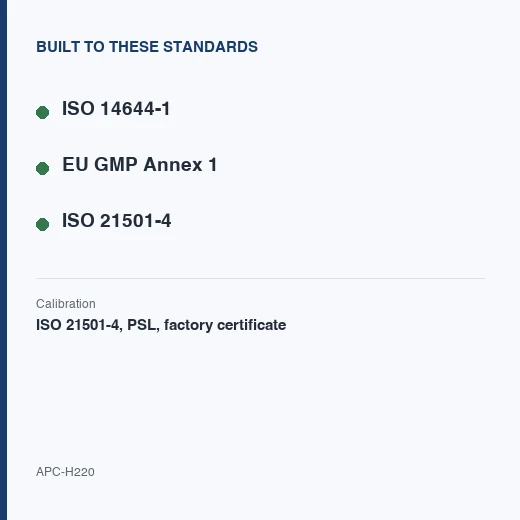
100,000 Records and Eight Hours of Power
A 5,200 mAh pack gives eight hours at full flow, which covers a validation day without a charger in the room. The memory takes 100,000 records, so the archive is on the instrument and in the printout at the same time.
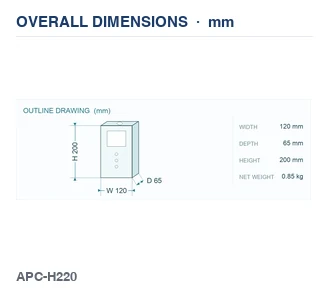
- Body — ABS + PC, IP54, 200 × 120 × 65 mm at 0.85 kg.
- Display — 4.3″ TFT, 480 × 272, with the sample trend drawn as it runs.
- Standards — ISO 14644-1, EU GMP Annex 1, ISO 21501-4; calibration certificate issued per unit.
Printer paper is standard 58 mm thermal stock, available from any office supplier rather than a single source.
FAQ
Because the paper is what gets signed. The printout comes out where the sample was taken, the person who took it signs it there, and the record cannot be edited afterwards. Nothing is retyped from a screen into a batch record, which is where transcription errors come from.
The print head is rated for 50 km of paper — roughly a year of audit printing at typical volumes. Paper is standard 58 mm thermal stock from any office supplier, so it is not a single-source consumable.
Site, room, operator, date and time, the six channel counts and the ISO class verdict, in a layout fixed at the factory so it matches what the QA procedure expects. The same record set stays in memory as well, so paper and file describe the same events.
100,000, which is unusual for a handheld with a printer inside it. Between the paper and the memory you have the same data twice, in two forms, which is what an audit usually wants.
Yes, at 2.83 L/min with the printer in use. The pack is 5,200 mAh and charges directly from mains through the instrument, without an external cradle that gets lost between sites.
Usually, yes. The 4.3″ display is readable at arm’s length, which matters inside a downflow booth, and the printout travels with the batch record instead of being filed separately. It is the model we quote most often for qualification work.