+86 13638632902
 Jason@cleanroomequips.com


 MENU
MENUcompanies like











Need a Handheld Particle Counter with Pump solution?
Deiiang provides professional Handheld Particle Counter with Pump solutions
Specifications & Models
A Piston Pump Changes What You Can Reach
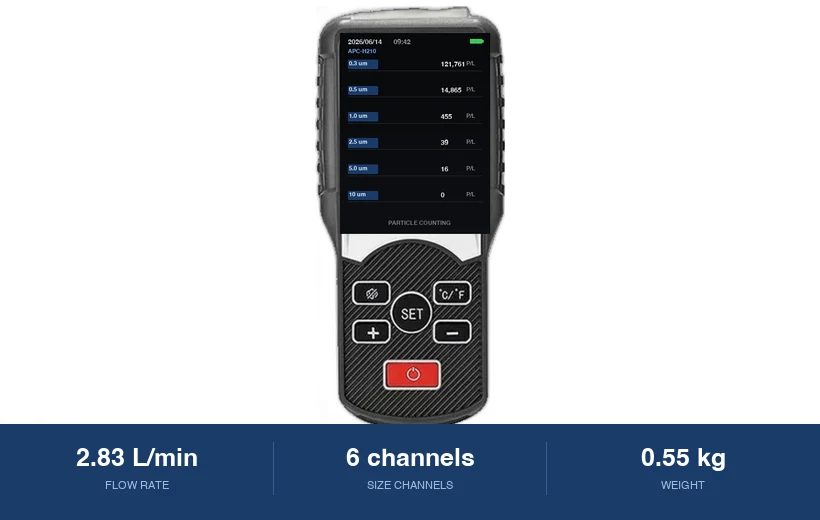
A Piston Pump Changes What You Can Reach
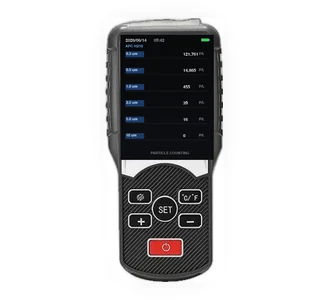
Most handheld counters use a fan, and a fan loses flow the moment it meets resistance. The APC-H210 uses a piston pump instead, which holds 2.83 L/min through two metres of sample tubing and keeps the six-channel count intact at the far end.
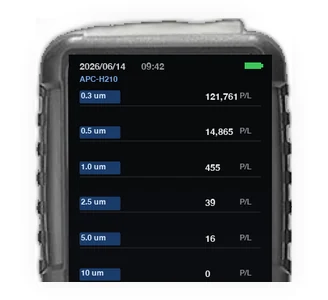
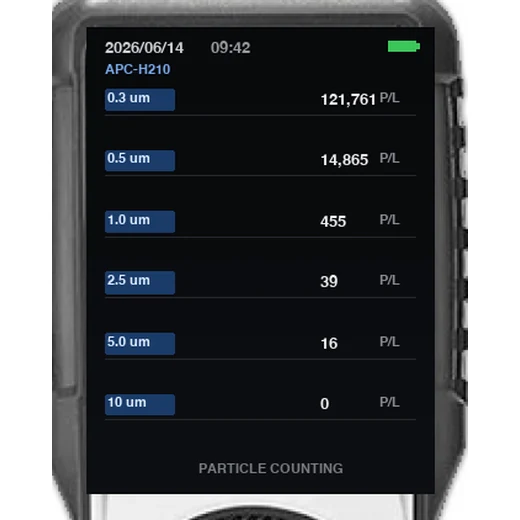
- Per-channel alarms — a threshold can be set for each size, so a duct survey flags the 0.5 μm channel rather than an average.
- Sample probe — bayonet fitting for standard 1/4″ tubing, removable for surface and duct work.
- Zero count — ≤ 1 particle / 5 min, which is what makes a low reading in a duct believable.
The pump head is a wear item and it is serviceable in place, rather than a return-to-factory repair that takes the instrument out of the monitoring schedule.
Two Metres of Tubing, No Lost Counts
Two Metres of Tubing, No Lost Counts
Sampling at a distance is a flow problem before it is an optical one. A pump that holds its rate against a loaded line means the volume that reaches the bench is the volume the record claims.
- Flow — 2.83 L/min ± 5%, piston pump, through up to 2 m of tubing.
- Typical work — duct sampling, remote-location monitoring, filter leak surveys and machine enclosure checks.
- Power — 1,800 mAh pack, four hours, swapped from the base in seconds so a second pack covers a double shift.
Four hours is shorter than the fan-cooled models in the range. That is the trade for a pump that does not fade when the line loads up.
Serviceable Pump, Records That Stay Put
Serviceable Pump, Records That Stay Put
A thousand records with date and time stamp is deliberate: this instrument is bought for survey work, not for archiving a year of rounds. What it does keep, it keeps properly.
- Interface — USB 2.0 and RS-232, both plain serial exports with no proprietary reader.
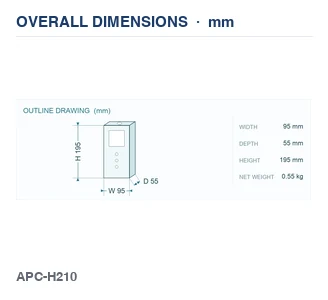
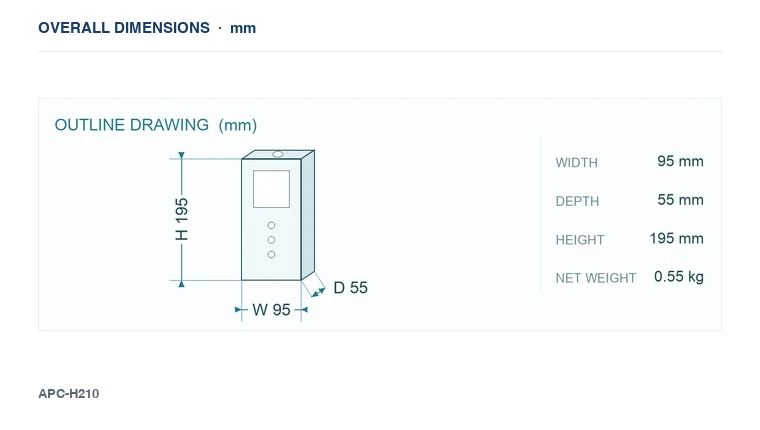
- Body — ABS + PC, IP54, 195 × 95 × 55 mm at 0.55 kg.
- Calibration — ISO 21501-4 with PSL spheres, certificate per unit, aligned to EU GMP Annex 1 practice.
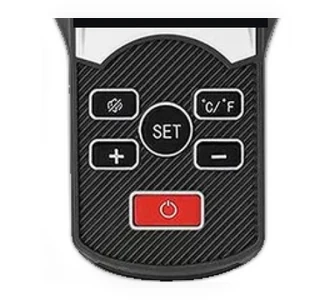
Alarm limits are set from the keypad per channel, so the same instrument can serve a duct survey and a Grade B check with two saved profiles.
FAQ
It holds flow against resistance. A fan loses rate as soon as it meets a length of tubing; a piston pump keeps 2.83 L/min through two metres of line, so the volume that reaches the optical bench is the volume on the record. If you sample ducts or machine enclosures, that is the whole argument.
Two metres is the figure we publish, and it is the length at which the pump still holds 2.83 L/min ± 5%. Longer lines will still draw, but the flow becomes a number you have to verify rather than assume, and particle losses in the tubing start to matter at the small channels.
The pump head is a service item and it is replaceable in place, without returning the instrument. That was a design decision: a pump is the one moving part that will fail, and a four-week factory repair takes the instrument out of a monitoring schedule.
Because this is a survey instrument, not an archive. A thousand records is several weeks of duct and enclosure work, and the export is a plain table. If you need a year of daily rounds on the instrument, the high-capacity model in the range holds a million.
Four hours from a 1,800 mAh pack, and the pack swaps from the base in seconds, so a second pack covers a double shift. That is shorter than the fan-cooled handhelds — a pump costs power, and there is no way around it.
Yes, per channel from the keypad. A duct survey might flag 0.5 μm while a Grade B check flags 0.3 μm, and the two profiles can be saved rather than re-entered each time. The alarm is audible while the sample is running, not only at the end.