+86 13638632902
 Jason@cleanroomequips.com


 MENU
MENUcompanies like











Need a Particle Counter with Camera & Environment solution?
Deiiang provides professional Particle Counter with Camera & Environment solutions
Specifications & Models
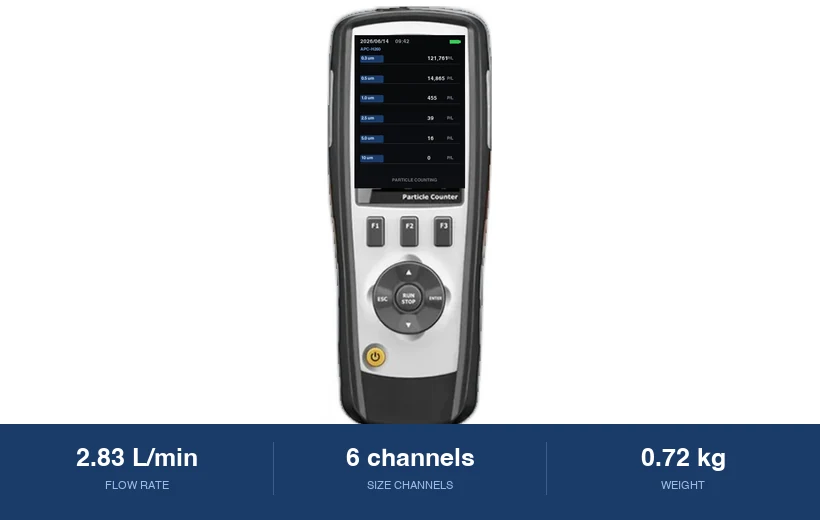
Six Channels, a Camera and a Climate Sensor
Six Channels, a Camera and a Climate Sensor
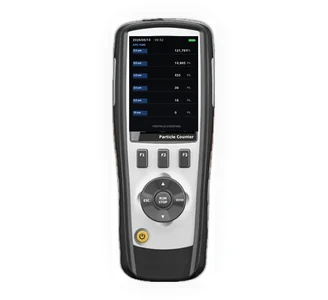
A failed point raises three questions at once: how many particles, what did the area look like, and what were the conditions when the sample was taken. The H260 answers all three in a single record instead of three separate notes.
- Camera — the sample point is photographed with the record; the flash is disabled automatically so it cannot disturb the optical count.
- Climate — temperature, relative humidity, and dew point and wet bulb computed from them.
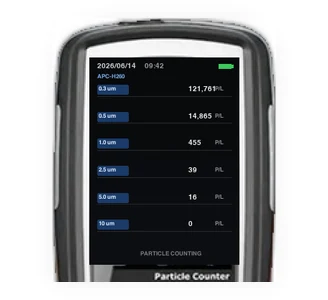
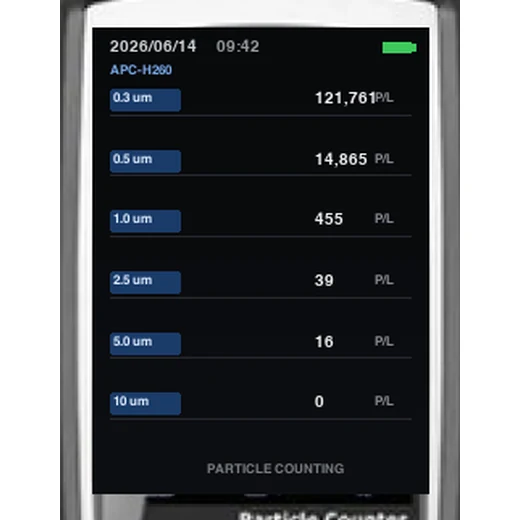
- Six channels — 0.3 to 10 μm, with the same counting efficiency and zero-count specification as the rest of the range.
The stored image appears as a thumbnail on the 2.8″ display, so a record can be checked before the operator leaves the room.
One Visit, One Record, One Photograph
One Visit, One Record, One Photograph
Deviations are usually investigated weeks later by people who were not there. A photograph taken at the moment of sampling removes most of the reconstruction, and the humidity figure removes most of the argument.
- Flow — 2.83 L/min ± 5%, with a masked inlet for isokinetic sampling at the probe.
- Typical use — deviation investigation, HVAC commissioning, moisture-related defects and insurance surveys.
- Storage — 10,000 records, each with a linked JPEG, exported over USB.
Where a defect is moisture-related, the dew point stored with the record is often the evidence that closes the case.
Evidence That Survives a Deviation Report
Evidence That Survives a Deviation Report
A record with a photograph and a climate reading attached takes far less explaining than a column of numbers. That is the whole design brief behind the H260.
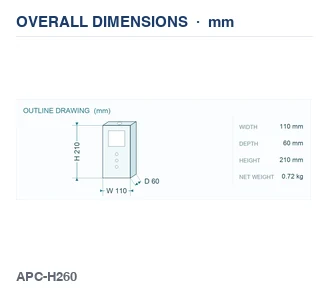
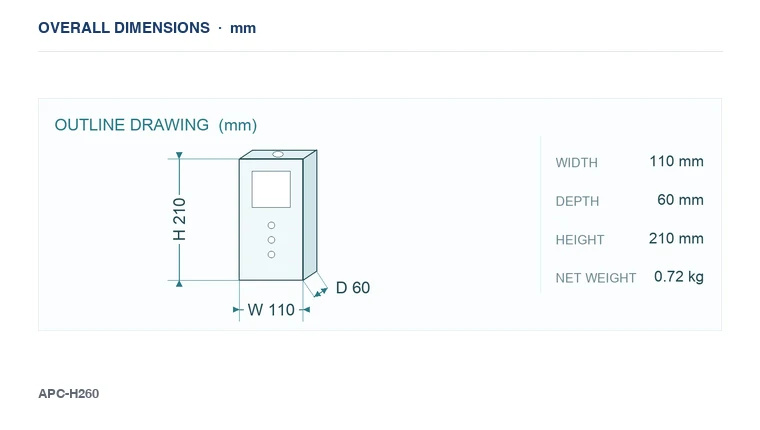
- Body — ABS + PC, IP54, 210 × 110 × 60 mm at 0.72 kg.
- Battery — 7.4 V / 3,500 mAh, six hours at full flow.
- Standards — ISO 14644-1, EU GMP Annex 1, ISO 21501-4; PSL calibration certificate per unit.
The camera adds no consumable and no separate device to charge, which is why it survives contact with a real investigation.
FAQ
It photographs the sample point at the moment of sampling, and the image is stored with the record. When a deviation is investigated three weeks later by people who were not there, that photograph removes most of the reconstruction. It is not a marketing feature.
It is disabled automatically during a sample, precisely because it would. The camera and the optical bench share a body, and light leaking into the sample path would show up as counts.
Temperature, relative humidity, and dew point and wet bulb computed from them. Dew point is the one that closes moisture-related cases: it tells you whether the air at that point could have condensed on the surface being investigated.
10,000 records, each with a linked JPEG. Images cost space, which is why this model stores fewer records than the counting-only versions — the trade is deliberate. Export is USB with the images alongside the table.
The masked inlet is designed for isokinetic sampling at the probe, which is the right configuration for the room-side checks this instrument is used for. It is not a surface-contact sampler; for that, use the probe accessory and hold it close.
Because the photograph is attached to the record rather than to a photo library. A picture on a phone has to be matched to a record later by timestamp, which is exactly the step that fails under pressure. This one cannot be separated from the data.