+86 13638632902
 Jason@cleanroomequips.com


 MENU
MENUcompanies like











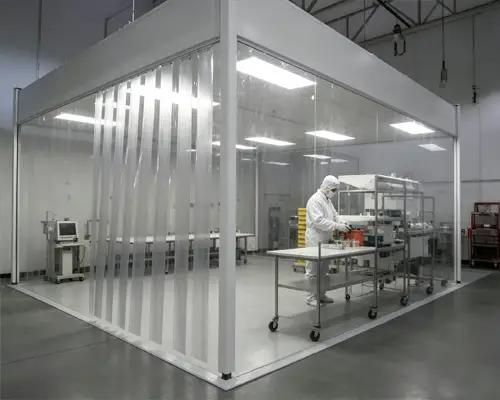
Need a ISO 7 Softwall Cleanroom solution?
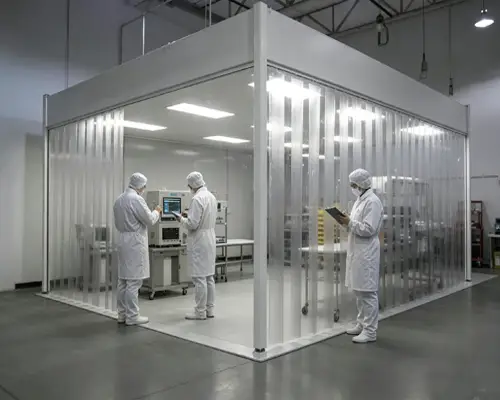
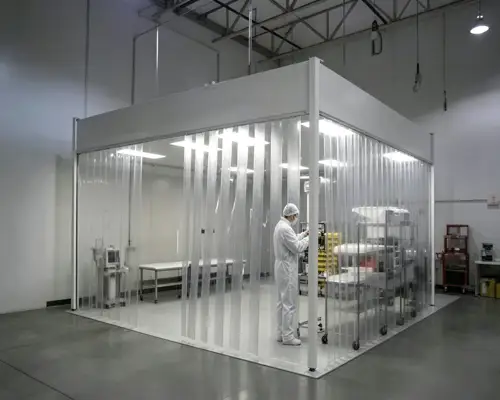
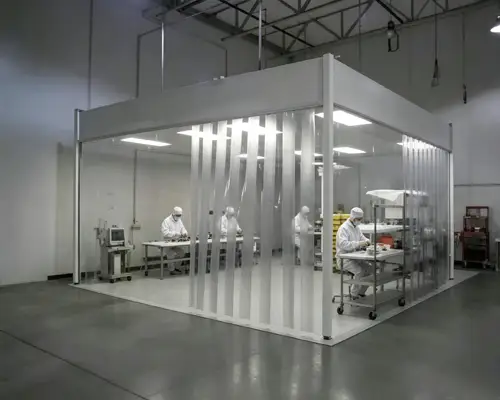
Deiiang provides professional ISO 7 Softwall Cleanroom solutions
Specifications and Models
Features and advantages

Unlike traditional cleanrooms with complicated installation, our prefabricated soft-wall cleanrooms install fast: tighten frame screws, place FFUs on ceiling grids and hang soft curtains.

Boost air change rates to hit ISO Class 5 or higher for targeted zones, no need to modify your surrounding workshop structure.

Standard cleanrooms cost a lot upfront and to run. Light frames, less civil work and efficient fan filter units slash both initial spend and daily running costs for your softwall cleanroom.

Cheap vinyl yellows, builds static and fails around chemicals. Our anti-static, UV-proof softwall material stays clear and lasts through repeated sanitizing.

Filter or light repairs usually stop production for long. Curtain walls and simple filter access cut maintenance downtime heavily.

Expanding factories rebuild cleanrooms from zero every time. This softwall cleanroom can shrink, grow or shift sites, safeguarding your long-term investment.
Working principle
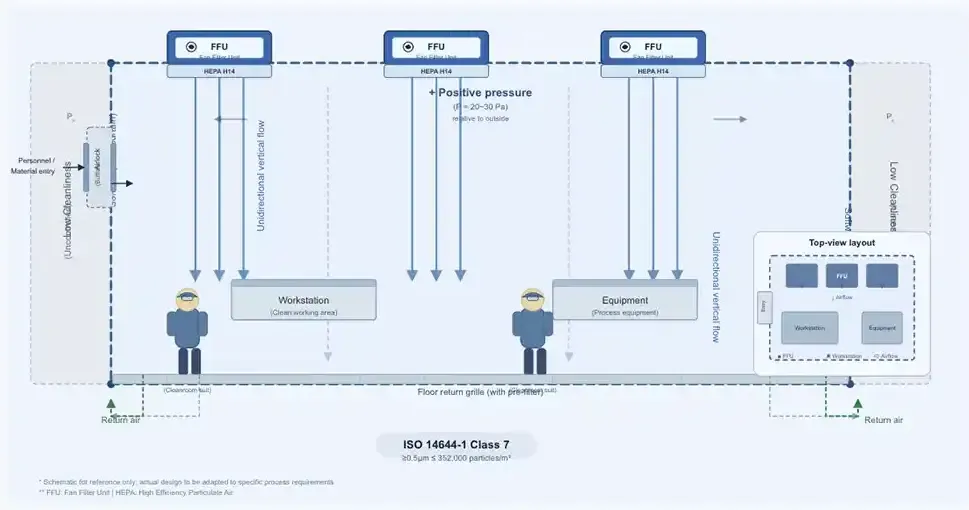
Legend |
| FFU / HEPA |
| Softwall (PVC curtain) |
| Supply air (downward ↓) |
| Return air path |
| Workstation / Equipment |
| Operator (cleanroom suit) |
| Airlock / Buffer |
Installation method
ISO 7 Softwall Cleanroom utilizes a modular setup technique that offers prompt assembly, easy modification, and limber extension. It is settled on a stable ground with lightweight structural frame, softwall curtains, HEPA filtration units, lighting and airflow regulation parts.
- Prepare the installation area: check whether the ground is flat, tidy, and able to sustain the construction and equipment of the cleanroom.
- Assemble the frame: fit in the modular posts, beams, connectors in accordance with the schemes of approved layout.
- Install the softwall curtains: attach pieces of PVC or flexible panels.
- Install filtration and lighting: put in HEPA filters, lighting units, and other necessary components.
- Connect and inspect the system: do all the necessary electrical connections, seal up the curtains, check the whole construction for safety and reliability.
- Test cleanroom performance: make sure the cleanroom shows the necessary air flow, pressure, temperature, humidity, and level of air pollution particles.
As it uses modular components; ISO 7 Softwall Cleanroom is capable of movement or alterations according to the changes in the requirements of production.
FAQ
Modular cleanrooms are prefabricated systems that can be configured and built to control specific levels of contamination. These systems are designed to be user-friendly and flexible, quick to implement and can be further modified as your requirements change. They are regularly used by the pharmaceutical, biotech, and electronics industries.
Cleanrooms require even greater protocol compliance when dealing with waste to maintain a clean environment and prevent contamination. Waste is generally divided into the following categories: Non-hazardous waste Hazardous waste Biohazardous waste The waste is contained in the proper waste streams with compliant labels, and is managed in accordance with regulations. Effective compliance with waste management plans requires frequent training.
To monitor cleanroom conditions, you need to install various types of sensors and control systems to monitor the conditions of the process including temperature, humidity, and other parameters. It is critical that all parameters be continuously monitored and maintained at their specified levels. Deviations outside the limits will trigger an alarm. Data logging systems are installed to capture data to meet regulatory and quality assurance goals.
Practices for effective cleanroom maintenance include cleaning schedules and the usage of cleaning agents resulting in no residue. These practices include: Regularly checking equipment and surfaces Training employees on appropriate gowning Watching for consistent changes in environmental factors Adherence to these practices permits contamination risks to remain minimal.
The function of cleanroom monitoring systems is to control cleanroom environment by keeping it consistent and staying within given set of standards. These systems help to maintain the quality of the product and comply with industry requirements by monitoring variables of temperature and humidity, control of particulates, etc. They also help by informing users of changes that occur outside given standards.
In cleanrooms, changes in temperature cause changes in the integrity of the product and risk of contamination. Temperature changes may affect the stability of the product being processed, cause condensation or affect the functioning of delicate equipment. It is important to have cleanrooms where the temperature does not change.
Cleanroom layout depends on many factors, such as the processes to be done, the equipment to be used, and the personnel flow. Other factors to consider are:Airflow patternsEquipment placementPersonnel and materials access routesControlling airflow patterns and creating a good layout is important for lowering the risk of cross-contamination and reducing the time it takes to complete the process.
The purpose of cleanroom commissioning is to test the cleanroom for fulfillment of the design specifications and completion of the construction and also ensure that the cleanroom is ready for use and complies with the regulatory standards. The process generally includes the following steps: Testing of HVAC systems Testing for cleanliness of the environment Test of the construction, along with the installation The sequence of the steps may vary.
Vinyl, epoxy resin, and rubber are floor types that can be used in cleanrooms. These types of flooring are durable, chemically resistant, and easy to clean. They are useful for maintaining cleanrooms.
Anti-static flooring Ionization systems Personnel wearing anti-static clothing Static electricity can affect the safety of the equipment and the integrity of the product.
Installing a cleanroom depends on the size and design, but on average it is done in a few months. There are many variables in cleanrooms that affect how long it takes to get the job done, including how much customers want it tailored to their preferences and how efficient the contractors are.
The size of a modular cleanroom depends on the application and the requirements set by the industry. They can range from a few hundred square feet to many thousands. Because of their design, they can be made to fit any need for a process or even a configuration of equipment that is large or small.