+86 13638632902
 Jason@cleanroomequips.com


 MENU
MENU
What Are cleanroom ceiling Panels?
Let's start with the fundamentals. Imagine a cleanroom as a meticulously controlled box. The Cleanroom Ceiling Panels form the critical top surface of this box. They're not just a lid; they're an active, engineered component of the contamination control strategy. Think of them as the "sky" of your controlled environment, dictating how clean air flows down over your critical processes.
So, how are they different from your standard industrial ceiling? Night and day! While a regular ceiling might just hold up lights and hide ducts, Cleanroom Ceiling Panels are designed for exceptional airtightness, smooth surfaces to prevent particle shedding, and the ability to integrate seamlessly with fan filter units (ffus) or other air delivery systems. They are, without a doubt, a "key surface" for maintaining your iso class.
📌 The Cleanroom "Six-Sided Box" Principle
The ceiling is one of the six critical containment surfaces. Its quality directly impacts the performance of the other five.
Illustration: The ceiling's dominant role in the cleanroom envelope.
Why Ceiling Panels Matter in Cleanroom Performance
You might be tempted to think walls are more important. Let me, Jason.peng from Deiiang™, share a perspective from the field: the ceiling is often the performance bottleneck. Why? It handles the first—and most important—contact with the filtered air. Subpar Cleanroom Ceiling Panels can create turbulence, leak unfiltered air, or simply fail under the weight of maintenance, turning your cleanroom into a very expensive problem.
The right panels ensure unidirectional, laminar flow. For example, in a vertical laminar flow cleanroom, if your ceiling panel system has poor sealing, you could lose up to 5-10% of your airflow through leaks, forcing your HVAC system to work 15% harder to compensate. That's a direct hit on your energy bill and your particle count stability.
Core Performance Checklist
Airtightness: No leaks allowed. It's the #1 rule.
Load Capacity: Can it hold a technician during filter changes?
Easy Cleanability: Non-porous, smooth, crack-free surfaces.
System Integration: Plays nice with FFUs, lights, and fire systems.
📌 Airflow Analysis: Good vs. Bad Seal
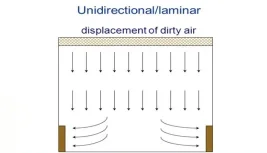
Smooth, Laminar Flow

Main Types of Cleanroom Ceiling Panels
Alright, let's get into the nuts and bolts. Not all Cleanroom Ceiling Panels are created equal. The choice boils down to what you need them to do. Do you need to walk on them? How many FFUs are you fitting? At Deiiang™, we see projects ranging from simple modular setups to complex walkable systems.
You'll mainly encounter three families: the standard Modular panels you snap into a grid, the heavy-duty Walkable panels built like a floor, and the smart Integrated systems that come pre-assembled with FFUs or lights. Material-wise, you're looking at aluminum, steel, or composite sandwich structures – eACH with its own pros and cons on weight, cost, and corrosion resistance.
Quick-Type Guide
📌 Structural Comparison: A Look Inside
Here’s how the core materials and constructions differ. For instance, Deiiang™'s MGO Rock Wool Cleanroom Panel offers great fire resistance and sound dampening, while our Paper Honeycomb Cleanroom Panel is ultra-lightweight for easier handling.
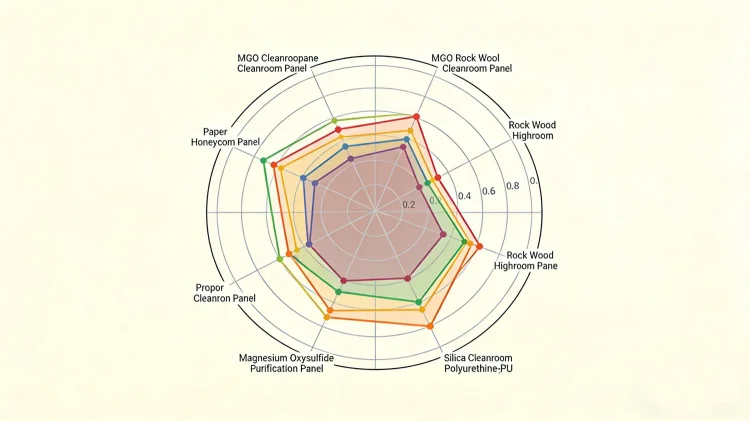
Different panel core structures (Sandwich, Honeycomb, Dense Core) affect strength, weight, and thermal properties.
The Selection Table (At a Glance)
| Type | Load Capacity | Airtightness | Typical Application | Deiiang™ Example |
|---|---|---|---|---|
| Modular | Low to Medium (e.g., 1.5 kPa / ~150 kg/m²) | High (with gasket) | iso class 6-8, Electronics, General Manufacturing | Modular MGO Panel |
| Walkable | Very High (e.g., 5 kPa+ / ~500 kg/m²+) | Very High (sealed seams) | ISO Class 1-5, Pharma, Biotech, Frequent Maintenance Areas | Walkable Steel Plate Panel (0.476mm) |
| Integrated (FFU) | Medium (Supports FFU weight) | Excellent (factory-sealed unit) | High-grade Laminar Flow Zones, Microelectronics, Advanced Labs | FFU Integrated Panel with HEPA |
Key Design Factors to Consider
This is where the rubber meets the road. Choosing Cleanroom Ceiling Panels isn't just about picking a type; it's about specifying the right combination of features for your project. Here’s what keeps engineers like us at Deiiang™ up at night (in a good way!).
Airtightness & Sealing Design: This is non-negotiable. Look for panels with continuous gaskets (like EPDM or silicone) in a dedicated channel. A panel with a 0.476mm steel face and a molded gasket will outperform a 0.326mm panel with a stick-on seal, especially over time. The goal is to achieve a leakage rate of less than 0.01% of room volume per hour under standard pressure differentials.
Load Capacity & Access: Do the math! Calculate the weight of potential maintenance personnel, tools, and maybe even stored items. A walkable panel needs a point load capacity, not just a distributed one. For a technician weighing 100kg with tools (say 120kg total) on a small area (0.1m²), you need a point load resistance of at least 12 kPa.
Panel Thickness & Material: Thicker isn't always better, but it often means more rigidity and better insulation. Common Deiiang™ thicknesses like 50mm, 75mm, and 100mm serve different needs. A 100mm thick Rock Wool Cleanroom Panel offers better fire rating and sound attenuation than a 50mm version, crucial for noisy plant environments.
Compatibility is King: Your panels must be friends with the FFUs, lights, sprinkler heads, and even the building management system sensors. Ensure the panel frame has standardized cut-out sizes and sealing methods for these integrations.
The 4-S Design Checklist
📌 Selection Logic Flow
Class 1-3? Think high-seal, integrated/walkable. Class 6-8? Modular may suffice.
Will maintenance walk up there? Yes → Walkable Cleanroom Ceiling Panels are a must.
Humid? Corrosive chemicals? Consider coated steels (like Deiiang™'s Electrolysis panel) or inorganic materials.
Pre-fab FFU grids speed installation but have higher upfront cost. Balance with TCO.
Standards & Compliance Requirements
You can't talk about cleanrooms without talking standards. It's the rulebook. The most universal one is iso 14644. This series covers everything from air cleanliness to testing methods. For your Cleanroom Ceiling Panels, the relevant parts are about air filtration and recovery (how fast particles are removed), which directly ties to the ceiling's airtightness and the quality of the airflow it delivers.
In regulated industries like pharmaceuticals (following GMP) or medical devices, the expectations are even tighter. The ceiling system must be validated—proven to perform as specified. This means documentation on materials (like Deiiang™'s material certificates), sealant compatibility, and cleanability data. The difference between an iso class 5 and an iso class 8 ceiling often comes down to the precision of the gasketing and the panel's surface finish.
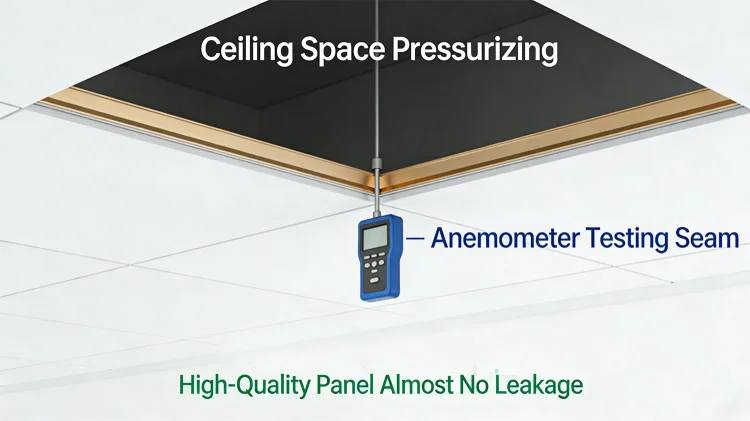
📌 Testing is Key
Panels and complete ceiling grids undergo rigorous tests: air leakage tests, load deflection tests, and particle emission tests. A common test is to pressurize the plenum above the ceiling and use a anemometer or tracer gas to detect leaks at the seams. Good panels will show near-zero leakage.
Installation & Integration Considerations
A brilliant panel design can be ruined by poor installation. The goal is a monolithic, seamless-looking plane that performs as one solid piece. This starts with a robust and level suspension system (T-bar, threaded rod, or proprietary grid). The alignment of this grid is crucial; a misalignment of just 3mm over 3 meters can cause visible gaps and sealing issues.
The connection between the Cleanroom Ceiling Panels and the wall panels is a critical detail often called the "wall-to-ceiling coving." It should be a smooth, coved transition (not a 90-degree angle) to prevent particle traps and allow easy cleaning. Then come the cut-outs for FFUs, lights, and sprinklers. These must be precisely sized and come with their own dedicated sealing kits to maintain the integrity of the plane.
Suspension
The hidden backbone. Must be level, rigid, and corrosion-resistant.
Sealing
Gaskets, sealants, and tapes applied with precision. This is where airtightness is won or lost.
Alignment
Panels must be flush. Even a slight misstep can create a leak path and a visual eyesore.
How to Choose the Right Cleanroom Ceiling Panels
Let's bring it all together. How do you, as a project lead or facility manager, make the final call? It's a balancing act. Based on countless projects with Deiiang™ clients, here’s a pragmatic approach.
By Industry: If you're in pharmaceuticals, think long-term validation and cleanability. A walkable, stainless-steel-faced panel with inorganic cores might be worth the investment. For microelectronics (iso class 3-5), focus on ultra-high airtightness and static dissipation—often integrated FFU ceilings with conductive coatings. For general manufacturing (iso class 7-8), a cost-effective modular MGO Cleanroom Panel could be perfect.
By Cleanliness Grade: The higher the grade (lower ISO number), the more you invest in the ceiling. An ISO Class 5 ceiling is an engineered product; an ISO Class 8 ceiling is a high-quality building component.
By Lifespan & Maintenance: A facility meant to run for 20 years with weekly filter changes needs durable, walkable panels. A pilot lab running for 5 years might opt for a lighter, modular system.
Final Thought: “Choosing the right Cleanroom Ceiling Panels system requires balancing performance, compliance, and long-term operation. It's not just a purchase; it's an investment in the reliability of your controlled environment.” – Reflections from the Deiiang™ design team, led by Jason.peng.
Common Mistakes to Avoid
Let's learn from others' oversights. Here are the top pitfalls we see:
Ignoring Airtightness in the Spec: Just saying "airtight" isn't enough. Specify the test standard and acceptable leakage rate.
Underestimating Load Requirements: Forgetting that two technicians with a tool chest might need to be up there simultaneously.
System Incompatibility: Ordering panels from one supplier and FFUs from another without verifying interface details (bolt patterns, sealing methods, electrical connections).
Overlooking Future Access: Not having enough removable panels or access doors for future utility runs or sensor additions.
Sacrificing Quality for First Cost: The cheapest panels often lead to higher energy costs, failed certifications, and expensive retrofits down the line.
Conclusion
So, there you have it. The humble ceiling panel, far from being just an overhead cover, is a strategic component in your cleanroom's success. The right Cleanroom Ceiling Panels ensure efficient airflow, protect your cleanliness classification, and reduce your total cost of ownership through durability and ease of maintenance.
Whether you're evaluating modular systems, walkable platforms, or integrated solutions, the principles remain the same: prioritize airtightness, validate load needs, ensure compatibility, and always design with the long game in mind. By understanding the types, standards, and selection criteria outlined here, you're well-equipped to make an informed decision that supports your critical processes for years to come.