+86 13638632902
 Jason@cleanroomequips.com


 MENU
MENU
In the critical environment sector, terminology can often become a barrier to efficient procurement. We frequently encounter facility managers and engineers seeking clarity on the functional distinction between a prefabricated cleanroom and a modular cleanroom. This is not merely a semantic debate; understanding the nuance is essential for selecting a system that meets your specific ISO compliance standards and project timeline without overspending.
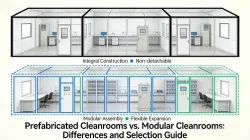
From an engineering perspective, these terms represent two compatible pillars of modern facility design rather than opposing choices. "Prefabricated" refers to the manufacturing process (components built off-site under strict quality control), while "modular" refers to the structural logic (standardized interfaces allowing for rapid assembly and future expansion). In this guide, we will deconstruct these concepts to demonstrate why a system that is both prefabricated and modular offers superior ROI compared to traditional construction methods.
Executive Summary:
Prefabricated: Quality controlled off-site manufacturing
Modular: Scalable grid design for rapid assembly
Modern Standard: Combines both for GMP compliance
Traditional Method: High-risk stick-built construction
Defining the Technology: Off-Site Precision vs. On-Site Flexibility
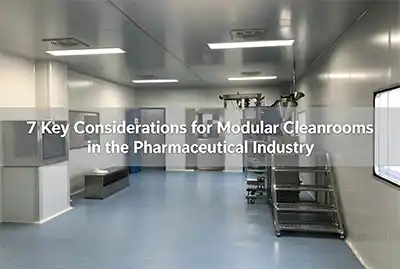
When we define a prefabricated cleanroom at Deiiang™, we are referring to an off-site manufacturing protocol rather than simple pre-cutting. Every critical component—from sandwich wall panels and flush ceiling grids to integrated utility chases—is produced within our controlled factory environment. This approACH eliminates the variability of field labor. We ensure consistent bonding quality and dimensional accuracy with tight tolerances, preventing the air leakage issues common in traditional stick-built structures.
In contrast, a modular cleanroom defines the architectural logic of the system. It relies on standardized interfaces and demountable connections (typically utilizing standard module widths like 1180mm). This design philosophy ensures that the facility is not a permanent, static monument but a flexible asset. It allows for rapid installation, easy replacement of damaged panels, and future reconfiguration without generating construction dust. The true value emerges when these two concepts merge: delivering factory-grade seal integrity with the adaptability of a kit-of-parts assembly.
Prefabricated Concept
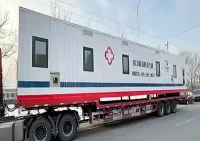
Factory-manufactured components delivered ready for installation.
Modular Concept
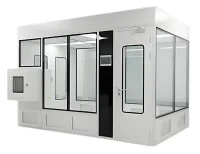
Standardized, interchangeable parts assembled on-site like a precision kit.
Core Comparison: Nuances in Market Offerings
Although the industry trend is moving toward hybrid solutions, valid distinctions still exist in the marketplace. Not every prefabricated cleanroom is designed for easy reconfiguration, and not every modular cleanroom achieves the high-end finish of factory prefabrication. At Deiiang™, our engineering focuses on bridging this gap—delivering the structural integrity of pre-built components alongside the adaptability of a modular grid. Below, we categorize the different system types you are likely to evaluate during your procurement process:
hardwall Modular Systems
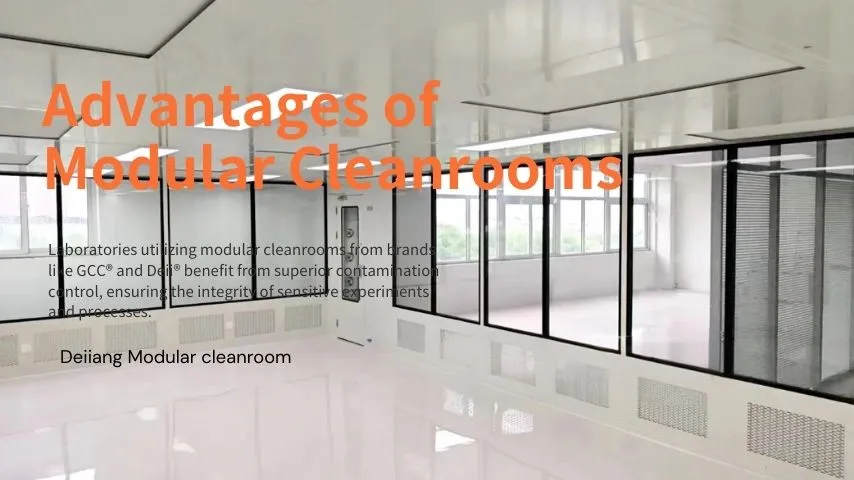
This is the industrial standard for iso 5-8 environments. These systems utilize high-integrity rigid panels (typically metal-faced with rockwool or aluminum honeycomb cores) that are both factory-prefabricated and modular. They offer the optimal balance: precision manufacturing prevents contamination, while the modular design allows for future layout changes. Our Deiiang™ Series 5000 exemplifies this hybrid approach.
Standard Panel: 1180mm width (Optimized for shipping)
Speed: 30-50% faster validation than drywall
Lifecycle: 100% reusable for relocation
Softwall / clean booths
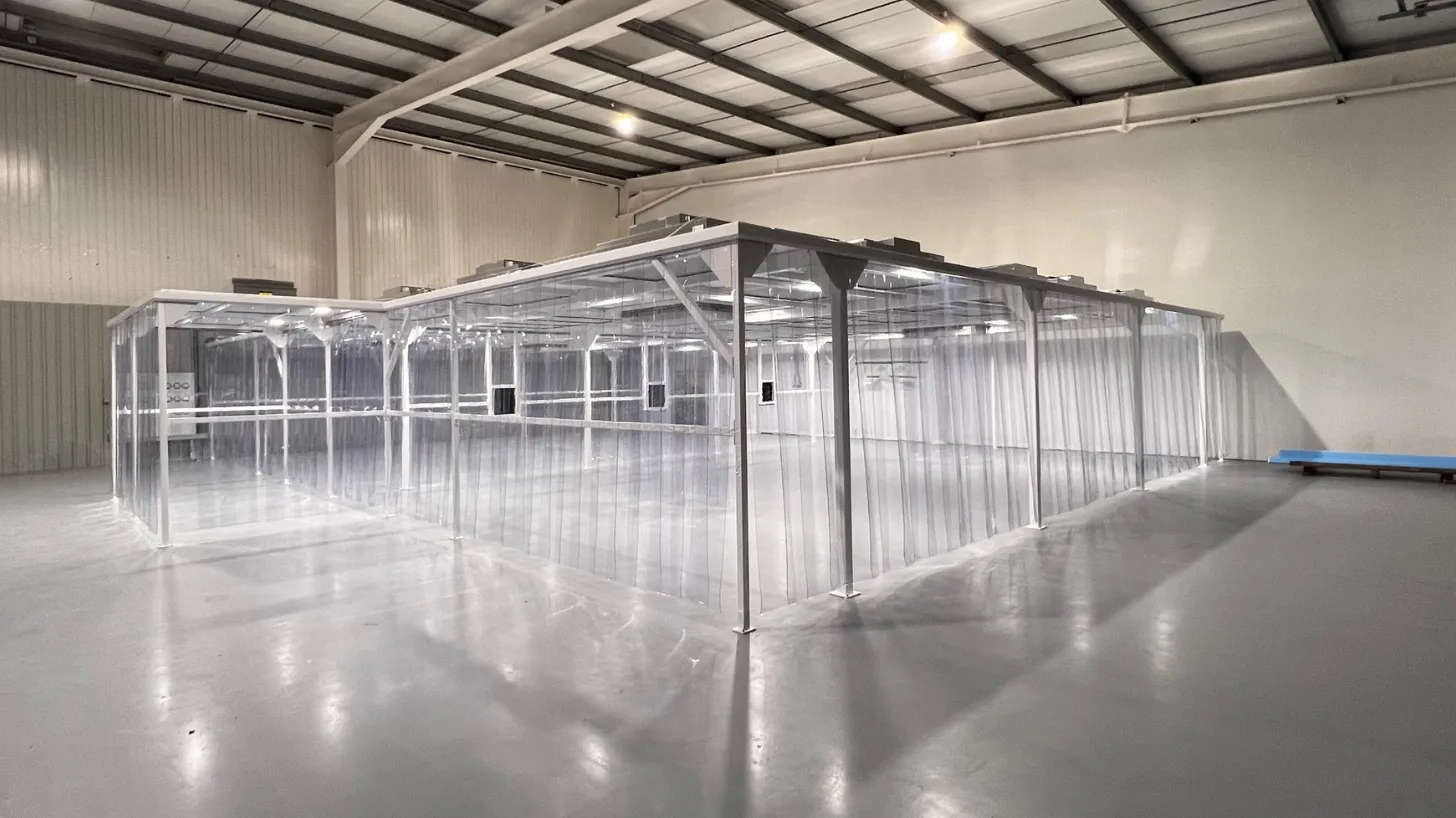
These systems prioritize modularity and portability over durability. Using PVC curtains on aluminum frames, they are essentially "pop-up" cleanrooms. While extremely fast to deploy, they lack the temperature and humidity control precision of hardwall systems. They are best suited for spot-checking or temporary process isolation.
Deployment: 24-48 hours for small units
Limit: Difficult to maintain iso 6 or better
Cost: Approx. 50% of hardwall systems
Containerized / Pod Systems
The ultimate expression of prefabrication. These are entire turnkey rooms built inside shipping containers or steel frames. They maximize off-site work (95% complete upon arrival) but sacrifice modular flexibility. Once placed, expanding them usually requires buying another separate unit rather than just moving a wall.
Completion: Plug-and-play delivery
Constraint: Limited by transport dimensions
Flexibility: Low (Hard to customize on-site)
The Real Decision: Engineered Systems vs. Traditional Construction
Ultimately, the decision usually lands between specifying an engineered system or relying on traditional stick-built methods. While the terminology of prefabricated cleanroom versus modular cleanroom is important, the real advantage lies in choosing a validated solution over conventional drywall.
From a compliance and operational standpoint, traditional construction poses significant risks, particularly regarding particulate shedding and extended project timelines. The following comparison leverages field data collected by our lead engineer, Jason.peng, to illustrate why engineered systems are now the standard for audit-ready facilities.
| Key Metric | Prefab/Modular System | Traditional Drywall | Operational Impact |
|---|---|---|---|
| Time to Validation | 3-6 weeks (Parallel workflow) | 8-12 weeks (Sequential trades) | Faster Revenue Start |
| Particulate Control | Non-shedding, anti-static coating | High dust generation during build | Easier IQ/OQ/PQ |
| Initial Investment | Moderate Premium ($350k-$450k) | Lower Upfront ($300k-$380k) | Offset by Tax Savings |
| Scalability | Non-intrusive expansion | Demolition Required | No Shutdowns |
| Depreciation (US Tax) | 7 years or 1 year (Section 179) | 39 years (Real Property) | Huge Cash Flow Benefit |
| Build Precision | Factory QC (±2mm) | Field Labor Variable (±10mm) | Better Air Seal |
The Speed Analysis: Parallel vs. Sequential Construction
Traditional construction suffers from a critical bottleneck: the "wet trades." You are forced into a rigid, sequential timeline where framing, drywalling, mudding, and sanding must happen on-site, one after another, with mandatory curing times in between.
A prefabricated cleanroom system breaks this cycle by enabling parallel construction. While we precision-manufacture your panels off-site (typically a 2-3 week cycle), your facility team can simultaneously prep the flooring and rough-in the HVAC and utilities. This concurrent workflow typically slashes project schedules by 30-40%. For a biotech firm, accelerating the validation phase means getting to market—and to revenue—months sooner.
Project Timeline Reality:
For a typical 400m² iso 7 facility:
Traditional: 10 weeks build + 2 weeks deep clean = 12 weeks
Prefab/Modular: 5 weeks (parallel work) + 1 week clean = 6 weeks
Result: 50% Time Reduction
Business Value: 6 weeks of additional production capacity
The Tax Advantage (Asset Classification)
This is where the financial model often tips in favor of modularity. In many jurisdictions (including the US under Section 179), a modular cleanroom is often classified as "tangible personal property" or equipment, rather than a permanent building improvement.
This classification allows for accelerated depreciation. Instead of writing off the cost over 39 years (like a standard building), you can often deduct the entire cost in the first year or over a 7-year schedule.
Engineered System
100%
Potential Year-1 Deduction
Subject to tax code eligibility
Traditional Build
~2.5%
Year-1 Deduction
Based on 39-year schedule
The ability to recover capital immediately significantly improves cash flow, often offsetting the initial material cost premium of prefabricated systems. (Note: Always verify with your tax professional.)
Flexibility & Scalability Analysis
This is where the modular cleanroom philosophy delivers its highest return on investment. Traditional drywall construction creates a static structure; expanding it later requires demolition, which generates particulate contamination that can shut down adjacent critical processes.
Instead of locking you into a rigid footprint, a modular system treats your facility as an adaptable asset. If your 3-year forecast predicts 50% growth, you don't need to overbuild upfront and waste capital. You can install exactly the 200m² iso 7 space you need today, knowing that future expansion involves simply unbolting an end wall and adding new grid sections. This allows for clean, non-intrusive scalability with minimal impact on your ongoing production.
The Clean Expansion Concept
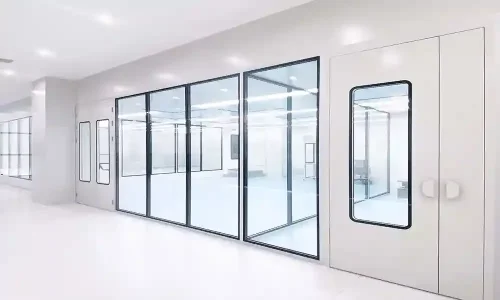
Result: Zero demolition dust, allowing adjacent lines to keep running.
The Asset Value Perspective
Consider the long-term TCO (Total Cost of Ownership). A traditional room is a sunken cost—once built, the money is gone. A prefabricated cleanroom is a recoverable asset.
Traditional Scenario
Upfront Cost: Lower
Modifiability: Low (Expensive demolition)
Salvage Value: $0 (Cannot be moved)
Lease Exit: Must be demolished/left behind
Modular Scenario
Upfront Cost: Higher
Modifiability: High (Component based)
Salvage Value: High (Can be sold/moved)
Lease Exit: Take it with you
For companies in leased spaces or those anticipating rapid process changes, the ability to relocate the cleanroom creates a significant financial safety net.
Installation & Logistics: Minimizing Disruption
One of the most underappreciated advantages of choosing a prefabricated cleanroom solution is the transformation of the construction site itself. We move the chaotic, dirty work of cutting and framing into our factory, leaving your site with a quiet, clean assembly process.
The Deiiang™ Deployment Workflow
1
Design Freeze
Engineering Sign-off
→
2
Parallel Works
Factory Build + Site Prep
→
3
Rapid Assembly
Non-invasive Install
→
4
Commissioning
IQ/OQ Handover
Key Benefit: Site installation time reduced by ~40%.
This parallel workflow—where panels are manufactured while your floor is being prepped—is the single biggest factor in reducing time-to-market.
Reducing Validation Headaches
Our lead designer, Jason.peng, notes a critical compliance factor: "Traditional construction sites are inherently dirty. Drywall dust penetrates HVAC ducting before the room is even turned on. With a prefabricated modular approach, the components arrive clean. We don't spend weeks trying to clean construction debris out of the hepa filters; we start balancing the air almost immediately."
Impact on particle counts:
Traditional Construction: Requires extensive "flush out" periods to remove gypsum dust.
Modular Assembly: Components are non-shedding and pre-cleaned.
Validation Outcome: Significantly higher first-pass pass rate for ISO 14644 certification.
Which Should You Choose? A Practical Decision Guide
By now, you understand that the prefabricated cleanroom vs modular cleanroom debate is mostly academic - the best modern solutions incorporate both principles. The real decision is between engineered systems and traditional construction. Here is our straightforward selection criteria:
Select Our Prefab/Modular System If:
Speed is Priority: You need an operational room in 6-8 weeks.
Uncertain Future: You anticipate growth or layout changes in 2-3 years.
Strict Compliance: You require guaranteed iso 5-8 or GMP conditions.
Operating Facility: You cannot afford dust contamination in adjacent areas.
Leasing: You want to own the asset, not improve the landlord's building.
Best for: Pharma, Biotech, Medical Device, Electronics.
Consider Traditional Drywall If:
Lowest Initial Cost: Budget is the only driving factor.
Low Spec: Only CNC / basic enclosure (iso 8/9) is needed.
Permanent: The room will never need to be moved or modified.
Time Flexibility: A 3-4 month construction schedule is acceptable.
Empty Building: Construction dust won't impact other operations.
Applicable for: Basic assembly rooms, storage areas.
Consider Container Pods If:
Mobility is Key: The unit needs to move between sites frequently.
No Infrastructure: Outdoor or warehouse-in-warehouse deployment.
Temporary: Short-term R&D projects or disaster relief.
Small Scale: Single-process enclosure needs.
Best for: Mobile labs, remote field operations.
Project Assessment
Not sure which fits? Check your lease agreement and 3-year production forecast. These two documents often dictate the right choice more than technical specs.
Case Study: The Power of Combining Both Approaches
We recently navigated this exact decision process with a medical device manufacturer scaling up production for a new catheter line. They required a 350m² ISO 7 environment within an existing, low-ceiling warehouse space. Their procurement team was stalled, receiving conflicting bids that pitted a rigid prefabricated cleanroom structure against a highly flexible modular cleanroom kit, with no clear guidance on which method suited their retrofitting constraints.
Project Constraints
Retrofit: Must fit inside operating warehouse.
Timeline: 8-week hard stop for equipment arrival.
Future Proof: 50% expansion planned for Year 2.
Compliance: Strict FDA audit upcoming.
Our Solution Strategy
System: Deiiang™ Series 5000 (Hybrid Modular).
Prefabrication: Factory-integrated Return Air walls to save space.
Phasing: Installed without stopping existing warehouse forklifts.
Result: Validated in 7 weeks total.
Outcome Comparison
Traditional Estimate
12+ Weeks
(Risk of missed launch)
vs
Actual Delivery
7 Weeks
(Ready for equipment install)
The Expansion Test
When the client expanded 18 months later, we disassembled the East wall over a weekend, added new modules, and re-validated. No demolition debris, no production halt. This confirmed their initial investment choice.
The Engineering Director remarked: "We wasted weeks debating terms with vendors. You showed us a solution that solved the real problem: how to build fast without shutting down our plant."
Conclusion: Stop Debating Terminology, Start Evaluating Solutions
Ultimately, getting caught up in the syntax of the prefabricated cleanroom versus modular cleanroom debate distracts from the project goal: performance. In modern high-tech construction, you should not have to choose between the two. The industry-leading systems we engineer at Deiiang™ represent the convergence of these methodologies—delivering the airtight precision of factory prefabrication with the on-site agility of modular assembly.
We recommend shifting your evaluation criteria from semantics to performance metrics:
Air Seal
Precision of connections
Validation
Speed to certification
Asset Life
Reusability %
Expansion
Non-invasive upgrades
The shift from stick-built to engineered modular systems is not just a construction preference; it is a strategic business decision. It minimizes risk, accelerates revenue, and preserves capital through asset recovery.
Final Recommendation from Jason.peng, Lead Designer:
"In my experience overseeing hundreds of facility build-outs, I typically advise clients to look beyond the initial sticker price. While a high-quality prefabricated cleanroom system may carry a slight premium over stick-built options, the ROI calculation shifts dramatically when you factor in the accelerated validation timeline. You are not just buying walls; you are buying speed and asset liquidity. A modular cleanroom design allows you to depreciate the asset faster and reconfigure it as your process evolves. For most dynamic industries, this operational agility outweighs the lower upfront cost of traditional drywall."
Don't let the technical jargon paralyze your decision-making. Focus on your production timeline and compliance roadmap instead. If you are ready to see how these systems fit your specific layout, contact our engineering team today for a preliminary site assessment.
faq(Frequently Asked Questions)
What distinguishes prefabricated cleanrooms from modular cleanrooms?
A prefabricated cleanroom is built mostly in a factory and then shipped to the site as pre-assembled parts or as a single part. In contrast, a modular cleanroom is created using components manufactured according to a standardized design, and its installation on-site takes much less time, making it easier to expand, modify, or even dismantle.
Which type of cleanroom has quicker installation?
Both prefabricated and modular cleanrooms installed on site typically have a faster timeline than traditional methods of construction. Prefabricated clean rooms usually take the shortest time to install because they are pre-assembled in a factory. Modular cleanrooms are installed quickly as well, but their installation time depends on their size, the type of utilities they require as well as on other factors.
Are prefabricated or modular cleanrooms ISO-friendly?
Both kinds of cleanrooms can be made according to the iso 14644-1 airborne-particle cleanliness class. Compliance with the ISO standard depends on the total system and not only on the building technology.
Which of the two cleanroom types is a better option for future expansion?
Modular cleanrooms are considered to be the better option for facilities which will experience changes in production capacities and processes. Modular cleanrooms have interchangeable panels that are easy to modify, making them more suitable than prefabricated cleanrooms.
Which cleanroom type is more cost-efficient?
The answer to this question depends on the lifecycle cost of the cleanroom. Prefabricated cleanrooms help save on construction work at the site while modular cleanrooms can turn out to be more cost-efficient in the long run as they provide possibilities for easy relocation, expansion, and maintenance.
How do you know whether to choose a prefabricated cleanroom or a modular cleanroom?
In order to make the right choice you have to evaluate iso class requirements, risks, availability of free space, budget and so many more factors. It would be a good idea to involve an expert in cleanroom construction in this process.