+86 13638632902
 Jason@cleanroomequips.com


 MENU
MENU
In controlled environments, every component matters, and cleanroom panels are no exception. Their precise specifications dictate the very integrity and performance of the cleanroom. Understanding the detailed Cleanroom Panel Specifications is crucial for ensuring optimal performance and compliance with industry standards.
This guide provides a comprehensive breakdown of key Cleanroom Panel Specifications, empowering informed decision-making for your critical environment projects. Whether you're designing a pharmaceutical facility or an Electronics manufacturing space, knowing these specifications will help you select the right panels.
Core Material Specifications
The materials used in cleanroom panels significantly impact their performance, durability, and suitability for specific applications. When evaluating Cleanroom Panel Specifications, material composition is one of the first considerations.
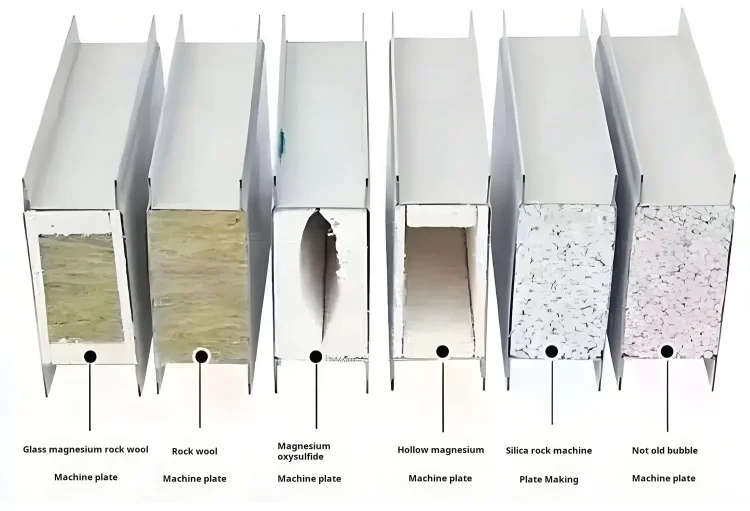
A. Panel core materials
The core material determines the panel's insulation properties, structural integrity, and fire resistance. Different core materials offer varying benefits:
- ✓ Polystyrene (EPS): Cost-effective with good insulation properties
- ✓ Polyurethane (PU/PIR): Excellent thermal performance and fire resistance
- ✓ Rock Wool / Mineral Wool: Superior fire resistance and sound absorption
- ✓ Honeycomb (Aluminum/Paper): Lightweight with high strength-to-weight ratio
- ✓ Gypsum: Good fire resistance and cost-effective for less critical areas
Figure: Cross-section of A CleanRoom panel showing core material, surface skin, and edge seals
B. Panel Surface Skin Materials
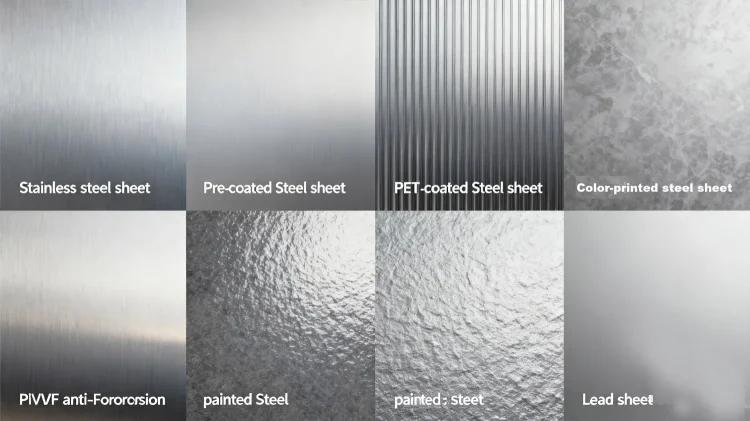
The surface material affects cleanability, chemical resistance, and durability. When reviewing Cleanroom wall panel material specifications, consider these options:
- ✓ Pre-painted Galvanized Steel (PPGI): Durable and cost-effective
- ✓ Stainless Steel (SS 304/316): Excellent chemical resistance and durability
- ✓ Fiberglass Reinforced Plastic (FRP): Non-porous and easy to clean
- ✓ High-Pressure Laminate (HPL): Scratch and impact resistant
- ✓ Aluminum (Pre-painted): Lightweight and corrosion resistant
Figure: Comparison of surface materials showing smoothness, reflectivity, and color options
Dimensional and Structural Specifications
Physical dimensions and structural capabilities are critical aspects of Cleanroom Panel Specifications. These parameters determine how panels fit together and withstand operational loads.
A. Panel Dimensions
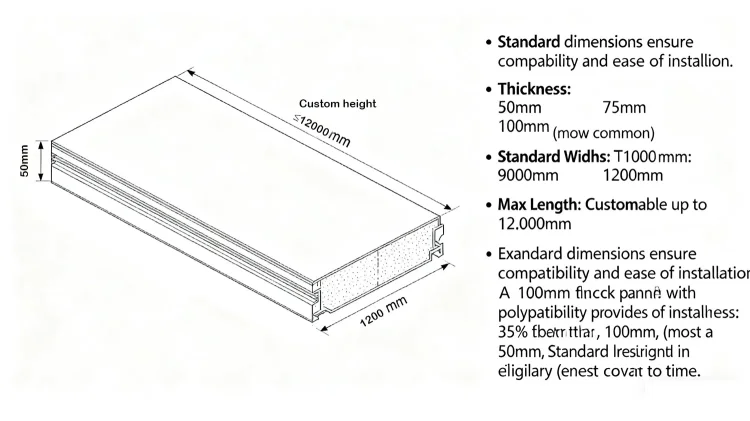
Standard dimensions ensure compatibility and ease of installation. The most critical dimension is Cleanroom wall panel thickness, which directly impacts insulation performance.
- ✓ Thickness: 50mm, 75mm, 100mm (most common)
- ✓ Standard Widths: 900mm, 1000mm, 1200mm
- ✓ Max Length: Customizable up to 12,000mm
Example: A 100mm thick panel with polyurethane core provides approximately 35% better insulation than a 50mm panel, resulting in significant energy savings over time.
Figure: Cleanroom panel dimension illustration showing length, width, and thickness
B. Structural Integrity & Load Bearing
Cleanroom panel load bearing capacity is crucial for ceiling applications where panels must support FFUs, lights, and other equipment.
- ✓ Compressive Strength: 120-180 kPa
- ✓ Flexural Strength: 0.35-0.70 MPa
- ✓ Point Load Capacity: 150-300 kg (for ceiling panels)
- ✓ Wind Load Resistance: Up to 150 mph (if applicable)
Calculation example: For a ceiling panel supporting a 200kg ffu, the required point load capacity should be at least 250kg with a safety factor of 1.25.
Load Capacity Comparison
Panel Type Max Point Load
Standard PU Core 150 kg
Reinforced PU Core 250 kg
Mineral Wool 200 kg
Honeycomb Core 300 kg
Performance Specifications
Performance metrics quantify how panels behave under various conditions. Understanding these Cleanroom Panel Specifications is essential for selecting panels that meet your environmental requirements.
A. Fire Resistance Ratings
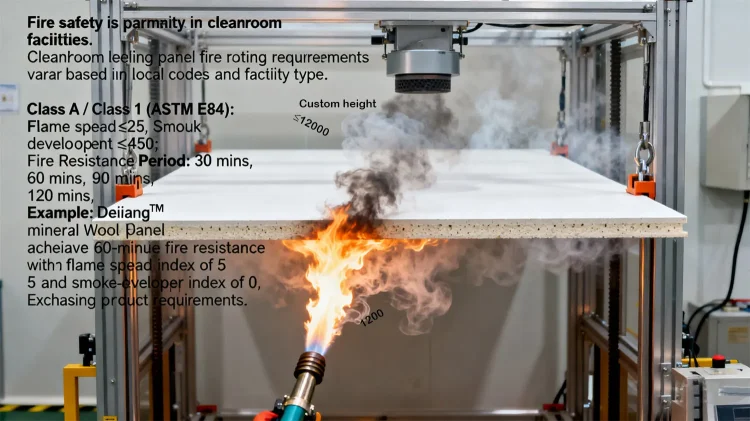
Fire safety is paramount in cleanroom facilities. Cleanroom ceiling panel fire rating requirements vary based on local codes and facility type.
- ✓ Class A / Class 1 (ASTM E84): Flame spread ≤25, Smoke developed ≤450
- ✓ Fire Resistance Period: 30 mins, 60 mins, 90 mins, 120 mins
Example: Deiiang™ mineral wool panels ACHieve 60-minute fire resistance with a flame spread index of 5 and smoke developed index of 0, exceeding standard requirements.
Figure: Cleanroom panel fire test showing flame spread and smoke development
B. Thermal Performance
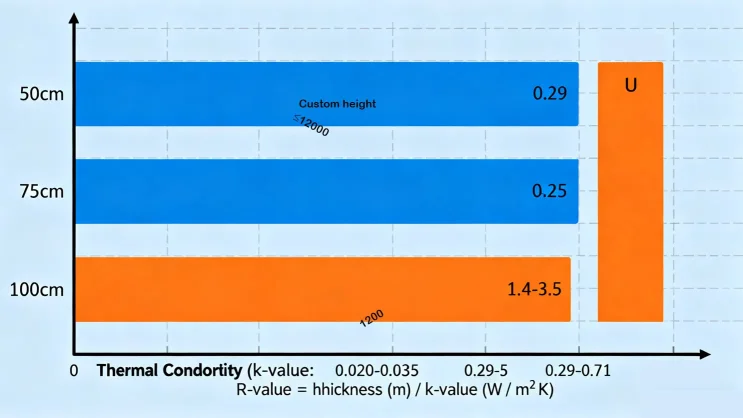
Insulation properties impact energy efficiency and temperature control. The cleanroom panel r value is a key metric for evaluating thermal performance.
- ✓ Thermal Conductivity (k-value): 0.020-0.035 W/m·K
- ✓ Thermal Resistance (R-value): 1.4-3.5 m²·K/W
- ✓ Overall Heat Transfer Coefficient (U-value): 0.29-0.71 W/m²·K
Formula: R-value = thickness (m) / k-value (W/m·K). For example, a 100mm (0.1m) PU panel with k-value of 0.022 W/m·K has R-value = 0.1 / 0.022 = 4.55 m²·K/W.
Figure: R-value/U-value comparison chart for different panel thicknesses and core materials
C. Acoustic Performance
Noise control is important in sensitive environments. Sound Transmission Class (STC) ratings indicate how well panels block sound.
- ✓ Sound Transmission Class (STC Rating): 30-50 dB
Example: A panel with STC 45 reduces noise transmission by 45 dB, making normal speech virtually inaudible through the panel.
D. Chemical Resistance
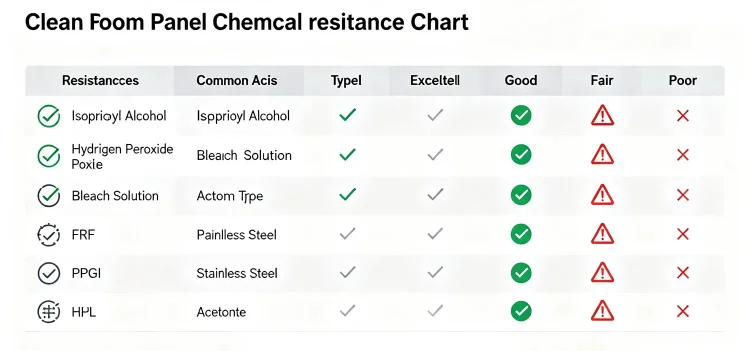
cleanrooms often use aggressive cleaning agents. Understanding cleanroom panel chemical resistance is crucial for long-term durability.
| Chemical | Stainless Steel | FRP | PPGI | HPL |
|---|---|---|---|---|
| Isopropyl Alcohol | Excellent | Excellent | Good | Excellent |
| Hydrogen Peroxide | Excellent | Good | Fair | Excellent |
| bleach Solution | Excellent | Good | Poor | Excellent |
| Acetone | Excellent | Fair | Poor | Good |
Figure: Chemical resistance chart for cleanroom panels showing tolerance to common acids, bases, and solvents
E. Air Tightness & Sealing
Maintaining pressure differentials is critical in cleanrooms. Proper sealing prevents particle ingress and ensures environmental control.
Deiiang™ panels feature advanced sealing systems that achieve air leakage rates below 0.1 m³/h·m² at 50 Pa pressure differential, exceeding industry standards for critical environments.
Surface Characteristics & Finish Specifications
Surface properties directly impact contamination control and cleanability. Meeting cleanroom panel surface finish requirements is essential for maintaining cleanroom integrity.
A. Surface Smoothness & Non-Shedding
Ultra-smooth, non-porous surfaces prevent particle entrapment and shedding, crucial for high-class cleanrooms.
- ✓ Non-Porous: Prevents microbial growth and particle retention
- ✓ Non-Shedding: Minimizes particulate contamination
- ✓ Seamless Appearance: Enhances cleanability and aesthetics
Example: Deiiang™ FRP panels have surface roughness (Ra) values below 0.5 μm, significantly reducing particle adhesion compared to standard surfaces.
B. Anti-Microbial & Anti-Static Properties
Specialized coatings inhibit microbial growth and dissipate static charges. Anti-microbial cleanroom panel specs and ESd CleanRoom panel specifications are critical for specific applications.
Deiiang™ offers panels with silver-ion antimicrobial coatings that reduce bacterial colonization by 99.9% within 24 hours, and ESD panels with surface resistance of 10^6-10^9 ohms for Electronics manufacturing.
Figure: Conceptual illustration of antimicrobial surface inhibiting bacterial growth under microscope

C. Color & Reflectivity
Standard color options and reflectivity impact lighting efficiency and visual comfort in cleanroom environments.
Deiiang™ panels are available in standard white (85% reflectivity) and light colors (70-80% reflectivity) to optimize lighting while minimizing glare. Custom colors are available with reflectivity values tailored to specific lighting requirements.
Panel System & Integration Specifications
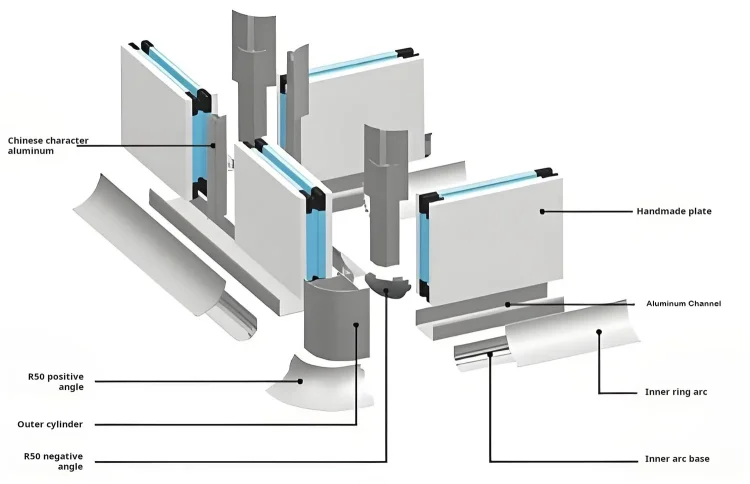
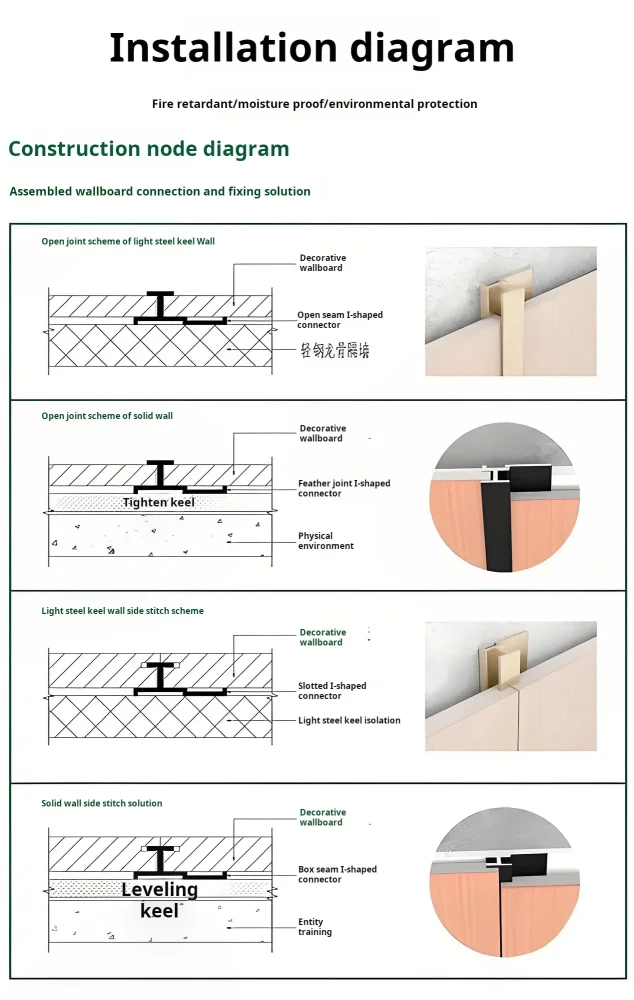
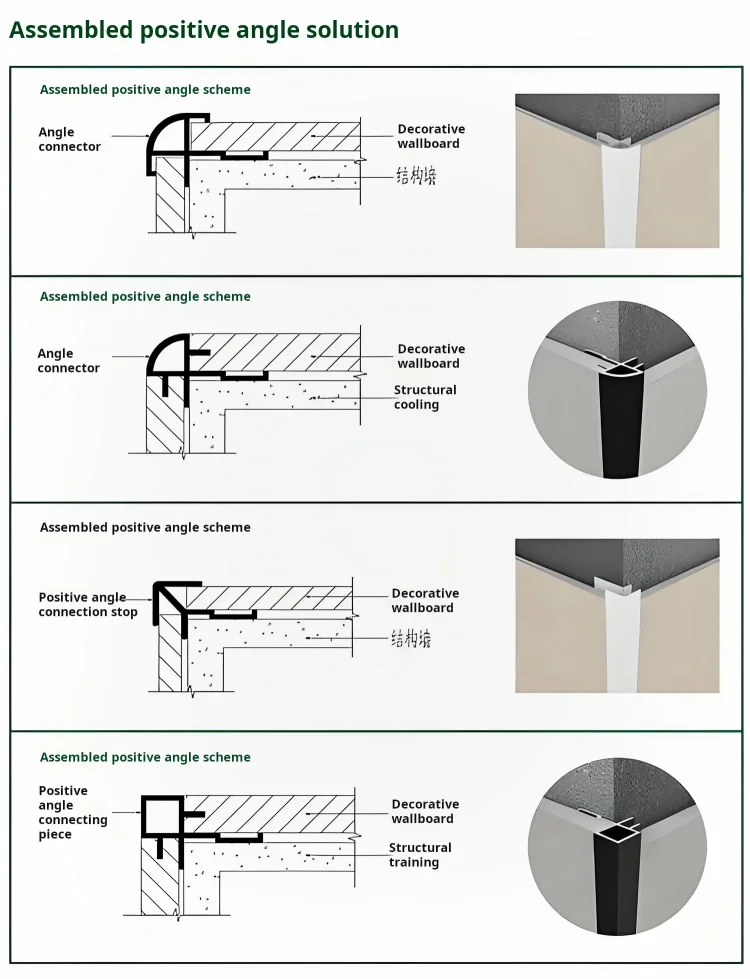
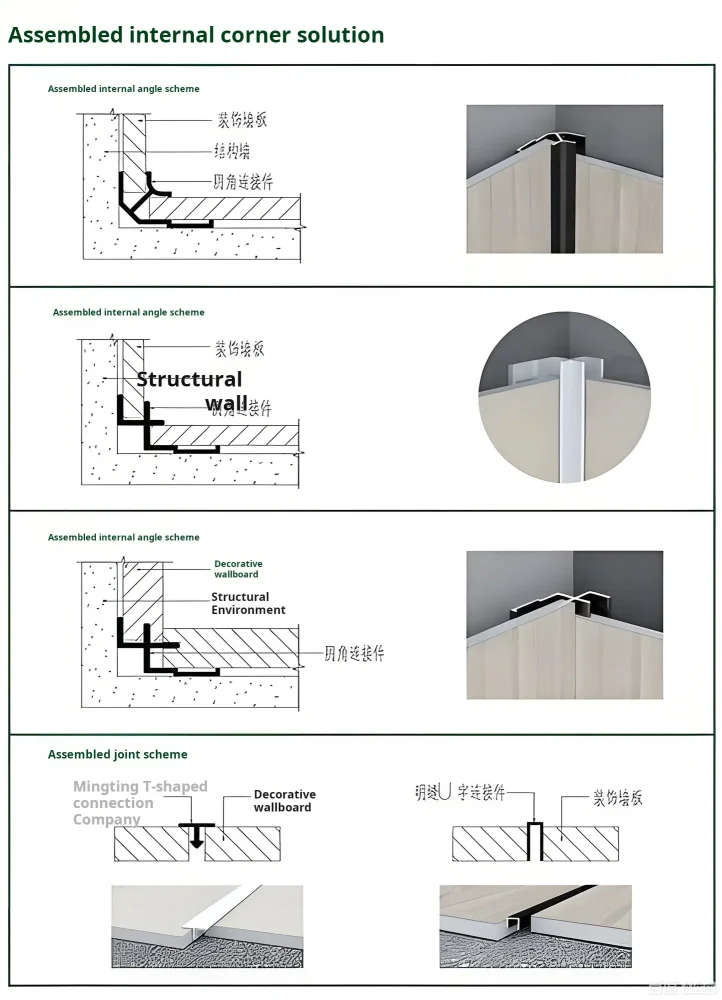
How panels fit together and integrate with other cleanroom elements affects both performance and installation efficiency. Understanding cleanroom panel joint details is essential for proper system design.
A. Joint Systems----------------------------------------------------------------
Different joint types impact airtightness, structural integrity, and aesthetics.
- ✓ Tongue-and-Groove: Excellent airtightness, requires sealant
- ✓ Cam-Lock: Quick installation, good structural connection
- ✓ H-Profile: Clean appearance, easy panel replacement
Example: Deiiang™ cam-lock system enables installation rates of up to 50m² per hour per installer, significantly reducing project timelines.
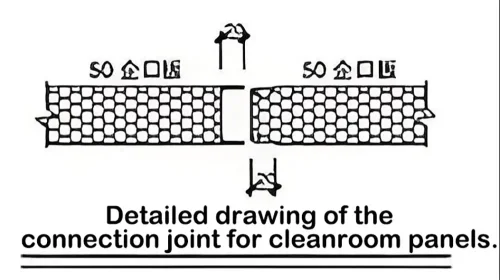
Figure: Detailed cross-sections of common cleanroom panel joint systems
B. Integration with Components
Panels must accommodate various cleanroom components while maintaining integrity.
- ✓ Doors: Flush, Interlocking - Maintain cleanroom envelope
- ✓ Windows: Double-glazed, Flush - Provide visibility without compromising integrity
- ✓ Pass-Throughs: Maintain separation between areas
- ✓ Service Cutouts: Accommodate utilities without compromising panel performance
Deiiang™ panels are designed with pre-engineered cutout options that maintain structural integrity while accommodating HVAC, electrical, and process utilities.
Certifications and Standards Compliance
Third-party certifications verify panel performance and ensure regulatory compliance. Understanding cleanroom panel certifications iso gmp requirements is essential for regulated industries.
- ✓ iso 14644: cleanroom standards
- ✓ GMP: Good Manufacturing Practices
- ✓ FDA Guidelines: Food and Drug Administration
- ✓ ASTM: E84 for Fire, C518 for Thermal
- ✓ UL: Underwriters Laboratories
- ✓ CE Marking: For Europe
- ✓ FM Approvals: Factory Mutual
Deiiang™ panels are certified to meet or exceed these standards, with documentation available for audit and validation purposes.
How to Interpret & Choose Based on Specifications
Matching panel specifications to project requirements requires a holistic approach. Consider these key questions when evaluating Cleanroom Panel Specifications for your application.
- ✓ What is the required cleanliness class? (iso class 5, 7, 8, etc.)
- ✓ What chemicals will be used for cleaning/processes? (Determines chemical resistance needs)
- ✓ What fire rating is mandated by local codes? (Class A, 60-minute, etc.)
- ✓ What are the temperature/humidity control requirements? (Determines insulation needs)
- ✓ What level of structural support is needed for ceiling loads? (FFUs, lights, etc.)
- ✓ Are anti-microbial/anti-static properties necessary? (Pharma, Electronics, etc.)
Example selection process: For an iso class 5 electronics cleanroom with hepa filtration in the ceiling, you would need panels with high point load capacity (≥200kg), ESD properties (10^6-10^9 ohms), Class A fire rating, and smooth, non-shedding surfaces.
Conclusion: The Blueprint for Success
Meticulously understanding Cleanroom Panel Specifications is non-negotiable for project success, ensuring optimal performance, safety, and compliance. The right specifications form the foundation of any successful cleanroom project.
By carefully evaluating all aspects of Cleanroom Panel Specifications - from material composition to performance metrics and certifications - you can select panels that will perform reliably in your specific application for years to come.
Next Steps
Download Deiiang™'s detailed product specification sheets, or contact our technical specialists for tailored advice on your specific CleanRoom panel requirements.
faq(Frequently Asked Questions)
What is the most important specification for a Pharmaceutical cleanroom?
Although multiple specifications exist, the most important include materials that do not shed particles, chemical resistance to disinfectants, surface smoothness for ease of cleaning, and compliance with GMP.
How can I read the R-value of the cleanroom panel specifications?
The R-value indicates thermal resistance, and thus the larger the R-value, the higher the degree of insulation. This is necessary to provide energy efficiency and stable temperature. For example, R3.5 m2·K/W is relating to an R-2.5 panel that is 40% more efficient.
Are all cleanroom panels anti-static?
No. Anti-static performances are a particular requirement for some applications, for example, in electronics manufacturing, and such panels should mention an anti-static property in the specifications, usually providing the surface resistance that is within the threshold between 10^6 and 10^9 ohm.
What does the fire rating of the panel mean?
This rating is referring to how well the particular panel has the ability to withstand fire propagation, which plays a role for ensuring the safety of the personnel and compliance with building regulations. There are various cleanroom applications and placements that imply a specific rating. For example, 60-minutes rating means that the panel can hold the fire propagation for the period of 60 minutes under a standard test.
Can the specifications of cleanroom panels be changed according to requirements?
Yes, reliable manufacturers like Deiiang™ usually provide changes in sizes and utility openings according to the peculiarities of the project, but changes of this kind may lead to longer lead times (e.g., 4-8 weeks for custom panels).