+86 13638632902
 Jason@cleanroomequips.com


 MENU

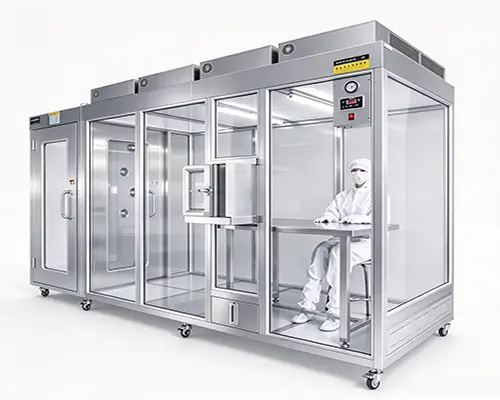
There is no set pricing for a modular cleanroom and costs depend on various factors including cleanroom classification (iso 5), desired compounding operation, complications of HVAC system, materials to use and location of installation. While simple softwall units can cost less, they often do not include all necessary features such as environmental controls, exhaust systems and validation paperwork.
This guide describes main price factors for modular cleanrooms, why it’s dangerous to quote only based on the price and shows how to prepare a Request for Quotation (RFQ) to obtain proper cleanroom for your pharmacy facility.
Modular cleanbooth price: the short answer
There is no responsible universal current price for a modular clean booth. The figure changes materially with internal size and height, required iso class and occupancy state, softwall or hardwall construction, environmental control needs, site conditions, and what the supplier includes in the quotation. A components-only price is not comparable to an installed, tested booth.
A Deiiang webpage published on 2025-01-20 states that modular clean booth prices typically range from US$10,000 to US$100,000 and that more advanced setups can exceed US$100,000 [6]. This is a company-published range from an article dated 2025-01-20, not a price valid through 2026 and not a current quotation. It does not define dimensions, destination, Incoterm, or inclusions. Treat it as a rough orientation only, and require sales revalidation with a defined scope before budgeting.
Key point: A modular cleanbooth price is only meaningful when the quotation states dimensions, ISO class and occupancy state, enclosure type, environmental control scope, delivery term, and what is included or excluded. Without that scope, two prices cannot be compared.
Four different meanings of "price"
"Price" is ambiguous in clean booth purchasing. Two suppliers can both say "clean booth price" and mean completely different scopes.
Ex-works/components-only scope: the quotation should state the named place and exactly who is responsible for loading, export formalities, freight, insurance, import clearance, inland transport, unloading, assembly, and commissioning.
Delivered scope: the quotation must identify the Incoterm, named place, destination, and which party arranges and pays for freight, insurance, import clearance, duties, unloading, installation, and testing.
Installed and commissioned: the supplier provides labor, supervision, or both for assembly and basic commissioning. Site preparation, utilities to the booth, local permits, and classification testing may still be excluded.
Turnkey / full-scope installed system: the supplier takes responsibility for design, delivery, installation, site-work interfaces, commissioning, contracted qualification support, testing, and documentation where applicable. Because it includes a broader scope of work, a turnkey quotation will generally have a higher quoted total than a components-only quotation, but the figures are not directly comparable unless scope is normalized.
Scope and terms must match before comparing numbers.
Why online prices vary so widely
Online clean booth prices differ because they are not quoting the same thing. A listed price may cover a frame-and-curtain kit only. Another may include ffus. Another may include installation in a specific country. Size, ISO class, wall type, filter coverage, HVAC and humidity control, monitoring, sector-specific rules, destination, and services all shift the figure.
A downflow booth listing on ConductScience displayed US$6,799.99 and "Standard delivery" when checked on 2026-09-29 [5]. It is an online product listing for a configuration, not a turnkey comparator. Confirm what "Standard delivery" covers, destination limitations, taxes or duties, configuration options, installation, commissioning, and classification testing before using the listing for project budgeting.
Do not combine these figures into a market-price range: they represent different source types, dates, configurations, inclusions, and commercial scopes.
The seven biggest clean booth cost factors
1. Internal dimensions and ceiling height
Internal volume, floor area, enclosure area, and required equipment all affect cost; floor footprint alone is not sufficient for estimating price. A 3 m × 3 m booth with 2.5 m ceiling height provides 9 m² floor area and 22.5 m³ internal volume. A 6 m × 6 m booth at the same height provides 36 m² and 90 m³.
The larger booth has four times the floor area and four times the volume. It does not mean exactly four times the project cost. Fixed and step costs — controls, minimum FFU quantities, freight minimums, engineering, commissioning visits — do not scale linearly. Very small booths can carry disproportionate overhead per square meter.
2. Required ISO class and occupancy state
iso 14644-1:2015 specifies classification of air cleanliness by airborne particle concentration [1]. iso 14644-3:2019 provides supporting test methods for cleanrooms and clean zones and describes the as-built, at-rest, and operational occupancy states [2]. The required occupancy state must therefore be stated when specifying and accepting the booth.
An ISO air-cleanliness class addresses airborne particle concentration; by itself it does not establish sterility, viable contamination control, temperature or humidity performance, or compliance with a sector-specific regulatory scheme.
A more stringent target class (a lower ISO class number) may require changes in airflow, filtration coverage, enclosure design, operating procedures, and testing, but ISO class alone does not prescribe a universal airflow rate or FFU count. All else being equal, a more stringent cleanliness target can increase equipment, engineering, commissioning, and testing requirements; the actual price difference must be determined from the defined design and scope.
3. Softwall, hardwall, or hybrid enclosure
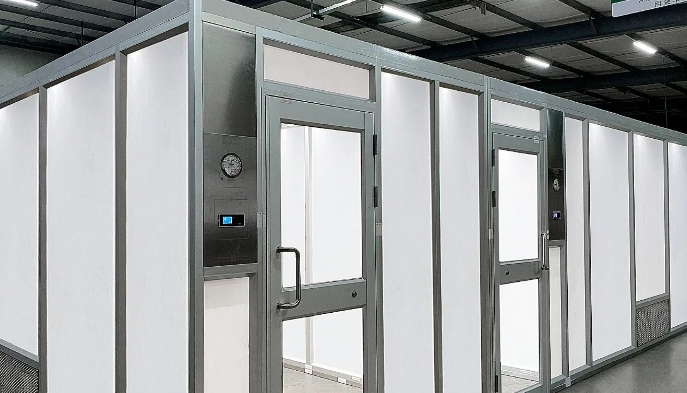
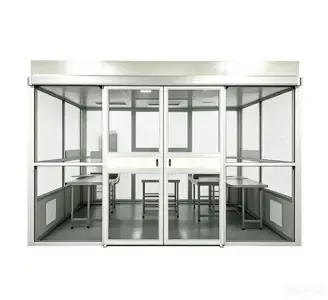
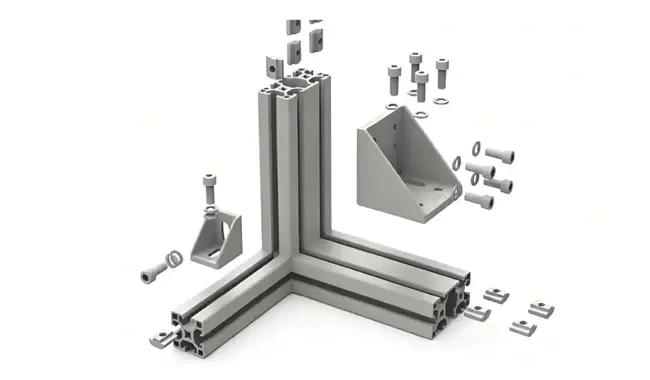
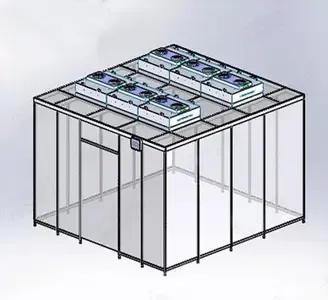
Softwall enclosures use flexible curtain walls on a frame. Softwall construction can reduce enclosure complexity and support rapid reconfiguration, but wall type alone does not determine the ACHievable ISO class. Selection should consider airflow strategy, pressure control, access, cleaning, durability, process risk, and the specified acceptance condition. A portable clean room price is often associated with softwall construction because the materials and frame are lighter.
Hardwall enclosures use rigid panels. Rigid panels can provide a more defined enclosure and may be preferred where sealing, durability, cleaning, or pressure-control requirements justify them.
Hybrid designs combine rigid and flexible elements. This is a cost-driver comparison, not a price table. The right choice depends on required class, duration, compliance needs, and expected changes.
4. Airflow, filtration, and environmental control
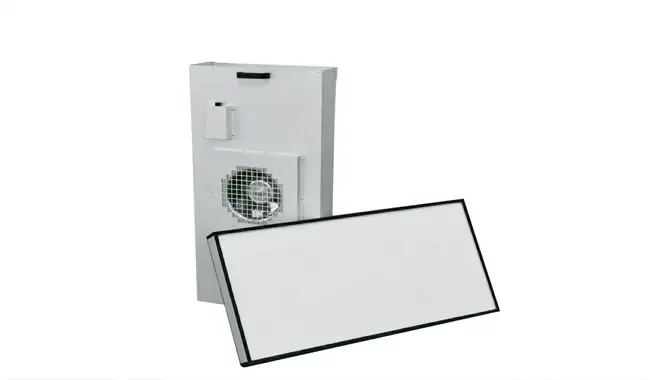
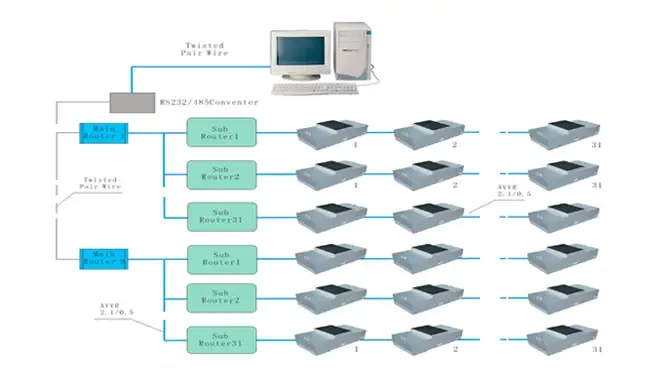
FFUs or terminal HEPA/ULPA filters provide filtered supply air. Return paths, make-up air, heating, cooling, humidity control, exhaust, redundancy, and controls all add cost. A booth that simply recirculates room air with FFUs costs less than a booth with conditioned make-up air and humidity control.
There is no universal FFU count or air changes per hour by ISO class. Required airflow depends on the booth design, heat load, contamination sources, and target occupancy state. Over-specifying filtration wastes money. Under-specifying risks failing the intended class.
For cleanroom-specific energy-efficiency guidance, see ISO 14644-16:2019 [3].
5. Doors, airlocks, monitoring, ESD, and other options
Doors, airlocks, pass-throughs, interlocked entries, particle counters, pressure monitors, temperature and humidity sensors, ESD flooring or curtains, and integrated controls are scope additions. Each option adds material, installation labor, and commissioning time.
6. Site, freight, installation, and local compliance
Export packing, containerization, Incoterm, inland freight, duties and taxes, unloading, rigging, installation labor, travel, local power compatibility, permits, seismic or wind requirements, fire protection, and work-hour restrictions all affect landed cost.
A booth that fits through a standard door may arrive in one crate. A larger booth may require multiple shipments, crane access, or partial assembly on site. Local electrical requirements, permitting, access restrictions, and site interfaces can add cost and affect the project schedule.
7. Testing, documentation, and validation
Commissioning, ISO 14644-1 classification testing, installed filter-system leakage testing where required, airflow measurements, and application-specific qualification documentation may be separate line items. A supplier should not describe the booth itself as "FDA-approved" or "GMP-certified" unless a specific applicable regulatory or certification basis supports that claim. The quotation should instead identify the contracted performance criteria, tests, records, and qualification support.
Testing and documentation cost money. A quotation without them is incomplete for any application that requires verified performance.
A formula for comparing modular clean booth quotations
Initial landed-and-installed cost
Subtotal = A + B + C + D + E + F + G + H
Contingency amount = Subtotal × contingency rate
Initial landed-and-installed cost = Subtotal + contingency amount
Count each cost once. If an item is already included in the supplier package price, enter it as included rather than adding it again as a separate cost.
Worked example template
insert variables A–I and the formula. No invented dollar values.
| Variable | Description | Source |
|---|---|---|
| A | Approved quote package price | Supplier quote |
| B | Engineering and selected options | Supplier quote or addendum |
| C | Export packing and freight to destination | Freight quote |
| D | Duty and tax | Customs broker estimate |
| E | Unloading and rigging | Local contractor quote |
| F | Site work and utilities to booth | Local contractor quote |
| G | Installation labor and supervision | Supplier or local contractor |
| H | Commissioning and testing | Supplier or third-party test firm |
| I | Contingency rate (%) | Buyer-defined percentage |
A — Approved quote package price: Supplier quote
B — Engineering and selected options: Supplier quote or addendum
C — Export packing and freight to destination: Freight quote
D — Duty and tax: Customs broker estimate
E — Unloading and rigging: Local contractor quote
F — Site work and utilities to booth: Local contractor quote
G — Installation labor and supervision: Supplier or local contractor
H — Commissioning and testing: Supplier or third-party test firm
I — Contingency rate (%): Buyer-defined percentage
The template can be used with live quotations. Any worked example published by Deiiang should use an approved, dated and anonymized quotation with currency, destination, Incoterm, inclusions, exclusions, and validity stated.
Annual operating cost
Annual operating cost = Fan/HVAC electricity + filters + calibration/testing + cleaning consumables + maintenance + repairs/downtime
Fan and HVAC electricity can be a significant operating-cost component, but its share depends on airflow, conditioning load, operating hours, climate, controls, and local electricity tariffs. Filter replacement depends on ambient conditions and prefilter maintenance. Calibration and testing depend on sector requirements and internal quality programs.
Fan-energy calculation example
Annual kWh = measured average kW × hours per year
Electricity cost = annual kWh × local tariff
Use measured or supplier-verified power at the operating point, not nameplate maximum. FFU power draw varies with speed and filter loading. A fan running at reduced speed draws less power than one at full speed. The exact relationship depends on the fan and control method.
Five-year total cost of ownership
Five-year nominal TCO = initial landed-and-installed cost + five-year operating costs + applicable requalification/reconfiguration costs − residual value
This is a nominal TCO, not a discounted net present value, unless a discount rate is explicitly applied and stated.
| Cost category | Timing | Treatment / source |
|---|---|---|
| Capex (landed/installed) | Year 1 | From initial cost formula |
| Energy | Years 1–5 | Annual kWh × local tariff; escalate with forecast |
| Consumables | Years 1–5 | Filters, cleaning supplies |
| Service | Years 1–5 | Maintenance visits, calibration |
| Retesting or requalification after change | As required | Required by applicable change-control process, risk assessment, contract, or regulatory/quality requirements; add when applicable |
| Reconfiguration cost | As required | Add when applicable |
| Residual or reuse value | End of Year 5 | Subtract at end of analysis if a defensible estimate exists |
Capex (landed/installed) — Year 1: From initial cost formula
Energy — Years 1–5: Annual kWh × local tariff; escalate with forecast
Consumables — Years 1–5: Filters, cleaning supplies
Service — Years 1–5: Maintenance visits, calibration
Retesting or requalification after change — As required: Required by applicable change-control process, risk assessment, contract, or regulatory/quality requirements; add when applicable
Reconfiguration cost — As required: Add when applicable
Residual or reuse value — End of Year 5: Subtract at end of analysis if a defensible estimate exists
What a trustworthy clean booth quotation should include
Technical scope
Internal dimensions, layout, and ceiling height
Target ISO class, occupancy state, applicable standard edition, agreed test/acceptance method, environmental design conditions, and responsibility for testing
Design conditions: temperature, humidity, external environment
Wall, ceiling, and floor construction
FFU quantity, filter type, and coverage
Return air path and make-up air provision
Doors, airlocks, pass-throughs
Lighting type and level
Controls and monitoring
Utilities required at booth boundary
Performance criteria and acceptance method
Commercial scope
Currency and date
Quote validity period
Incoterm and named place
Tax and duty responsibility
Packaging type and responsibility
Freight scope and destination
Lead-time definition (from what event)
Payment terms
Warranty period and coverage
Installation scope and supervision
Travel and living expenses if applicable
Exclusions list
Change-order process
Test and document scope
General arrangement drawings
Installation manuals
Manufacturer/factory documentation for supplied FFUs and filters, where included
Installed filter-system leakage test report, where required by the agreed test scope
Commissioning procedure and report
Classification test method and acceptance criteria
Calibration certificates
Training scope
Qualification documentation if applicable
How to reduce cost without creating compliance risk
Define the process before choosing the class
Specify the cleanliness class and other environmental controls justified by the process, product requirements, contamination-risk assessment, and applicable regulatory or quality requirements. Avoid specifying a more stringent ISO class without a defined need.

Separate critical zones from support space
Where the process and applicable requirements permit, separating a smaller critical zone from less critical support space can reduce the area requiring the most stringent controls. The zoning concept must be justified by the process and contamination-control strategy.
Freeze interfaces early and design for expansion
Changing utilities, power, or layout later costs more than planning for them initially. Design for reasonable expansion so a future change does not require rebuilding the booth.
Compare exclusions, not only headline price
The lowest headline price often excludes HVAC, installation, freight, controls, and testing. Compare total landed and installed cost against the same scope.
Red flags:
- Required temperature, humidity, make-up air, exhaust, or environmental-control responsibilities are undefined or omitted where the process requires them
- Installation, freight, or controls excluded
- Local compliance requirements not addressed
- Filter data undefined or not provided
- Occupancy state ambiguous (at-rest vs. operational)
Deiiang price example: publish an auditable quote, not a marketing range
Deiiang has not published an approved anonymized modular clean booth quotation for this article. Until such a quotation is approved and released, no client name, project name, dimensions, class, region, or price should be presented here as a Deiiang case example.
If Deiiang later publishes an approved anonymized quotation, it should state at minimum: quote number and date, buyer region, internal dimensions, target class and occupancy state, sector and use, enclosure type, FFU/HVAC/controls scope, voltage and local power, delivery term, freight/install/testing inclusions, currency, and validity. Written permission and approved redaction are required before publication.
Information to send for an accurate price
| Item | Your information |
|---|---|
| Country, city/region, and postal/ZIP code | |
| Application/process | |
| Internal dimensions (L × W × H) | |
| Clear height required | |
| Target ISO class and occupancy state | |
| Personnel, equipment, and heat load | |
| Enclosure preference (softwall/hardwall/hybrid) | |
| Temperature and RH requirements | |
| Exhaust needs | |
| Doors and airlocks | |
| Monitoring and controls | |
| Available power (voltage, phase, amps) | |
| Site constraints (access, floor, ceiling) | |
| Delivery, installation, and testing scope | |
| Target schedule |
Country, city/region, and postal/ZIP code
Application/process
Internal dimensions (L × W × H)
Clear height required
Target ISO class and occupancy state
Personnel, equipment, and heat load
Enclosure preference (softwall/hardwall/hybrid)
Temperature and RH requirements
Exhaust needs
Doors and airlocks
Monitoring and controls
Available power (voltage, phase, amps)
Site constraints (access, floor, ceiling)
Delivery, installation, and testing scope
Target schedule
Request an itemized budget quote after technical review. No guarantee of price or timeline is implied until a formal quotation is issued.
FAQs
1. How much does a modular cleanbooth cost?
There is no responsible universal current price without a defined scope. A Deiiang webpage published on 2025-01-20 states that prices typically range from US$10,000 to US$100,000 and that more advanced setups can exceed US$100,000 [6]. That is an undefined historical company range from an article, not a current 2026 quotation. Require a supplier quotation with defined scope.
2. Is a softwall clean booth cheaper than a hardwall booth?
Softwall configurations can have a lower initial enclosure cost than comparable hardwall configurations, but the final installed cost depends on size, airflow, environmental control, doors, monitoring, installation, and testing scope. The right choice depends on required class, duration, and compliance needs.
3. Does the quoted price include HVAC and humidity control?
Do not assume HVAC or humidity control is included. Check the quotation for conditioned make-up air, heating, cooling, humidity control, exhaust, controls, utilities, and responsibility for integration.
4. Does the price include ISO classification testing?
ISO 14644-1 specifies classification of air cleanliness by airborne particle concentration [1]. ISO 14644-3 provides supporting cleanroom and clean-zone test methods [2]. A quotation should state who will perform the agreed tests, the occupancy state, applicable standard edition, acceptance criteria, and required report.
5. What information is needed for a clean booth quotation?
Dimensions, target class and occupancy state, enclosure type, environmental requirements, heat load, power, site constraints, and required scope for delivery, installation, and testing. Use the checklist above.
6. What costs are commonly excluded from online clean booth prices?
Items that may be excluded include freight, duties and taxes, unloading, rigging, site work, utilities, installation, commissioning, testing, HVAC, humidity control, and local compliance work. Verify each item in the individual quotation. Online prices are often component or kit prices.
7. How should two clean booth quotes be compared?
Compare landed-and-installed cost against identical scope. Check inclusions and exclusions for HVAC, controls, freight, installation, testing, and documentation. Do not compare headline prices from different scopes.
References
- iso 14644-1:2015, Cleanrooms and associated controlled environments — Part 1: Classification of air cleanliness by particle concentration — https://www.iso.org/standard/53394.html
- iso 14644-3:2019, Cleanrooms and associated controlled environments — Part 3: Test methods — https://www.iso.org/standard/60598.html
- ISO 14644-16:2019, Cleanrooms and associated controlled environments — Part 16: Energy efficiency in cleanrooms and separative devices — https://www.iso.org/standard/66331.html
- Technical Equipment Sales (TES), cleanroom cost Estimator Worksheet — undated, scope-limited budgeting worksheet — https://products.tesinc.com/Asset/Cleanroom-Cost-Estimator-Worksheet.pdf
- ConductScience, Clean Booth (down flow booth), online product listing — price checked 2026-09-29; not a turnkey project comparator — https://conductscience.com/lab/clean-booth-down-flow-booth
- Deiiang, "What is the price of a modular clean booth?", published 2025-01-20 — company-published, scope-limited historical pricing reference — https://www.cleanroomequips.com/Modular-CleanRoom-FAQ/What-is-the-price-of-a-modular-clean-booth-.html