+86 13638632902
 Jason@cleanroomequips.com


 MENU

Washing is not the same as reusing. Washing is a cleaning method while reusing is the repetition of service after cleaning has been approved. If the datasheet is silent on the issue, do not wash and do not reuse the filter—the plain answer to the general question “are medium filters washable” is then simply no.
This article will look at what medium filters are and how medium air filters are defined—what they do and why they are more usually simply replaced rather than cleaned in terms of medium filter maintenance procedures.
Additional issues covered will pertain to cleanroom airflow medium filter cleaning, cleanroom medium filter care, how to plan for medium filter replacement in cleanroom applications, and HVAC medium filter lifespan limitations.
The simplest answer is a medium filter can only be washed if it was specifically designed to be washed and it can only be reused within the manufacturer’s stated limits. If you find an undocumented medium filter, you should consider it disposable.
cOzulupWs1Q
What “Medium Filter” Means in HVAC and Cleanroom Applications
Within HVAC and cleanroom airflow, the term “medium filter” describes a filtering medium that functions at the middle filtration stage when placed between a coarse prefilter and a high-efficiency final filter.
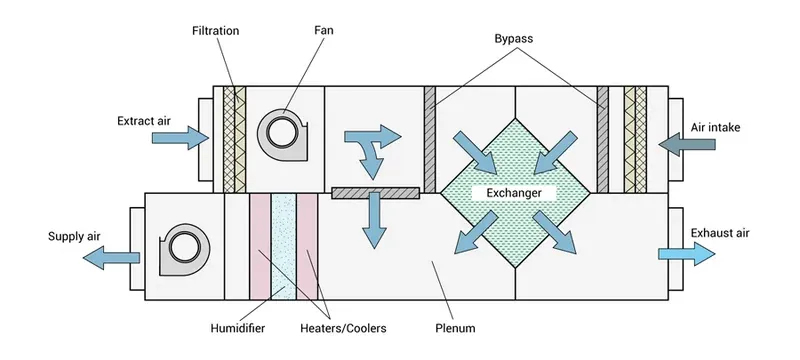
Figure 1: Three-stage filter layout showing prefilter, medium filter, and final high-efficiency filter positions in an air handling unit. Illustrative diagram; use it to see why the medium stage protects the final filter but is not the terminal barrier.
The term “medium” has specific meaning relative to either filtering efficiency categories or specific product categories. In the old European classification system (EN 779), information was available on classes G1 to G4 and F5 to F9 [1].
The F5 term is now used in commercial contexts, although the F5 class term does not appear in EN 779 standards.
How Do Medium Filters Differ from Prefilters and HEPA filters?
Prefilters are the first stage of filtration, capturing all the large particles and thus preventing any of them from reACHing further stages. Prefilters are typically made of either metal mesh or synthetic media, and in some cases prefilters are designed to be cleaned.
Medium filters retain smaller particles than prefilters, but they do not achieve HEPA filter submicron levels of efficiency. Medium filters can be made with various materials such as glass fibres, plastic fibres, or pleated media depending on the product family.
HEPA and ULPA filters are considered terminal filters which means they are the last stage of filtration. According to the EN 1822 and ISO 29463 standards, the filtering efficiency of these filters is expressed in terms of their MPPS levels.
However, in the United States, HEPA filter efficiency is expressed in terms of the 0.3 µm particle size as a standard [3][4].
Why Do Filter Ratings and Terminology Vary?
The reason that various standards have different rating systems is that each rating system measures efficiency differently. The EN 779 standard measures average efficiency based on defined particle sizes, while the ISO 16890 standard provides efficiency ratings based on fractional efficiency over a range of particulate matter.
The EN 1822 and ISO 29463 standards classify filters according to the MPPS.
There is no direct conversion between the EN 779 F-class ratings and the ISO 16890 ePM ratings. Your selection should be based on the test data from relevant applications, including airflow and pressure drop limits.
Are Medium Filters Washable or Reusable?
Most medium filters currently used in HVAC and cleanroom applications are disposable, but this is not the case for all medium filters, so the practical question “are medium filters reusable” has to be answered model by model. If you are asking whether are medium filters reusable, the answer depends entirely on what the model datasheet says.
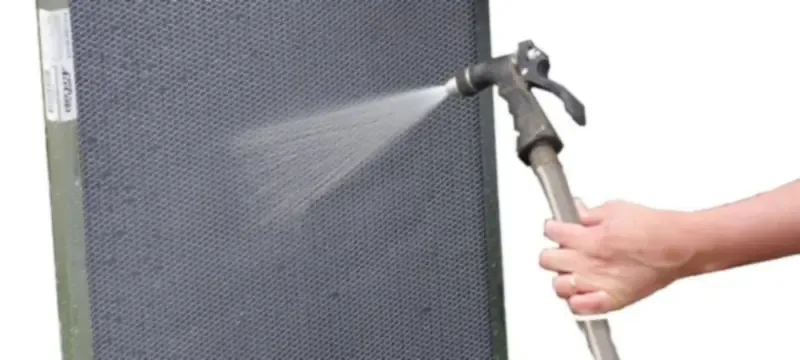
Figure 2: Cross-section comparison of washable filter construction versus disposable medium filter construction. Compare with the datasheet to determine if the frame, media, and seal are indicated as cleanable.
The practical question is not “are medium filters washable” in general, but whether the individual model has been documented as washable and reusable; if not, then medium air filter cleaning has not been cleared as an acceptable use of the filter medium.
The comparison of suitability for cleaning by design and with a qualification is shown in Table 1; generally, these are good guidelines, but the manufacturer’s instructions for the specific model always hold first priority.
Table 1: Cleaning suitability by medium filter design type.
| Filter type | Washable | Reusable | Manufacturer guidance | Basis or qualification |
|---|---|---|---|---|
| Metal mesh prefilter | Usually yes provided it is designed to be washable | Yes if approved | Cleaning only by the specified method for that model | Usually treated as a prefilter, not a true medium filter |
| Synthetic panel medium filter | Typically no | Typically no | Changing filter at either pressure drop or condition limit | Some variants exist which can be cleaned but check datasheet |
| Glass-fibre bag medium filter | No unless documented | No unless documented | Changing filter unless specifically approved | Wet handling can cause damage to the glass-fibre media |
| V-bank combined medium filter | Dependent on model | Dependent on model | Adhere to manufacturers recommendations | Structure varies therefore not every V-bank is a disposable filter |
| Pleated medium panel | Dependent on model | Dependent on model | Adhere to manufacturers recommendations | Media, frame and gasket differ from one filter design to another |
| Specially designed reusable medium filter | Yes if approved | Yes if approved | Follow cleaning process and reuse restrictions | Reuse means repeated service after approved cleaning |
| Filter type | Washable | Manufacturer guidance |
|---|---|---|
| Metal mesh prefilter | Usually yes if designed for washing | Clean only by the specified method for that model |
| Synthetic panel medium filter | Typically no | Change at pressure drop or condition limit |
| Glass-fibre bag medium filter | No unless documented | Change unless specifically approved |
| V-bank combined medium filter | Dependent on model | Adhere to manufacturer recommendations |
| Pleated medium panel | Dependent on model | Adhere to manufacturer recommendations |
| Specially designed reusable medium filter | Yes if approved | Follow cleaning process and reuse restrictions |
In this context, “reusable” refers to repeating the use of a filter design after approved cleaning, and not simply putting a dirty filter again into service. A filter design which has not reached its specified end of life condition may continue to be utilized in some cases, but this does not conform to a definition of a reusable filter design.
Deiiang catalogue data for medium efficiency bag filter family provides a six-bag configuration of the size 592 × 592 × 381 mm rated at 2,050 m³/h with a media area of 3.18 m² [10]. This is a product catalogue data for that configuration; this does not signify a cleaning approval.
Which Medium Filter Designs Are Made for Washing?
There are some washable HVAC filters in the medium range but they are still a small portion of the market. Most medium-efficiency filters are designed so that they are rigid, contain media specifically designed to withstand moisture, and have a gasket that prevents the filter from leaking after drying.
For the reusable design to be acceptable, it is necessary to document the cleaning agent, water quality, rinsing method, drying criteria, and inspection criteria to establish the reuse criteria. However, if this documentation is lacking, the filter should be treated as disposable.
Why Are Most Medium-Efficiency Filters Replaced Instead?
Medium efficiency filters need to be replaced because washing does not guarantee restoration of the filter performance. Even though washing can remove a considerable amount of dust, minute particles remain present, embedded in the media, so medium filter replacement usually delivers the more predictable result.
Washing could also alter the filter’s pleat shape, reduce its electrostatic property, or damage the sealing process, which is why medium air filter cleaning is never a routine task. An unauthorized cleaning attempt in cleanroom medium filters could create bypass occasions and unnecessarily overload the final filter.
How to Identify a Washable Medium Air Filter
To confirm the capacity to wash a medium air filter, one must check its label and manufacturer’s product report. Before asking can you wash a medium-efficiency air filter, the documentation should answer the question for you.
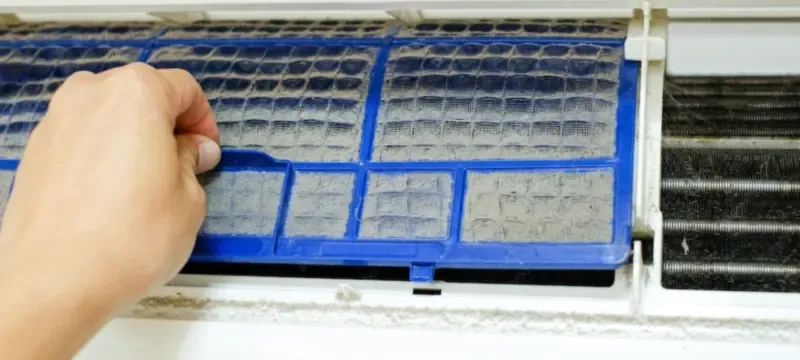
Figure 3: Label and datasheet checklist for confirming whether a medium filter is approved for washing. Illustrative checklist; use it to stop before cleaning when the model documentation does not explicitly authorize it.
To begin, use the label, which is usually where the question “can you wash a medium-efficiency air filter” is first answered. Be on the lookout for any cleaning instructions, a reuse statement, or a model number that resembles that of an already documented reusable air filter. If it mentions that it is a disposable filter, simply stop as there are no two ways about it.
Go through the manufacturer’s product report to see if there is any information about the cleaning processes and reuse needs. If the report simply states how often replacement occurs, then it has no specific information which could be used for medium air filter cleaning.
Make sure to check the filter’s frame, media, sealant, and gasket. For Deiiang medium efficiency bag filters, catalogue data indicates that glass-fibre versions are mounted in aluminum frames while synthetic versions use aluminum-profile frames.
However, the material of the frame alone does not indicate whether or not the entire assembly is washable, or answer the wider question “are medium filters washable”.
What Labels or Datasheets Confirm Reusability?
A datasheet for a reusable medium filter should indicate that the filter is designed for washing and reuse, and that statement is what settles the wider question “are medium filters reusable”. It should specify the method of cleaning, drying requirements, and the maximum number of reuses possible or some condition(s) to determine when a filter requires replacement.
Washing or reusing a filter should only be done if the manufacturer gives authorization through documentation; no general article can decide “are medium filters reusable” for a specific model. While it is acceptable to have a condition-based rule for filtering replacement, this is not a universal requirement.
Which Construction Features Affect Cleaning Suitability?
Although aluminum and stainless-steel frames may withstand water better than untreated steel frames, the mere use of a certain frame material does not guarantee cleanability, and it does not settle the question “are medium filters reusable” either. The media used in the filter, adhesive, gasket, and other specifications must also be certified.
Do not assume that PU sealants, EVA spacers, synthetic media or glass fibre media will react the same upon washing. Each type must be designated according to reliable construction methods.
Risks of Washing a Non-Washable Medium Filter
As previously indicated, washing a non-washable filter has several potential failure modes once the general question “are medium filters washable” has been answered incorrectly.
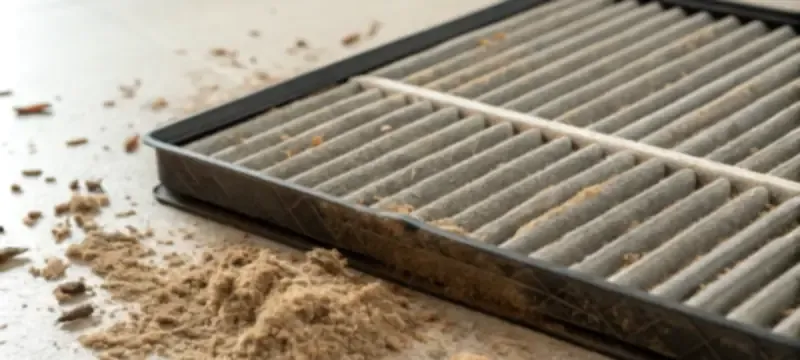
Figure 4: Damage pathways from washing a non-washable medium filter, including media breakdown, seal bypass, and moisture retention. Illustrative diagram; use it to recognize that damage may be hidden inside the filter.
Synthetic media becomes damaged when the charge or structure is affected.
Seal bypass occurs when a sealant or gasket fails to perform its function of sealing against the frame, a failure that medium filter maintenance checks are meant to catch early. With a compromised seal, there is an allowance of unfiltered air to go around the media.
Retained moisture poses a threat as well. A filter should be reinstalled only after the complete drying procedures as per the manufacturer’s specifications are followed; skipping this step shortens any HVAC medium filter lifespan.
How Can Washing Damage Filter Media and Seals?
Depending on the design, there are many ways in which the following can lead to damage: cleaning agents, spray pressure, drying and heat, any of which can force a medium filter replacement decision earlier than planned. Manufacturers provide no general recommendations regarding the amount of pressure or water temperature.
There are several instances in which detergents can remain on the medium after a wash. There are solvents that can erode the sealants. Under some conditions heating may deform frames or shrink the medium as well.
Do not improvise a cleaning method when the documentation is silent, whatever assumption has been made about “are medium filters washable”.
What Can Filter Damage Mean for Cleanroom Operation?
As regards cleanroom operations, a damaged medium filter reduces filtration or leads to bypass. The specific implications of damage to a medium filter have to be determined through inspection and testing rather than assumed.
The presence of a damaged medium filter leads to a shift of particles previously collected on the medium filter to the final filter, which is why washable HVAC filters still have to be re-inspected after every clean. It can lead to reduced life of the final filter as well as affect the pressure balance of the system.
Safe Cleaning and Inspection for Approved Reusable Filters
mD6cH1FWkrg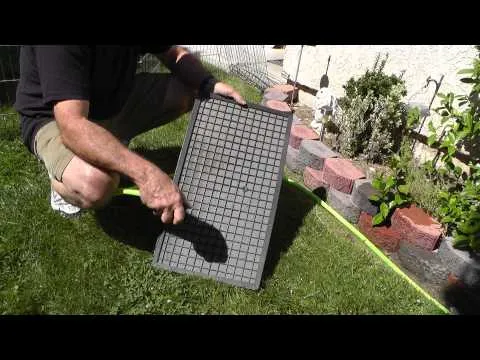
Should a medium filter be specifically authorized for cleaning, cleaning will have to proceed in a controlled manner. Cleanroom medium filter care procedures should always start from this rule.
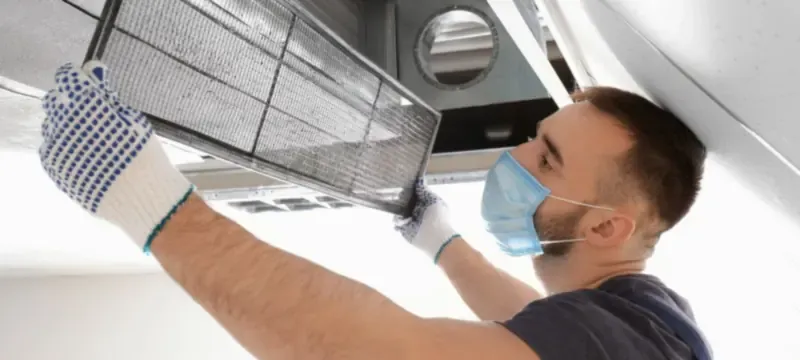
Figure 5: Approved cleaning workflow for reusable medium filters: clean, inspect, dry, and reinstall. Illustrative process; use it only after the manufacturer has authorized cleaning for the exact model.
Follow the manufacturer’s cleaning directions explicitly, because that is the only basis on which medium filter maintenance by cleaning can be defended. There is no room for variation with cleaning agents, water temperatures, rinsing methods, or drying methods. This is a requirement, not a suggestion.
Avoid reinstalling a wet or contaminated item. The growth of microorganisms could occur from a damp filter, and re-installing a filter cleaned in unsanitary conditions could bring back contaminants.
The media, frame, and seals should be checked after cleaning, because cleanroom medium filter care is judged on the inspection record rather than on appearance. Be sure to make a note of the date, method, drying time and results of the inspection after filters have been cleaned.
How Should a Reusable Medium Filter Be Cleaned?
There is no substitute for following the manufacturer’s recommended protocol and method; medium air filter cleaning without that document is simply a guess. This protocol and method will include proper water temperature, cleaning agents, rinsing methods, and drying requirements.
Refrain from mechanical agitation unless the protocol states that it is acceptable. Do not scrub, pressure wash, or use a brush on the media. Also avoid wringing out or twisting the filter.
Make sure that the filter is completely dry before reinstalling, since medium air filter cleaning that ends wet is worse than no cleaning at all. Air drying is preferable in a clean, dry area, unless the manufacturer states otherwise.
What Checks Are Needed Before Reinstallation?
Before installation, check for the following four conditions:
Media is dry, with no moisture on the media, frame, or gasket.
Media is not torn or punctured in any way.
Frame is intact and has not warped or corroded.
Gasket is functioning properly and compresses to eliminate gaps.
If any of the inspections fail, replace the filter.
Cleaning Versus Replacement: Performance and Cost
Cleaning and replacing are two different methods of maintaining a filter.
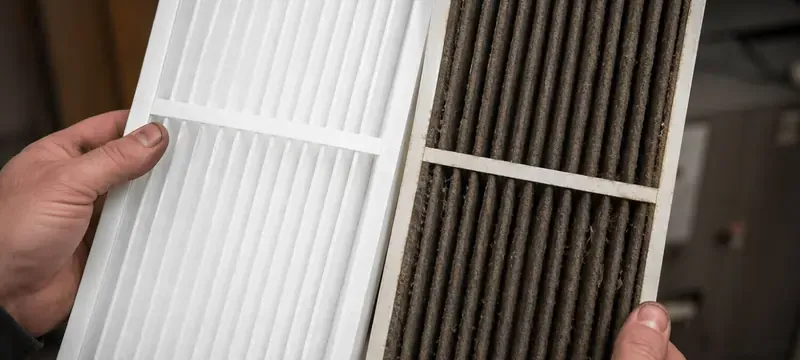
Figure 6: Decision map for cleaning versus replacing a medium filter based on manufacturer approval and filter condition. Illustrative decision map; use it to choose replacement when cleaning is not explicitly approved.
Use the illustrated decision map to select replacement if cleaning is not specifically approved.
A useful compact clean/replacement checklist will enable teams to apply the decision effectively.
- Is the particular model approved for cleaning? If not, then replace it.
- Is there any damage to filter, moist or bypassed? If so, then replace it.
- Has pressure drop reached the applicable data sheet or site limit? If not, then replace it.
- Has approved cleaning method been implemented and checked? If not, then do not reinstall it.
Table 2: Cleaning versus replacement for medium filters.
| Factor | Approved cleaning | Filter replacement |
|---|---|---|
| Restoration of performance | May or may not restore performance, but it must be confirmed prior to reuse | Only restores expected performance when proper replacement is made |
| Chance of media damage | There is a risk even if approved procedure is being followed | New media, but chance of damage during installation still exist |
| Risk of seal integrity | Gasket and sealant may start to deteriorate through cleaning cycles | New seal applicable, but housing itself still matters for sealing integrity |
| Required labor and downtime | Cleaning, drying, inspections, and reinstallation | Removal and replacement |
| Disposal effects | Reduced if reuse cycles are completed | One filter discarded with each replacement |
| Suitability for cleanroom | Rarely approved and must have bypass controls | Standard procedure when specified |
| Cost model | Lower raw material costs but higher labor costs and validation | Higher raw material cost but predictability of replacement |
| Factor | Approved cleaning | Filter replacement |
|---|---|---|
| Restoration of performance | May or may not restore performance; confirm before reuse | Restores expected performance only with proper replacement |
| Chance of media damage | Risk exists even with approved procedure | New media, but installation damage still possible |
| Risk of seal integrity | Gasket and sealant may deteriorate over cleaning cycles | New seal, but housing condition still matters |
| Required labor and downtime | Cleaning, drying, inspections, reinstallation | Removal and replacement |
| Disposal effects | Reduced if reuse cycles completed | One filter discarded per replacement |
| Suitability for cleanroom | Rarely approved; needs bypass controls | Standard procedure when specified |
| Cost model | Lower material cost, higher labor and validation | Higher material cost, predictable replacement |
When Is Replacement Safer Than Cleaning?
When cleaning is not appropriate, replacement will eliminate the need to discount cleaning cost and product reinstallation. You can change the filter as long as it is not damaged, the manufacturer has not approved the cleaning of the filter, or the filter is now at the replacement limit.
The final resistance is specific to the model and the system, and it is the trigger that turns a monitoring reading into a medium filter replacement. Refer to the filter data sheet and the maintenance limits approved at the facility, and do not use a universal threshold of pressure.
How Do Maintenance Teams Compare Lifecycle Costs?
Use a transparent formula rather than comparing costs. The total cost consists of the purchase costs, labor costs, cleaning materials costs, downtime costs, disposal costs, energy impacts, and downstream costs of filters.
Use verified input data to calculate the formula; if the data is not available, keep the formula open for you to fill in. Do not show any hypothetical losses of efficiency as actual measured numbers.
Filter Maintenance, Monitoring, and Replacement Planning
The medium filter maintenance for medium size filters is primarily focused on monitoring the filters unless they are approved for reuse.
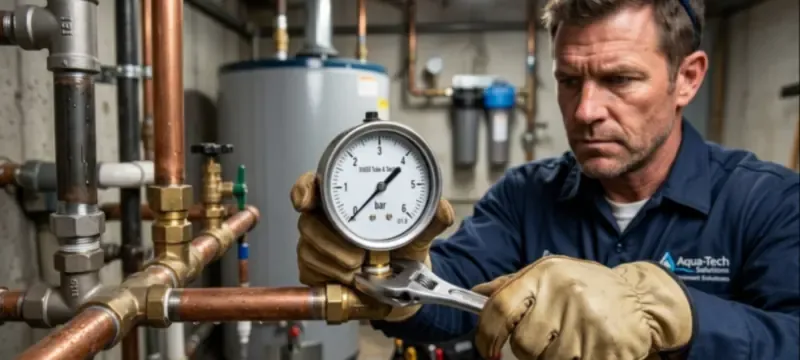
Figure 7: Pressure-drop trend for a loaded medium filter across its service life, marking the monitoring band, the final-resistance limit and the point at which replacement is triggered. Illustrative trend; use site-specific limits rather than a universal threshold.
Depending on the conditions of site and loading, you can determine the inspection time that best matches the expected HVAC medium filter lifespan.
Monitor the pressure drop and the flow of air against the approved limits, the core of routine medium filter maintenance.
How Should Teams Monitor Medium Filter Condition?
A visual inspection checks dust, damage of the media, and the frame distortion. Monitoring pressure drop allows us to verify loading as well as potential bypass. Measuring airflow indicates whether or not our system is providing the volume of air that was specified in the original design.
While a low pressure drop along with low airflow may indicate that bypass is indeed occurring, it needs further evaluation to make sure that the automatic moisture controls or instrumentation settings of the fan and electronics are functioning correctly.
Correctly placed sensors would help us validate operation as per specifications. Furthermore, we should examine the filter itself, and seals for damages, before concluding that a bypass is indeed occurring.
Which Records Support Reliable Replacement Decisions?
Replacement decisions can only be made with certainty based on four records that support every medium filter replacement:
- Filter model and rated capacity;
- Initial pressure drop at installation;
- Pressure drop record over time;
- Inspection records showing media, frame, and seals.
In the absence of the above, medium filter replacement will be made without knowledge of its condition.
Standards, Testing, and Deiiang Product Selection
The selection of filters must be made in accordance with the standards that define efficiency, testing, and classification.
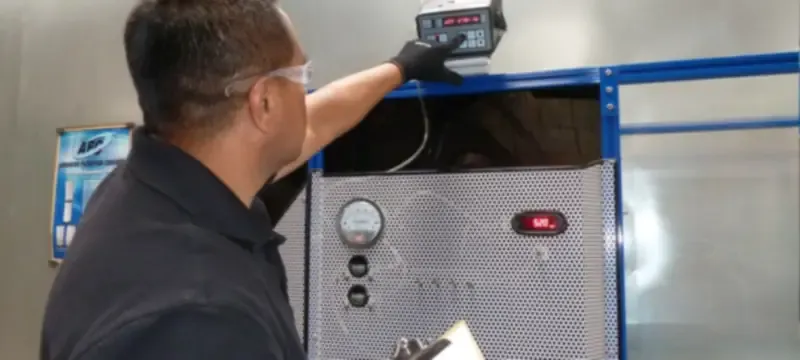
Figure 8: Medium-stage pocket filter bank opened for inspection inside an air-handling unit during planned maintenance. Illustrative image of the kind of filter described above, not a project measurement record.
Table 3: Standards relevant to filter selection and validation.
| Standard | Scope | Relevance to selection or validation |
|---|---|---|
| EN 779 | Historical classification of general ventilation filtration, G1–G4, M5–M6, F7–F9 | Now obsolete; while it is referenced in the general ventilation filtration spectrum |
| ISO 16890 | The current ePM1, ePM2.5, ePM10 classification of general ventilation filtration | The main regulation for medium filtration efficiency claims |
| EN 1822 | HEPA and ULPA filtration classification according to MPPS | H13/H14 efficiency classification for finishing filtration |
| ISO 29463 | HEPA and ULPA filtration classification and testing | Not fully interchangeable with reference EN 1822; however, part of the general protocol |
| iso 14644-1 | clean room classification | Defines clean room classes such as iso class 6 and class 7 |
| iso 14644-3 | clean room testing | Provides test methods only and cannot validate filter installations on their own |
| IEST-RP-CC001 | Recommended practice for HEPA/ULPA filtration | The recommended practice involving HEPA/ULPA filtration is not currently applicable to medium filtration cleaning |
| MIL-STD-282 | Historical DOP test method | Historical reference only as it relates to a test method, not a cleaning standard |
| ASHRAE 52.2 / MERV | Filter performance ratings in HVAC | MERV does not equate to EN 779 or ISO 16890 classification |
| Standard | Scope | Relevance to selection |
|---|---|---|
| EN 779 | Historical general ventilation classification, G1–F9 | Obsolete; legacy reference only |
| ISO 16890 | Current ePM1, ePM2.5, ePM10 classification | Main regulation for medium filtration claims |
| EN 1822 | HEPA and ULPA classification by MPPS | H13/H14 efficiency for finishing filtration |
| ISO 29463 | HEPA and ULPA classification and testing | Related but not fully interchangeable with EN 1822 |
| ISO 14644-1 | Clean room classification | Defines iso class 6 and class 7 |
| ISO 14644-3 | Clean room testing | Test methods only; cannot validate installations |
| IEST-RP-CC001 | HEPA/ULPA recommended practice | Not applicable to medium filtration cleaning |
| MIL-STD-282 | Historical DOP test method | Historical test reference, not a cleaning standard |
| ASHRAE 52.2 / MERV | HVAC filter performance ratings | MERV does not equate to EN 779 or ISO 16890 |
Standards do not equate to cleaning approvals, and no rating class turns disposable elements into washable HVAC filters. Meeting an efficiency classification does not equate to cleaning approval. Cleaning approval is contained in the product specifications of the manufacturer.
For the Deiiang line of products, confirm current cross-referenced models and verify current data sheets. Some of Deiiang medium efficiency families of products include the following: glass-fiber bag filtration, synthetic bag filtration, plastic-frame W-bank combined filtration, combined activated carbon medium filtration, and pleated medium-efficiency panels.
Refer to product designer Jason.peng in the Deiiang catalog for documentation of cleaning deliveries; technical review of cleaning deliveries should be confirmed with that party as well. It’s important to note that temperature tolerance, media area, or frame material is not enough reason to presume any method is cleanable.
For example, a hypothetical cleanroom may use the correct sizing principles but does not demonstrate Deiiang’s success. In this example, a cleanroom operator in the pharmaceutical industry may decide to implement the use of a cleanroom featuring H14 filters as per iso 6 standard standards. If such statements about cleanrooms are in existence there is a need for project documentation supporting those statements.
Which Standards Help Specify and Validate Filters?
Filters must be classified in accordance with ISO 16890 or EN 779. HEPA and ULPA filters will likely be classified to EN 1822 and ISO 29463 standards.
It is also important to determine the fan curve of the system being used for installation requirements in determining the correct installation of filters.
What Should Buyers Confirm in Deiiang Product Data?
When purchasing Deiiang products, end-users must verify the following: the product model number to ensure the right specifications are used for the job; the source datasheet, reported airflow, media area, efficiency rating of the filter, filter initial resistance, final resistance, and maximum allowable temperature/humidity.
Also included in the verification process is confirmation of cleaning/reuse status, which is one item that has caused significant misunderstanding in the past; the question “can you wash a medium-efficiency air filter” is still settled by the datasheet, not by the class letter.
Frequently Asked Questions
Are medium filters washable?
Most medium filters are not washable. A filter can only be washed if the manufacturer has specifically designed it for that purpose and documented the approved cleaning method. If the datasheet does not authorize washing, treat the filter as disposable.
Can medium air filters be reused?
Most medium air filters cannot be reused, so the near-universal answer to “are medium filters reusable” is no unless the model says otherwise. Reuse is only possible with those that have a known procedure for cleaning and reuse limits. Reusable means these models may be serviced again only after proper cleaning, not simply putting a dirty filter back into service.
How can I tell if a medium filter is reusable?
Look for cleaning instructions, authorized methods, drying requirements, and reuse limits or conditions on the product label and data sheet for the filter. If this information is absent from the documentation, do not wash or reuse the filter, whatever the general guidance says about “are medium filters washable”.
What happens if I wash a non-washable medium filter?
Washing can damage the medium, break seals, and leave excess moisture in the filter medium. All of this can affect the filter’s efficiency or lead to bypass. With cleanroom applications, you will have to verify the actual effect through inspection and suitable testing.
How should a reusable medium filter be cleaned?
Be sure to follow the manufacturer’s exact procedure for cleaning, including water temperatures, cleaners, rinsing methods and drying requirements; this is medium filter maintenance at its least forgiving. Check the medium, frame, and gasket before reinstallation.
When should a medium filter be replaced?
replace the filter when it reaches the model-specific final resistance, becomes physically damaged, or reaches the facility’s approved replacement limits. Final resistance is specific to the model and system, so please refer to the product data sheets and site maintenance specifications.
References
- [1] EN 779:2012, Particulate air filters for general ventilation - Determination of the filtration performance (withdrawn; legacy classifications G1-G4, M5-M6, F7-F9).
- [2] ISO 16890-1:2016, Air filters for general ventilation - Part 1: Technical specifications, requirements, and classification system based on particulate matter efficiency (ePM).
- [3] EN 1822-1:2019, High efficiency air filters (EPA, HEPA, and ULPA) - Part 1: Classification, performance testing, and marking.
- [4] ISO 29463-1:2017, High-efficiency filters and filter media for particles in air - Part 1: Classification, performance testing, and marking.
- [5] iso 14644-1:2015, Cleanrooms and associated controlled environments - Part 1: Classification of air cleanliness by particle concentration.
- [6] iso 14644-3:2019, Cleanrooms and associated controlled environments - Part 3: Test methods.
- [7] IEST-RP-CC001.7, HEPA and ULPA Filters, Institute of Environmental Sciences and Technology.
- [8] MIL-STD-282, Filter Units, Protective Clothing, Gas-Mask Components and related products: Performance-Test Methods.
- [9] ANSI/ASHRAE Standard 52.2-2017, Method of Testing General Ventilation Air-Cleaning Devices for Removal Efficiency by Particle Size.
- [10] Data from the medium-efficiency bag filter catalogue provided by Deiiang, including the six-bag configuration 592 mm x 592 mm x 381 mm; confirm actual model number and date sheet with Deiiang prior to specification.