+86 13638632902
 Jason@cleanroomequips.com


 MENU

A standard operating procedure for sedimentation bacteria monitoring cleanroom operations is a written, validated set of instructions. It specifies how settle plates should be set up, exposed, incubated, counted, and reported.
Its main goal is to show that the cleanroom does not exceed its permissible contamination levels as it operates. Every step in a cleanroom microbial monitoring SOP must be comprehensive and traceable.
The SOP is designed for pharmaceutical cleanrooms classified A, B, C, and D following GMP regulations. It is also applicable to iso 14644 levels 5 through 8 for particulate classification purposes.
iso 14698 covers microbiological methodologies and limits, while ISO 14644 is exclusively for airborne particles. That split matters whenever an ISO 14644 microbial testing section is written.
There are four major steps in the cleanroom settle plate testing procedure: preparation, exposure, incubation, and calculation.
Each step must be executed by trained personnel using calibrated equipment and validated media. The reader then flows through regulatory framework, detailed procedures, sampling design, corrective actions, and HVAC controls.
Where HVAC cleanroom bacteria control impacts sedimentation results, Deiiang H13 and H14 HEPA filters tested per EN 1822 are used.
The SOP is written for QA professionals, microbial scientists, and facility engineers. It enhances audit compliance, reduces product rejections, and brings consistency from shift to shift.
According to Deiiang's estimate based on 15 years of cleanroom filtration project experience, almost 40% of sedimentation bacteria deviations result from HVAC operational deficiencies.
Regulatory Framework for Sedimentation Bacteria Monitoring
There is no specific worldwide standard for sedimentation bacteria limits. Guidance on methodologies and validation comes from ISO 14698 biocontamination monitoring.
gmp cleanroom environmental monitoring regulations provide the enforceable action levels. The EU GMP Annex 1 table is the most widely referenced source for settle plate limits.
USP <797> [5] covers compounding environments, and GB 50073 [7] adds Chinese requirements.
Table 1: Standard Comparison for Sedimentation Bacteria Monitoring
| Standard | Scope | Basis of Settle Plate Limits |
|---|---|---|
| EU GMP Annex 1 | Sterile medicinal products | Grade A: no growth; B: 5 cfu/4h; C: 50 cfu/4h; D: 100 cfu/4h |
| iso 14698-1 and -2 | Biocontamination monitoring methods | No numeric limit; validated methods and risk-based site selection |
| USP <797> | Compounded sterile preparations | iso 5: ≤3 cfu/plate (30-minute exposure); ISO 7: ≤5 cfu/plate (30-minute exposure); iso 8: ≤100 cfu/plate (30-minute exposure) |
| PIC/S GMP [6] | International inspection harmonisation | Adopts EU Annex 1 limits for grades A–D |
| GB 50073 [7] | Chinese cleanroom design code | ISO 5: ≤1 cfu/plate (30-minute exposure); ISO 7: ≤10 cfu/plate (30-minute exposure) |
| FDA 21 CFR Part 211 [4] | US cGMP for finished pharmaceuticals | Validated monitoring required; no numeric limit |
| Standard | Basis of Settle Plate Limits |
|---|---|
| EU GMP Annex 1 | Grade A: no growth; B: 5 cfu/4h; C: 50 cfu/4h; D: 100 cfu/4h |
| ISO 14698-1 and -2 | No numeric limit; validated methods and risk-based site selection |
| USP <797> | ISO 5: ≤3 cfu/plate; ISO 7: ≤5 cfu/plate; ISO 8: ≤100 cfu/plate (30-minute exposure) |
| PIC/S GMP [6] | Adopts EU Annex 1 limits for grades A–D |
| GB 50073 [7] | ISO 5: ≤1 cfu/plate; ISO 7: ≤10 cfu/plate (30-minute exposure) |
| FDA 21 CFR Part 211 [4] | Validated monitoring required; no numeric limit |
Footnote to Table 1: USP <797> and GB 50073 values assume a 30-minute exposure. EU GMP values assume a 4-hour exposure and therefore cannot be compared directly.
ISO 14644 Microbial Testing Specifications
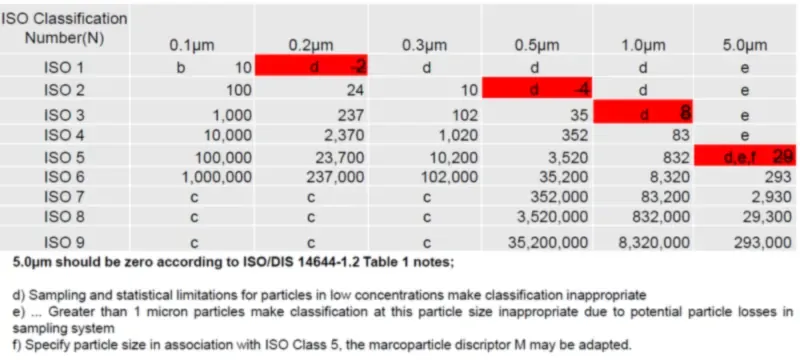
The heading uses the common industry phrase "ISO 14644 microbial testing", but the correct standard split matters. ISO 14644-1 [9] classifies air cleanliness by particle concentration.
Microbial method requirements sit in ISO 14698-1 and iso 14698-2 [2][3]. Confusing the two is one of the most common documentation errors found in audits.
ISO 14698 biocontamination monitoring requires that the cleanroom microbial monitoring SOP justify exposure time through a recovery study.
Sterility and growth-promotion capacity of media must be verified before use. Sampling frequency must be determined by risk assessment and documented.
Key ISO 14698 requirements include:
- Method validation: recovery efficiency and reproducibility confirmed.
- Exposure time: justified for each area, with 4 hours as a maximum.
- Sampling frequency: minimums established through risk assessment and operational status [3].
- Media calibration: sterility and growth promotion of each batch confirmed.
- Location selection: risk-based, addressing worst-case scenarios.
- Data trending: performance compared with previous results.
Global GMP & Regional Regulatory Mandates
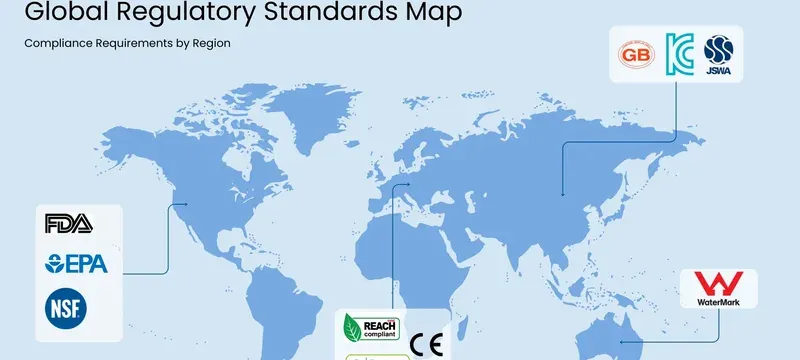
GMP cleanroom environmental monitoring guidelines share a similar structure but differ in enforcement specifics. EU GMP Annex 1 is the most restrictive for sterile production [1].
It includes continuous monitoring at Grade A and batch-related settle plate exposure. FDA 21 CFR Part 211 requires validated environmental monitoring but sets no specific numerical limits [4].
PIC/S GMP is similar to Annex 1 and is used by many exporting manufacturers [6]. WHO GMP has comparable requirements. GB 50073 specifies design and testing constraints for facilities in China [7].
Table 2: Comparison of Regional Settle Plate Limits for GMP
| Region or Guideline | Grade A | Grade B | grade c | Grade D |
|---|---|---|---|---|
| EU GMP Annex 1 | No growth | 5 cfu/4h | 50 cfu/4h | 100 cfu/4h |
| PIC/S GMP [6] | No growth | 5 cfu/4h | 50 cfu/4h | 100 cfu/4h |
| WHO GMP | No growth | 5 cfu/4h | 50 cfu/4h | 100 cfu/4h |
| GB 50073 (ISO equivalent) [7] | ≤1 cfu/plate (30-minute exposure) | ≤5 cfu/plate (30-minute exposure) | ≤10 cfu/plate (30-minute exposure) | ≤50 cfu/plate (30-minute exposure) |
| Region or Guideline | Grade A | Grade B |
|---|---|---|
| EU GMP Annex 1 | No growth | 5 cfu/4h |
| PIC/S GMP [6] | No growth | 5 cfu/4h |
| WHO GMP | No growth | 5 cfu/4h |
| GB 50073 [7] | ≤1 cfu/plate (30-minute exposure) | ≤5 cfu/plate (30-minute exposure) |
GB 50073 assumes a 30-minute settle plate exposure compared to the four-hour limit in the EU GMP guidelines.
Compliance audit checkpoints include written SOP availability, media batch records, exposure and incubation records, and out-of-specification investigation documentation.
Deiiang technical teams create dual-compliance SOPs for export sites, incorporating EU GMP Annex 1 limits alongside GB 50073 requirements.
Cleanroom Settle Plate Testing Procedure: Standardized SOP
A standardized cleanroom settle plate testing procedure has six stages. Failure to complete any stage results in invalid results and a breach of the cleanroom microbial monitoring SOP.
Each step must be documented in a controlled manner. Sedimentation bacteria monitoring in clean areas depends on this discipline.
- Step 1: Pre-test preparation — check media sterility, prepare equipment, and confirm gowning.
- Step 2: Aseptic sampling technique — open plates only inside the controlled area, minimizing hand movement.
- Step 3: Settle plate exposure — place plates at defined locations for the validated duration.
- Step 4: Incubation and counting — incubate at 30–35°C for 48–72 hours, then count colonies.
- Step 5: Result calculation — convert colony counts to cfu per 4 hours or per unit area.
- Step 6: Documentation — record location, time, operator, and result on the batch-linked form.
Pre-Test Preparation & Media Validation

Preparation determines whether the result reflects the environment or the analyst. Tryptic soy agar is the standard medium for bacterial recovery.
Every batch must pass sterility and growth-promotion tests. Media mishandling is one of the most common causes of false positive readings in sedimentation monitoring.
- Media formulation: tryptic soy agar supports bacterial growth at pH 7.3 ± 0.2.
- Batch sterility: incubate one plate per batch as a negative control.
- Equipment disinfection: wipe forceps and plate carriers with 70% isopropyl alcohol.
- Personnel gowning: Grade A/B requires sterile gloves, mask, and coverall.
- Environmental pre-conditioning: HVAC must run at least 30 minutes before sampling.
- Media storage: keep prepared TSA plates at 2–8°C, protected from light, for a maximum of 30 days.
- Transport: carry plates in sealed, disinfected containers to avoid contamination.
- Shelf-life check: verify no visible contamination or dehydration before use.
Settle Plate Exposure & Sampling Execution
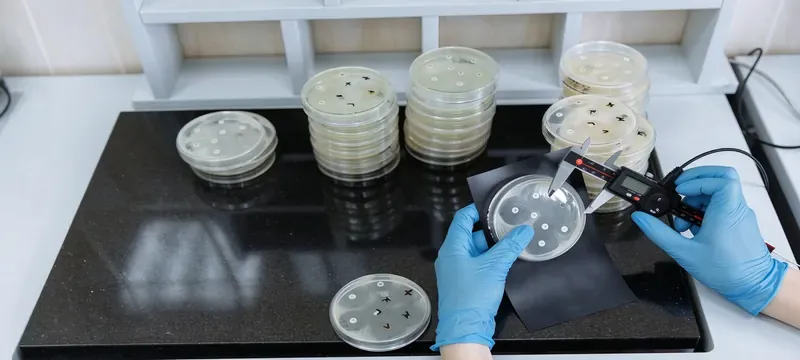
Exposure is the step in the cleanroom settle plate testing procedure where errors are most likely. Plate height should match the work surface, usually 0.8–1.5 m above the floor.
Standard 90 mm settle plates are used in most monitoring programs. Each plate has a 0.00636 m² surface area for cfu/m² conversion.
Grade A and B plates may be exposed for a maximum of 4 hours and changed as needed during use. Lower grades use shorter, validated exposure times.
Incubation, Enumeration & Result Calculation
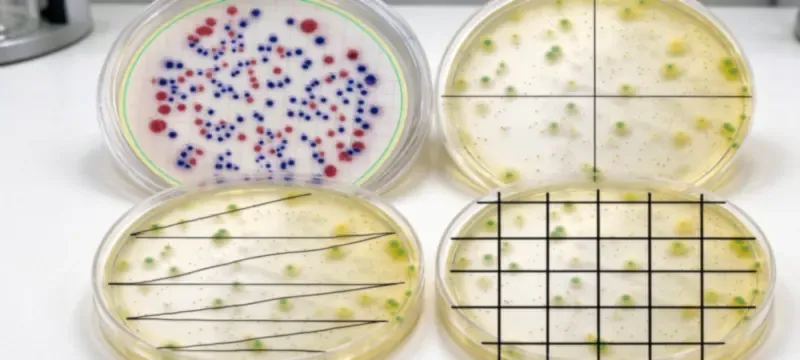
Incubation has a fixed temperature and time window. Plates are held at 30–35°C for 48–72 hours. Colony counting must be performed under adequate lighting, with a minimum countable colony diameter of 0.5 mm.
- Incubate plates inverted to prevent condensation from dripping onto the agar surface.
- Count only colonies ≥0.5 mm; report confluent growth as too numerous to count (TNTC).
- Control criteria: negative control must show zero growth; positive control must show ample growth.
If a Grade B plate is exposed for 3 hours and yields 3 colonies, the result is (3/1) × (4/3) = 4 cfu/4h. That is within the Grade B limit of 5 cfu/4h.
Out-of-spec results trigger immediate investigation under the cleanroom contamination control microbiology workflow.
Table 4: Exposure Time Conversion Multipliers (to cfu/4h)
| Exposure time | Multiplier |
|---|---|
| 1 hour | ×4 |
| 2 hours | ×2 |
| 3 hours | ×1.33 |
| 4 hours | ×1 |
| Exposure time | Multiplier |
|---|---|
| 1 hour | ×4 |
| 2 hours | ×2 |
| 3 hours | ×1.33 |
| 4 hours | ×1 |
Viable Bacteria Monitoring Clean Areas: Sampling Design
Sampling design for viable bacteria monitoring clean areas provides information on contamination risk. A fixed or randomized grid should cover high-risk locations rather than easily accessible ones.
Grade-specific limits determine how many sites are sampled and how often. Daily changes in humidity and temperature can shift recovery rates by 10–30%.
Table 3: Grade-Specific Sampling Design Parameters
| Grade | At-rest points | In-operation points | Exposure time | Sampling frequency |
|---|---|---|---|---|
| A | 2–3 per zone | Continuous or batch-linked | 4 hours maximum | Every batch |
| B | 2 per zone | Batch-linked | 4 hours maximum | Every batch or shift |
| C | 2 per zone | Periodic | Validated, ≤4 hours | Weekly |
| D | 2 per zone | Periodic | Validated, ≤4 hours | Monthly |
| Grade | Exposure time | Sampling frequency |
|---|---|---|
| A | 4 hours maximum | Every batch |
| B | 4 hours maximum | Every batch or shift |
| C | Validated, ≤4 hours | Weekly |
| D | Validated, ≤4 hours | Monthly |
Sampling Site Placement Strategy
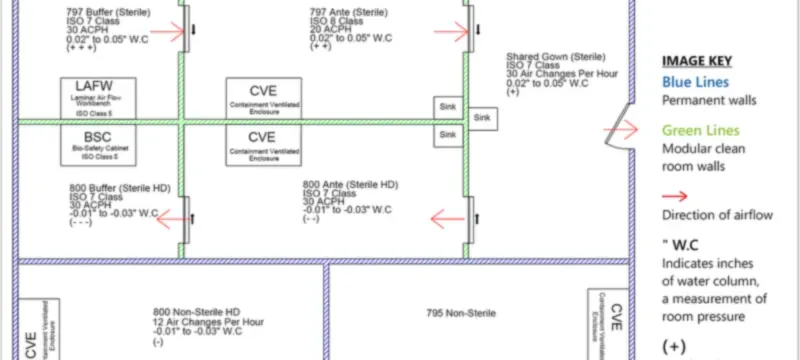
Site placement criteria are based on risk and airflow principles. The goal is to maximize the potential for detecting microbial deposition onto product and critical surfaces.
ISO 14698-2 requires a documented, risk-based rationale for every sampling location [3].
- Floor and work surface placement: place plates on horizontal surfaces at working height.
- Near HVAC supply and return: monitor air distribution effectiveness.
- High traffic areas: include gowning rooms and transfer hatches.
- Product contact area: place samples within 30 cm of open product.
- Least accessible zones: include corners and dead zones for worst-case data.
For rooms under 20 m², use a minimum of 2 sites, plus 1 additional site per 20 m² increment. Align the total with ISO 14698-2 risk-based requirements [3].
Deiiang airflow modeling data shows corners within 0.5 m of two walls have 30–40% lower air velocity. These are high-priority sedimentation monitoring sites.
Grade-Specific Sampling Parameters
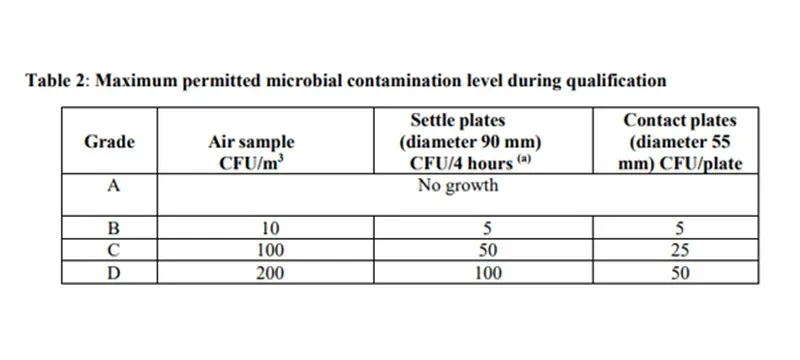
Grade-specific parameters differ in frequency and operational linkage. Grade A and B require batch-linked monitoring. Grade C and D use periodic monitoring.
Table 3 above summarizes the minimum requirements for a cleanroom microbial monitoring SOP. Sedimentation bacteria monitoring in clean areas should always link settle plate results to the specific batch or shift being produced.
Cleanroom Contamination Control Microbiology: Corrective Actions
Cleanroom contamination control microbiology is based on effective detection and proper reaction when contamination occurs. An out-of-specification settle plate result is not a singular failure but an indication that a control has been compromised.
Common causes include personnel gowning faults, HVAC failures, and material ingress.
An elevated plate reading can be ignored if the next result is acceptable.
Fact: Regardless of later findings, every Grade A deviation must be investigated [1].
Increasing disinfection frequency alone solves the problem.
Fact: A thorough root cause examination is required before CAPA closure.
Root Cause Analysis for Out-of-Spec Results

Initiate root cause analysis within 24 hours for Grade A/B deviations, and within 72 hours for Grade C/D. All formal deviations must be closed, with CAPA verification, within 30 calendar days.
First, validate the result by checking the plate count and incubation records. Second, eliminate sampling bias by reviewing exposure logs and operator technique.
Third, check HVAC performance, including differential pressure and air changes per hour. Fourth, audit personnel gowning practices. Fifth, review material ingress routes.
Based on Deiiang's national service database, 35% of unexpected bacterial spikes in Grade B areas come from clogged pre-filters raising HEPA face velocity.
Corrective & Preventive Action (CAPA) Protocol
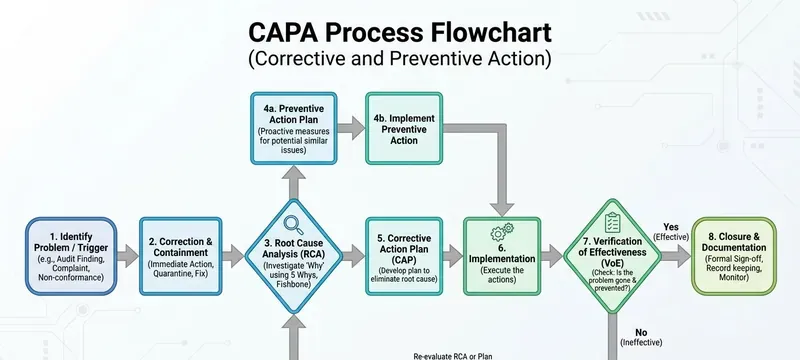
The CAPA protocol converts investigation findings into permanent controls.
- Immediate action: fog or wipe the entire area with a validated sporicidal agent.
- HEPA filter integrity testing: perform a DOP scan on the affected terminal.
- Personnel training: retrain all operators in gowning and aseptic technique.
- Increased monitoring: double settle plate frequency for at least 3 batches.
- CAPA effectiveness verification: review 4 consecutive weeks of data; confirm 95% of results stay below 50% of the grade action limit.
HVAC Cleanroom Bacteria Control & System Validation
HVAC cleanroom bacteria control is the primary engineering barrier against viable contamination. Filtration removes airborne microorganisms, air changes dilute residual contamination, and pressure differentials prevent contamination crossing from lower-grade zones.
Failure in any element forces reliance on operational controls, which are less reliable than engineering systems.
Table 5: Relative HVAC Contribution to Sedimentation Bacteria
| Parameter | Contribution % |
|---|---|
| HEPA filtration effectiveness | 45 |
| Air change rate | 25 |
| Pressure differential | 20 |
| Airflow pattern | 10 |
| Parameter | Contribution % |
|---|---|
| HEPA filtration effectiveness | 45 |
| Air change rate | 25 |
| Pressure differential | 20 |
| Airflow pattern | 10 |
- Filtration effectiveness: H14 removes ≥99.995% of particles at 0.3 µm.
- Air change rate: Grade B typically requires 40–60 ACH.
- Pressure differential: maintain ≥10 Pa between adjacent grades.
- HEPA integrity testing: at commissioning, then every 6–12 months.
- Deiiang VHP integration: supports biodecontamination cycles without filter damage.
HEPA Filtration & Airflow Design for Microbial Control
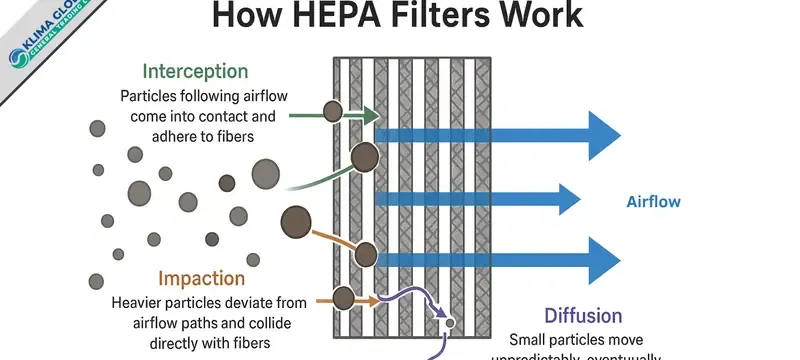
HEPA filters remove bacteria through interception, impaction, and diffusion. H14 HEPA bacteria removal efficiency is 99.995–99.999% at 0.3 µm under EN 1822 [8].
Laminar airflow reduces deposition by directing particles downward and away from critical areas. Turbulent airflow should be avoided in Grade A areas because it causes random deposition.
Deiiang Combined High Efficiency Filter catalogue data (H13/H14, EN 1822) covers terminal filtration in air conditioning units.
The 592 × 592 × 292 mm model delivers 2,500 m³/h with a 20.04 m² media area and initial resistance ≤200 Pa (H13) or ≤220 Pa (H14). Dust holding capacity reaches about 1,200 g at 2,500 m³/h [8].
- Supply air diffuser placement: position over critical zones, not the perimeter.
- Return air grille positioning: low-level returns minimize dead zones.
- Pre-filtration: Deiiang F7 medium-efficiency filters extend HEPA service life.
- Filter sealing: silicone-free gaskets eliminate bypass leakage.
HVAC System Validation for Microbial Compliance

HVAC validation confirms that equipment functions as designed. Initial commissioning verifies filter installation, airflow direction, and pressure balance. Regular testing maintains compliance throughout the facility lifecycle.
- Initial commissioning: perform a DOP leak test on every HEPA filter; maximum allowable leakage is 0.01% per EN 1822 [8].
- Periodic filter leak testing: annual DOP scanning, more frequent for Grade A/B.
- Air velocity uniformity: ±20% of design velocity across the filter face.
- Differential pressure verification: record every 15 minutes in critical zones.
- Microbial recovery correlation: compare settle plate results before and after filter service.
Cleanroom Maintenance Microbial Protocol & Quality Control
The cleanroom maintenance microbial protocol combines routine upkeep with microbial monitoring. Maintenance activities disturb airflow and generate particles, so scheduling must avoid production windows.
Disinfection protocols must be validated against the microbial flora recovered from the facility.
- Daily: disinfect all surfaces and floors with a validated agent.
- Weekly: deep clean ceilings, walls, and equipment exteriors.
- Monthly: check HVAC filters for loading and damage.
- Quarterly: air balancing and velocity verification.
- Annually: full HEPA integrity testing.
The cleanroom quality control bacteria test cadence defines how often each grade is monitored. If a disinfection cycle or filter change is delayed, settle plate counts can rise within 48 hours.
Deiiang's maintenance service framework aligns filter replacement with microbial trend data.
Monitoring cadence by grade:
- Grade A: daily or batch-linked testing — highest intensity.
- Grade B: weekly sampling — high intensity.
- Grade C: monthly sampling — moderate intensity.
- Grade D: quarterly audits — baseline intensity.
Routine Maintenance Practices for Microbial Stability

Routine maintenance directly affects viable bacteria monitoring clean areas. A missed disinfection cycle or delayed filter change can produce a measurable settle plate spike within 48 hours.
- Daily: disinfect surfaces and floors; check pressure gauges.
- Weekly: deep clean ceilings and walls; inspect the gowning room.
- Monthly: check pre-filter pressure drop; replace if above final resistance.
- Disinfectant rotation: alternate between two chemically distinct agents monthly to avoid microbial resistance.
- Quarterly: air balancing and velocity verification.
- Annually: full HEPA integrity test and facility requalification.
Cleanroom Quality Control Bacteria Test Cadence
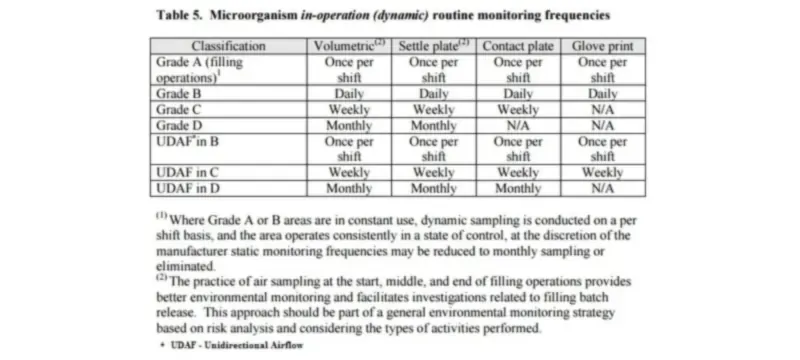
The monitoring cadence must align with the risk level of each grade. Grade A zones need daily or batch-linked monitoring. Grade B requires weekly sampling.
Grade C spaces require monthly monitoring. Grade D requires quarterly audits. Full facility validation is done annually.
Deiiang case study (project-reported): A class 1000 / ISO 6 pharmaceutical packaging cleanroom with high ambient particle load and limited plenum height.
Deiiang supplied low-profile combined high efficiency HEPA filters (592 × 592 × 292 mm, 2,500 m³/h, ≤220 Pa initial, 20.04 m² area), F7 pre-filters, and silicone-free sealing gaskets, with per-unit DOP scan testing.
The project reported particle counts dropping from an ISO 7 baseline to ISO 6. Post-installation settle plate testing showed average sedimentation rates fell from 12 cfu/4h to 3 cfu/4h in the ISO 6 zone, with stable compliance over 12 months.
Frequently Asked Questions
How often should settle plates be run in a Grade A cleanroom?
ISO 14698 biocontamination monitoring requires a risk-based, documented frequency [2]. EU GMP criteria require continuous or batch-related monitoring in Grade A cleanrooms [1]. In practice, settle plate exposure happens with each aseptic filling batch or working session, and Deiiang experts recommend documenting both start and end times to link with batch records.
What is the standard exposure time for settle plate testing?
The standard exposure period is 4 hours in Grade A and B areas under EU GMP guidelines [1]. Lower-grade cleanrooms can apply shorter, validated durations. ISO 14698-2 provides the framework for specifying exposure lengths based on recovery studies [3].
How do HVAC systems affect sedimentation bacteria levels?
HEPA filters remove over 99.995% of airborne particles at 0.3 µm or larger, lowering the microbial load available for sedimentation. Air change rate dilutes remaining contamination. Pressure differentials prevent contaminants entering from other areas, while airflow patterns affect where particles finally settle.
What action limits apply to sedimentation bacteria per EU GMP?
Grade A: no growth; Grade B: 5 cfu/4 hours; Grade C: 50 cfu/4 hours; Grade D: 100 cfu/4 hours [1]. Any growth in Grade A triggers an investigation.
Can settle plate testing replace active air sampling?
No. They are complementary methods. Active air sampling determines viable airborne concentrations in cfu/m³, whereas settle plates determine deposition rates onto surfaces. EU GMP Annex 1 requires both methods for Grade A and B qualification [1].
How do you validate a cleanroom microbial monitoring SOP?
Validation includes checking against ISO 14698 regulations, GMP rules, at least three reproducibility runs, and recovery rate verification above 70%. An annual formal review is mandatory. Revalidate after any facility modification, process change, or three consecutive deviations, and at minimum once per year.
References
- [1] EU GMP Annex 1, Manufacture of Sterile Medicinal Products, 2022.
- [2] ISO 14698-1:2004, Biocontamination control — General principles and methods.
- [3] ISO 14698-2:2004, Biocontamination control — Evaluation and interpretation of biocontamination data.
- [4] FDA 21 CFR Part 211, Current Good Manufacturing Practice for Finished Pharmaceuticals.
- [5] USP <797>, Pharmaceutical Compounding — Sterile Preparations.
- [6] PIC/S GMP Guide, PE 009-13, Annex 1.
- [7] GB 50073-2013, Code for design of clean rooms.
- [8] Deiiang Technical Datasheet, Combined High Efficiency Filter H13/H14, EN 1822.
- [9] iso 14644-1:2015, Classification of air cleanliness by particle concentration.