+86 18186671616
 Jason@cleanroomequips.com
 MENU
MENU

ISO 7 Cleanrooms are designed to maintain specific cleanliness levels, allowing for only a limited quantity of particles in the air. According to ISO 14644-1, an ISO 7 cleanroom allows up to 352,000 particles of 0.5 microns or larger per cubic meter. Regular testing and monitoring are crucial to ensure these standards are consistently met.
Implementing comprehensive cleanliness evaluation procedures helps maintain the integrity of the controlled environment. Using expert equipment, such as those offered by Deiiang, helps streamline the testing process, ensuring reliable and repeatable results.
Dust Particle Count Testing for ISO 7
Dust and airborne particles can compromise the purity of A CleanRoom environment, making regular particle count testing vital.This involves using particle counters to measure the concentration of particulate matter.
These instruments identify particle sizes and concentrations, verifying that the room remains within specified ISO regulations.Brands like Deiiang offer state-of-the-art dust particle counters that provide accurate and efficient particle counts, essential for maintaining ISO 7 compliance.
Temperature Regulation Tests in ISO 7
Maintaining stable temperature conditions is critical in ISO 7 cleanrooms to prevent contamination and ensure process efficiency. Temperature regulation tests check the efficiency of the HVAC system to maintain the necessary environmental conditions.
This testing is conducted using precise thermometers and sensors designed to operate within the cleanroom environment, guaranteeing the effectiveness of the temperature regulation systems in use.
Humidity Control Assessment in ISO 7
Controlling humidity levels is vital in preventing moisture-induced contamination and ensuring the operational integrity of sensitive equipment. Humidity control assessments involve monitoring the HVAC systems' ability to maintain humidity within predetermined limits, typically around 50% relative humidity.
By utilizing humidity sensors and controls, such as those available from Deiiang, cleanroom operators can ensure that the environment remains within optimal humidity ranges.
Testing Air Change Rates in ISO 7
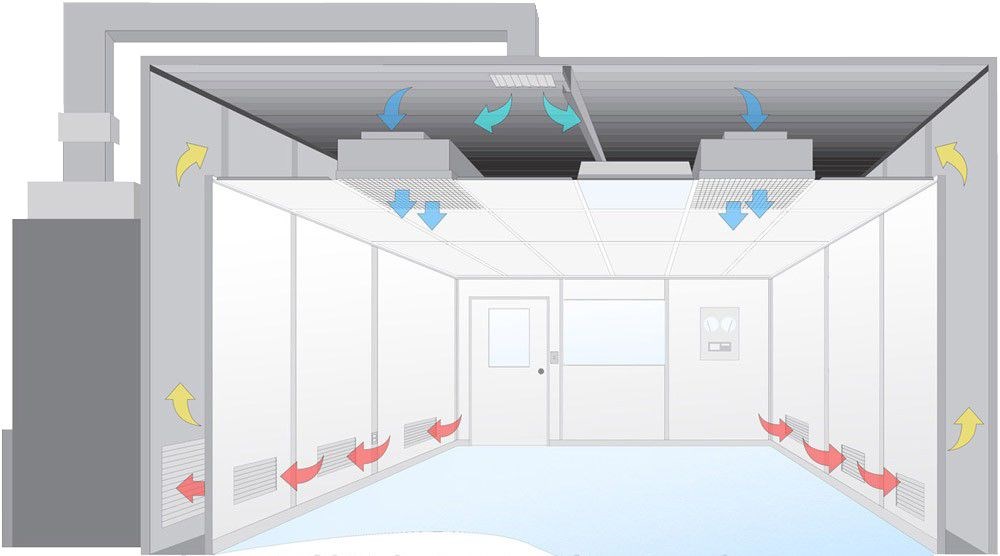
Air change per hour (ACH) is a critical measure in maintaining air purity in cleanrooms.For ISO 7, the expected air change rate is about 60 times per hour.
Testing these rates ensures that the cleanroom maintains the appropriate airflow patterns necessary to prevent particulate contamination.
Regular measurement of air changes ensures compliance with ISO standards, which is crucial in high-stakes environments.
Noise Level Testing for ISO 7
Excessive noise can be a sign of malfunctioning HVAC systems or contribute to environmental contamination through vibration.
Noise level testing in an ISO 7 cleanroom involves measuring decibel levels to ensure they remain within acceptable standards.
Monitoring noise levels helps preserve both the functionality of sensitive equipment and the comfort of personnel.
Differential Pressure Testing in ISO 7
Maintaining differential pressure between cleanroom and adjacent spaces is crucial in preventing contamination ingress. This involves testing the pressure variations between the cleanroom and external environments to maintain an overall Clean air balance.
The correct differential pressure prevents particles from less controlled areas from entering the cleanroom, safeguarding its cleanliness.
Air volume measurements in ISO 7
Air volume testing evaluates the capacity of HVAC systems to deliver sufficient air supply, keeping the environment within specification requirements.
Measuring air volume helps in confirming that the air delivered matches the requirements for maintaining the desired CleanRoom conditions.
With cutting-edge equipment from companies like Deiiang, operators can ensure accurate and consistent airflow measurements.
Conclusion
Adherence to ISO standards for cleanrooms involves a comprehensive testing approach to assess cleanliness, temperature, humidity, air changes, and more.
Utilizing advanced technologies provided by trusted brands like Deiiang can significantly improve the accuracy and efficiency of these assessments, ensuring robust compliance with international standards.