+86 13638632902
 Jason@cleanroomequips.com


 MENU
MENU
In any HVAC system, the duct network is the circulatory system of a building. But without the right 5 Core Dampers for HVAC Ducts, that network can become a dangerous pathway for fire and smoke. While many engineers and technICians are familiar with manual or electric volume-control dampers, the fire-rated and smoke-control dampers often cause confusion — even among professionals with several years of experience.
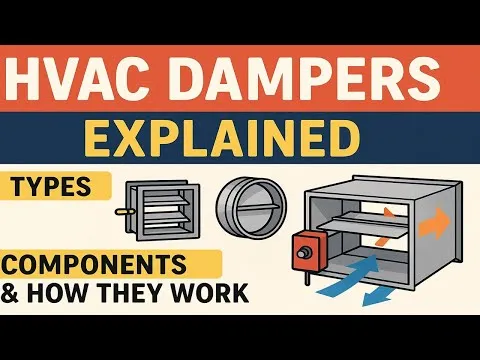
This guide aims to highlight five key damper types: 70°C fire damper, 150°C fire damper, 280°C fire/smoke damper, smoke exhaust valve, and pressurization supply damper.We will explain their structure, how they work, installation scenarios, and key differences—all accompanied by illustrations and actual site data. Whether you are reviewing drawings, ordering materials, or preparing for fire safety inspection, this guide will be your ideal reference.
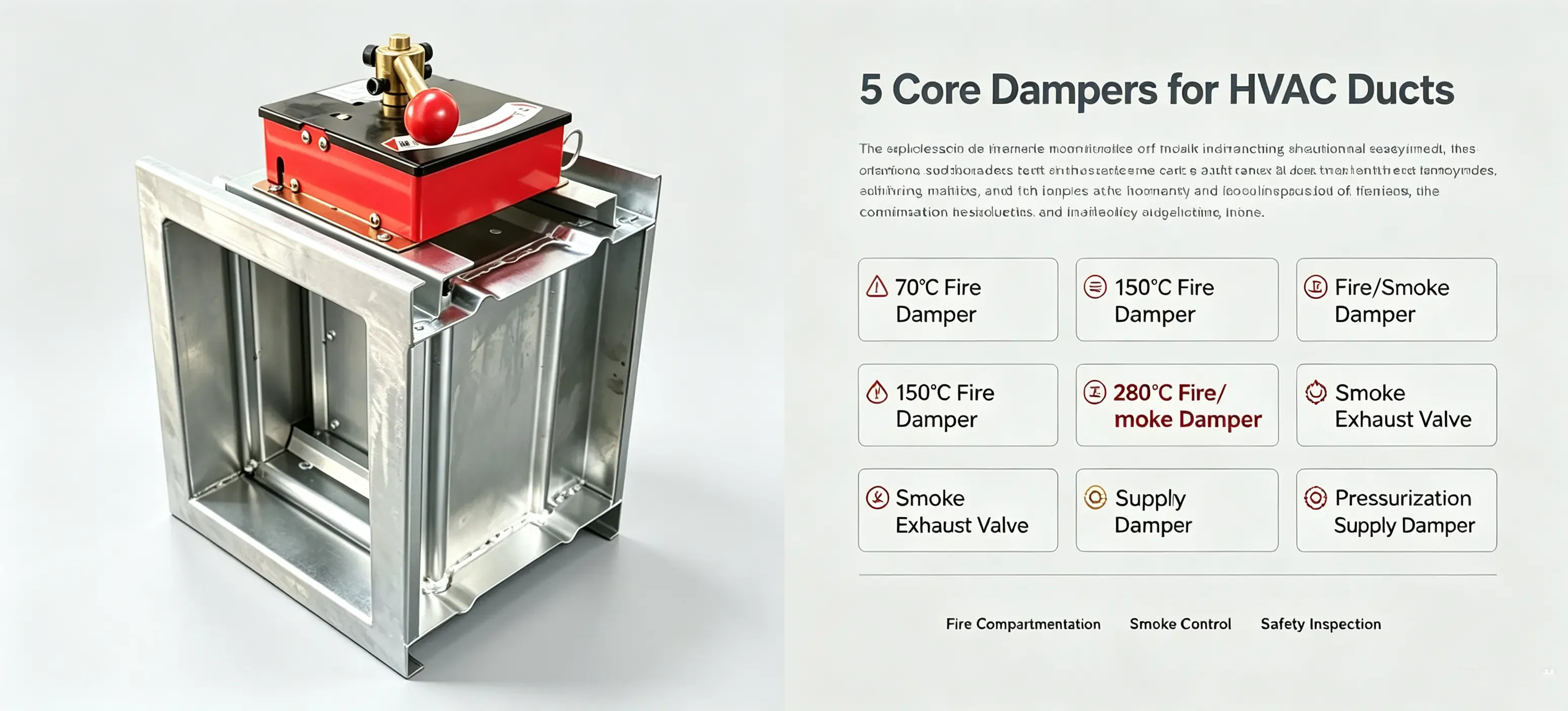
Fast Takeaways
Before diving deep, here are the three most critical points every HVAC professional should remember about 5 Core Dampers for HVAC Ducts:
✓ Temperature rating — 70°C (general), 150°C (kitchen), 280°C (smoke exhaust) — eACH triggers at a specific threshold.
✓ Normal state — 70/150/280°C dampers are normally open; smoke exhaust and pressurization dampers are normally closed.
✓ Fusible link vs. electric actuation — thermal dampers rely on fusible links; smoke/pressurization dampers use DC24V actuators with remote control.
Keep these distinctions in mind as we explore each valve in detail.
Deiiang™ engineers, led by Jason.peng, have refined these designs to meet both NFPA and EN standards.
Core Damper Snapshot — 5 Types Compared
Before diving into individual products, it helps to recognize how air duct dampers are categorized by their trigger mechanisms. The table below illustrates that some dampers rely on temperature-sensitive fusible links, while others utilize electric actuators for smoke control.
All HVAC air dampers covered in this guide serve a life-safety function, but their operational states—normally open or normally closed—dictate where and how they are installed.
This is your quick-reference matrix for the 5 Core Dampers for HVAC DuctsUsing it, we can see the differences at a glance, and then explore each difference in depth through illustrations and application instructions.
| Damper Type | Normal State | Trigger Temp. | Actuation | Primary Application | Fusible Link |
|---|---|---|---|---|---|
| 70°C Fire Damper | Open | 70°C | Fusible link + manual reset | General HVAC, fire compartment crossings | Yes |
| 150°C Fire Damper | Open | 150°C | Fusible link + manual reset | Kitchen exhaust ducts | Yes (high-temp) |
| 280°C Smoke/Fire Damper | Open | 280°C | Fusible link + DC24V + fan interlock | Smoke exhaust mains, fan inlets | Yes (alloy) |
| Smoke Exhaust Valve | Closed | — (no fuse) | DC24V electric / manual cable | Room-level smoke extraction | No |
| Pressurization Supply Damper | Closed | — (no fuse) | DC24V electric / manual override | Stairwells, lobbies, fire-fighting access | No |
| Damper | State | Trigger | Use |
|---|---|---|---|
| 70°C | Open | 70°C fuse | General HVAC |
| 150°C | Open | 150°C fuse | Kitchen exhaust |
| 280°C | Open | 280°C fuse + DC24V | Smoke exhaust mains |
| Smoke Valve | Closed | DC24V (no fuse) | Room extraction |
| Pressurization | Closed | DC24V (no fuse) | Stairwells / lobbies |
Key insight: The presence or absence of a fusible link is the single most important differentiator. Thermal dampers (70/150/280°C) are passive devices that close on temperature rise, while smoke and pressurization dampers are active, electrically controlled devices that open on demand.
70°C Fire Damper — General HVAC Protection
In general ventilation systems, ventilation duct dampers with a 70°C rating are the most common fire protection devices. They remain open during normal operation, allowing airflow while standing ready to stop fire spread.
Choosing the right duct dampers for HVAC in this category requires attention to blade sealing and reset mechanisms, ensuring long-term reliability without routine intervention.
Function: Installed in general ventilation and air-conditioning ducts. Normally open, it closes when the duct temperature reaches 70°C, preventing fire and smoke from spreading through the duct network.
Working principle: Under normal circumstances, the damper remains open to ensure daily air circulation. When the temperature of the high-temperature flue gas reaches 70°C, the fuse inside the actuator melts, releasing the spring mechanism and causing the damper to close quickly. A manual reset handle is provided on the valve body for later reopening of the damper
construction: Galvanized steel casing, steel blades, 70°C fusible link, manual reset handle, and signal feedback (monitoring only).
Mounting: Where ducts penetrate fire-rated walls, floors, or fire compartment boundaries.
Deiiang™ offers the FS-70 series with enhanced blade sealing and corrosion-resistant coatings, designed by Jason.peng to meet EN 15650 and UL 555 standards.
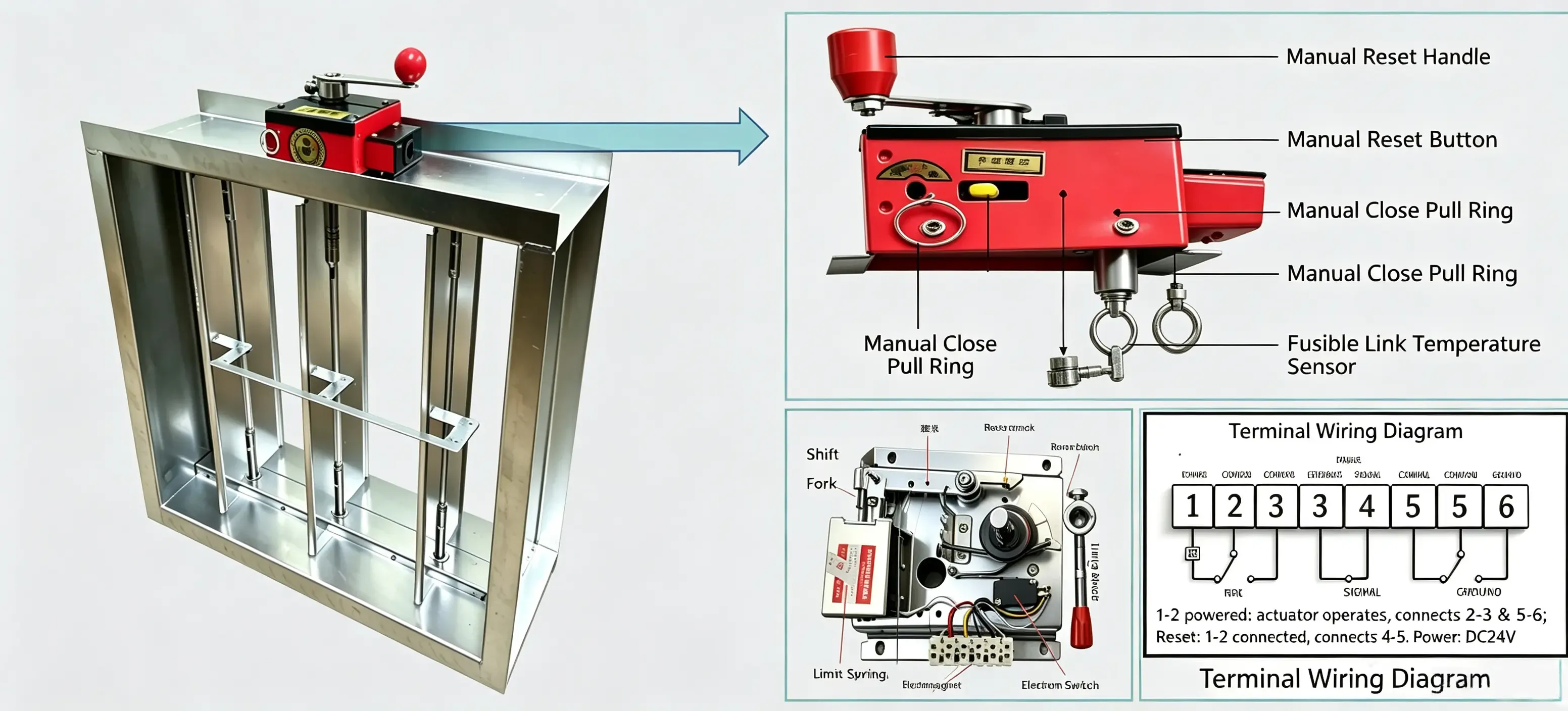
70°C fire damper — fusible link and manual reset shown.
150°C Fire Damper — Kitchen Exhaust Specialist
Kitchen exhaust ducts demand specialized HVAC Duct Dampers that can tolerate elevated ambient temperatures without nuisance closures. The 150°C fusible link is calibrated specifically for this harsh environment.
Additionally, air duct dampers for kitchen applications often incorporate grease-resistant coatings and inspection ports to simplify maintenance and code compliance.
Function: Specifically designed for kitchen exhaust systems. Normally open, it automatically shuts off when the duct temperature reaches 150°C to control the spread of cooking fumes.
How it works:Kitchen exhaust ducts deliver hot, oily air. In the event of a fire in the kitchen or duct, the temperature will rise rapidly. This 150°C high-temperature resistant fuse has a higher melting point than the standard 70°C fuse, preventing accidental shut-off during normal cooking. Once triggered, the damper seals shut, containing the fire within the kitchen area.
Construction: Stainless steel or heat-treated blades, oil-resistant housing, 150°C high-temperature resistant fuse, and access panel for regular Cleaning.
Mounting:Installed on main and branch ducts of kitchen exhaust systems, especially suitable for ducts that pass through walls or floors.
Deiiang™ FS-150-K series features a unique anti-stick blade profile and is grease-resistant, a design refinement by Jason.peng after analyzing 200+ kitchen fire incidents.
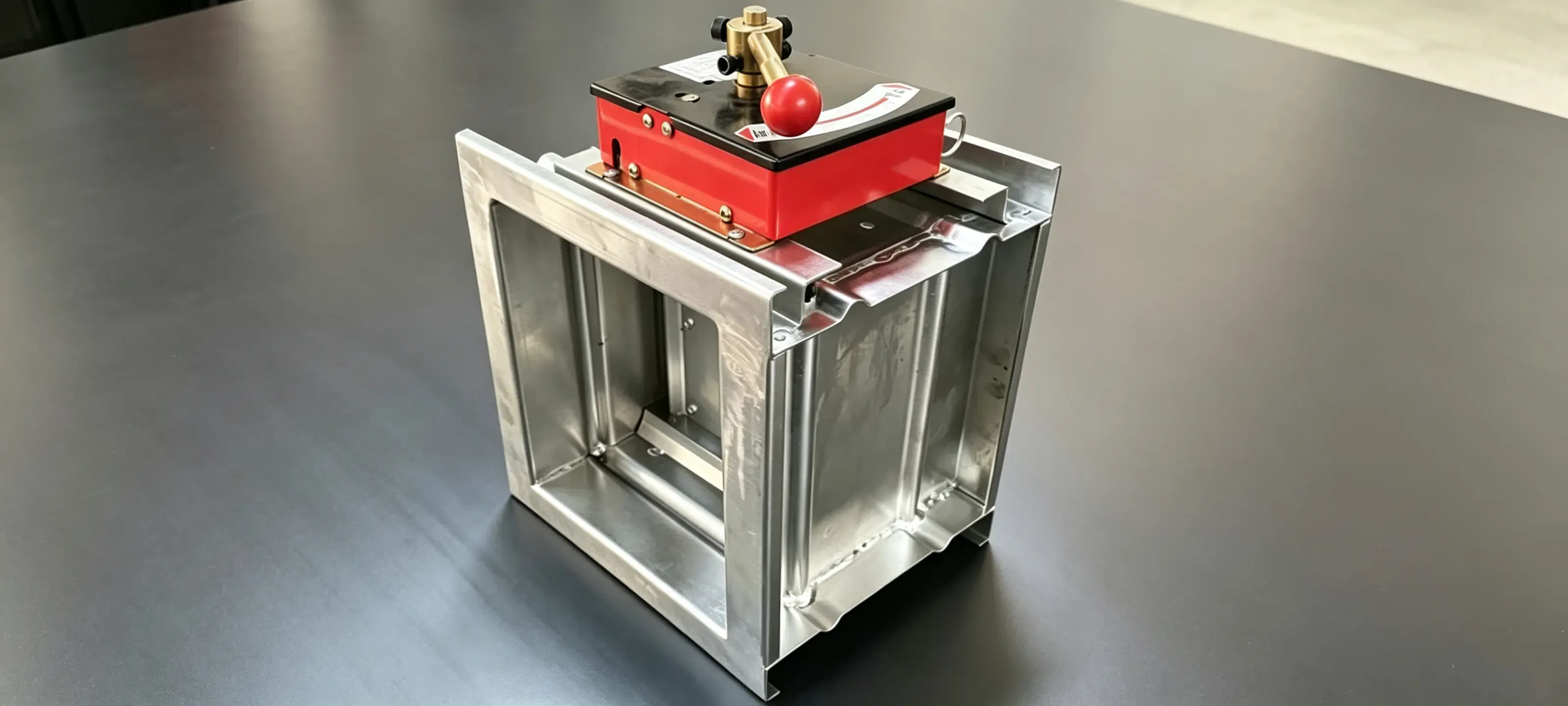
150°C kitchen fire damper with inspection port.
280°C Smoke/Fire Damper — Smoke Exhaust Main & Fan Protection
Smoke exhaust mains demand robust HVAC air dampers capable of withstanding extreme heat while maintaining a positive seal. The 280°C rating ensures the damper stays operational long enough to evacuate smoke before it closes and triggers fan shutdown.
When integrating ventilation duct dampers into a smoke exhaust system, their interlocking with the exhaust fan is crucial. This coordination prevents fan damage and maintains the integrity of the smoke exhaust path.
Function: Used in dedicated smoke exhaust systems. Normally open, it closes at 280°C and simultaneously inter locks with the exhaust fan to shut it down.
How it works:In the event of a fire, the dampers remain open to exhaust smoke. If the duct temperature reaches 280°C, the fuse melts, the damper closes, and a signal is sent to the fire control panel to stop the smoke exhaust fan. This prevents the fan from being damaged by extreme heat and stops the spread of superheated gases.
Construction: Reinforced thick heat-resistant steel body, alloy blades with a rated temperature of 280°C, DC24V electric actuator, 280°C fuse, and dual signal feedback (damper position + fan interlock).
Mounting: At the intersection of the main smoke exhaust duct, fireproof compartments, and—most importantly—at the inlet of each smoke exhaust fan (as required by regulation
Deiiang™ FS-280-H dampers are tested to 2 hours of fire resistance (EI120) and feature a fail-safe spring return. Jason.peng incorporated a dual-seal design to ensure zero leakage at 280°C.
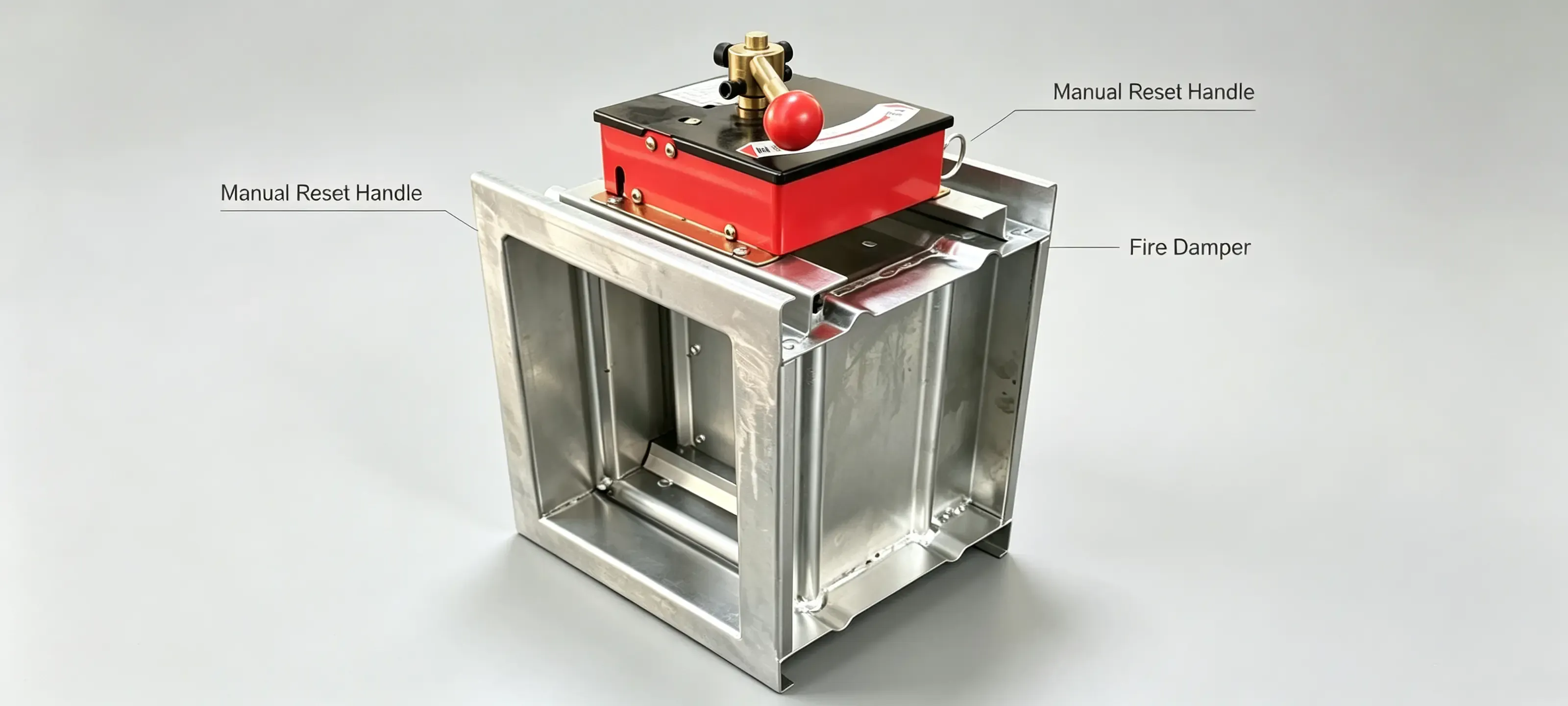
280°C smoke/fire damper with DC24V actuator.
Smoke Exhaust Valve — Room-Level Extraction (Normally Closed)
Unlike thermal dampers, duct dampers for HVAC used as smoke exhaust valves are normally closed and open only upon receiving a fire alarm signal. This on-demand operation characteristic makes it the cornerstone of zoned smoke extraction strategies.
The ventilation duct dampers are appropriately sized to ensure adequate smoke extraction without causing excessive pressure loss or directly affecting the safety of personnel evacuation.
Function:Installed in the room or area at the end of a branch. Normally closed, it opens on fire signal to extract smoke from the protected space.There is no fused connection—it relies entirely on electricity or manual operation.
How it works: In standby mode, the valve is closed to prevent air leakage. When a smoke detector or fire alarm panel sends a DC24V signal, the actuator opens the valve, allowing the smoke exhaust fan to draw smoke out. A manual pull-cable (or electric reset on newer models) allows on-site emergency opening and reset after the incident.
Construction: Compact casing, sealed blade, DC24V actuator, manual cable override, and position feedback. Modern versions (e.g., Deiiang™ SEV-E series) offer push-button electric reset, eliminating the need for traditional cable mechanisms.
Mounting: In ceiling voids or on walls within smoke compartments, typically paired with a decorative grille.
Deiiang™ SEV-E series, designed by Jason.peng, integrates a low-profile actuator and meets ISO 21927-9 for smoke control dampers.
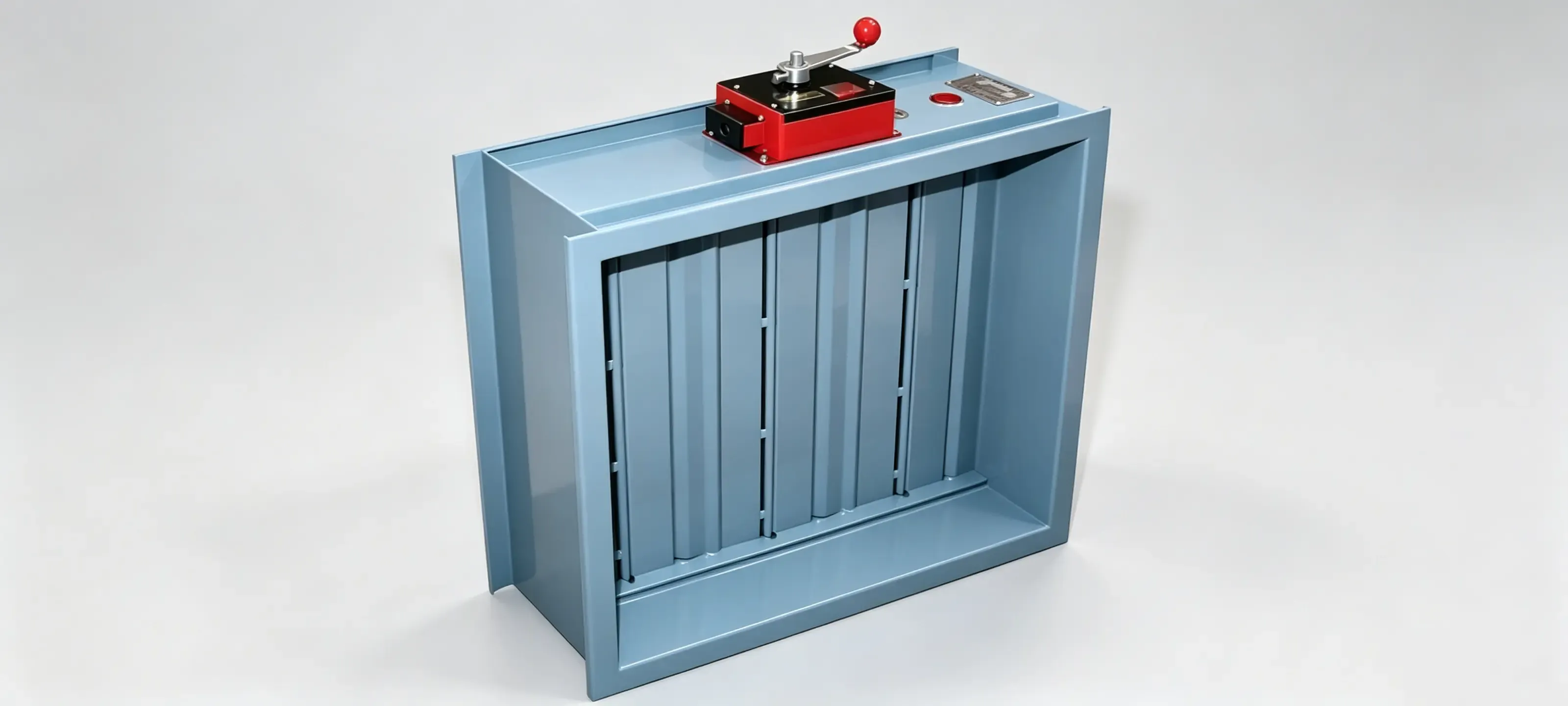
Smoke exhaust valve with electric actuator and manual cable.
Pressurization Supply Damper — Life-Safety Air Supply
Pressurization systems rely on ventilation duct dampers that open to deliver fresh air into protected zones, creating a pressure barrier against smoke. These dampers must close tightly when not in use to prevent unwanted leakage.
Selecting HVAC Duct Dampers for pressurization applications involves verifying low-leakage performance and compatibility with the building's fire alarm logic, ensuring dependable operation during an emergency.
Function: Used in pressurization systems for stairwells, lobbies, and fire-fighting access routes. Normally closed, it opens during a fire to deliver fresh air, creating a positive pressure barrier that keeps smoke out of escape routes.
How it works: The damper remains shut under normal conditions. Upon fire detection, the building management system (BMS) or fire panel triggers the DC24V actuator to open the damper, and the pressurization fan starts. The resulting pressure differential (typically 25–50 Pa) prevents smoke ingress into protected zones.
Construction: Robust, low-leakage casing with a tight-sealing blade, DC24V actuator, status feedback, and optional flow-adjustment vanes.
Mounting: At the terminal of pressurization ducts, typically in stairwell landings, elevator lobbies, and combined-use lobbies.
Deiiang™ PSD-24 series incorporates a patented zero-leak seal and is available with adjustable damper blades for fine-tuning pressurization flow, a feature championed by Jason.peng to meet EN 12101-6.
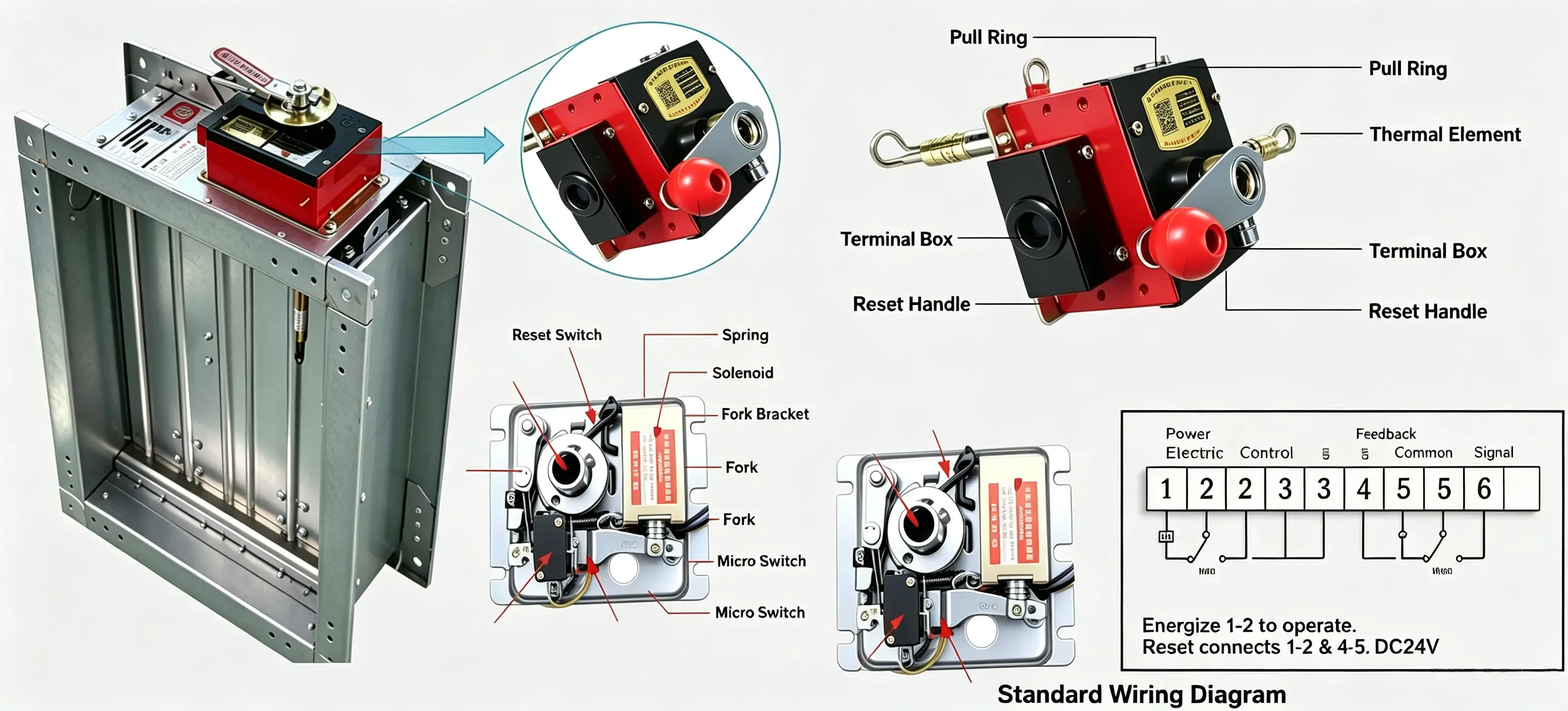
Pressurization supply damper — normally closed, opens on fire signal.
Key Design & Installation Nodes
Effective integration of HVAC air dampers into a building's ductwork goes beyond product selection—placement, clearances, and access for maintenance are equally critical. Adhering to these nodes prevents installation defects that could compromise fire barriers.
For retrofits, specifying compatible duct dampers for HVAC often requires custom flange adapters and field measurements to address non-standard duct dimensions, as highlighted in Deiiang™ case studies.
Proper placement and installation are as critical as selecting the correct damper type. Here are the most important on-site considerations for 5 Core Dampers for HVAC Ducts:
Always install a fire damper (70°C or 280°C depending on system) at every penetration. The damper must be securely anchored and its fusible link accessible for inspection. Maintain a clearance of at least 200 mm from the wall to allow for thermal expansion.
Locate smoke exhaust valves within each smoke compartment, typically near the ceiling (within 300 mm of the highest point). Ensure the manual override cable is routed to an accessible location, clearly marked.
Install pressurization dampers at the terminal of each pressurization duct. Each damper should serve a single fire compartment (stairwell or lobby) to avoid cross-contamination. Use flow-measuring stations to verify pressure differential during commissioning.
Always place 150°C dampers as close as possible to the kitchen hood exhaust connection, before any branch take-off. Include a clean-out access panel downstream for grease removal — a requirement in many local codes.
Pro tip from Deiiang™: For retrofits, always verify the existing duct gauge and clearance before selecting a damper. Our engineering team, led by Jason.peng, offers on-site dimension checks and custom flange adapters to simplify installation.
Testing & Acceptance — What Inspectors Look For
Test run time, lockout time, performance verification, and performance checks. The inspector confirms that the fuse is correctly installed and that the electric actuator is operating normally within its operating range.
Documentation demonstrating that ventilation duct dampers comply with EN and UL standards is often mandatory.Recording these test results will simplify future inspections and make it easier to comply with safety protocols.
Whether you are commissioning a new building or renovating an existing one, here are 5 key inspection points that fire safety inspectors will assess for HVAC duct dampers:
Documentation: Provide test reports for fire resistance (EI rating), fusible link calibration, and actuator response time. For Deiiang™ products, all units come with EN 1366-2 and UL 555S test certificates.
Visual inspection: Check that the damper body is intact, the fusible link is correctly installed, and the manual reset handle (where fitted) is accessible and unobstructed.
Operational test: For electrically actuated dampers (smoke exhaust and pressurization), simulate a fire signal and verify that the damper opens within 30 seconds. For thermal dampers, manually trip the fusible link (with a spare on hand) and confirm full closure.
Smoke tightness: Perform a leakage test (if required by local code) to ensure the closed damper meets the specified class (e.g., Class 3 or Class 4 per EN 1751).
Acceptance checklist: Ensure each damper is clearly tagged with its type, rating, and installation date. Photograph every installation for the O&M manual — this saves time during future inspections.
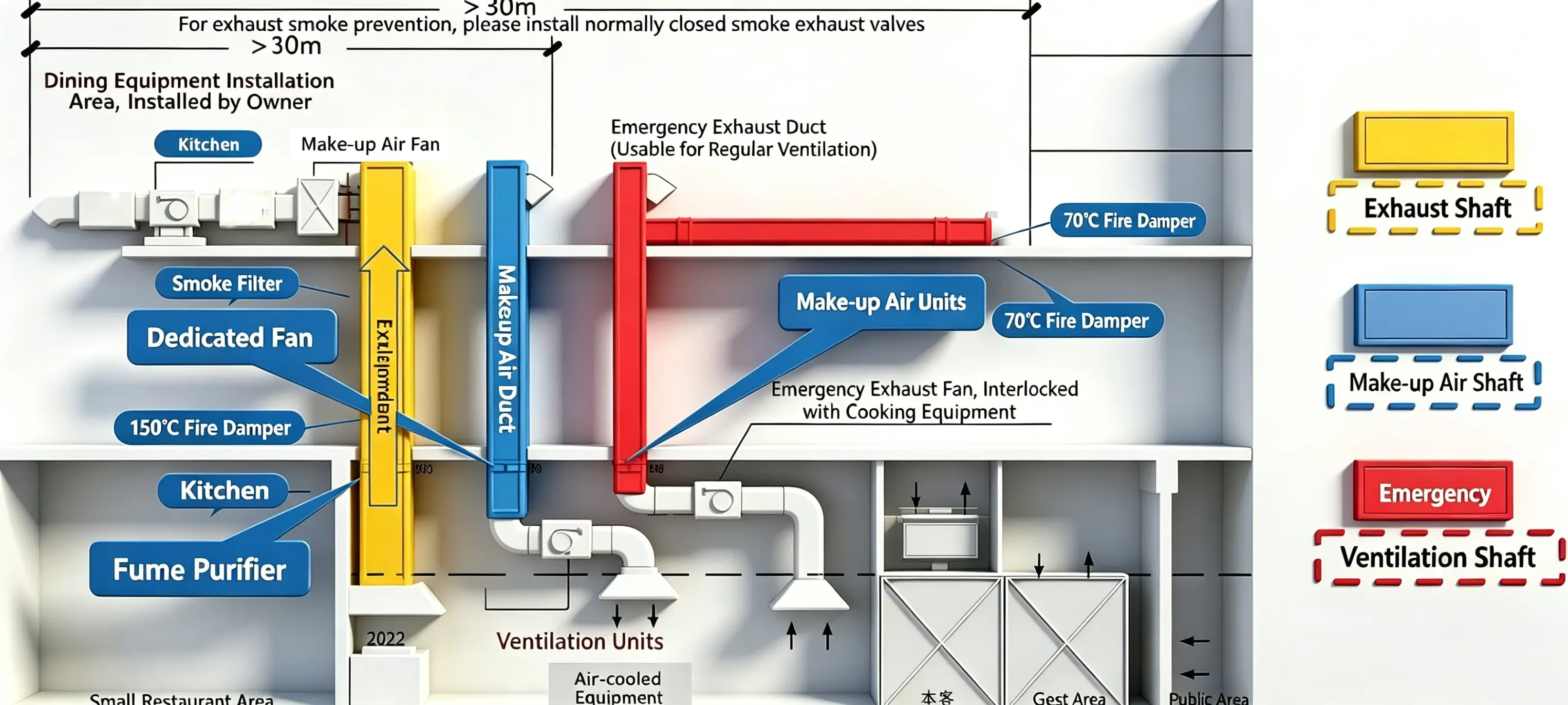
Deiiang™ Products & Case Study
Deiiang™ engineering ensures that its range of HVAC air dampers—including the FS-70, FS-150-K, and FS-280-H series—meets the most demanding fire and smoke control Requirements. These products are backed by full-scale fire test data and decades of field experience.
During the course of the current items, the current situation of the current situation can be combined to reduce the size difference and shorten the installation time.
Deiiang™ manufactures a full range of fire-rated and smoke-control dampers, with each series rigorously tested to international standards. Our product designer, Jason.peng, has over 18 years of experience in HVAC fire protection and has led the development of our flagship FS-70, FS-150-K, FS-280-H, SEV-E, and PSD-24 lines.
Case Study — ABC Pharma cleanroom Retrofit (City): The project required replacing 450 dampers across 12 production floors, with strict cleanroom protocols and a 6-week deadline. The challenge: many existing duct penetrations had non-standard dimensions. Deiiang™ worked with the client to pre-fabricate custom flange adapters for each location, using our FS-280-H and SEV-E series. On-site VOC levels averaged 2.1 g/L (well below the 5 g/L limit), and all 450 installations passed the EI120 fire test on the first attempt. The project finished 22% ahead of schedule, and the client credited our prefabrication strategy and Jason.peng's design support for the success.
Scenario & Persona — Li's Challenge
Li's experience demonstrates that even well-designed cleanrooms can become extremely vulnerable after the ductwork baffles of the HVAC system fail during a fire. Immediately closing the fireproof baffles at the boundaries of compartments is crucial for protecting personnel and the valuable production environment.
For Pharmaceutical plants, dampers with specified low-VOC coatings and zero-leakage seals (such as Deiiang™ products) can meet both pollution control and fire safety requirements.
Meet Li, a cleanroom engineering manager with 12 years of experience. He is overseeing a new pharmaceutical R&D facility where fire safety and contamination control are equally critical. Li's biggest headache: ensuring that fire dampers do not compromise the cleanroom's positive pressure or introduce particulate contamination.
A fire broke out in the service corridor next to the cleanroom.If the 70°C damper leading from the corridor to the cleanroom is not closed in time, smoke may be drawn into the cleanroom through the HVAC Return Air duct, potentially ruining weeks of production. Worse, if the 280°C smoke exhaust damper on the main riser does not interlock with the fan, the fan could be destroyed by 300°C+ gases, leaving the entire building without smoke extraction.
Deiiang™ addressed Li's concerns by providing dampers with zero-leakage seals (tested to 500 Pa) and low-VOC coatings (VOC < 3 g/L). In simulated fire tests, our FS-280-H fuse can shut off within 18 seconds after melting, and the fan interlock can be triggered within 2 seconds.The cleanroom maintained its 25 Pa pressure differential for the first 60 minutes, keeping smoke out of the production area. Li's team now specifies Deiiang™ dampers as the standard for all cleanroom projects.
Maintenance & Lifespan — Keep Your Dampers Reliable
Routine inspection of air duct dampers identifies early signs of corrosion or mechanical binding, especially in kitchen exhaust and humid environments. A scheduled maintenance plan extends service life and ensures readiness.
For electrically actuated dampers, periodic cycling under load verifies that motorized components remain functional. Deiiang™ dampers are designed with replaceable seals, simplifying long-term upkeep.
Even the best dampers need regular attention. Here is a practical schedule for 5 Core Dampers for HVAC Ducts:
Visual inspection: Every 6 months — check for physical damage, corrosion, grease accumulation (kitchen dampers), and ensure the fusible link is intact and the manual reset handle moves freely.
Functional test: Every 2 years — for electric dampers, apply a test signal and verify full travel. For thermal dampers, remove and test the fusible link in a controlled oven (or replace it). Always keep spare fusible links on hand.
Replacement interval: Most dampers have a service life of 10–15 years, but kitchen dampers (150°C) may need replacement earlier (8–10 years) due to grease-induced corrosion. Deiiang™ dampers are designed with replaceable blade seals and fusible links, extending the usable life by up to 5 years.
Micro-Glossary
Understanding terminology is key when specifying ventilation duct dampers and air duct dampers. Terms such as fusible link, EI rating, and DC24V actuator define critical performance attributes that directly influence damper selection and code compliance.
Fusible link
A temperature-sensitive alloy element that melts at a predetermined temperature (70°C, 150°C, or 280°C), releasing a spring-loaded damper blade to close.
EI rating
Fire resistance classification: E (integrity) and I (insulation). For example, EI120 means the damper maintains integrity and insulation for 120 minutes under fire conditions.
DC24V actuator
An electrically powered device that opens or closes a damper upon receiving a 24-volt direct current signal from a fire alarm panel or building management system.
Pressurization
The process of supplying fresh air to a protected space (e.g., stairwell) to create a positive pressure differential, preventing smoke ingress during a fire.
References & Further Reading
For those seeking deeper technical guidance, international standards such as EN 15650 and UL 555 provide comprehensive testing protocols for HVAC air dampers and duct dampers for HVAC. These documents are essential references for engineers and inspectors alike.
NFPA 90A — Standard for Installation of Air-Conditioning and Ventilating Systems
EN 15650 — Fire dampers
ISO 21927-9 — Smoke and heat control systems — Part 9: Specification for control equipment
UL 555 — Fire Dampers
CIBSE Guide — Fire safety engineering
Get the Technical Handbook
To support your next project, download our comprehensive handbook covering HVAC Duct Dampers selection, installation details, and compliance data. This 68-page resource consolidates decades of fire damper engineering experience.
Whether you are upgrading an existing system or designing a new one, having detailed specifications for duct dampers for HVAC at your fingertips can streamline approvals and reduce installation errors.
Ready to specify or install 5 Core Dampers for HVAC Ducts with confidence? Download the Deiiang™ Fire Damper Technical Handbook — 68 pages of selection charts, installation details, and test data, all compiled by Jason.peng and our engineering team.
All downloads include UTM tracking for better support. For urgent inquiries, contact our technical support team directly.
© 2026 Deiiang™ — Fire & Smoke Control Dampers. Designed by Jason.peng. All specifications subject to change without notice.