+86 13638632902
 Jason@cleanroomequips.com


 MENU
MENU
Cleanrooms that utilize modular concepts help to ensure conditions for manufacturing processes are well-controlled, and adaptable as production requirements change. Their proper functionality defies the concept of ISO cleanliness: control of particles, ESD protection, temperature, humidity and vibration must comply with the necessary parameters of the production process and equipment. This guide outlines nine factors to consider when designing and procuring modular cleanrooms.
This article is intended for project preparation, supplier vetting, and design evaluation. The cleanliness class, electrostatic discharge controls, vibration restrictions, HVAC system design, and qualification specifications should be determined by the product being manufactured, the processes in use, the vendor’s specifications, and applicable standards. The numbers appearing in the illustrations are standard values, practical illustrations, and assumptions.
Five Main Points to Keep in Mind Before Continuing
- iso class does not provide an exhaustive description. iso class refers to airborne particles only. Other factors must also be taken into account, including ESD, airborne molecular contamination (AMC), vibration, and yield.
- It is critical to know what the ISO number refers to. In particular, the particle size involved, the condition of the space (as-built, at-rest, or in operation), and the location of the measurement.
- Vibration restrictions depend on the equipment. VC figures are frequency-dependent and need to be measured at the equipment’s location instead of being calculated from construction materials.
- Modular manufacturing changes the enclosure type and installation method, but it does not guarantee lower energy consumption or a shorter construction period. Both aspects are determined by engineering and design solutions.
- Every construction item in this article is mentioned using code numbers or clearly labeled assumptions. If a number does not have a reference, it should not be used as a procurement target.
Scope: Which Electronics Processes This Guide Covers
Electronics manufacturing covers a wide range of processes with very different environmental requirements. Applying one ISO class, one budget, and one delivery timeline to all of them is a common cause of overspecification and disappointment.
| Process Category | Typical Environmental Focus | Common Misconception |
|---|---|---|
| PCB / SMT assembly | Particle control, ESD, solder fume extraction, humidity stability | Believing that semiconductor-level ISO standards apply |
| Precision optics, sensors, camera modules | Particle control, low outgassing, temperature stability, vibration | Ignoring molecular contamination and thermal drift |
| Semiconductor packaging and testing | Particle control, ESD, humidity control, equipment interfaces | Pretending back-end and front-end needs are the same |
| Wafer front-end processing | Very tight control of particles, airborne molecular contamination, vibration, and temperature | Considering a modular enclosure a replacement for the full fab design process |
It takes about 10 weeks to deliver a modular room, but that does not mean wafer manufacturing can be completed in the same time. Modular construction streamlines the enclosure and fit-out process, but manufacturing lead time, utility infrastructure work, and process qualification are still lengthy.
Understanding the Contamination Control Requirement
Modern electronic components are sensitive to particles, electrostatic discharge, vibration, temperature drift, humidity, and airborne molecular contamination. The relative importance of eACH depends on the specific product and process step — not on the industry label “electronics.”
When a project specifies an iso 14644-1 class, that value must be read together with the particle size, the occupancy state, and the sampling method. A class number alone does not describe a manufacturing environment.
Classification note: ISO class describes airborne particle concentration at specified sizes and in a specified state (as-built, at-rest, or operational). It does not by itself demonstrate ESD control, AMC limits, vibration compliance, temperature/humidity stability, or process yield.
Reference Limits for Particle Concentration as per ISO 14644-1
The following limits are reference values taken from iso 14644-1:2015 for selected classes and particle sizes. They are provided for orientation only. Always confirm against the current version of the standard and the specific particle size relevant to your process.
| ISO Class | ≥0.1 μm (particles/m³) | ≥0.3 μm (particles/m³) | ≥0.5 μm (particles/m³) | ≥5.0 μm (particles/m³) |
|---|---|---|---|---|
| ISO 3 | 1,000 | 102 | 35 | — |
| ISO 4 | 10,000 | 1,020 | 352 | — |
| iso 5 | 100,000 | 10,200 | 3,520 | — |
| ISO 6 | 1,000,000 | 102,000 | 35,200 | — |
| ISO 7 | — | — | 352,000 | — |
| iso 8 | — | — | 3,520,000 | — |
Reference values as specified in ISO 14644-1:2015. Verify against the current standard before use in design documents.
In actual practice, the environment directly around a critical process is sometimes controlled to a greater extent than the surrounding room, through a localised mini-environment or laminar flow zone. Treating the whole hall as the critical zone is one of the most expensive misreadings of a particle specification.
Whole Room or Local Mini-Environment?
| Selection | Condition of Use | Financial and Operating Implications |
|---|---|---|
| Raising the entire room to a new class | Significant airflow; numerous manual processes | Peak HVAC and electricity consumption; hefty reconfiguration expense |
| Clean zone with mitigation | Specific critical applications; mechanised processing between stages | Lower investment and operational expenditure; requires airflow regulation |
| Machine-based micro-climate | Inline devices with specific controlled enclosure | Minimal room requirements; dependent on machine manufacturer values |
Insight 1: Air Flow, Filtering, and Particle Control
Cleanroom airflow must above all be concerned with the required contamination control. unidirectional airflow is characterised by uniform velocity, coverage, and flow pattern. In the case of non-unidirectional flow, the relevant factors are air change rate, filter coverage, and recovery capability.
S4VyAOnngAk
HEPA and ULPA filter efficiency needs to be described using the standard and the particle and aerosol sizes used for testing. If any efficiency is given, for example 99.995% at MPPS, a relevant standard such as EN 1822 or ISO 29463 and the filter class must be stated. Leak testing is separate from the filter’s factory rating.
Filter rating ≠ room classification. A highly efficient filter does not guarantee a classified room. In addition to the rating, duct leakage, sealing, room pressurisation, internal particle generation, and airflow uniformity all affect the result obtained.
Instead of highlighting an anticipated yield increase, a design evaluation should request that the facility measure yield both before and after changes are made and provide enough detail to allow proper attribution.
| Field to Record | Purpose |
|---|---|
| Product and process stage | Indicates how sensitive a process is |
| Comparison period before and after | Provides a valid time frame |
| Batch count and units produced | Establishes statistical significance |
| Yield, percentage of defects, and contamination-related defects | Helps distinguish environmental effects from other reasons |
| Simultaneous modifications of equipment, inputs, and processes | Prevents false assignment of cleanroom influence |
| Measurement methods and equipment | Ensures data can be confirmed |
Insight 2: Timing and Scalability
Modular building technologies can shorten the enclosure and fit-out phases because they are produced off-site in a controlled factory environment. However, the timing of the project depends on the whole scope of work, not just the cleanroom shell.
A timeline reading “8 to 12 weeks” is only meaningful if it states what it covers. The following checklist can be used to compare vendor proposals.
Approval of design and engineering
Renovation of the building, structural inspection, and approval from the landlord or local authorities
Approval regarding fire protection and life safety
Renovation of utilities such as power, chilled water, compressed air, and exhaust
Purchase of production equipment and its approval on site
Production of panels and units in the factory
Installation at the site
Commissioning and balancing
Classification testing of systems and approval of the ESD system
If the company provides a shorter period compared with standard construction, the reasons behind the schedule must be outlined. It should be taken into account that moving labour and production does not change approval, production, and qualification processes; the latter is usually the longest stage of the process.
Insight 3: ESD Management and Vibration Control
ESD Management as a System
Discharge control in an electronics cleanroom is a documented system that consists of grounding, working surfaces, floors, tools, ionisation, and other measures. Quoting a single resistance number or ionisation value does not mean the system is compliant.
The system should cover the following points:
- Sensitivity of the device: the elements being processed and their discharge principles.
- EPA borders: what is considered the area of discharge control and how it is managed.
- Grounding of personnel: wrist devices, shoes, and clothing should be checked at intervals.
- Working surfaces and floors: measure resistance using the respective procedures.
- Ionisation: voltage and decay time.
- Testing and documentation: all types of testing, calibration of devices, and documents at all stages should be performed.
Although humidity may have an effect on how static is generated, it cannot replace an ESD control programme in its entirety. Some facilities also apply ESD requirements to cleanroom walls and seals because of triboelectric properties. Whether this is required depends on the specifics of the process and the internal standards adopted.
Vibration Criteria Depend on Equipment
Vibration criteria should be determined by equipment suppliers. Moreover, they should be defined based on measurements taken under the working conditions of the tool. Generic VC curves are considered a reference point for defining the configuration of the specific tool.
| Summary of VC Curves (Reference) | Indicative RMS Velocity Level | Typical Situation |
|---|---|---|
| VC-A | ~50 μm/s | General laboratory and light manufacturing |
| VC-B | ~25 μm/s | Certain metrology and precision assembly |
| VC-C | ~12.5 μm/s | Advanced lithography and highly precise tools |
| VC-D | ~6.25 μm/s | Tools with extremely high accuracy |
| VC-E | ~3.125 μm/s | Advanced and research equipment |
Indicative VC curve levels. Actual requirements depend on the frequency range and the equipment supplier specification.
It should be stated that wall and ceiling modular components are not vibration isolation systems. The building structure, tool support, and any specialised isolation systems play a key role in defining vibration performance.
Insight 4: Cost Structure and Investment Predictability
An acceptable comparison includes the region, currency, date of price, area, ceiling height, classification status, temperature and humidity requirement, percentage of outside air, exhaust requirements, and systems included or excluded.
| Scope Item | Typical Point of Confusion |
|---|---|
| Panels, ceilings, and doors | Typically included; confirm finish and fire rating |
| ffus and HEPA filters | Most often quoted separately |
| HVAC plant and ducting | Usually excluded in quotes limited to panels |
| Chilled water, heating, and power distribution | Done by third parties unless stated otherwise |
| Fire detection and suppression | Often excluded from cleanroom vendor scope |
| Process exhaust and scrubbing | Usually ignored; can involve significant costs |
| Monitoring and controls | Confirm integration with BMS |
| Testing, balancing, and classification | Confirm whether third parties will perform these |
| Freight, taxes, and site access | Very often misunderstood |
The important point regarding lifecycle cost analysis is that it must include its duration and assumptions about discounting. Comparing capital costs, energy, maintenance, and reconfiguration over ten years without indicating the assumptions would produce irrelevant numbers.
Insight 5: Flexibility and Reconfiguration
Modular construction facilitates reconfiguration because it makes it possible to change the position of panels, ceiling grid, and FFUs more easily than in traditional implementation. However, it is still important to plan properly, because changing the position of a wall can put air balance, pressure relationships, monitoring points, fire compartmentalisation, and the validity of previous qualifications at risk.
Standard reconfiguration projects include the following steps:
- Revise the data sheet for the room and the airflow balance calculation.
- Check whether the capacity of HVAC and electricity is sufficient for the project.
- Make sure the fire safety system complies with requirements.
- Check monitoring points and alarm limits.
- Establish the re-qualification scope based on the change at hand.
The length of time needed for reconfiguration is specific to the project at hand. Although the expression “two to four weeks” is often used in sales, it should not be considered a planning assumption unless the scope of work and specific site conditions are identified.
Insight 6: Materials, Surfaces, and Outgassing
The choice of materials used within an electronic cleanroom affects particle shedding, ease of cleaning, chemical compatibility, and — when relevant — airborne molecular contamination. The same panel system cannot be used in all processes.
| Material | Typical Application | Considerations | Evidence to Be Requested |
|---|---|---|---|
| Powder-coated steel panels | General cleanroom walls and ceilings | Coating integrity, edge sealing, chip resistance | Coating system data, adhesion test methods, repair procedure |
| FRP panels | Walls and ceilings in chemically exposed areas | Resin type, cut-edge sealing, fire performance | Fire classification, chemical compatibility, cleaning methods |
| Stainless steel surfaces | Equipment washdown and interface panels | Finish treatment, welding treatment, washing residue | Surface finish data, compatibility with washing substances |
| ESD flooring | EPA floors and walkways | Resistance data derived from specific measurement procedures | Test methods, resistance range, maintenance and re-testing procedure |
| Cleanroom sealants and gaskets | Panel manufacture and fitting finish | Compatibility with cleaning agents, ageing behaviour | Chemical compatibility, compression resistance, service life statement |
Outgassing claims should be supported by a specific testing standard, chamber conditions, sample preparation, and the values obtained for the material of concern. The mere presence of the label “low outgassing” does not constitute a specification without the testing method employed.
Insight 7: Monitoring, Control, and Data
Monitoring the cleanroom helps ensure that conditions conform to specifications and supports data collection for operational control and maintenance planning. These two purposes are different, and their requirements for accuracy and recording must be treated separately.
| Parameter | Sensor Options | Recording Options |
|---|---|---|
| Particle size | Size, flow rate, and location of sensor | Alarm thresholds, historical records, calibration frequency |
| Temperature and humidity | Accuracy, speed, and location of device | Averaging time, alarm delay, and requirements |
| Differential pressure | Sensor capability must match the target parameter | Zeroing process, thresholds, and reference point |
| Air movements and filter working | Air pressure on the filter and fan speed | Maintenance action thresholds |
| ESD status | Point-by-point checking rather than summary results | Test records with instrument and date |
Sensor parameters matter. A differential pressure reading that resolves to roughly 5 Pa is not suitable for monitoring a target differential of 5–10 Pa. Double-check sensor accuracy, resolution, and control stability.
Claims about predictive maintenance need to be backed by data. Particle movement, filter pressure drop, and fan speed certainly help, but a filter change decision must be based on pressure, airflow, integrity test results, and operating history — not on a single algorithm output.
Insight 8: Meeting ISO 14644 and Other Standards
Compliance in an electronics cleanroom does not involve only one international standard, but several at the same time. Different standards may apply depending on the market, the client’s demand, and the production process.
- ISO 14644 series — classification, monitoring, and testing of cleanrooms and related controlled environments.
- ANSI/ESD S20.20 or relevant IEC documents — requirements for ESD control programmes.
- EN 1822 or ISO 29463 — depending on the filter standard in question, filter classification and testing.
- Equipment supplier specifications — requirements for vibration, temperature, humidity, ventilation, and other utility needs.
- SEMI standards — wherever applicable to the process at hand; provide specific document numbers instead of citing “SEMI standards” generally.
The use of pre-validated document collections can reduce the amount of work needed to prepare qualification documentation, but it will not eliminate the need for site inspection and testing. The classification report for any given room must be based on measurements obtained from that room under the established conditions.
Insight 9: Energy Consumption and Operational Sustainability
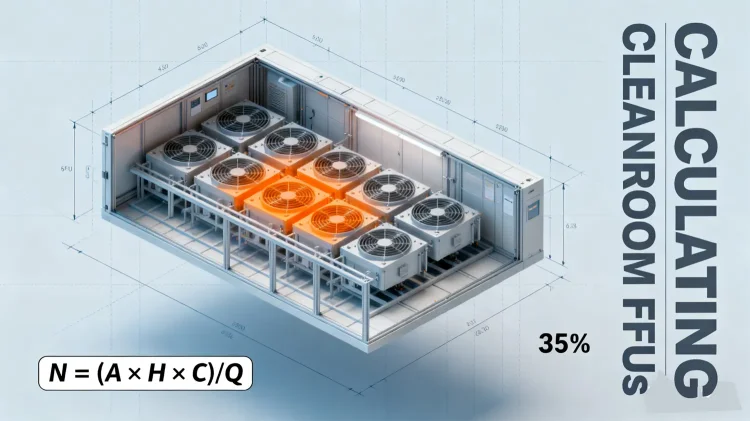
The largest share of cleanroom energy consumption is used by air management systems, followed by heating, cooling, and lighting. Modular construction can allow for energy-efficient operation as long as appropriate measures are taken in the design of the plant; however, the type of enclosure alone does not guarantee efficiency.
The following techniques are widely used to cut down energy consumption in cleanrooms:
- Use of appropriate air change rates based on observed recovery performance.
- Use of variable frequency drives for both intake and exhaust motors.
- Use of demand-based control when production does not take place.
- Use of an exhaust heat recovery system.
- Implementation of energy-efficient lighting with lighting controls.
- Performing filter loading checks and replacing filters only when required.
Any particular percentage reduction should be regarded only as a design target until it is confirmed by measurements made in the finished facility. Comparisons with “industry averages” require a baseline that is defined, along with the limits of what is included in the energy calculation.
Acceptance and Handover: Tasks, Methods, and Signatures
The following table serves as a guide for preparing an acceptance plan. The exact scope depends on the project. Each row should be assigned to a named responsible party, with a specified test method and a record retained in the qualification file.
| Requirement | Verification | Record | Responsible Party |
|---|---|---|---|
| Particle classification | Classification test performed using a particular particle size | Classification report with sampling plan | Third-party tester / QA |
| Airflow performance | Air volume, filter velocity, flow uniformity, and, as needed, airflow visualisation | Balance record and test report | Commissioning engineer |
| Filter integrity | Leak test performed on installed filters at specified coverage | Leak test report, pass or fail per filter | Commissioning engineer |
| Pressure relationships | Measurement of differential pressure between specified zones | Pressure profile and measurements taken at defined conditions | Commissioning engineer |
| Temperature and humidity | Stability of temperature and humidity against specifications | Mapping report | Commissioning engineer / QA |
| ESD control | Verification of EPA surfaces, ESD flooring, and ionisation based on the required programme | Test results | ESD coordinator |
| Vibration | Measurement at the tool at the designated condition | Vibration spectrum and comparison to tool specification | Vibration consultant / tool supplier |
| Fire and life safety | Inspect and test detection and alarm systems | Confirmation from relevant authorities | Fire protection contractors / authorities |
Application and Illustrative Scenarios
The examples below are intended to serve as a basis for preparing a project brief. They are illustrative and do not represent customer projects, and no measured result should be reused as a design target without site-specific verification.
Scenario A: Expansion of an SMT Line
Setting: An existing electronic equipment manufacturer needs additional SMT capacity in its existing facility.
Limitations: Limited land area, existing HVAC and power, and a short production window.
Design approach: Construction of a modular enclosure with static-dissipative flooring and electrically conductive surfaces; local exhaust at the reflow and wave soldering stages; and an air handling and circulation system designed taking into account the measured particle count and heat load of the new production line.
What would be recorded: Particle counts measured at respective states, ESD test results obtained at the EPA boundary, exhaust airflow measurements, and temperature and humidity records during typical production.
Limitations: No definite timeline, cost, or energy figures are set in this scenario. All figures depend on the specific building, utilities, and scope.
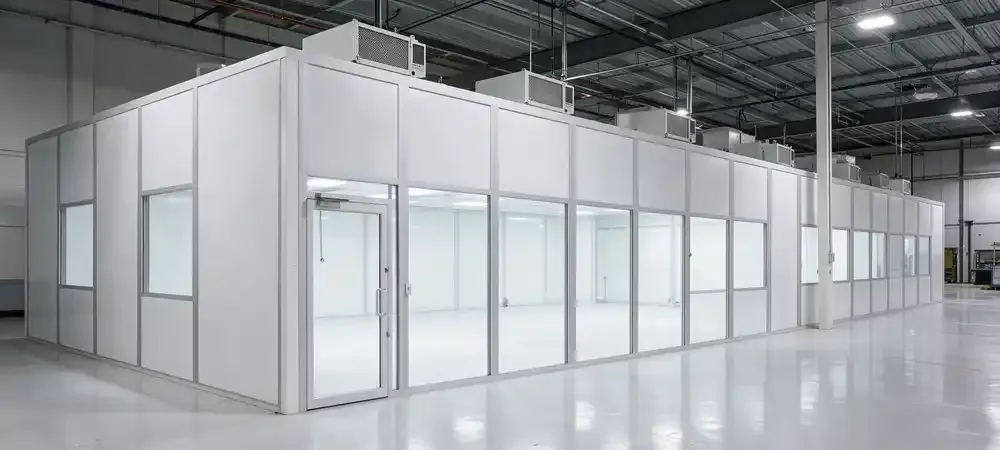
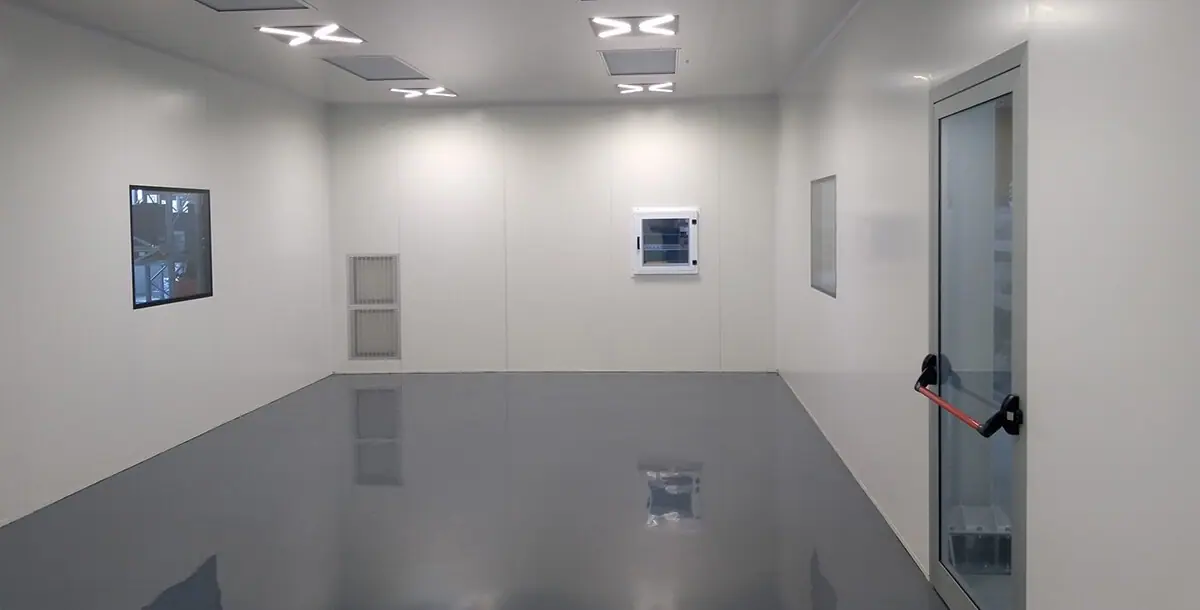
Modular cleanroom enclosure prepared for electronics manufacturing. Image for illustrative purposes.
Scenario B: Precision Sensor Assembly
Context: Assembly of optical sensors where contamination and vibration affect alignment and efficiency.
Constraints: Existing building vibration conditions, rigid temperature stability requirements, and limited space for a cleanroom hall.
Design approach: Moderate background classification with a localised high-cleanliness zone over the critical assembly step; base vibration isolation provided by the equipment vendor; temperature regulation based on the heat load.
What would be recorded: Vibration level at the tool location, temperature stability during a tested production period, and particle counts in the critical zone.
Limitations: Requirements for vibration and temperature are equipment-dependent and cannot be generalised from this scenario.
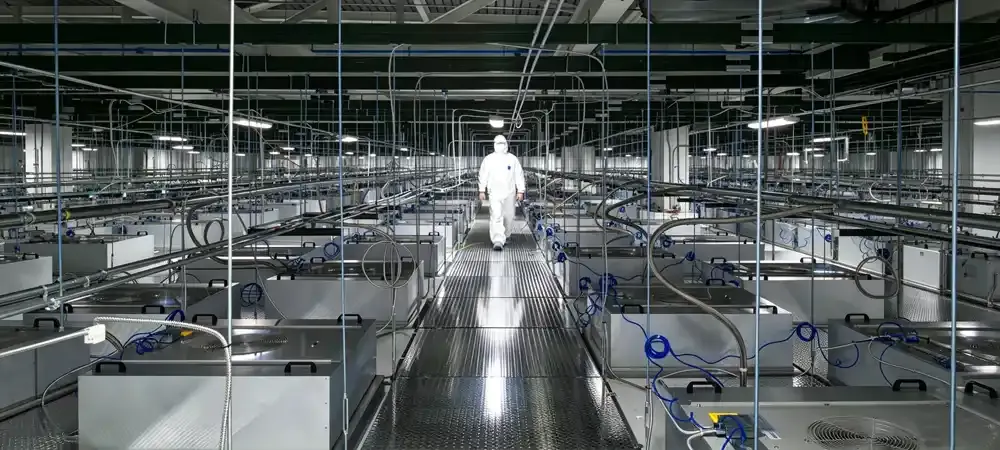
fan filter unit installation during commissioning. Image for illustrative purposes.
Choosing a Cleanroom Vendor: The Assessment Checklist
Vendor selection should be based on established capability and documentation, not just one reference account or a published timeline. The checklist below can help evaluate vendors.
Experience in the exact type of process in question, not just “electronics”
Defined scope of the quotation, including what is included and what is excluded
Document package to support the qualification scope
Defined methodology for testing and balancing, with third-party testing agency names where necessary
ESD experience if required by the process
Vibration and structural knowledge, or a partner identified
Change order management process with clearly defined approval steps
Commissioning plan with clearly defined acceptance criteria
Spare parts and maintenance terms including response times
References from similar projects
If a vendor shares a case study, they should also share the project limits, measurement methods, and barriers. A case study without them cannot support a purchasing decision.
Conclusion
modular cleanrooms can be a feasible instrument for producing controlled electronic devices if speed, flexibility, and staged investment are among your priorities. The advantages depend on how well the project sets its aims and how clearly the numbers are presented.
Before selecting any design or vendor, make sure you know the particle size and state for classification, the ESD control system applied in your process, the vibration criteria from your supplier, and the whole extent of the quotation. These four factors take care of most conflicts during construction and delivery.
Discuss Project Requirements
Get in touch with Deiiang™ to discuss the requirements of your production process, limitations of the manufacturing facility, and acceptance criteria before moving on to the final stage of the modular cleanroom specification.
Product Designer: Jason Peng | Email: jason@deiiang.com | Phone: +86-18186671616
Frequently Asked Questions
Which ISO category is needed for electronics production?
There is no exact answer. PCB assembly, precision optics, packaging and testing, and processes with silicon wafers require different classifications. The category should be based on the sensitivity of the process, the specification of the equipment supplier, and the requirements applicable in the given industry and for the customer. The classification must address both the particle size and the occupancy status — ISO 5 at rest and ISO 5 in operation represent two different standards.
Does a cleanroom automatically guarantee high yield?
The answer is no. Yield depends on many different factors such as materials, tools, process control, operator techniques, and inspection requirements. A cleanroom can only decrease defects related to contamination, but the amount should be measured with reference to the relevant practical baseline while all other parameters are held fixed. Any yield provided without a basis for measurement should be considered only a design objective.
Which vibration criterion should be used for my equipment?
The criterion must be provided by the supplier and determined at the tool’s location under real operational circumstances. The reference framework of the VC curves serves an important purpose but comes with limitations. Keep in mind that the letters range from VC-A, which shows the least stringent requirements, to VC-E, which represents the most stringent. The order is often presented incorrectly in advertising.
Is ESD control limited to flooring resistance only?
The answer is no. An ESD control programme encompasses grounding of personnel, working surfaces, tools and equipment, ionisation, flooring, verification procedures, and record keeping. One resistance value cannot define the compliance of the programme, because requirements may apply differently depending on the sensitivity of the equipment and the processes, typically described in the ESD control plan for each facility.
What energy savings can be expected from a modular cleanroom?
The actual energy consumption of cleanrooms depends on parameters such as design airflow, system efficiency, working schedule, outside air fraction, and internal load. Modular construction is not an inherent determinant of energy consumption. Energy parameters need to be compared with a preset baseline.
What should be included in a quotation for a modular cleanroom?
The quotation needs to be clear in its scope, specifying what is included and what is excluded. One needs to know what is included, such as panels, ceiling, fan filter units and filters, HVAC installation, utilities, fire protection, controls, and monitoring. A quotation that offers only cleanroom enclosure installation is not comparable with a quotation for the installation of the whole system.
Could a modular cleanroom be constructed in 8 to 12 weeks?
Yes, it could be done for a certain scope of work, specifically cleanroom installation and fit-out in an area prepared beforehand. Depending on the project, many factors influence the length of project processing, such as design approval and building modification, installation of utilities, procurement of equipment, and commissioning of the system. The project might be organised into phases allowing for better allocation of time and costs. All phases should be clearly defined.
References and Standards
The following standards and documents are commonly referenced in electronics cleanroom projects. Confirm the current version and applicability for your specific project before use.
- ISO 14644-1:2015 — Classification of air cleanliness by particle concentration. iso.org
- iso 14644-2:2015 — Monitoring to provide evidence of cleanroom performance. iso.org
- iso 14644-3:2019 — Test methods for cleanrooms and associated controlled environments. iso.org
- ANSI/ESD S20.20 — Protection of electrical and electronic parts, assemblies, and equipment. esda.org
- EN 1822 series — High efficiency air filters (EPA, HEPA, and ULPA). beuth.de
- ISO 29463 series — High-efficiency filters and filter media for removing particles from air. iso.org
- SEMI standards — consult the specific document applicable to your process and market. semi.org