+86 13638632902
 Jason@cleanroomequips.com


 MENU
MENU
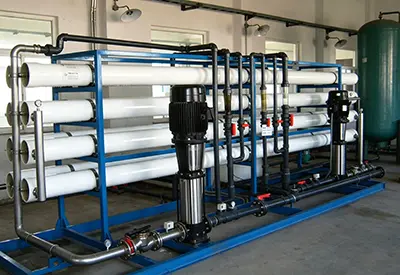
The critICal utility of Pharmaceutical purified water is directly affected by the quality of the reverse osmosis (RO) treated water.
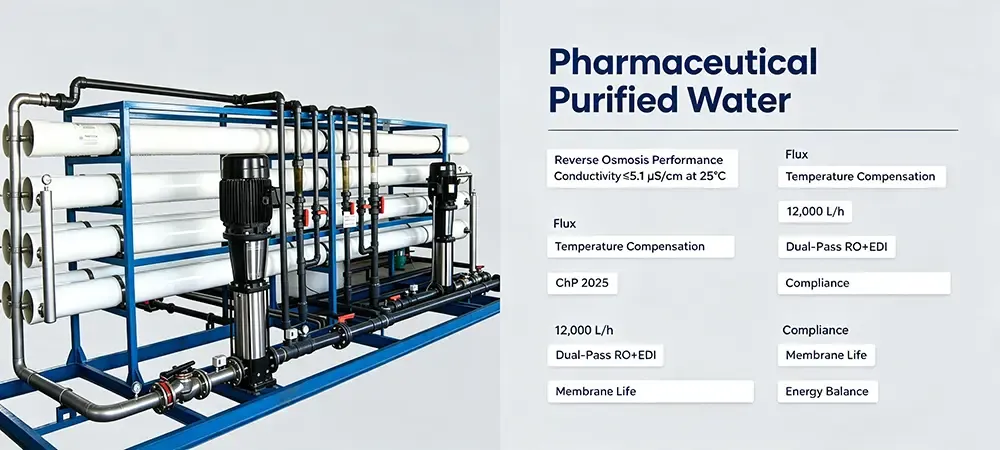
Frontline indicators for reverse osmosis permeate quality are conductivity and flux. Conduction (ChP 2025 edition, 0681/0261) is specified temperature-compensated, typically at he value of 5.1 μS/cm at 25°C.
To balance between meeting specification, using minimal amount of energy and extending the life of membrane, it is important to understand the key factors that determine the permeate quality of reverse osmosis. In this work, both theoretical discussions and data from a 12,000 L/h dual-pass RO+EDI system are presented.
RO Fundamentals
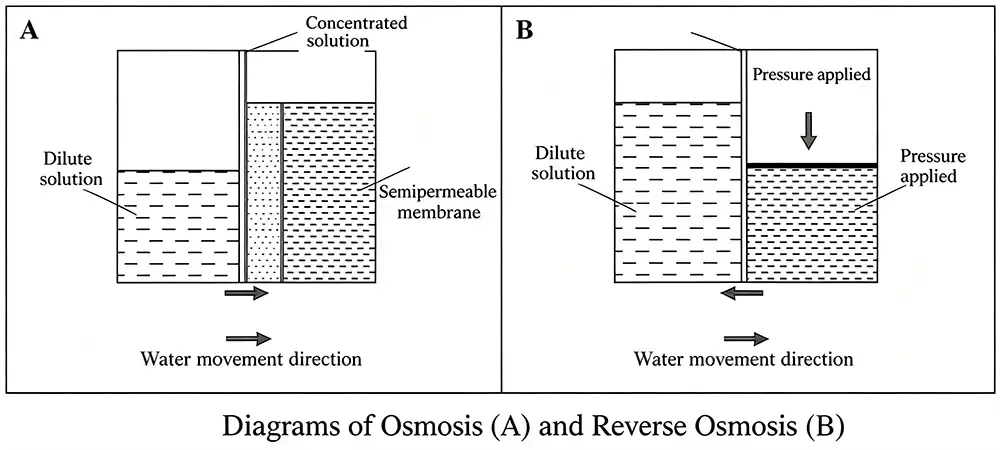
Reverse osmosis (RO) is a membrane separation process in which water is separated from dissolved salts using pressure that is greater than the osmotic pressure. The typical system for preparation of purified water is illustrated. The feed, for example purified water, is pumped into the inlet of the spiral-wound polyamide membrane.
Permeate, which is the purest water, will be collecting in the center tube of the membrane while the Concentrate Discharge will be collecting on the outer layers of the membrane. This type of system is typically operated as a dual-pass RO with EDI polish to maintain conductivity and microbial numbers in the water.
TIQqKP7Sdwg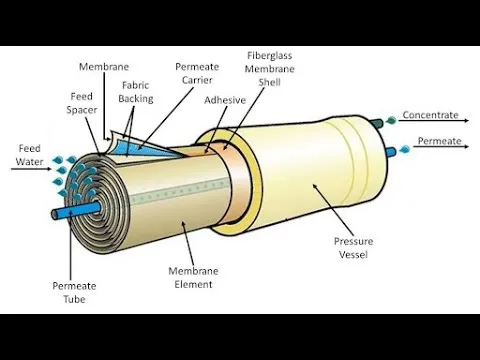
Executive Data Highlights
Based on Deiiang™ operational records across multiple Pharmaceutical sites, we can visualize how key factors contribute to permeate conductivity deviation.
These weightings help prioritize troubleshooting when product water quality drifts.
Feed EC contribution to permeate EC
CO₂ / pH effects
Temperature / flux
Biofouling
Key Feedwater Factors
In essence, the feedwater chemistry will dictate the performance of the reverse osmosis (RO) unit, affecting the membrane’s life in particular. Residual chlorine, SDI, total water hardness, and conductivity are the most important parameters to monitor and control.
Continual monitoring of feedwater chemistry allows for control to be maintained to produce water of adequate quality to meet pharmacopoeial Requirements.
Residual Chlorine
The Polyamide active layer of composite membranes is sensitive to oxidation. As a result, free chlorine can degrade the active layer of the membrane causing an increase in the salt passge.
Typical manufacturer requirements are for less than 0.1 mg/L residual chlorine. For chlorine removal by sodium metabisulfite, a typical dosing range is 1.5 – 2.0 mg/L SMBS per mg/L chlorine.
Even short duration of breakthrough of chlorine in CIP water can cause serious damage to reverse osmosis membranes as demonstrated in a recent site visit to a Deiiang™ plant.
🔬 Control tip: Maintain oxidation-reduction potential (ORP) below 300 mV post-SMBS injection to guarantee chlorine-free feed.
Sludge Density Index (SDI)
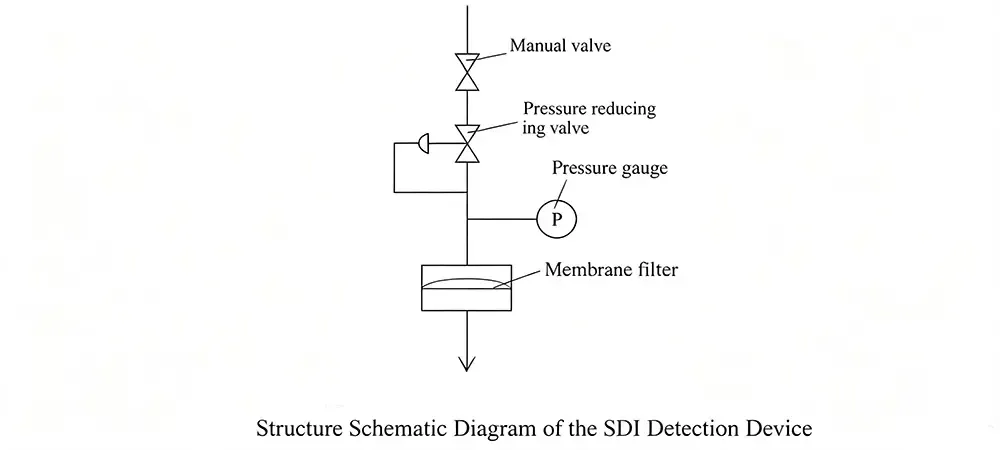
SDI indicates colloidal and particulate fouling potential. ASTM D4189 uses a 0.45 μm membrane at 207 kPa constant pressure to determine the plugging rate.
SDI < 5 is recommended for RO feed. When SDI rose from 3.5 to 6.2, Cleaning frequency increased from 6 months to 2 months.
Annual flux loss accelerated by 35% in that case. A well-maintained multimedia filter with graded quartz and regular backwash keeps SDI in check.
SDI ≤ 3: low fouling risk, standard cleaning interval.
SDI 3–5: acceptable, monitor trend weekly.
SDI > 5: immediate corrective action on pre-filtration.
Hardness
Calcium and magnesium scaling reduces effective membrane area. Softeners with strong acid cation resin lower hardness to <1.5 mg/L as CaCO₃.
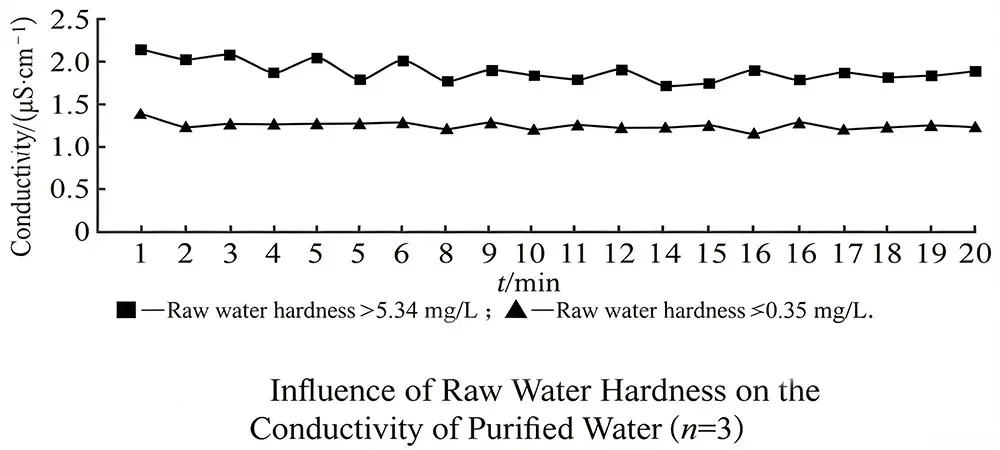
In a Deiiang™ test, when feed hardness exceeded 5.34 mg/L, permeate conductivity fluctuated between 1.8–2.9 μS/cm. At <0.53 mg/L hardness, it remained stable at 1.1 μS/cm.
The resin selectivity sequence is Fe³⁺ > Al³⁺ > Ca²⁺ > Mg²⁺ > K⁺ > Na⁺. Iron must be controlled to prevent calcium displacement. Regeneration with saturated NaCl restores capacity.
Feed Conductivity
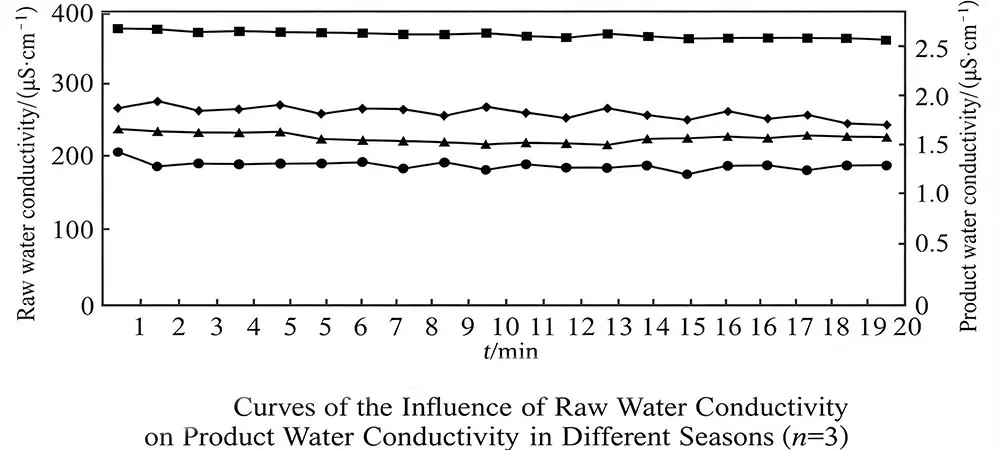
Higher feed conductivity increases osmotic pressure, reducing net driving pressure. For brackish water RO, 800 μS/cm feed versus 500 μS/cm can elevate permeate conductivity by 0.15–0.25 μS/cm.
Seasonal fluctuations are common. A purified water preparation system in a Deiiang™ project showed summer permeate values 18% higher than winter, matching source water trends.
Observed trend: Permeate conductivity (μS/cm) ≈ 0.0025 × Feed EC + 0.4 (R²=0.89, n=48). This linear approximation helps set alarm thresholds.
Beyond feed chemistry, temperature and pH directly affect permeate quality and energy consumption. Adjusting these parameters can optimize the product water quality without hardware changes.
Temperature
Water viscosity decreases with rising temperature, increasing permeate flux but also salt diffusion. A 5°C drop (25→20°C) typically reduces flux by 10–12% and raises feed pressure by 0.5–0.8 bar.
Deiiang™ data showed permeate conductivity fell from 1.4 to 1.1 μS/cm when temperature dropped from 25°C to 18°C. Specific energy consumption rose by 9%.
This creates a trade-off: colder water yields slightly better quality but at higher pumping cost.
| Temperature (°C) | Relative flux | Permeate EC (μS/cm) | Energy index |
|---|---|---|---|
| 18 | 0.88 | 1.1 | 1.09 |
| 22 | 0.95 | 1.25 | 1.03 |
| 25 | 1.00 | 1.4 | 1.00 |
pH and CO₂
Because RO membranes reject bicarbonate and carbonate, but not dissolved CO2, at low pH (less than 8.3) the permeate will contain dissolved CO2, which will then re-equilibrate as HCO3- and thereby increase the conductivity of the permeate.
Feeding the RO at pH ~9 using NaOH to convert CO2 to carbonate which is then rejected from the permeate. Deiiang™ trials have shown that dropping the pH from 9.0 to 7.0 in a matter of minutes can increase the conductivity of the permeate from 1.0 to 2.0 μS/cm.
The difference at steady state was 0.6–0.8 μS/cm. Permeate with a high CO2 concentration can be degassed using a membrane degasser before passing to the RO plant, thereby reducing the amount of NaOH required for pH adjustment.
📊 Formula insight: CO₂(aq) + H₂O ⇌ H⁺ + HCO₃⁻. Shifting equilibrium to carbonate form at pH 9 maximizes rejection and stabilizes purified water quality.
Biofouling Control
Biofilm growth can create additional differential pressure and reduce flux. In RO systems, pre-treatment chlorination and periodic hot water sanitization of RO skids (80–85°C) is required.
Our colleague at Deiiang™ was able to cut CIP frequency in half by implementing a strict shutdown policy. Membranes are flushed with permeate every 8 hours if the RO is idle for more than 24 hours.
Within 72 hours, a previously unused reverse osmosis system developed a 40% increase in differential pressure between the feed and the concentrate, presumably due to a lack of flow. Continuous or intermittent flow is required.
Maintain 0.2–0.5 mg/L free chlorine pre-RO during intermittent chlorination; dechlorinate completely before membranes.
Perform weekly SDI and heterotrophic plate count checks on feed water.
Install pressure transmitters and trend dP; clean when dP increases 15% over baseline.
Monitoring & Control
ChP 0681 requires the use of online instruments with 25°C temperature compensation. Deiiang™ systems utilize UniCond-type sensors which are calibrated on a quarterly basis.
The use of Statistical Process Control (SPC) helps provide early warning for potential problems. SPC upper control limits have been set for permeate conductivity at 1.8 μS/cm. Monitor of key loops include pH, antiscalant and SMBS injection.
Trigger Alarms for: SDI > 5, hardness > 1.5 mg/L, residual chlorine > 0.05 mg/L, and dP > 1.5 bar.
SDI < 3 (green)
SDI 3-5 (amber)
SDI > 5 (red)
Deiiang™ Case Studies
PROJECT 1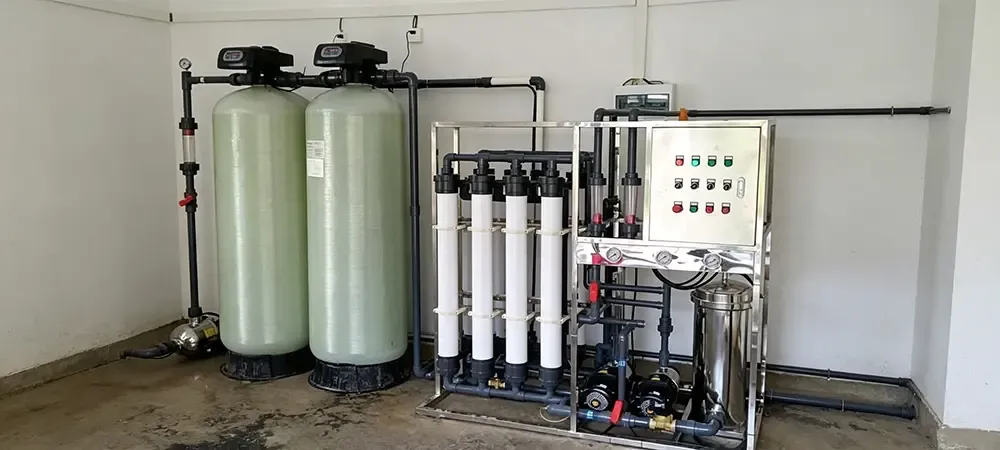
California, USA – WFI pretreatment (12 m³/h dual-pass RO+EDI). Feed EC 600–900 μS/cm, summer peaks. Challenge: seasonal high conductivity and temperature.
Solution: automated cooling to 24°C and pH trim to 9.0. Result: permeate EC P95 ≤1.2 μS/cm, cleaning interval extended from 2 to 6 months.
PROJECT 2
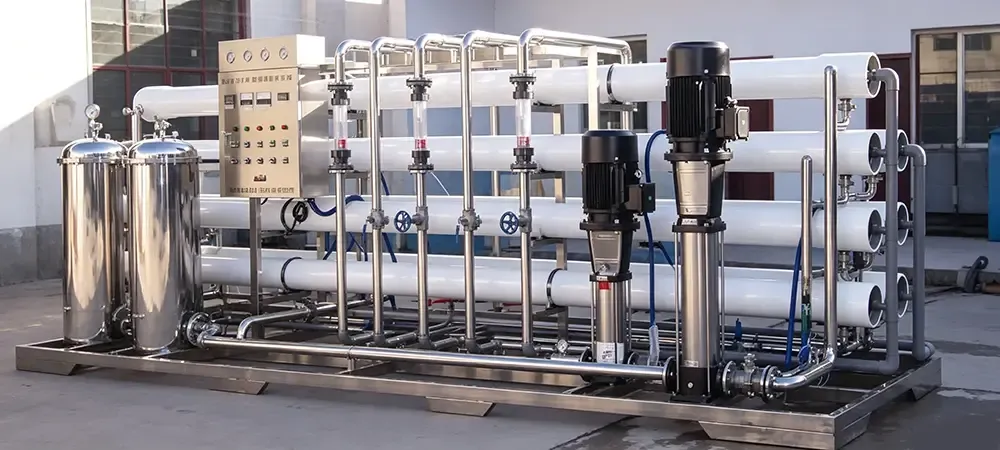
Jiangsu, China – Solid dosage facility. SDI unstable (5–7). Measures: re-graded multimedia filter media, optimized backwash sequence, online SDI alarm.
Outcome: SDI reduced to <4, membrane flux decay rate dropped 35%.
PROJECT 3
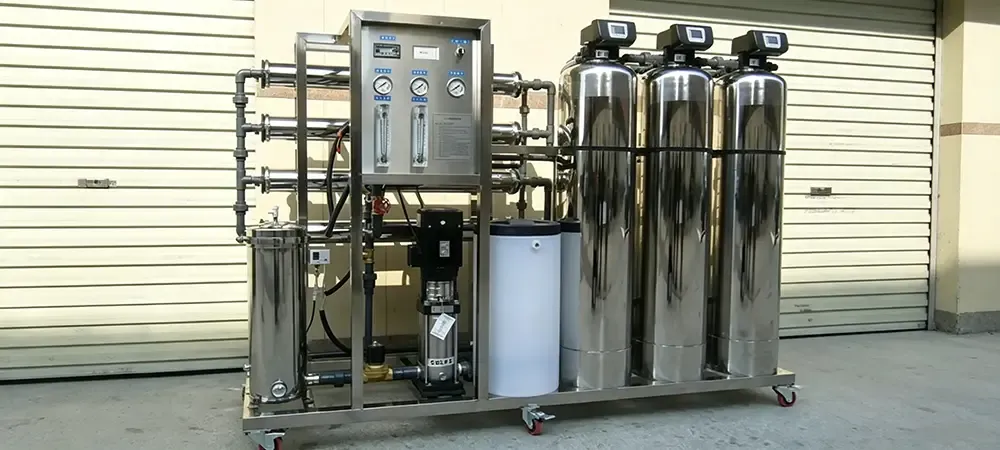
Germany – BiologICs plant. pH-CO₂ control with membrane degassing. Permeate EC median lowered by 0.5 μS/cm, NaOH consumption reduced 18%.
“Small, stable changes to feed pH, temperature, and SDI deliver outsized gains in RO permeate quality and lifecycle cost.”
Risk & Troubleshooting
Conductivity rise: check pH/CO₂, chlorine leakage, temperature drift, EDI current limits.
Flux drop: inspect SDI/scaling, differential pressure, sudden temperature decrease, biofouling.
High dP: verify multimedia filter backwash, softener regeneration, and initiate low-pH cleaning if organic fouling suspected.
Conclusion & Checklist
Maintaining reverse osmosis permeate quality in pharmaceutical systems demands a holistic view. Feed chemistry, operational parameters, and microbial control all matter.
The critical thresholds derived from Deiiang™ installations are listed below.
Residual chlorine <0.1 mg/L
SDI <5 (target <3)
Hardness <1.5 mg/L as CaCO₃
Feed pH ~9 for CO₂ control
Temperature compensation at 25°C
Regular backwash, regeneration, and hot water sanitization
References
ChP 2025, General Chapter 0681 “Pharmaceutical Water Conductivity Determination”.
ASTM D4189-23, “Standard Test Method for Slit Density Index (SDI) of Water”. ASTM link
FilmTec™ Reverse Osmosis Membranes Technical Manual (DuPont).
GB 5749-2022, Standards for drinking water quality.
© Deiiang™ · All data based on anonymized operational records. Product designer: Jason.peng.