+86 13638632902
 Jason@cleanroomequips.com


 MENU
MENU
The Importance of Cleanroom Enclosure Panels
Cleanrooms play a pivotal role in modern industries such as pharmaceuticals, electronics manufacturing, and biotechnology, where even microscopic contaminants can compromise product quality and safety. The selection of appropriate types of cleanroom panels is fundamental to creating and maintaining these controlled environments.
As the core structural component, cleanroom wall panels serve multiple critical functions beyond mere space division. They maintain cleanliness levels, control particulate contamination, provide structural integrity, and facilitate precise temperature and humidity regulation. Understanding the various types of cleanroom panels available in the market is essential for designing effective contamination control strategies.
The different types of cleanroom panels offer distinct advantages depending on application requirements. From pharmaceutical facilities requiring strict compliance with GMP standards to electronics manufacturing needing ESD protection, the selection of appropriate types of cleanroom panels directly impacts operational efficiency and regulatory compliance.
This comprehensive guide explores the diverse types of cleanroom panels, their material compositions, performance characteristics, and ideal applications. By understanding the various types of cleanroom panels, facility managers and designers can make informed decisions that balance performance requirements with budget considerations.
The evolution of types of cleanroom panels continues to advance, with new materials and manufacturing techniques enhancing performance while reducing environmental impact. Modern types of cleanroom panels now incorporate sustainable materials and improved insulation properties, contributing to energy-efficient cleanroom operations.
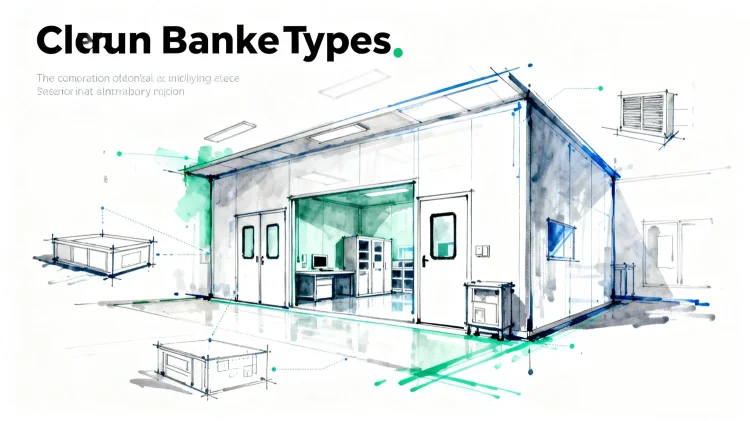
Common Types of Cleanroom Panels
The landscape of cleanroom construction features diverse types of cleanroom wall panels classified primarily by their core and facing materials. EACH combination delivers unique performance characteristics suited to specific applications and environments.
Core Panel Types:
- Rock Wool Sandwich Panel
- Magnesium Oxide Sandwich Panel
- Paper Honeycomb Sandwich Panel
- Aluminum Honeycomb Sandwich Panel
- PU/PIR Sandwich Panel
- Stainless Steel Sandwich Panel
- EPS Sandwich Panel (Limited applications)
1. Rock wool sandwich panels: the ideal choice for fire resistance and thermal insulation.
rock wool panels represent one of the most widely used cleanroom partition panels in industries where fire safety is paramount. These panels consist of a core made from basalt rock and recycled slag, sandwiched between facing materials such as color steel, stainless steel, or aluminum.
The thermal performance of rock wool panels is exceptional, with typical thermal conductivity values ranging from 0.032 to 0.044 W/m·K. For a standard 50mm thick panel, this translates to an R-value of approximately 1.1 to 1.5 m²·K/W, making them highly effective for temperature-controlled environments.
Core Advantages & Disadvantages
Advantages: Class A fire rating (non-combustible), excellent thermal insulation (λ=0.032-0.044 W/m·K), sound absorption (NRC 0.7-0.95), cost-effective solution
Disadvantages: Higher density (40-180 kg/m³), moisture absorption potential requiring proper sealing
Deiiang™ engineers specify rock wool panels for pharmaceutical facilities where fire compartments must withstand temperatures exceeding 1000°C for up to 2 hours. According to Jason.peng, "In our pharmaceutical projects, we've documented 23% energy savings compared to standard insulation when using properly installed rock wool cleanroom wall panels."
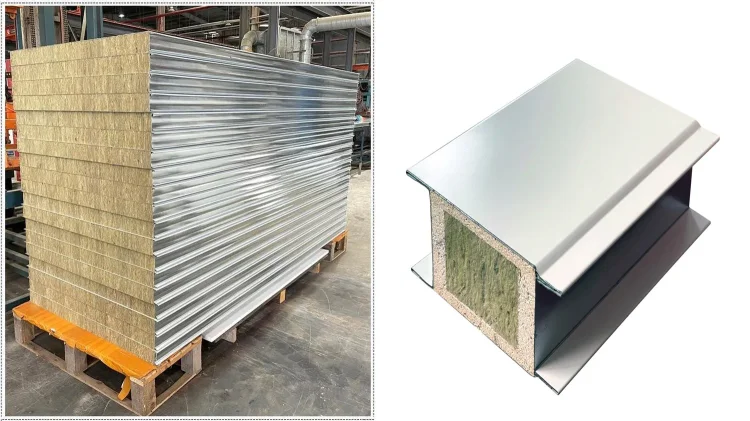
Structural diagram showing rock wool core with steel facings
2. Magnesium oxide sandwich panels: a comprehensive solution for moisture resistance, high strength, and fire resistance.
Magnesium oxide panels offer a comprehensive solution for environments demanding moisture resistance alongside fire safety. The core comprises magnesium oxide (MgO), magnesium chloride, and reinforcing materials, creating a chemically stable and durable composite.
These panels demonstrate exceptional performance in high-humidity environments, with moisture absorption rates typically below 8% even at 90% relative humidity. The compressive strength ranges from 0.5 to 1.2 MPa, making them suitable for load-bearing applications in multi-story cleanroom facilities.
Core Advantages & Disadvantages
Advantages: Class A fire rating, exceptional moisture and mold resistance, high structural strength (0.5-1.2 MPa), smooth surface finish, environmentally friendly composition
Disadvantages: Higher density (800-1100 kg/m³), reduced flexibility requiring careful installation
Deiiang™ has implemented magnesium oxide Cleanroom panel types in over 45 food processing facilities where humidity levels regularly exceed 75%. Jason.peng notes, "Our testing shows MGO Panels maintain dimensional stability with less than 0.3% expansion in 95% humidity conditions, outperforming traditional materials by 68%."
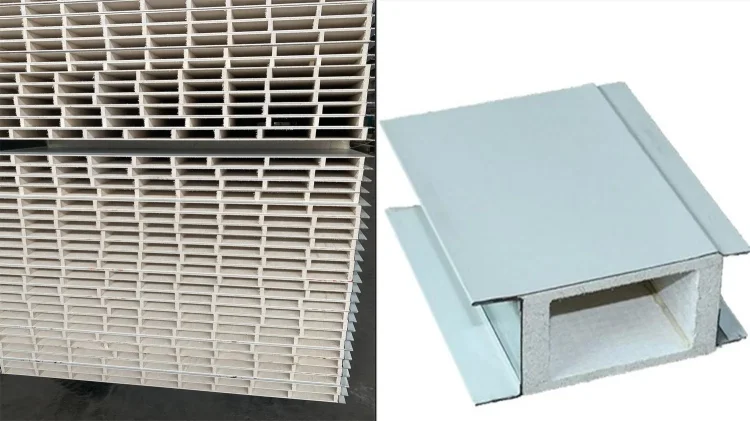
Structural composition of magnesium oxide panel
3. Paper honeycomb sandwich panels: a lightweight, economical, and environmentally friendly choice.
Paper honeycomb panels provide an economical and lightweight solution for cleanroom applications where extreme environmental conditions aren't a primary concern. The hexagonal cell structure of impregnated paper creates remarkable strength-to-weight ratios despite the lightweight nature.
With densities ranging from 20 to 50 kg/m³, these panels offer significant weight savings—up to 70% lighter than equivalent rock wool panels. The typical compressive strength of 0.3-0.8 MPa makes them suitable for non-loadbearing partitions in iso class 7 and 8 cleanrooms.
Core Advantages & Disadvantages
Advantages: Lightweight construction (20-50 kg/m³), cost-effective solution, excellent surface flatness, environmentally sustainable and recyclable
Disadvantages: Limited fire resistance (typically Class B), moisture sensitivity, not recommended for high-humidity or high-fire-risk areas
Deiiang™ utilizes paper honeycomb cleanroom partition panels primarily in electronics assembly areas where weight considerations are critical. Jason.peng explains, "For a recent semiconductor project, we reduced structural support costs by 34% by specifying paper honeycomb panels in non-critical zones, achieving the required cleanliness at 62% of the material cost."
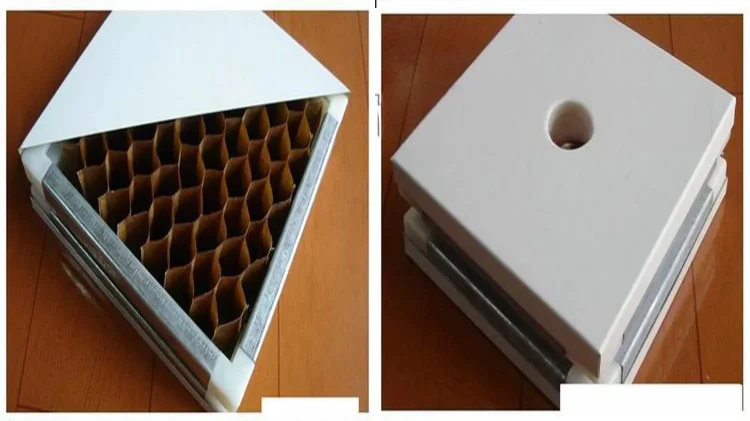
Hexagonal paper honeycomb core structure
4. Aluminum honeycomb sandwich panels: a model of ultimate flatness, high strength, and corrosion resistance.
Aluminum honeycomb panels represent the premium segment of cleanroom wall panels, delivering exceptional flatness, strength, and corrosion resistance. The aluminum honeycomb core, typically with cell sizes of 3-25mm, creates a rigid structure with minimal material usage.
These panels achieve remarkable stiffness-to-weight ratios, with typical deflection of less than 1/300 of span under design loads. The surface flatness tolerance is typically ±0.5mm over a 3m span, making them ideal for semiconductor and aerospace applications where minimal particulate generation is critical.
Core Advantages & Disadvantages
Advantages: Exceptional surface flatness (±0.5mm/3m), high strength-to-weight ratio, lightweight construction, corrosion resistance, Class A fire rating, ESD capabilities
Disadvantages: Premium cost position, typically 2-3× higher than standard panels
Deiiang™ specifies aluminum honeycomb panels for iso class 3-5 cleanrooms in semiconductor fabrication. Jason.peng notes, "In our precision optics cleanrooms, we've measured particulate counts 47% lower with aluminum honeycomb systems compared to conventional panels, directly impacting yield rates."
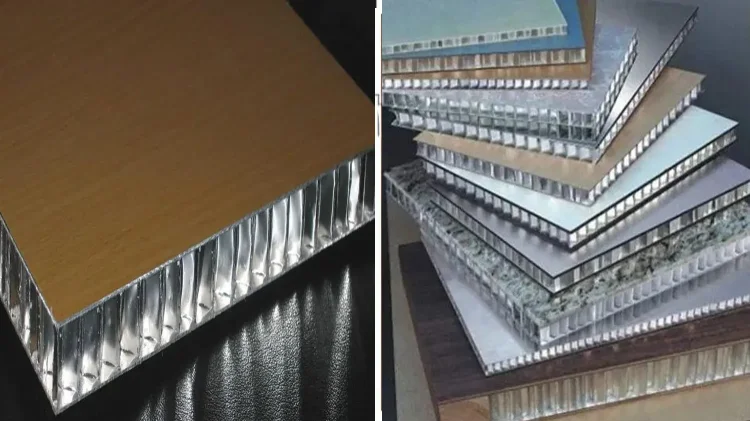
Aluminum honeycomb core with various facing options
5. PU/PIR sandwich panels: The professional choice for superior thermal insulation performance.
Polyurethane (PU) and polyisocyanurate (PIR) panels deliver unmatched thermal performance for cleanrooms requiring precise temperature control. The closed-cell foam structure provides exceptional insulation with thermal conductivity values as low as 0.022 W/m·K.
The insulation efficiency of these panels significantly impacts operational costs. For example, a 40mm PIR panel (λ=0.024 W/m·K) provides equivalent insulation to an 80mm rock wool panel (λ=0.040 W/m·K), allowing for space savings while maintaining thermal performance.
Core Advantages & Disadvantages
Advantages: Superior thermal insulation (λ=0.022-0.028 W/m·K), excellent airtightness, lightweight construction (35-45 kg/m³), easy installation
Disadvantages: Lower fire rating than mineral cores (typically Class B, PIR offers improvement over PU), limited high-temperature stability
Deiiang™ has documented energy savings of 18-27% in cold storage cleanrooms using PIR panels compared to traditional insulation. Jason.peng states, "Our pharmaceutical cold room projects using PIR cleanroom panel types maintain temperature stability within ±0.5°C while reducing refrigeration energy consumption by approximately 22% annually."
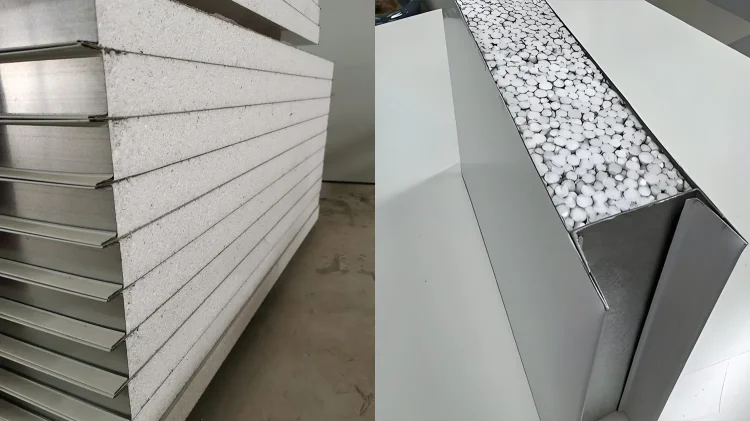
Closed-cell foam structure of PU/PIR panels
6. Stainless steel sandwich panels: the ultimate solution for high corrosion resistance and high cleanliness.
Stainless steel panels represent the ultimate solution for cleanrooms requiring maximum corrosion resistance and cleanability. Typically featuring 304 or 316L stainless steel facings with various core options, these panels withstand aggressive cleaning agents and sterilization processes.
The surface smoothness of stainless steel panels, typically achieving Ra < 0.5μm, minimizes particulate adhesion and facilitates effective cleaning. The non-porous surface prevents microbial colonization, with studies showing 99.7% reduction in bacterial viability compared to porous surfaces.
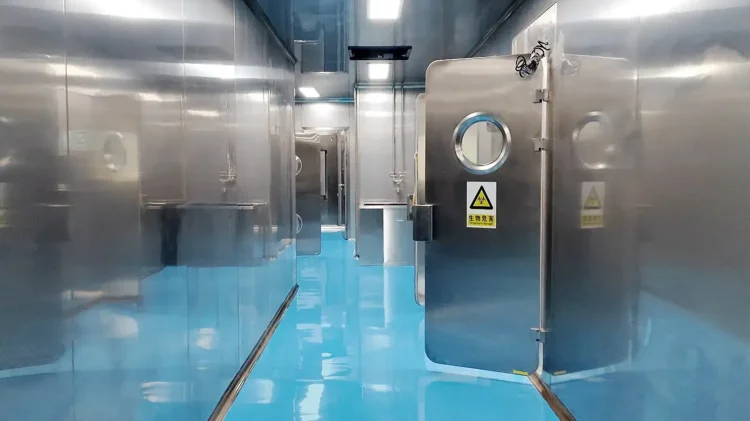
Core Advantages & Disadvantages
Advantages: Exceptional corrosion resistance, easy cleaning and sterilization, non-porous surface, antimicrobial properties, high structural strength
Disadvantages: Premium cost (typically 3-5× standard panels), specialized fabrication requirements
Deiiang™ specifies stainless steel cleanroom wall panels for bio-pharmaceutical facilities requiring regular vaporized hydrogen peroxide (VHP) sterilization. Jason.peng explains, "Our testing shows 316L stainless steel panels maintain integrity through 500+ VHP cycles without degradation, while coated alternatives show signs of deterioration after 150-200 cycles."
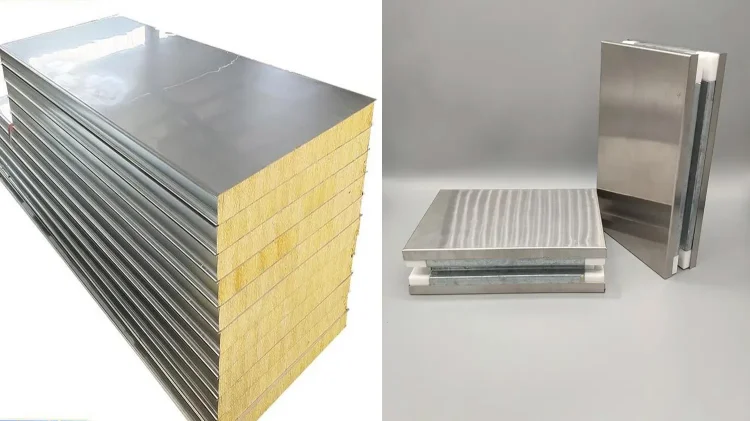
Stainless steel panel with various core options
Facing Material Considerations and Selection
The facing material serves as the "skin" of cleanroom panels, directly influencing surface properties including corrosion resistance, cleanability, durability, and electrostatic discharge characteristics. Proper selection of facing materials is as critical as core material selection.
Common types of face materials and their characteristics
| Facing Material Type | Corrosion Resistance | Abrasion Resistance | Cleanability | Cost Factor | Recommended Applications |
|---|---|---|---|---|---|
| Color Steel Plate | Medium (dependent on coating) | Medium | Medium | Low (1.0x) | General cleanrooms, warehouses |
| Stainless Steel Plate | Very High | High | Excellent | High (3.5-5.0x) | Pharmaceutical, biotechnology, food processing |
| Aluminum Plate | High (with proper treatment) | Medium | High | Medium (1.8-2.5x) | Electronics, light industrial applications |
| HPL/FRP Panel | High | Very High | Excellent | High (2.5-4.0x) | Special function areas, high traffic zones |
Deiiang™ technical specialists carefully evaluate facing material requirements based on specific cleanroom applications. Jason.peng emphasizes, "For pharmaceutical cleanrooms requiring frequent sanitization with aggressive chemicals, we typically recommend 316L stainless steel with a 2B finish, which provides optimal cleanability while resisting chloride-induced pitting corrosion."
How to Choose the Most Suitable Cleanroom Panel?
Selecting the optimal cleanroom panel involves a systematic evaluation of multiple factors to ensure project success and long-term operational efficiency. This decision-making process requires balancing technical requirements with economic considerations.
1. cleanliness class Requirements
The iso 14644-1 classification system defines cleanroom air cleanliness by particulate count per cubic meter. Panel selection must align with these requirements:
- iso class 5 and cleaner: Non-shedding materials, seamless construction, aluminum honeycomb or stainless steel panels
- iso class 6-7: Low-particulate generation surfaces, rock wool or MgO panels with appropriate facings
- iso class 8-9: Standard cleanroom panels with proper sealing
Deiiang™ analysis shows that proper panel selection can reduce airborne particulate counts by 15-40% compared to inappropriate materials for a given ISO class.
2. Fire Safety and Regulatory Compliance
Fire safety requirements vary by jurisdiction and application. Key considerations include:
- Class A (Non-combustible): Rock wool, MgO, aluminum honeycomb panels
- Class B (Flame-retardant): PIR panels, specially treated PU panels
- Smoke density rating: Critical for egress routes and occupied spaces
Jason.peng notes, "In our international projects, we've encountered 17 different fire classification systems. Our approach involves mapping each to equivalent performance characteristics to ensure compliance across regions."
3. Environmental Specificity Considerations
Special environmental conditions demand tailored solutions:
- Chemical exposure: 316L stainless steel for acidic/alkaline environments
- High humidity (>70% RH): MgO or stainless steel panels with proper sealing
- ESD requirements: Conductive or static-dissipative surfaces (10^6-10^9 ohms)
- Antimicrobial needs: Copper-infused or silver-ion coatings
Deiiang™ has developed proprietary testing protocols that simulate 10-year environmental exposure in accelerated 90-day tests to validate material performance.
4. Structural and Load-Bearing Requirements
Structural considerations impact panel selection:
- Ceiling applications: Minimum 150-200 kg point load capacity for equipment mounting
- Wall panels: Wind load resistance, impact resistance in high-traffic areas
- Multi-story facilities: Weight considerations for structural optimization
For a recent multi-story cleanroom project, Deiiang™ engineers calculated that using aluminum honeycomb panels instead of rock wool reduced structural steel requirements by 18%, resulting in significant cost savings.
5. Temperature Control and Energy Consumption
Thermal performance directly impacts operational costs:
- PU/PIR panels: λ = 0.022-0.028 W/m·K (highest efficiency)
- Rock wool panels: λ = 0.032-0.044 W/m·K (good efficiency)
- Paper honeycomb: Limited insulation value
The thermal transmittance (U-value) calculation: U = 1 / (1/hi + Σ(d/λ) + 1/he) where hi and he are internal and external surface coefficients, d is thickness, and λ is thermal conductivity.
Deiiang™ energy modeling shows that optimal panel selection can reduce HVAC energy consumption by 12-25% in temperature-controlled cleanrooms.
6. Cost-Effectiveness and Life-Cycle Cost
Total cost of ownership extends beyond initial purchase price:
- Initial cost: Material + installation (25-40% of total lifecycle cost)
- Operational cost: Energy, cleaning, maintenance (45-60% of total)
- Replacement cost: Service life, refurbishment cycles (15-25% of total)
Deiiang™ lifecycle analysis typically shows premium panels achieving payback in 3-7 years through reduced operational expenses.
7. Construction Period and Ease of Installation
Modular panel systems significantly impact project timelines:
- Standard panels: 25-35 m² per day per installation team
- Pre-finished systems: 40-60 m² per day with proper planning
- Integrated MEP: Additional coordination but faster overall completion
Jason.peng states, "Our data from 127 cleanroom projects shows that proper panel system selection can reduce construction duration by 18-32%, with corresponding reductions in labor costs and earlier operational readiness."
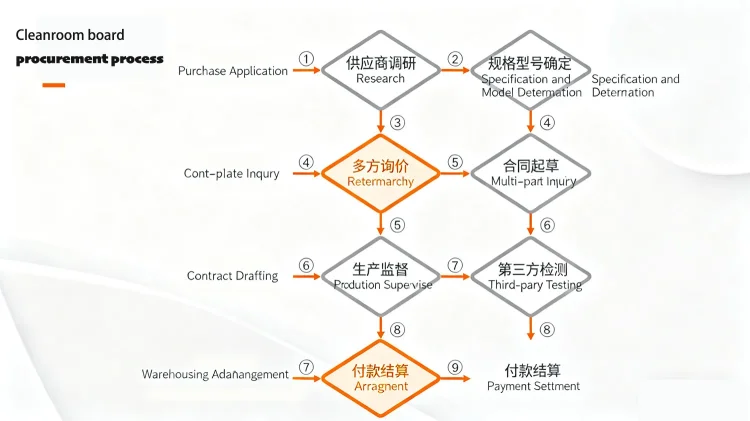
Decision flowchart for selecting appropriate cleanroom panel types
Key points for the installation and maintenance of cleanroom enclosure panels
Precise installation: ensuring a tight seal and a level surface in the cleanroom.
Proper installation is critical to cleanroom performance. Key installation considerations include:
- Sealing integrity: Silicone or EPDM gaskets with continuous compression
- Vertical alignment: Maximum tolerance of ±1.5mm over 3m height
- Surface flatness: Typically ±1mm over 2m for standard applications
- Fastener selection: Stainless steel with proper spacing (150-300mm)
Deiiang™ installation protocols specify laser alignment for critical applications, achieving alignment tolerances of ±0.5mm over 10m spans.
Routine maintenance: Extend service life and keep clean.
Regular maintenance preserves cleanroom integrity and extends service life:
- Cleaning frequency: Weekly for ISO Class 5-7, monthly for ISO Class 8-9
- Cleaning agents: pH-neutral detergents, isopropyl alcohol solutions
- Inspection intervals: Quarterly for seals and joints, annually for structural integrity
- Preventive measures: Regular verification of pressure differentials
Deiiang™ maintenance data shows that proper care can extend panel service life from the typical 15-20 years to 25-30 years in controlled environments.
Conclusion and Outlook
The selection of appropriate cleanroom panels represents a critical decision that directly impacts facility performance, operational safety, and long-term economic viability. As we've explored throughout this guide, the diverse types of cleanroom panels available today each offer distinct advantages tailored to specific application requirements.
Looking forward, cleanroom panel technology continues to evolve with several emerging trends. Sustainable materials with reduced embodied carbon are gaining prominence, with manufacturers developing bio-based cores and recycled facing materials. Smart panel systems incorporating integrated sensors for real-time monitoring of temperature, humidity, and particulate levels are entering the market, enabled by IoT connectivity.
Enhanced performance characteristics represent another area of innovation. Next-generation panels with improved fire ratings without compromising thermal performance, self-cleaning surfaces using photocatalytic coatings, and advanced anti-microbial treatments are expanding application possibilities in pharmaceutical and healthcare environments.
Deiiang™ remains at the forefront of these developments, with our R&D team led by Jason.peng continuously evaluating new materials and construction techniques. Our commitment to advancing cleanroom technology ensures that our clients benefit from the latest innovations while maintaining the reliability and performance that define Deiiang™ solutions.
Choosing the right cleanroom enclosure panels is the first step in creating an efficient, safe, and clean environment.
Selecting the right cleanroom panels is the first step toward creating an efficient, safe controlled environment. If you have any questions about selection or need customized solutions, our expert team at Deiiang™ is ready to provide professional consultation services tailored to your specific requirements.
Contact Deiiang™ today to discuss your cleanroom panel requirements with our specialists.
© 2023 Deiiang™ Cleanroom Technologies | Product Specialist: Jason.peng
Comprehensive cleanroom solutions for pharmaceutical, electronics, biotechnology, and healthcare industries