+86 13638632902
 Jason@cleanroomequips.com


 MENU
MENU
When iso 5 cleanroom certification is denied, it is very rarely due to a single factor failure. Almost always, failures are determined multi-factorially. This includes elements like filtration, airflow, pressure differentials, test conditions, and of course, human factors. This article outlines the five major failure cases alongside a diagnostic pathway using engineering examples.
Key Insight: An iso 5 cleanroom relies on controlled airflow to keep particles out of the cleanroom. Filter efficiency is not the only factor. Realising this distinction is the first step to troubleshooting particle counts.
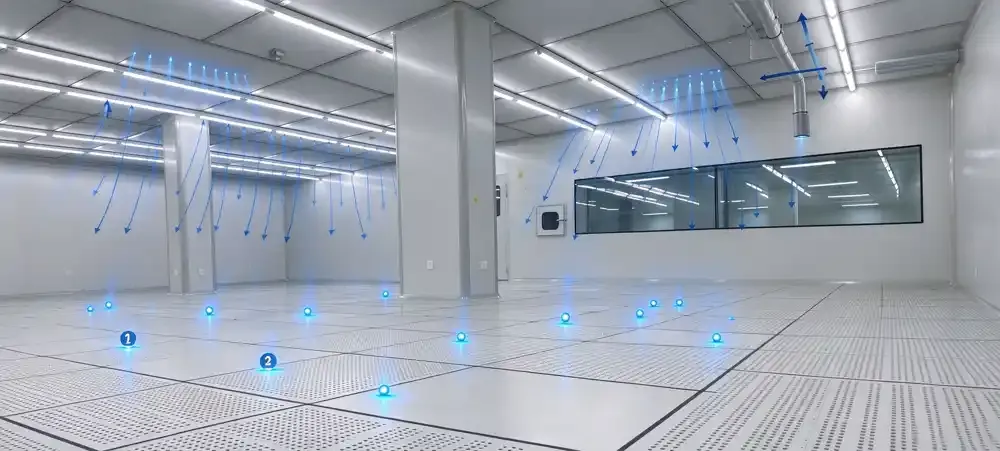
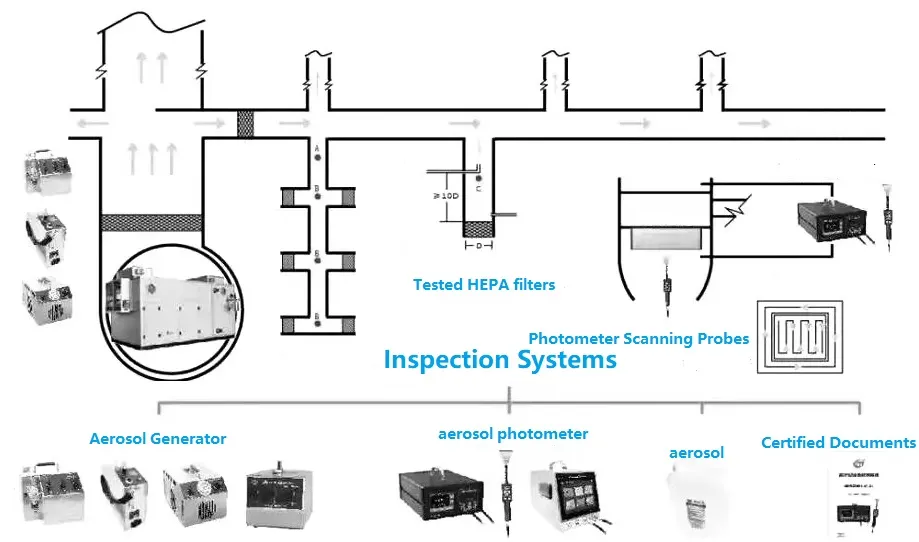
Figure 1: Diagnostic pathway for recertification of an ISO class 5 cleanroom for particle counts, validity testing, ffu airflow, HEPA scans, air balance analysis, and identification of contamination sources.
More on Recertification Failure for iso 5 clean rooms
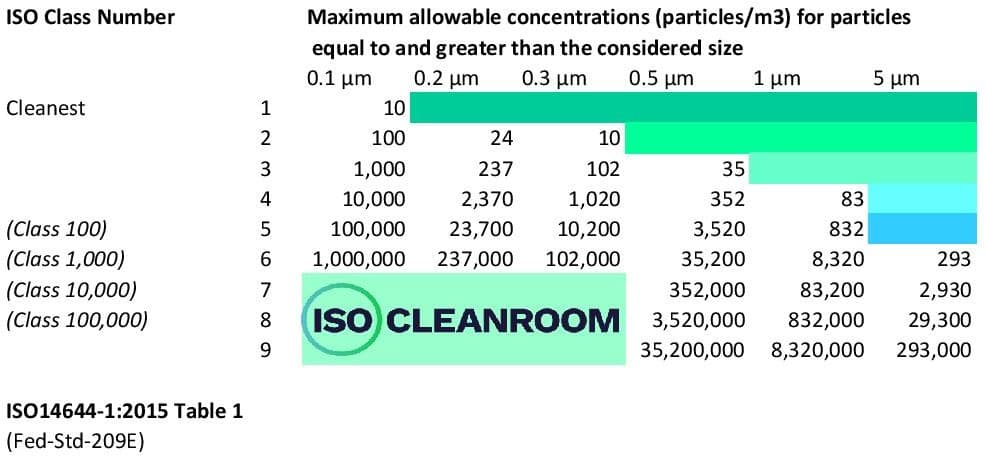
A class iso 5 cleanroom can have no more than 3,520 particles of 0.5 µm and above per cubic meter; this is from iso 14644-1:2015, Table 1. Failure can occur in several aspects beyond particle counts:
- Conformance to ISO 14644 for airborne particles has not been met.
- HEPA/ULPA Filters fail Preliminary Integrity Testing.
- FFUs and terminal HEPA filters exhibit face velocities that are below specification and/or verified to be non-uniform.
- Pressure differentials established between the cleanroom and adjacent spaces, and the direction of the pressure cascade, are out of specification.
- Airflow, air change rates, and unidirectional flow patterns are out of specification.
- Validated air recovery times are exceeded.
- Temperature and/or humidity are out of the specified control and validation range.
- Instruments used for testing, methods of sampling or the cleanroom's condition do not conform to the approved protocol.
ISO 14644 vs EU GMP / FDA cGMP — Key Differences
Submitting incorrect documentation is the main cause of most recertification failures. Some labs mistake ISO 5 for gmp grade a. The two have unique operational requirements. Some key differences are outlined below:
| Parameter | iso 14644-1:2015 | (EU GMP) Annex 1 Grade A | FDA cGMP (Sterile) |
|---|---|---|---|
| At-rest particle count (≥0.5 µm) | 3,520 / m³ | 3,520 / m³ | 3,520 / m³ |
| In-operation particle count (≥0.5 µm) | Not strictly defined (user-defined) | 3,520 / m³ | 3,520 / m³ (advisory) |
| Sampling volume | 28.3 L per location (ISO 14644-1) | 1,000 L per location (Annex 1) | 28.3 L (USP 797) |
| Recertification frequency | Based on risk (typically between 6-12 months) | At least once per year with additional testing post-intervention | Once per year or post-validation |
| Is Dynamic testing required? | Not applicable (user-defined) | Yes (Grade A) | Yes (recommended) |
Conclusion: For GMP Annex 1 compliance, not conducting dynamic testing is a major non-conformance regardless of ISO 5 at-rest particle count compliance. Always check the applicable regulations for your product and your location.
Failure Symptom Quick Reference
| Failure Symptom | Most Likely Cause | First Check |
|---|---|---|
| Single-point particle excursion | LEAKING HEPA, nearby contamination source | HEPA scan + visual inspection |
| Multi-point elevated counts | Total FFU airflow drop, background contamination | FFU face velocity survey |
| Particle spikes near doors | Loss of pressure differential, door seal, traffic | Pressure trend + smoke test |
| Failure only on re-test | Condition of test, sampling error | Calibrate instrument + check sampling equipment |
Reason #1 — HEPA Filter Leakage or Filter Loading
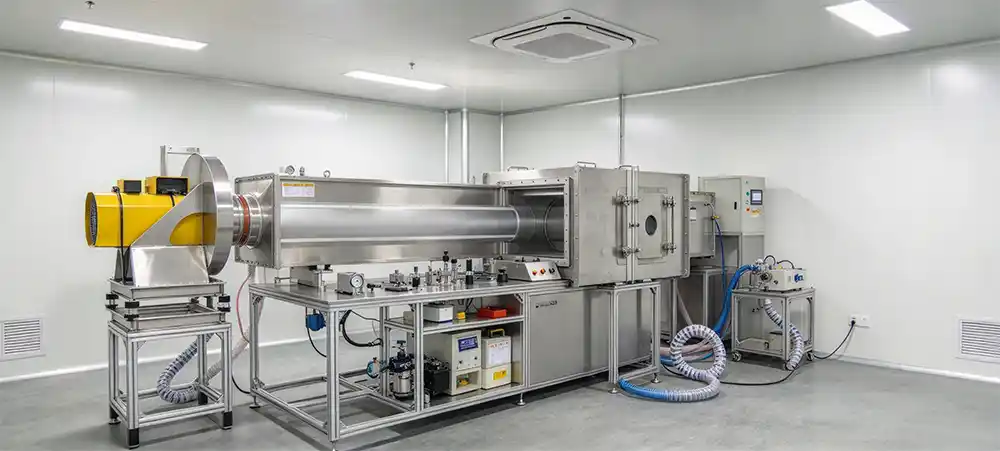
Why HEPA Filter Leakage Cause Recertification Failure
HEPA filters serve as the final safeguard against contamination in the air. However, during an ISO 5 recertification, they remain the most common isolated incident of failure. FDA warning letters validate the presence of leaking HEPA filters, soiled filters, and deficient testing of HEPA filters.
- Presence of pinholes or other forms of damage to filter media during the handling, transport, or installation.
- Mechanical failure of the frame, gasket, or liquid seal creates a complete air bypass.
- Dust loads that create an undesirable state that increases resistance and reduces FFU airflow.
- Filters operated beyond terminal resistance of the pressure drop was monitored.
Insider Pitfall — The PAO Over-Concentration Trap: During PAO leak testing, if the aerosol concentration exceeds 20 µg/L, HEPA media can be contaminated by PAO, which causes permanent resistance. This can cause slow off-gassing PAO during operation, which gives the illusion of media failure. Thus, PAO concentration must always be verified according to IEST-RP-CC034.
Filter Efficiency Does Not Ensure Optimal System Functionality
Deiiang™ HEPA Filters meet EN 1822 standards. Refer to the most up-to-date performance data for Deiiang products:
- H13 efficiency: 99.97% – 99.99% @ 0.3 µm; initial resistance is typically ≤200 Pa.
- H14 efficiency: 99.995% – 99.999% @ 0.3 µm; initial resistance is typically ≤220 Pa.
- Final resistance is expected to be within 400 – 600 Pa (based on application).
- EXAMPLE: HEPA filter (592 mm × 592 mm × 292 mm) with a rated airflow of 1,900 m³/h or 2,500 m³/h; media area is ~15.03 m² or ~20.04 m².
These ranges are for the purposes of selection and trending, and are not a substitute for onsite filter liquid challenge (PAO/DOP) testing, pressure-drop measurement, and airflow measurement.
Diagnostic Strategy
- Trend filter pressure-drops with a focus on the gradient.
- Examine frames, seals, and clamp devices to look for leakage bypass.
- Perform aerosol integrity scans (PAO/DOP) in accordance with iso 14644-3.
- Match the locations of leaks to hotspots in particle counts.
- Conduct the tests again after replacing the filters or resealing.
Reason #2 — Loss of Performance in fan filter units (FFU)
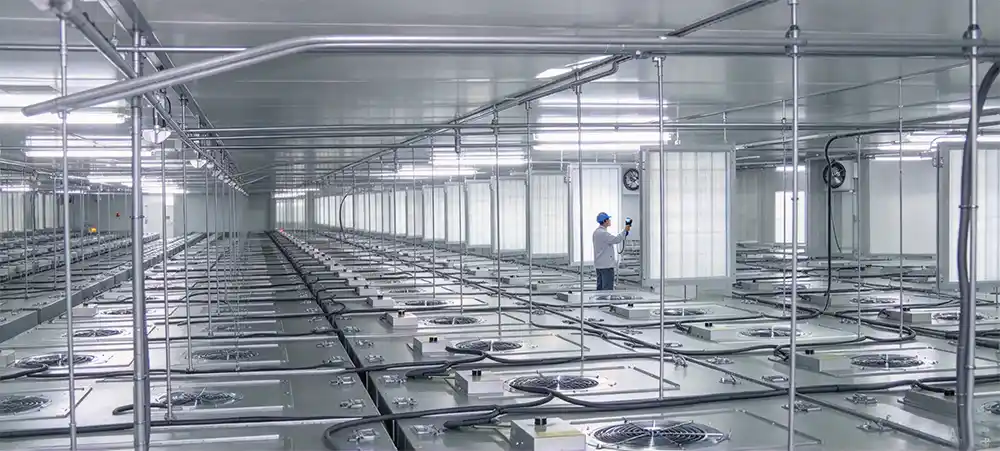
As the workhorses of ISO 5 cleanrooms, if FFUs lose performance, so does the entire airflow architecture. FFUs performance loss is most commonly underestimated as the units are still "running."
- As HEPA filters load, filter resistance increases.
- Worn motors, impellers, or bearings reduce the fan's output.
- Fouled impellers reduce balance and efficiency.
- Setpoints shift due to controller's drift or communication errors.
- Asynchronous adjacent FFUs cause a turbulent mix of flows.
- Static pressure balance within the plenum changes due to adjusted dampers or duct leakage.
Deiiang field data: n=1,247 units (FFU Failure Mode Probability Distribution)
| Failure Mode | Occurrence (%) | Typical Symptom | Detect |
|---|---|---|---|
| Pre-Filter Loading | 48% | Massive drop in overall velocity, rise in motor current | Pre-Filter pressure drop and dust load visuals |
| Motor Capacitor Aging | 27% | Single FFU speed drop or an unusual noise | Measure run current and run capacitance |
| RS485 Control Drift/Break | 15% | Group control velocity fluctuation | Check Bus Comm. And Term. Res. |
| Impeller Fouling/Imbalance | 10% | Air flow and vibration exceeding spec | Multi point anemometer measurement and vibration test |
Deiiang FFU Performance Baselines
Deiiang™ FFU systems are built for ease of use and reliable operation. Reference parameters (validate against current Deiiang product info):
- Standard face velocity: 0.45 m/s ± 20%.
- Controller's max applicable motor power: ≤180 W, ≤220 W, ≤260 W, ≤280 W depending on model.
- DC motor speed options: Approximately 930 ±30 rpm or 2,000 ±30 rpm.
- Controllers accommodate RS485, network comm. (with power-off memory), and Group Control.
Deiiang engineers do not merely check that an FFU is "running." They analyze face velocity, speed commands, current measurements, filter pressure drops, and adjacently located units.
How to Tell FFU Degradation from HEPA leakage
- Leaks in the HEPA appear shaped as distinct, steady, scanning anomalies.
- FFU degradation presents as low or uneven velocity across the entire face.
- Multiple adjacent FFUs with low output cause broad area increases of particles.
- A single low-flow FFU can draw in and other adjacent zones contaminate.
Reason #3 — Air Balancing and Pressure Cascade Concerns
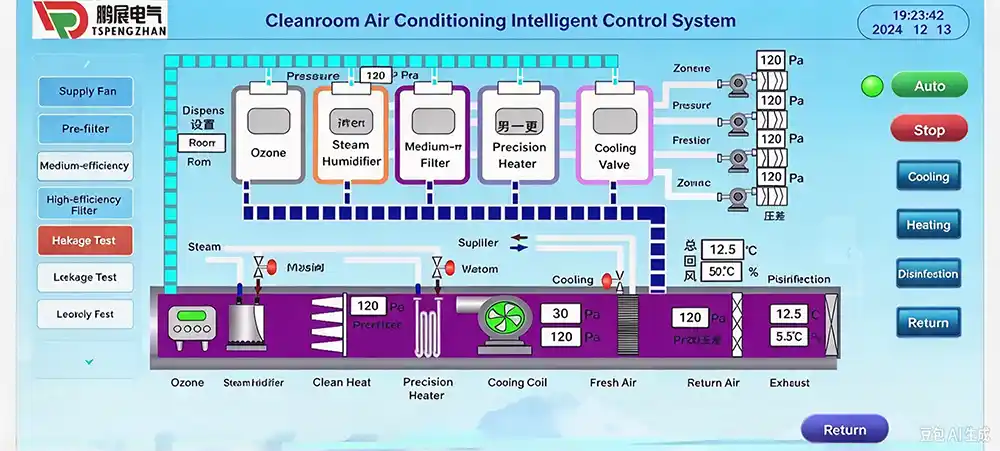
How Does Air Balancing Disruption Cause Particle Excursion
Airflow balance is the cleanroom equivalent of the human skeleton, being invisible and essential to the cleanroom's structure and functionality. Where there is an Airflow Balance Disruption, there is an unrestricted path for cleanroom personnel to introduce viable contaminants into the cleanroom. Out of all cleanroom operational problems, Airflow Balancing problems are among the most notorious in difficulty to isolate and diagnose due to their nature of invisibility.
- Altering the flow supply to the return side.
- Adjusted branch dampers owing to maintenance.
- Gradual deterioration of the duct, flexible connectors, or flanges.
- Return grilles are obstructed by tools, materials, and/or poor housekeeping.
- Sealed doors, pass-throughs, and process openings alter the pressure relationships.
- Adjusting one room in a cascade ruins the pressure gradient in the adjoining rooms.
- The increased number of FFUs is not evaluated with return air balance capacity.
Engineering Data Based on Deiiang Reference Materials
- Standard Dampers: leakage rate should be <2%.
- Air leakage in a tight-seal damper should be <0.5%.
- The ideal flow velocity is <20 m/s at the fully open damper.
- A Constant Air Volume (CAV) damper should have 1.5 times the duct width upstream and 0.5 times the width downstream.
- Using thin-sheet steel flanges may increase fastening intervals to 150 mm or less.
- Cleanroom flanges should come with resilient, non-shedding gaskets of air-tight and non-shedding materials. These should be 4–6 mm in thickness.
Although these engineering guidelines provide essential references, they are not rigid rules. Always validate against the local building code, approved drawings, and manufacturer specifications.
Air Balancing Diagnostic Sequence
- Measure the face velocity of each FFU or terminal HEPA filter.
- Measure the room-to-room pressure differential with doors in their most used position.
- Verify the total supply against total return/exhaust airflow.
- Check damper positions against records from the commissioning.
- Perform smoke visualization at doorways and critical workstations.
- Please create a new air balance report after making the adjustments.
NOTE: Cascading pressure within cleanrooms will collapse as the cleanroom door opens. The cleanroom door provides an uncontrolled leakage path, and the HVAC system cannot adapt quickly. Solutions can include rebalancing the HVAC system, additional seals, adding door closers, and/or adding door interlocks.
Reason #4 — Uncontrolled Particle Sources inside the Cleanroom
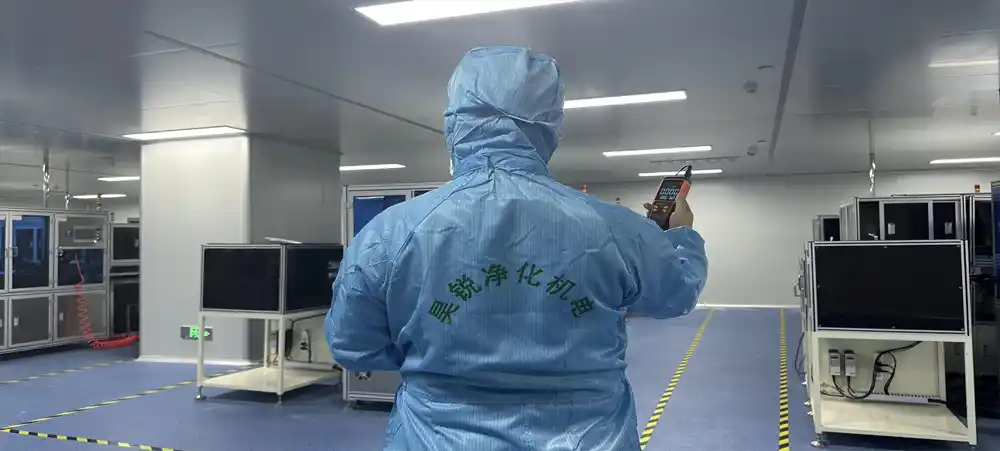
Equipment Passes — Yet Particle Count Still Fails
It can be very frustrating when all the cleanroom filters are intact, all the fan filter units are working, and yet the particle count is too high. These failures are mostly due to sources internal to the cleanroom and can include:
- Personnel: Improper gowning, rapid movements, and increased foot traffic.
- Cleaning Materials: Lint shedding wipes and/or disinfectants with incompatible active ingredients.
- Imported Materials: Non-clean packaging, cardboard, paper, and other non-approved materials.
- Process Equipment: Friction, wear on belts, thermal plumes, and/or moving parts.
- Inadequate recovery times post cleaning and/or maintenance.
- Ceilings, Walls, and Utility Penetrations: Unsealed/Ineffective Seals.
- Inadequate sealed door closure.
- Use of Compressed Air for Cleaning.
FIELD OBSERVATION — CONFLICT BETWEEN THERMAL PLUMES AND EQUIPMENT EXHAUST: During a semiconductor packaging study, all scans of equipment touching the HEPA filter and all fan filter unit (FFU) velocity measurements were within acceptable limits. However, particle counts were elevated at the work surface, which was due to a hot press that had no localized exhaust. This disrupted the unidirectional flow of the ISO 5 and drew particle contaminants back into the work area. When identifying internal sources, always consider the heat load of the process and the exhaust.
A good rule of thumb when considering a static test has passed, but the dynamic test has not, is to consider the personnel, the equipment, as well as the operational procedures, before checking anything else.
Check HEPA, FFU, and local seals first for Scenario B, where both static and dynamic fail at the same location.
Reason #5 — Certification Test Setup or Instrument Errors
While some articles list this issue, few focus on it as one of the major reasons for a lot of unnecessary failures—and panic.
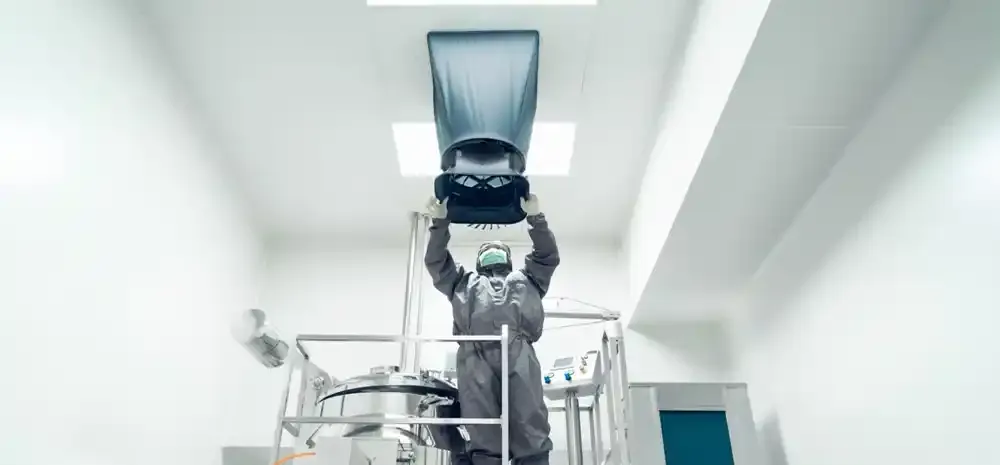
Common Test Setup Problems
- An out-of-date or invalid calibration on the particle counter.
- Issues with the sampling tube (too long, kinked, leaking), or internal contamination.
- Deviations from approved sampling locations.
- Probes facing the wrong way (isokinetic sampling is not being maintained).
- The state of the room prior to a test (at rest vs. operational) does not match requirements.
- Doors were opened during the testing (even if only briefly) shows a breach of protocol.
- Cleaning or maintenance was done right before the test was supposed to be.
- An incorrect sample volume was taken, and the number of sample locations was not done according to the required statistical method.
- Test personnel neglect to record FFU settings and environmental conditions (temperature, humidity, & pressure) during the test.
There are many situations that cause instrument error, but not all failures are instrument error, so if a failure is caused by an outside influence, do not be quick to accept that. The best option is to retain the original data recorded, and verify the method, and repeat the test in a controlled and monitored environment.
Help you Decide
Select the recertification failure symptom to view the first-priority investigative procedure.
🔴 Single-point particle excursion (localized) ▼
First Priority: Perform localized integrity HEPA scanning (PAO/DOP) in the affected zone. Examine local equipment exhaust; inspect door sealing; check door seals; review maintenance that was recently performed in the zone.
- Examine the integrity of the filter frame clamping and gaskets.
- Ensure that no local exhaust or supply diffusers have been obstructed.
- Consider the operator activity logs from the two (2) hours prior to testing.
🔵 Multi-point elevated counts (widespread) ▼
First priority: Conduct a full FFU face velocity survey. Most of the time, widespread elevations are a result of an airflow or a filtration issue at the system level.
- Examine total supply airflow to total supply or return/exhaust airflow.
- Examine the pressure drop data across the pre-filters and HEPA filters.
- Confirm that the FFUs are configured to the commission speed and drop settings.
🟡 Spikes near doors or pass-throughs ▼
First priority: Measure room-to-room pressure differentials and perform smoke visualization at doorways.
- Ensure that door seals and automatic door closers are operational.
- Confirm that the HVAC system will maintain a pressure cascade during door opening.
- Examine the traffic flow and review the interlock settings.
⚪ Failure only on re-test (inconsistent) ▼
First priority: Verify the test configuration is correct and that the test setup adheres to the required standards of instrument calibration and sampling setup.
- Examine the particle counter calibration certificate and check for a zero count.
- Examine the bending, and obstruction of the sample tubing.
- Ensure that the Room State (At Rest / Operational) matches the setup protocol.
Particle Count Troubleshooting — A 60-Minute First-Response Workflow
This demonstrates the effectiveness of the particle count troubleshooting keyword in search results.
qmwV7SmOfTs
⏱ 0–10 min
Preserve the Scene
- All activity, except that deemed essential, is to be stopped in the affected area.
- Record number of staff, answer a technician’s closing door query, and state how many pieces of equipment are operational. When equipment is being used, record the raw data totals for all equipment count data. Don’t delete or overwrite raw data.
- filter fan unit speeds and damper changes should not be made at this time. The general rule for filter fan unit under speed and filter fan unit over speed events is that the failed condition should be preserved (the fastest way to cover the camera lens is to put a hand in front of it).
Golden rule: Preserve the failed condition before making adjustments—the best diagnostic evidence can disappear within minutes.
⏱ 10–25 min
Test Verification
- Particle counter calibration certificates should include a zero count and be examined carefully. Particle and sampling tube should be examined to ensure there are no kinks and that the tube is clean and correct in length. Confirm that the sampling position matches the protocol and verify that the doors are in the correct state (open/closed). The room should be either at rest or in an operational state (at rest/in operational state).
⏱ 25–45 min
Local vs Systemic
- If an isolated failure occurs: verify HEPA (high efficiency particulate air) filter, failed equipment, doors, local airflow, and the airflow control unit. If multiple failures occur, consult total airflow for all filter fan units, pressure differential, and the background. If failures are periodic, consult the equipment door, equipment airflow, and personnel.
⏱ 45–60 min
Plan Subsequent Testing
- Measurement of airflow and face velocity, HEPA (high efficiency particulate air) integrity scanning (PAO/DOP) (Particle and dioctyl phthalate), pressure differential with smoke, and gravimetric balance of airflow tests are all part of a controlled retest. Cleaning of all test equipment should be done prior to future tests.
Regulatory Compliance for Standard 5-Step CAPA Workflow for Failed Recertification
The failure of essential equipment to meet stated performance bounds (performs a function outside of the stated bounds) in the pharmaceutical and medical device industries and in the semiconductor industry is not a maintenance issue. In these cases, the failure is to indicate that the equipment is of unacceptable quality, and the standard 5-step CAPA process (corrective action and preventive action) should be followed.
- Containment/Immediate Action: The impacted area should be sealed, and production (if applicable) stopped. Document the failure condition with timestamp, personnel, and environmental data.
- Root Cause Investigation: Assemble a cross-functional team (engineering, QA, operations). Use the diagnostic workflow above to identify the primary and contributing causes.
- Corrective Action: Implement the specific fix, whether it's HEPA replacement, balancing the airflow, sealing repairs, or retraining personnel. Make all changes documented and traceable.
- Verification of Effectiveness: Conduct the same test as before to see if the cause of failure has been addressed. Make sure the room complies with ISO 5 and other relevant GMP requirements, and then obtain a QA sign-off.
- Preventive Action: Modify the maintenance, training, and monitoring schedules to allow for more frequent checks. Utilize trending to provide early warning signs prior to the next recertification.
Documentation tip: During FDA and EU inspections, the CAPA's depth is often more interesting than the actual failure. Make sure every action is recorded, and provide evidence such as photos, test reports, and sign-offs.
Deiiang ISO 5 Cleanroom Troubleshooting Case Study
Project Overview
Location: Midwest, United States (semiconductor packaging facility). Industry: Semiconductor. Area: ~280 m² ISO 5 cleanroom. FFU count: 186 units. Age: 6 years. Failure: During the annual recertification, three critical workstations exceeded the ISO 5 limit. Stop production risk: 48 hours.
Challenges
- Particle anomalies were only present at specific workstations as opposed to being evenly spaced across the room.
- HEPA scan results and FFU velocity data comparisons were both useful and puzzling.
- Production could not be stopped for long periods; all changes needed to be documented and reversible.
Diagnostic Process
- As a baseline, Deiiang engineers verified that the particle counters had been calibrated properly, the sampling positions were correct, and the room was in a proper state.
- Generated a velocity heatmap across all 186 of the FFUs and identified 14 units with a face velocity less than 0.36 m/s.
- Analyzed the values of current, speed commands, filter pressure drops, and control signals for the suspect units.
- Evaluated the state of plenum static pressure, the position of the dampers, and the pathways of the return air.
- HEPA scans and smoke visualization performed on the three affected workstations.
- Repairs and rehoning with recertification were completed.
Deiiang Solution
- Three HEPA filters were replaced due to failure of integrity. Two gasket frames were resealed.
- FFU motors with bearing degradation were replaced, and impellers were cleaned.
- Control parameters and group control were restored to the baseline of the commissioning.
- Adjustment of branch dampers, which had drifted 15–20% from the setpoints, was done.
- A flexible duct connector and a ceiling penetration seal were repaired.
- New pressure and velocity baselines were set with a new filter pressure drop trend.
Quantified Results
| Metric | Before | After | Improvement |
|---|---|---|---|
| Average FFU face velocity | 0.38 m/s | 0.46 m/s | +21% |
| FFU velocity max deviation | ±32% | ±11% | -66% |
| Room pressure differential | 18 Pa (target 25 Pa) | 24 Pa | Restored |
| Particle count (≥0.5 µm) | 4,800 / m³ | 1,200 / m³ | Passed recertification |
Recertification project was conducted within a case study. Based on facility condition, individual results may vary.
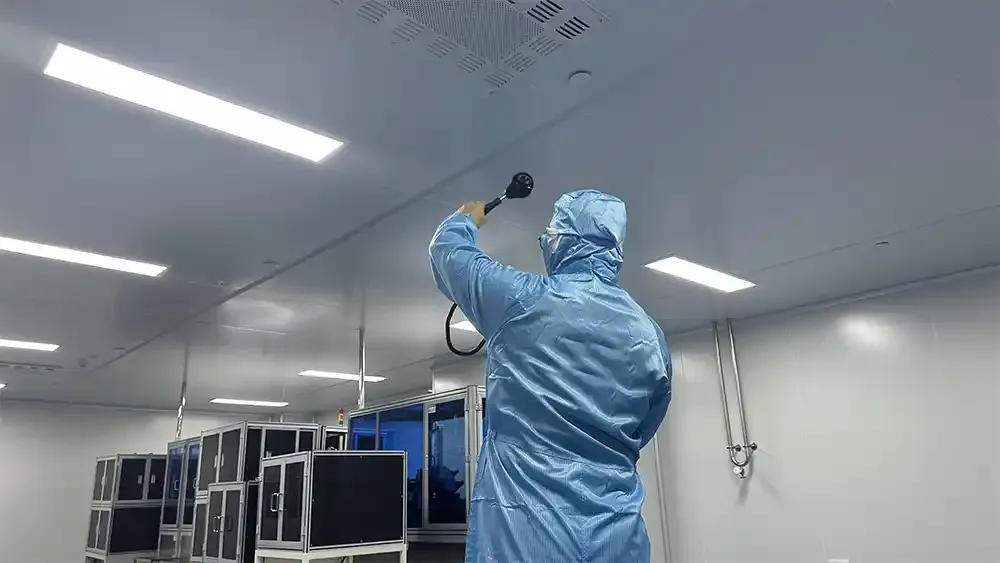
Deiiang engineer performing HEPA filter integrity scan — identifying a hidden frame bypass during a visual inspection.
How to Prevent the Next Recertification Failure
- Capture the data for trend analysis of FFU velocity, pressure differentials, and particle counts, and do not limit capture to the recertification day.
- Track filter pressure drop. replace filters based on measured resistance, threshold, and not the date.
- FFU control and bypass dampers should be permanently set post commissioning.
- This should be followed and adhered to, the integrity and control of local airflow should be determined after each maintenance activity.
- Inspect seals on doors, ceiling penetrations, and vertical transportation utilities on a set, recurring basis.
- A pre-certification self-assessment should be conducted no later than the two weeks prior to the recertification.
Pro tip: Download the Deiiang ISO 5 Cleanroom Pre-Recertification Checklist PDF to identify issues before the big day.
When should you repair, rebalance, or replace the FFU?
- Repair: the electrical connection, the control, the impeller, or any other component (e.g. capacitor) that is replaceable.
- Rebalance: the FFU’s airflow control features are working, but the majority of the room’s airflow and pressure differentials are not within the defined control limits.
- replace HEPA (a HEPA filter): the HEPA filter’s integrity has failed, the pressure drop is greater than 2 times the initial, or the HEPA filter’s filtering media is damaged.
- replace the FFU: the fan motor has deteriorated to the extent that it can no longer deliver the specified design airflow, efficiency, or reliability.
- The current FFU coverage, the FFU Return Air Area, the plenum’s static pressure, and/or the room’s layout are fundamentally inadequate.
Need assistance determining why your ISO 5 Cleanroom failed recertification?
Send Deiiang your particle count report, FFU layout, and recent airflow data for a preliminary engineering review.
Deiiang™ — cleanroom engineering Solutions
Common Questions
Why is recertification for an ISO 5 cleanroom typically denied?
There is no singular most common cause across all facilities. The most common set of cases is FFU performance degradation, leaks in the HEPA filter, air balance drifts, and FFU internal particle sources. Every facility has its own unique risk profile.
Can a HEPA filter pass a leak test but the cleanroom still fail particle counting?
Yes. The HEPA filter may be intact, but a drift in air balance, inadequate airflow from the FFU, disrupted airflow with unidirectionality, or internal contaminating sources of disruption may be the cause of failure.
What should I know about our procedures for addressing high particle counts in a cleanroom?
Follow the 60-minute workflow: verification of test validity, hotspot localization, the checking of FFU airflow, HEPA filter inspection, verification of air balance, internal source investigation.
What are some reasons FFUs performance degrades?
Resistance increases with filters due to the wear/tear of the motor/impeller, imbalances, fouling of the impeller, controller drift, and changes of plenum static pressure.
When it comes to FFUs, should all of them have the same airflow velocity?
Not necessarily. It's the design airflow model that dictates the requirements. Greatness is important, but the value must be validated according to the requirements of each application.
Can an air balancing issue be the reason for a failed recertification?
Sure. An air balancing issue can destroy unidirectional flow and pressure differences.
How often should a FFU be checked?
Frequency is a function of risk, industry, hours of operation, the history of maintenance, and validation plan. Critical zones should be monitored continuously rather than only during annual certification.
Do failed HEPA filters always need to be replaced?
No, not always. First, make sure it's a failed HEPA filter and not media leak, framing bypass, gasket and/or seal failures. Do the appropriate corrective actions, and per the procedures of the facility, maintain quality.
References
- ISO 14644-1:2015 — Cleanrooms and associated controlled environments
- iso 14644-3:2019 — Test methods
- IEST-RP-CC034 — HEPA and ULPA Filter Leak Tests
- FDA Guidance for Industry — Sterile Drug Products
- Cleanroom Technology — Industry Best Practices