+86 13638632902
 Jason@cleanroomequips.com


 MENU
MENU
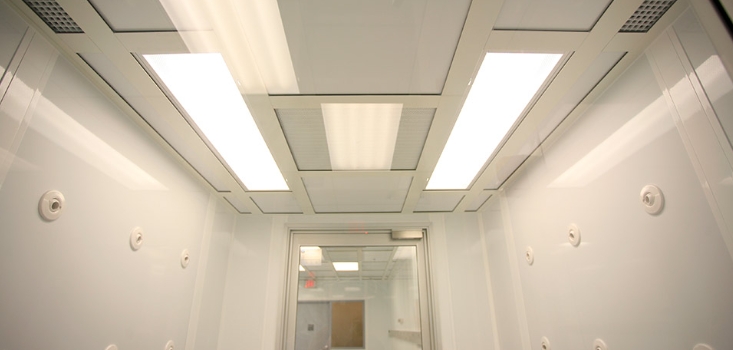
An air shower eradicates dirt from the cleanroom garments or materials with the help of high speed, HEPA filtered air but cannot sterilize surfaces. In contrast to gowning, cleaning, chemical disinfection, UV-C or vaporized hydrogen peroxide, air showers are only supplemental contamination controls and cannot be considered complete solutions for decontamination. Effectiveness depends on proper design of the air shower, its cycle time, the users’ behavior, and maintenance performed on it. Keep reading and compare the methods in order to choose the best contamination technique for your cleanroom.
How Do Air Showers Compare to Other Methods of Decontamination?
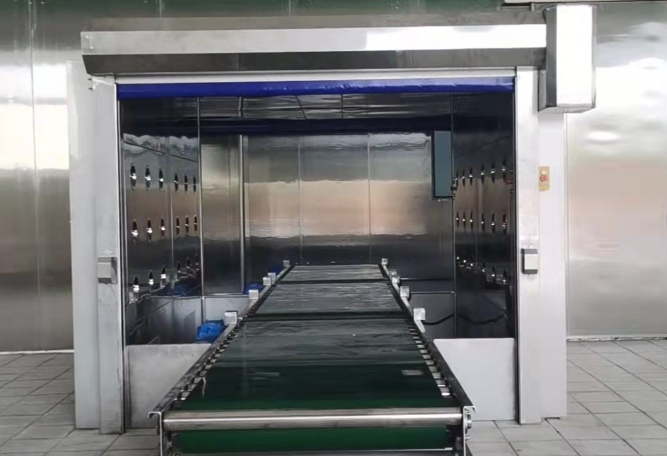
Air showers are an effective decontamination method used in cleanrooms, offering advantages over traditional cleaning techniques. They use high-velocity air jets to remove particles from personnel and equipment, ensuring a controlled environment. Compared to other methods, air showers are faster and reduce the risk of cross-contamination.
Comparative Analysis
- Traditional Cleaning Methods:
Traditional cleaning methods, such as wet wipes or chemical sprays, can be effective but often require longer processing times and may introduce additional contaminants. These methods may also leave residues that can compromise cleanroom standards.
- Advantages of Air Showers:
Air showers provide rapid decontamination without the need for chemicals, minimizing the risk of chemical contamination. They are designed to handle personnel and equipment efficiently, making them ideal for high-traffic areas in cleanrooms.
- Limitations of Other Methods:
Other methods, like UV light decontamination, may not be practical for all surfaces or materials and can take longer to ACHieve the desired level of cleanliness. Additionally, UV light may not penetrate all areas effectively, leaving some surfaces potentially unclean.
Effectiveness of Air Showers
Air showers are highly effective in removing particulate matter and are often a key component of a multi-layered Contamination Control Strategy. Their integration into cleanroom protocols enhances overall cleanliness and ensures compliance with strict industry standards.
Regulatory Standards and Guidelines:
1. iso 14644-1: cleanroom classification
2. iso 14644-7: Separative devices
3. IEST-RP-CC003: Contamination control
4. OSHA standards: Workplace safety regulations
5. FDA guidelines: Good Manufacturing Practices (GMP)
The Principle of Air Shower
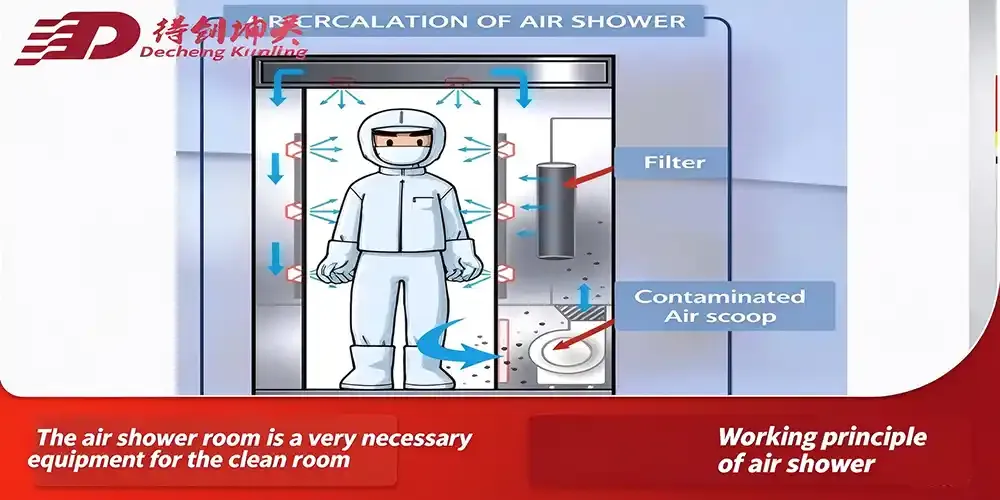
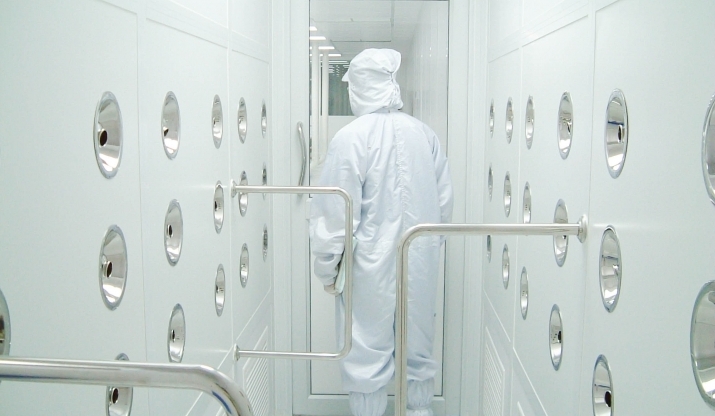
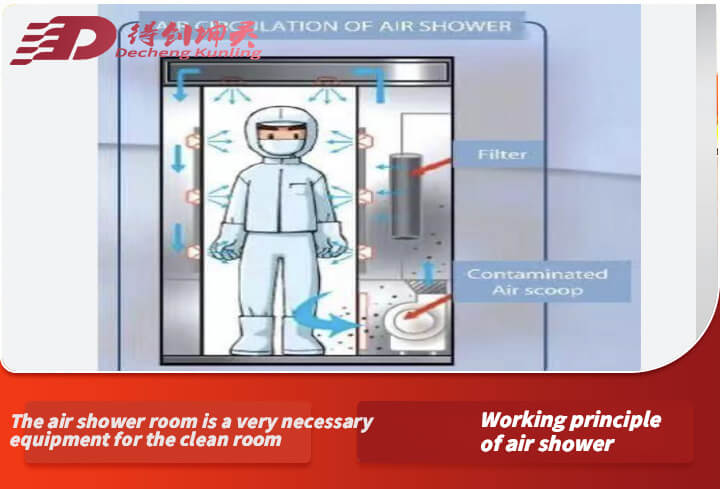
Air showers are essential components of cleanroom environments, designed to minimize contamination by removing particles from personnel and equipment before they enter controlled areas. The principle of an air shower relies on high-velocity air jets that are strategically positioned to create a turbulent air flow. As individuals pass through the air shower, these jets dislodge and carry away dust, skin cells, and other contaminants, effectively cleaning the surfaces of the clothing and equipment.
The air shower operates by utilizing a series of powerful blowers and HEPA filters that deliver filtered air at high speeds. This airflow is directed at various angles to ensure complete coverage of the body and items being decontaminated. The process is quick, generally taking only a few seconds, making it an efficient method for maintaining cleanliness without the need for chemical agents.
In addition to particle removal, air showers help maintain positive pressure within cleanrooms, which is critical for preventing outside contaminants from entering. By incorporating air showers into cleanroom protocols, facilities can enhance their contamination control strategies, supporting compliance with stringent industry standards and ensuring high-quality outcomes in sensitive environments.
The Benefits of Air Showers
1. Efficient Contamination Control: Air showers effectively remove particulate contaminants from personnel and equipment, significantly reducing the risk of contamination in cleanroom environments.
2. Chemical-Free Operation: Unlike traditional cleaning methods that may involve chemicals, air showers use only high-velocity air, minimizing chemical residues and enhancing safety for personnel and products.
3. Time-Saving Solution: Air showers operate quickly, allowing personnel to decontaminate themselves in seconds, which is critical in high-traffic cleanroom environments.
4. Support for Cleanroom Standards: By integrating air showers into cleanroom protocols, organizations can ensure compliance with industry standards like ISO 14644, improving product quality and maintaining a sterile environment essential for industries such as pharmaceuticals and biotechnology.
How Do I Get Air Out of My Shower?
To get air out of your shower, follow these simple steps:
Check for Air Traps:
Identify if there are any air blocks in the plumbing or fixtures that might be causing air pockets.
Open the Shower Valve:
Turn on the shower to allow water to flow. This can help to push out trapped air and restore normal flow.
Bleed the System (if necessary):
If air continues to be an issue, you may need to bleed the plumbing system. Locate the bleed valve or faucet closest to the shower andopen it to release trapped air. Allow water to flow until it runs steadily without sputtering, indicating that the air has been removed from the system. This process ensures proper water flow and eliminates any air pockets that may disrupt the shower's performance.
By following these steps, you can effectively manage air issues in your shower system, ensuring a consistent and comfortable water flow for an optimal shower experience. If problems persist, it may be advisable to consult a plumber for further assistance, as there could be underlying issues affecting the water supply.
faq(Frequently Asked Questions)
In what way does an air shower remove contamination from the personnel and materials?
Air showering utilizes the principle of propelling the air at a high velocity through HEPA filters in order to remove any dust or loose particles from the clothing or other objects. The function of the air shower is to minimize dust contamination but not to eliminate microorganisms or any chemical substances present.
Is using an air shower superior to wearing a cleanroom suit?
The cleanroom suits and the air showers are different technologies. Proper cleanroom clothing works by preventing any particles, including microorganisms, leaving the people and coming out from the suits. An air shower should be used in addition to the suited personnel and not instead of them.
Do air showers and tacky mats fulfill the same purpose?
The tacky mat is primarily designed to remove undesirable particles from the foot gear or trolley wheels at the entrance to the clean room. Air showers are more powerful and remove all contamination from the clothing and equipment. However, both cleanroom devices have their limitations and can be used together only if justified by risk assessment.
Can an air shower kill bacteria, viruses, or fungi?
Regular air showers are not meant to kill any microorganisms. They can remove only some particles carrying micro-organisms but cannot guarantee that cleansing is effective in the strictest sense. Instead, chemicals, UVC lights, or hydrogen peroxide are used for the purposes.
How do air showers relate to the disinfection treatment?
Air showers have the key advantage over chemical disinfection methods in terms of the drying and speed of cleansing of the particles but do not leave the residues of the chemical substances. On the contrary, on the one hand, chemical treatments are effective in minimizing viable microorganisms, but they require right concentrations, proper contact time, the compatibility of surfaces and proper disposal of remnants.
What is the principal difference between air shower and airlock?
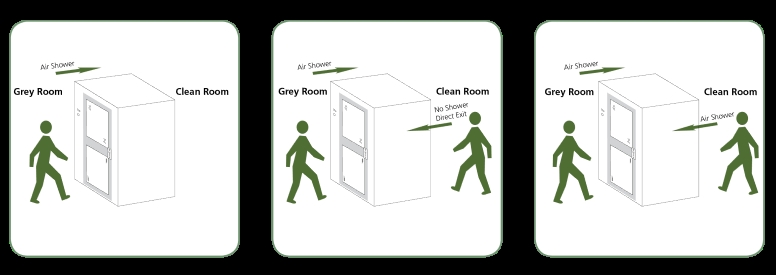
Airlock separates areas with different level of cleanliness so that it can control the pressure differences and the movement of people and materials. However, air showers use HEPA filtration to remove the loose particles. Some air showers may be functioning as airlocks, but it does not mean that they have the same meaning.
Is air shower obligatory according to iso 14644 regulations or current GMP standards?
Air showers are not needed in all cases under ISO 14644 or GMP. The necessity of using air showers should in each case be demonstrated as part of documented assessment of the risk and conditions of use.
What decontamination technologies can be used in the clean rooms?
The choice between various clean-room technologies depend only on the type of contamination. In a clean room, air showers or HEPA filtering should be used for removing loose particles; in the cases of pollution by people, proper apparel should be used.