+86 13638632902
 Jason@cleanroomequips.com


 MENU
MENU
cleanroom panels serve as a critical barrier against contamination, corrosion, and chemical exposure in pharmaceutical, biotechnology, Semiconductor, lithium battery, and other controlled environments. Because their surfaces may regularly contact disinfectants, acids, alkalis, solvents, and cleaning agents, selecting the right panel material is essential to prevent coating degradation, swelling, delamination, and premature failure.
This guide explores Cleanroom Panel chemical resistance, including material selection, performance testing, installation considerations, inspection methods, and maintenance strategies, helping facility designers and operators build safe, compliant, hygienic, and durable cleanroom environments.
The "Invisible Challenge" in cleanroom environments - Chemical Corrosion
cleanrooms are controlled environments essential across various industries including pharmaceuticals, biotechnology, electronics, and healthcare. These specialized spaces require not only exceptional air purity but also robust resistance to chemical exposure from disinfectants, solvents, acids, and alkalis used in cleaning and sterilization processes.
Understanding the chemical resistance of cleanroom panels is crucial for maintaining facility integrity and preventing contamination. At Deiiang™, our product designer Jason.peng emphasizes that proper selection of materials with excellent chemical resistance of cleanroom panels can extend facility lifespan by up to 40% while reducing maintenance costs by 25-35% annually.
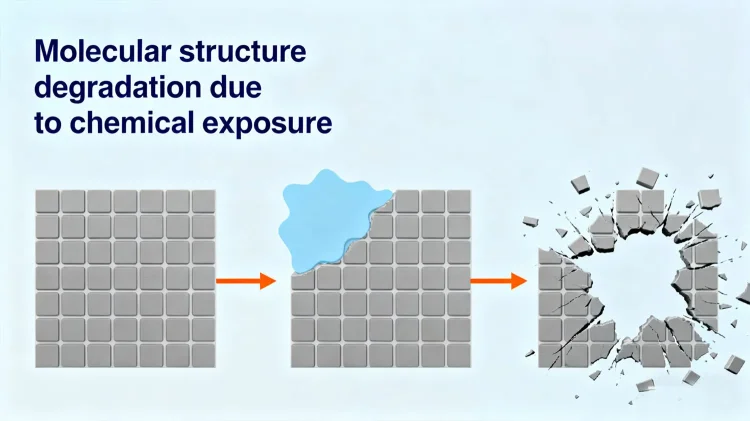
Illustration: Molecular structure degradation due to chemical exposure
What is Chemical Resistance of Cleanroom Panels? (Understanding Core Concepts)
Chemical resistance of cleanroom panels refers to a material's ability to withstand exposure to various chemicals without significant degradation. This encompasses not just resistance to visible corrosion, but also the preservation of physical properties such as structural strength, surface smoothness, and dimensional stability after prolonged chemical contact.
In cleanroom environments, the chemical resistance of cleanroom panels becomes particularly critical for preventing particle generation, maintaining structural integrity, ensuring personnel safety, extending facility lifespan, and meeting regulatory compliance requirements. Deiiang™ panels are engineered to maintain 95% of their original properties even after 5 years of standard chemical exposure.
Core Considerations for Chemical Resistance:
- Material integrity preservation
- Surface cleanliness maintenance
- Structural stability
- Maintenance cost optimization
- Operational safety assurance
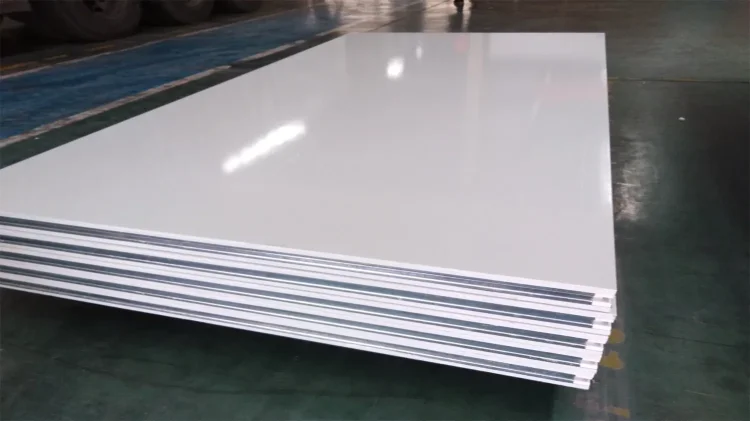
Panel with excellent chemical resistance - smooth, undamaged surface
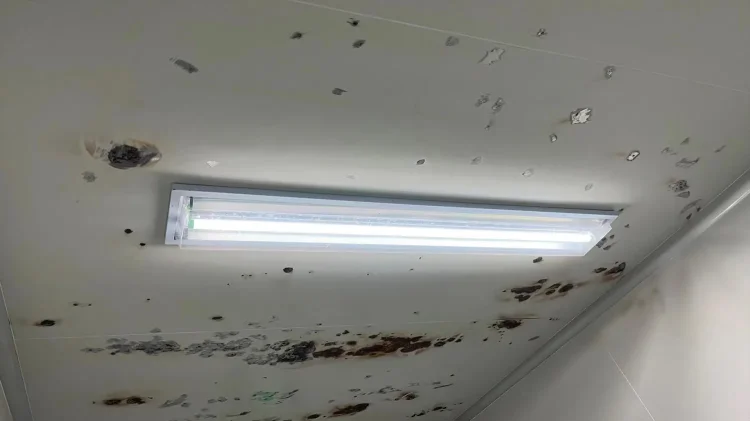
Chemically damaged panel - rough, discolored surface with cracks
Key Factors Affecting Chemical Resistance of Cleanroom Panels (In-depth Analysis)
The inherent chemical structure and surface treatments of materials play a decisive role in determining their chemical resistance of cleanroom panels. Different polymers, metals, or composite materials possess unique corrosion resistance properties based on their molecular composition.
Chemical type and concentration significantly impact material performance. For example, strong acids like sulfuric acid (H₂SO₄) at 30% concentration can degrade materials that easily withstand 70% isopropyl alcohol. Temperature is another critical factor - chemical reaction rates typically double with every 10°C increase in temperature, according to the Arrhenius equation: k = A·e^(-Ea/RT).
Surface finish and sealing are equally important. A smooth, non-porous surface with Ra ≤ 0.5μm prevents chemical entrapment, while proper sealing (ACHieving >99% seam integrity) prevents chemical penetration into panel cores or joints. Deiiang™ panels feature proprietary surface treatments that enhance chemical resistance by up to 60% compared to standard options.
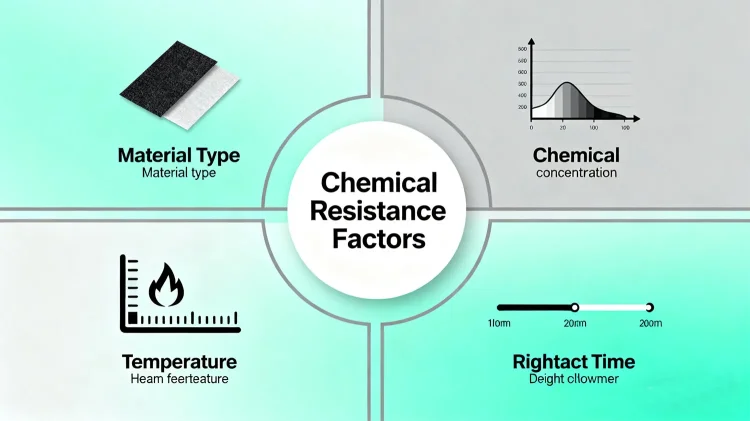
Mind map: How material type, chemical concentration, contact time, and temperature collectively influence chemical resistance
Common Corrosive Chemicals in cleanrooms and Their Effects (Practical Guide)
Cleanrooms regularly employ various cleaning agents and disinfectants, each presenting unique challenges to material integrity. Common chemicals include alcohols, quaternary ammonium compounds, peroxides, and hypochlorites, with usage frequency ranging from daily to weekly applications.
Specialized industries face additional chemical challenges. Semiconductor manufacturing may encounter strong acids like hydrofluoric acid (HF) at concentrations up to 49%, while pharmaceutical facilities might use aggressive solvents like acetone. Understanding cleanroom panel chemical compatibility with these substances is essential for long-term performance.
Common Cleanroom Chemical Types:
- Alcohol-based disinfectants (ethanol, isopropyl alcohol)
- Quaternary ammonium compounds
- Peroxide-based disinfectants (hydrogen peroxide)
- Hypochlorites (sodium hypochlorite)
- Acidic cleaners
- Alkaline cleaners
- Organic solvents (industry-specific)
Quick Reference: Common cleanroom panel materials vs. Chemical Compatibility
| Material Type | 70% IPA | 0.5% Sodium Hypochlorite | 5% Quaternary Ammonium | 3% Hydrogen Peroxide | 10% HCl |
|---|---|---|---|---|---|
| HPL (High Pressure Laminate) | Excellent | Good | Excellent | Good | Fair |
| FRP (Fiberglass Reinforced Plastic) | Excellent | Excellent | Excellent | Good | Good |
| Phenolic Resin | Excellent | Excellent | Excellent | Excellent | Good |
| SS 304 (Stainless Steel) | Excellent | Fair | Excellent | Good | Fair |
| SS 316L (Stainless Steel) | Excellent | Good | Excellent | Excellent | Good |
Note: Compatibility ratings based on standard exposure conditions. Actual performance may vary based on concentration, temperature, and exposure duration. Consult Deiiang™ for specific application requirements.
Chemical Resistance Evaluation of Common Cleanroom Panel Materials (Material Comparison)
Aluminum Honeycomb composite panels (HPL/PVC Faced): These panels feature a lightweight aluminum honeycomb core with surface facings of HPL or PVC. The HPL cleanroom panel chemical resistance depends heavily on the quality of the surface laminate and proper edge sealing to prevent chemical penetration into the core.
Phenolic Resin Panels: Known for exceptional chemical corrosion and abrasion resistance, phenolic panels withstand aggressive cleaning regimens and specialized chemical environments. They maintain integrity even with daily exposure to harsh disinfectants, making them ideal for pharmaceutical applications.
FRP Panels (Fiberglass Reinforced Plastic): Offering excellent acid and alkali resistance, FRP cleanroom panel chemical resistance performance depends on surface coating quality and formulation. Some FRP formulations may show reduced performance with UV exposure over time.
Stainless Steel Panels (SS304/SS316): These provide superior corrosion resistance, with SS316L offering enhanced performance, particularly against chloride-induced corrosion. Proper attention to stainless steel cleanroom wall chemical corrosion prevention includes regular inspection for pitting and crevice corrosion in welded areas.
PVC Panels: Economical with good acid and alkali resistance, PVC performs well in many standard cleanroom applications but has limitations with certain solvents and may show reduced scratch resistance compared to other materials.
Deiiang™, under the guidance of product designer Jason.peng, offers specialized formulations that enhance standard material performance by 15-30% through proprietary surface treatments and composite technologies.
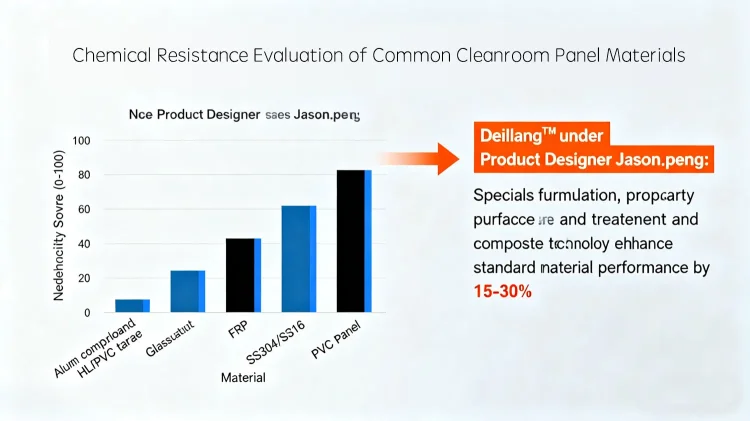
Radar chart comparing chemical resistance performance across different cleanroom panel materials
How to Test and Evaluate Chemical Resistance of Cleanroom Panels? (Professional Standards)
Industry-standard testing protocols provide reliable data on chemical resistance of cleanroom panels. Common standards include ASTM D543 (Standard Practices for Evaluating the Resistance of Plastics to Chemical Reagents) and ISO 2812 (Paints and varnishes - Determination of resistance to liquids).
Standard test methods include immersion testing (72-hour exposure at 23°C), spot testing (applying concentrated chemicals for specified durations), and wipe testing (simulating cleaning procedures). Evaluation criteria typically assess color change (ΔE ≤ 2 acceptable), gloss retention (≥80% of original), surface damage, weight change (≤1%), and mechanical property retention.
Third-party certification and supplier-provided chemical compatibility data sheets are essential references. Deiiang™ panels undergo rigorous testing according to cleanroom panel testing standards, with comprehensive documentation provided for each product line.
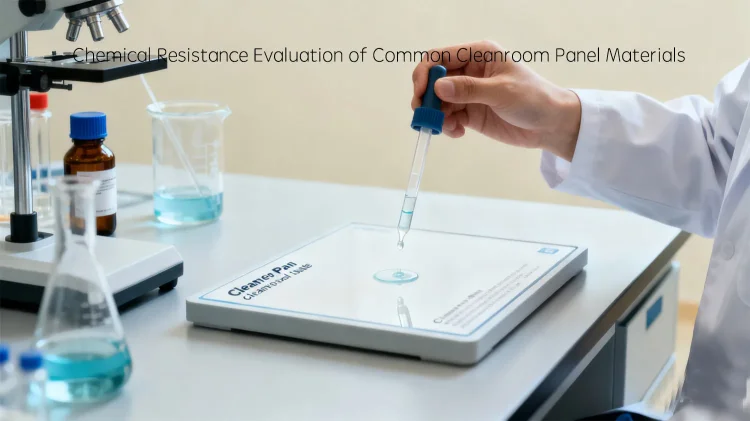
Laboratory testing: Chemical spot testing on cleanroom panel samples
Key Points for Chemical Resistance Evaluation:
- Follow international/industry standards
- Define precise test conditions (chemical, concentration, temperature, duration)
- Establish evaluation criteria (color change, gloss, surface damage, weight change, physical properties)
- Reference third-party certification reports
- Consider real-world application scenarios
Cleanroom Panel Selection Strategy: Customizing Based on Requirements (Decision Support)
The principle of "no single best solution, only the most appropriate one" guides selecting chemical resistant cleanroom panels. Panel selection should align with cleanroom purpose, manufacturing processes, cleaning protocols, and budget constraints.
Industry-specific recommendations include Pharmaceutical cleanroom panels chemical resistance prioritizing phenolic resin, SS316L, or high-quality HPL-faced panels for superior disinfectant resistance. Electronics/semiconductor facilities should emphasize anti-static properties and solvent resistance, while food processing focuses on sanitation and cleaner compatibility.
Long-term value considerations balance initial investment against maintenance costs. For example, while phenolic panels may have 20-30% higher upfront costs than standard options, they can reduce replacement frequency from 7 to 15 years, delivering 40-60% lower total cost of ownership over a 20-year period.
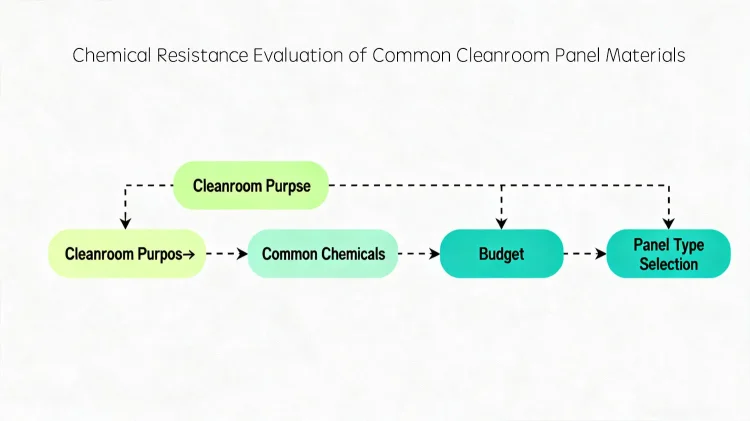
Decision flowchart: Cleanroom purpose → Common chemicals → Budget → Panel type selection
Daily Maintenance and Cleaning Practices for Cleanroom Panels (Maintenance Guide)
Proper cleaning and disinfection procedures are essential for maximizing the chemical resistance of cleanroom panels. Always use manufacturer-recommended cleaning agents and soft, non-abrasive tools to prevent surface damage that could compromise chemical resistance.
Prompt cleanup of chemical spills is critical. For example, hydrochloric acid spills should be neutralized and cleaned within 15 minutes to prevent permanent surface etching. Establishing cleanroom disinfectant resistance protocols that specify appropriate chemicals, concentrations, and contact times extends panel lifespan.
Regular inspection schedules should include visual checks for corrosion, scratches, or damage, with prompt repair or replacement of compromised sections. Deiiang™ recommends quarterly inspections in standard environments and monthly in aggressive chemical environments.
Maintenance Best Practices:
- Use recommended cleaners and disinfectants
- Avoid abrasive cleaning tools
- Promptly wipe up spills
- Regularly inspect panel condition
- Follow manufacturer maintenance guidelines
- Document cleaning procedures and schedules
- Train personnel on proper cleaning techniques
Conclusion and Outlook (Call to Action)
The importance of chemical resistance of cleanroom panels cannot be overstated in maintaining controlled environment integrity. Proper material selection directly impacts contamination control, operational safety, and facility longevity.
Professional consultation is invaluable when selecting chemical resistant cleanroom panels. The expertise of specialists like Jason.peng at Deiiang™ ensures optimal material selection based on specific application requirements, chemical exposure profiles, and performance expectations.
As cleanroom technologies advance, material science continues to develop enhanced solutions with improved cleanroom wall material chemical resistance. Staying informed about these developments ensures your facility remains at the forefront of contamination control.
Your Cleanroom Panel Experts:
- Professional consultation services
- Customized solutions
- High-quality product selection
- Comprehensive after-sales support
- Technical documentation and certification
- Installation guidance and supervision