+86 13638632902
 Jason@cleanroomequips.com


 MENU
MENU
Preventing pathogens like Listeria requires more than just clean equipment—it demands the right infrastructure. Traditional walls are often the silent failure point, where mICro-fractures harbor biofilms that survive cleaning.
This is why cleanroom panels for Food processing are critical. Unlike porous materials, these systems provide a sealed, non-corrosive surface engineered to withstand daily high-pressure washdowns, effectively eliminating contamination risks at the source.
Quick Fact:
Over 70% of food recalls are due to microbiological contamination, much of which originates from environmental surfaces. The right Cleanroom Panels for food processing can reduce this risk by creating a non-porous, cleanable barrier.
Why Food Processing Needs Specialized cleanroom Panels
Picture this: You're running a meat processing facility. Every day, your team sprays down surfaces with high-pressure hoses and sanitizers. Regular tiles or painted drywall would absorb moisture, develop mold in grout lines, and eventually fail. That's not just a maintenance headACHe—it's a contamination risk waiting to happen.
The secret to effective cleanroom panels for food processing lies in three key properties: non-porosity (so nothing can seep in), chemical resistance (to withstand daily sanitizer baths), and non-shedding surfaces (so they don't become part of the contamination problem). Think of them as the silent guardians of your food safety program.
Traditional Tile Walls

Grout lines trap bacteria
Moisture absorption up to 3-7%
Regular regrouting needed
Difficult to clean completel
Seamless Cleanroom Panels

Zero grout lines
Moisture absorption: <0.5%
Minimal maintenance
Easy to clean surfaces
Visual comparison: Traditional vs. Modern Cleanroom Panels
Core Standards & Compliance
When we talk about cleanroom panels for food processing, compliance isn't optional—it's the foundation. I've seen facilities spend hundreds of thousands retrofitting because they chose the wrong materials upfront. Let's break down what really matters.
The right cleanroom panels for food processing need to meet multiple standards simultaneously. It's like a three-legged stool: FDA/USDA for materials, ISO for air quality, and HACCP for hazard control. Remove one leg, and the whole system becomes unstable.
Essential Standards Checklist
FDA / USDA
Materials must be food-grade contact surfaces, non-toxic, and non-absorbent. For example, Deiiang™ panels use FDA-compliant coatings that won't leach chemicals.
ISO 14644
Controls airborne particles. Most food processing requires iso class 7 (≤352,000 particles/m³ ≥0.5μm) or Class 8. Panels must not shed particles.
HACCP
Design must facilitate hazard control. Smooth surfaces, rounded corners, and cleanable joints are essential for preventing biological hazards.
Fire Rating
Class A fire resistance (flame spread ≤25) is typically required. This is non-negotiable for insurance and local building codes.
Common Materials: Deep Comparison
Choosing materials isn't about finding the "best" one—it's about finding the right fit for your specific application. Let me walk you through the three main contenders in the cleanroom panels for food processing arena.
Each material has its sweet spot. The key is matching the panel's capabilities with your processing requirements. For instance, if you're running a cold storage facility, insulation becomes your top priority, while a meat processing plant needs extreme chemical resistance.
| Material | Cost Index (1-10) | Chemical Resistance | Thermal Insulation | Best For | Deiiang™ Example |
|---|---|---|---|---|---|
| Stainless Steel | 9-10 | Excellent (pH 1-14) | Poor (needs insulation) | High-acid/alkali, meat/seafood | 316L grade with PVDF coating |
| FRP (Fiberglass) | 5-7 | Very Good (pH 3-11) | Moderate | Dairy, beverage, baked goods | Deiiang™ FRP with gel coat |
| Composite (PU/rockwool) | 6-8 | Good (pH 4-10) | Excellent (R-value: 5-8 per inch) | Cold storage, frozen Foods | 50mm PU core panels |
Panel Structure & Core Technology
A high-performance cleanroom panels for food processing is more than just a flat surface—it's a sophisticated sandwich of specialized materials. Let me take you through what makes these panels tick, layer by layer.
Think of it like this: The surface coating is the "armor," the core provides "insulation," and the joints are the "seals." Get any of these wrong, and your cleanroom panels for food processing won't perform as needed. Our lead designer, Jason Peng, always says: "The magic is in the layers."
Key Layer Functions
Surface Coating: Provides chemical resistance, anti-microbial properties, and easy cleaning. PVDF can withstand 10,000+ cleaning cycles.
Base Material: Structural integrity. 1mm steel provides 5x more impact resistance than 0.5mm.
Core Material: Thermal insulation (R-values from 5 to 8 per inch) and fire resistance.
Joints & Seals: Critical for preventing microbial harborage. Rounded corners (25-50mm radius) eliminate cleaning dead zones.
Designer Insight: "We calculate corner radii based on cleaning nozzle sizes. A 38mm radius accommodates most standard pressure washers without creating shadow areas." — Jason Peng, Product Designer
Installation & Joint Systems
Here's a truth I've learned from 15 years in the industry: The best panel installed poorly is worse than a mediocre panel installed perfectly. Joints are where contamination happens—or where it's prevented.
When evaluating cleanroom panels for food processing, pay as much attention to the connection system as to the panels themselves. A flush joint with proper gasketing can reduce bacterial harborage by up to 95% compared to traditional overlaps.
Flush Connection System
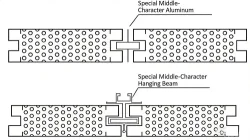
How it works: Panels connect via an internal aluminum profile that pulls them together from behind. The joint is then sealed with FDA-approved silicone, creating a smooth, cleanable surface with no exposed fasteners.
Zero exposed screws or bolts
Gap < 1mm for microbial control
Withstands thermal expansion/contraction
Allows for panel replacement if damaged
Installation Efficiency
Modern cleanroom panels for food processing use modular systems that can be installed 3-5x faster than traditional construction:
Traditional Tile Walls 28-35 days
modular cleanroom Panels 6-10 days
Cost impact: Faster installation means less downtime. For a 10,000 sq.ft facility, that's 3-4 weeks of additional production time worth $150,000-$300,000 for many processors.
How to Choose by Food Industry Segment
Not all food processing is created equal. The panels that work perfectly in a bakery would fail miserably in a meat plant. Let me give you a quick guide to matching panel specifications with your specific needs.
The secret to selecting the right cleanroom panels for food processing is understanding your unique combination of temperature, moisture, chemical exposure, and cleaning frequency. Get this right, and you'll have a system that lasts for decades.
🥩 Meat & Seafood Processing
Challenge: High moisture, blood, saline, daily pressure washing
Solution: 316L stainless steel or heavy-duty FRP
Key Specs: Resistance to 5% NaCl solution, 1500psi washdown capability
Deiiang™ Recommendation: SS panels with electropolished finish
Typical cycle: 2x daily washdown with chlorine-based sanitizers (pH 11-12)
🥛 Dairy & Beverage
Challenge: Mold growth, fat/oil residues, moderate chemicals
Solution: Antimicrobial FRP or coated steel
Key Specs: Mold resistance (ASTM G21), smoothness Ra < 0.8µm
Deiiang™ Recommendation: FRP with silver-ion antimicrobial coating
Cleanliness standard: Typically iso class 7 (≤352,000 particles/m³)
🍞 Bakery & Snack Foods
Challenge: Dry environment, flour dust, fire risk
Solution: Fire-rated composite panels
Key Specs: Class A fire rating, static-dissipative surface
Deiiang™ Recommendation: Rockwool core panels with conductive coating
Fire safety: Flame spread ≤25 (Class A), critical for flour dust environments
❄️ Cold Storage & Frozen Foods
Challenge: Thermal efficiency, condensation, sub-zero temperatures
Solution: Insulated sandwich panels
Key Specs: R-value ≥7.5 per inch, vapor barrier integrity
Deiiang™ Recommendation: 100mm PU core panels with thermal break
Energy savings: Proper insulation can reduce cooling costs by 30-40%
Testing & Performance Data
Specifications are nice, but real-world performance is what matters. At Deiiang™, we put our cleanroom panels for food processing through punishing tests that simulate years of use in just weeks.
When evaluating panels, don't just look at the marketing claims—ask for the test data. A quality panel should withstand thousands of cleaning cycles without degradation. Our FRP panels, for example, show less than 5% gloss reduction after 5,000 scrubs with abrasive cleaners.
Chemical Resistance Test Results
Panel A
Panel B
Panel C
5% NaOH
24 hrs
24 hrs
3% HCl
24 hrs
24 hrs
Chlorine
1000 cycles
1000 cycles
✓ No Change
✓ No Change
✗ 15% Gloss Loss
Deiiang™ Panel A & B show superior chemical resistance compared to generic Panel C
Test Standard: ASTM D1308 - "Test Method for Effect of Household Chemicals on Clear and Pigmented Organic Finishes"
Performance MetrICs That Matter
Surface Smoothness (Ra) ≤0.8µm
Cleanability (ATP reduction) ≥3.5 log
Thermal Insulation (R-value) 7.2 per inch
Impact Resistance 50J without crack
Energy Savings Calculation
For a 10,000 ft² cold room at -20°C:
Basic insulation: ~$18,000/year cooling cost
High-performance panels: ~$11,000/year
Annual savings: $7,000+
Payback period: Typically 2-3 years
Conclusion & Next Steps
Choosing the right cleanroom panels for food processing isn't an expense—it's an investment in food safety, operational efficiency, and regulatory compliance. The upfront cost difference between basic and premium panels is often recovered within 2-3 years through reduced maintenance, lower energy costs, and avoided contamination incidents.
Remember, the most expensive panel is the one that fails during an audit or causes a recall. Your walls should be your first line of defense, not your weakest link. With proper cleanroom panels for food processing, you're building a foundation for years of safe, efficient production.
Ready to Upgrade Your Food Processing Facility?
Get expert guidance on selecting the right cleanroom panels for your specific application
Includes: Material comparisons, compliance checklists, installation guidelines, and energy savings calculator
Frequently Asked Questions
Q: Can these panels withstand daily pressure washing?
A: Absolutely. Our food-grade panels are rated for 1500psi washdowns. The key is the joint system—flush connections with proper sealing prevent water intrusion that would damage standard walls.
Q: Do Deiiang™ panels meet GMP Standards?
A: Yes, all our food processing panels are designed to meet or exceed current Good Manufacturing Practice requirements. We provide documentation packs for FDA and other regulatory inspections.
Q: How difficult is installation?
A: Our modular system is designed for quick installation with standard tools. A typical 10,000 ft² area can be completed in 1-2 weeks versus 4-6 weeks for traditional construction, minimizing production downtime.
About Deiiang™ Cleanroom Solutions
Deiiang™ provides comprehensive cleanroom solutions for food processing facilities, including panels, ceilings, Doors, and specialized Ventilation systems. Our panels are engineered for:
Standard Specifications
Thickness: 50mm, 75mm, 100mm options
Fire Rating: Class A (BS 476 Part 7)
Surface: Ra ≤ 0.8µm smoothness
Colors: White, blue, grey standard
Customization Options
Anti-microbial coatings
Static-dissipative surfaces
Integrated utility channels
Observation Windows
Lead Designer: Jason Peng | Compliance: FDA, USDA, iso 14644, HACCP | Warranty: 10-year system warranty