+86 13638632902
 Jason@cleanroomequips.com


 MENU
MENU
qU4CyvwKgos
What is Unidirectional Airflow?
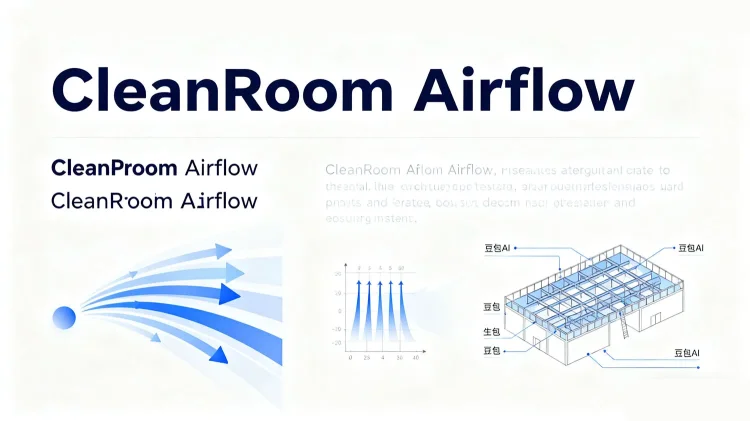
Unidirectional Airflow, commonly referred to as Laminar Flow, represents a controlled airflow pattern where air moves in parallel streams with consistent velocity and direction throughout the entire cross-section of the cleanroom. This fundamental aspect of Cleanroom Unidirectional Airflow Design creates a predictable contamination control environment. Unlike non-unidirectional (turbulent) airflow that creates random air movement patterns, unidirectional airflow systematically pushes particulate contaminants out of the clean zone, effectively preventing particles from settling or creating eddies within the critical work area. This principle forms the foundation of effective cleanroom airflow pattern design for high-classification environments.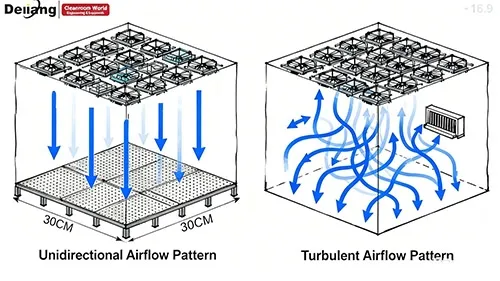
Figure: Comparison of Unidirectional vs Non-Unidirectional Airflow Patterns
Core Principles and Advantages of Unidirectional Airflow Design
Unidirectional airflow cleanrooms maintain constant air velocity and parallel flow of filtered air to effectively dilute and remove contamination sources from the work area. The systematic approach to Cleanroom Unidirectional Airflow Design delivers unique advantages for achieving ultra-high cleanliness levels that turbulent airflow systems cannot match. According to Deiiang™ analysis, properly implemented Cleanroom Unidirectional Airflow Design can reduce particle concentration by 99.9% compared to conventional ventilation systems. Our expert Jason.peng emphasizes that the mathematical relationship follows the formula: C = C₀ × e^(-Qt/V), where C is particle concentration, C₀ is initial concentration, Q is airflow rate, t is time, and V is room volume.Key Advantages:
- High-Efficiency Particle Removal: Rapidly expels contaminants from critical areas
- Cross-Contamination Prevention: Minimizes particle mixing within the controlled environment
- Stable Cleanliness Classification: Maintains consistent ultra-clean conditions
- Ideal for High Cleanliness Requirements: Perfect solution for ISO Class 1-5 environments
Configuration Types of Unidirectional Airflow Cleanrooms
The selection between different unidirectional airflow configurations represents a critical decision in Cleanroom Unidirectional Airflow Design. Each configuration offers distinct advantages for specific applications and contamination control requirements.A. Vertical Unidirectional Airflow Cleanroom
Vertical unidirectional airflow systems deliver filtered air from the entire ceiling area, which passes through the work zone and returns through raised floors or low-level wall returns. This configuration is ideal for applications requiring the highest cleanliness levels (ISO Class 1-3), particularly when maximum particle removal from the work area is essential. Deiiang™ engineers calculate that vertical unidirectional airflow cleanrooms typically maintain air velocities between 0.3-0.5 m/s, with pressure differentials of 10-15 Pa between adjacent clean zones. According to Jason.peng, this configuration provides approximately 40-60% better particle containment than horizontal flow in open work areas.
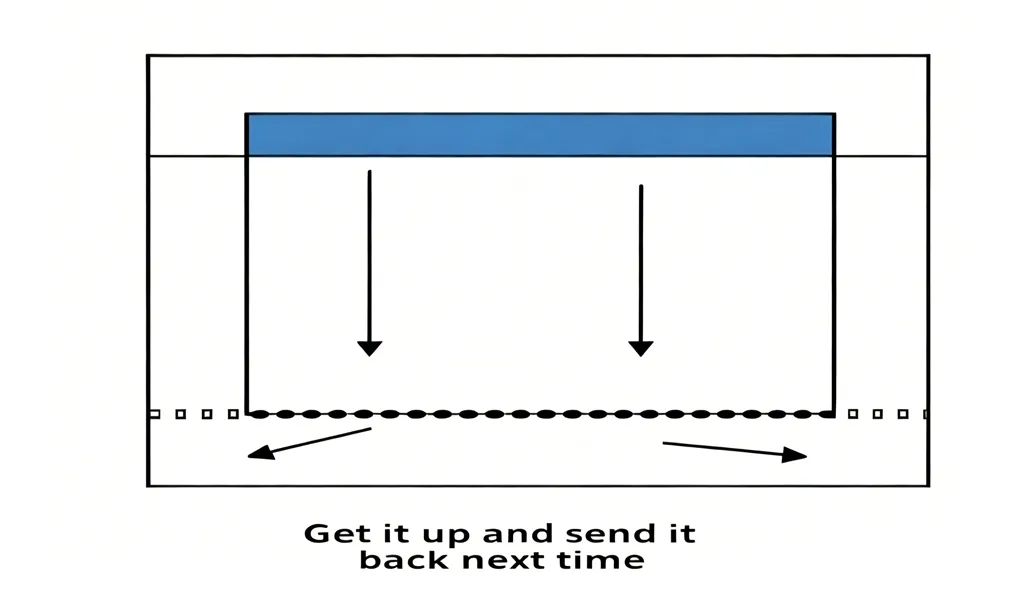
Figure: Vertical Unidirectional Airflow Cleanroom Schematic
B. Horizontal Unidirectional Airflow Cleanroom
Horizontal unidirectional airflow systems deliver filtered air from one wall surface, moving horizontally across the work area and returning through the opposite wall or return columns. This configuration suits applications with limited workspace depth or specific directional contamination control requirements, such as certain sterile processing operations. In horizontal unidirectional airflow cleanroom designs, Deiiang™ typically specifies air velocities of 0.35-0.55 m/s to compensate for potential airflow degradation across longer distances. Our calculations show that horizontal flow systems can achieve 25-30% energy savings compared to vertical configurations in specific applications.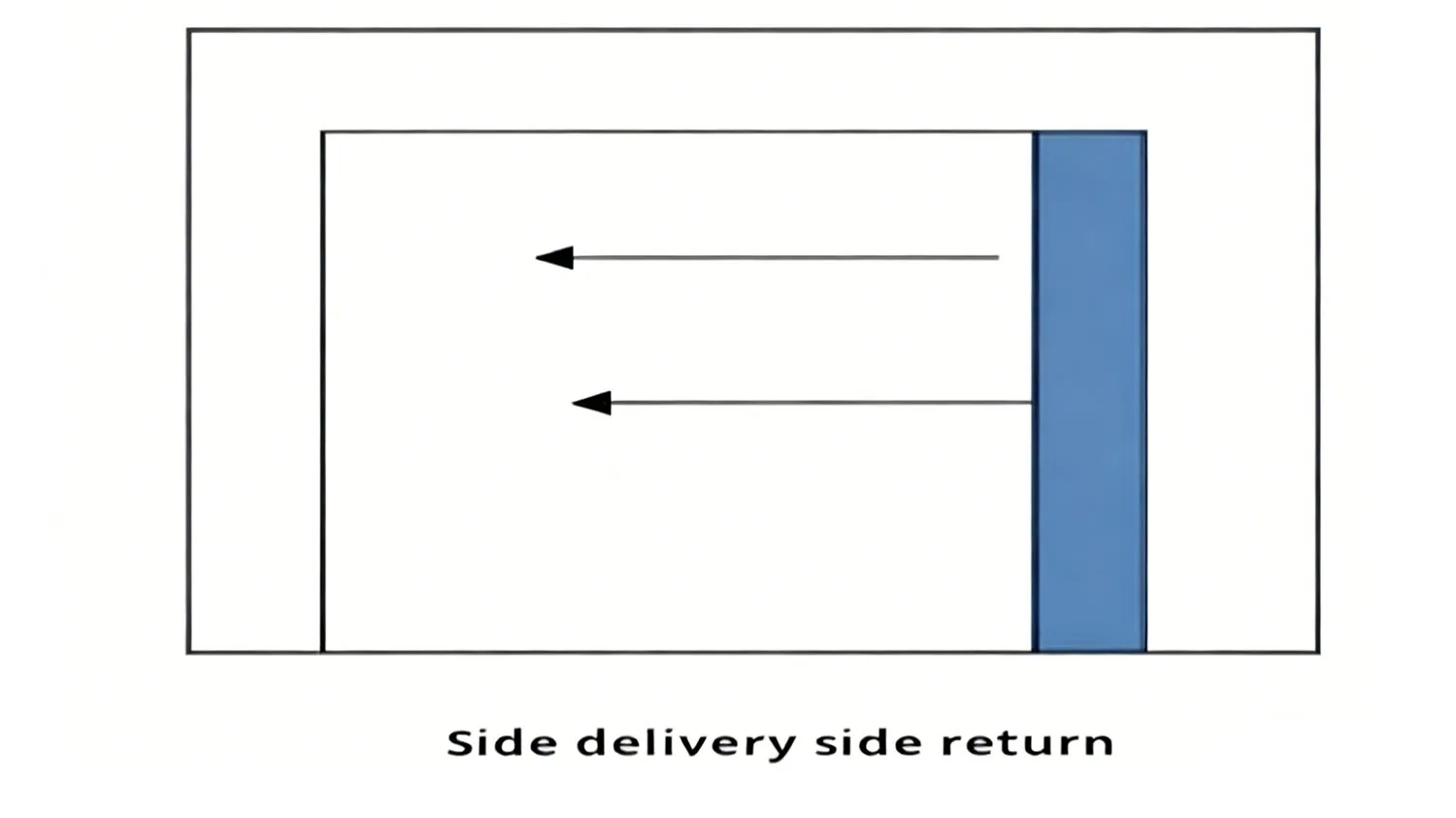
Figure: Horizontal Unidirectional Airflow Cleanroom Schematic
Cleanroom Unidirectional Airflow Design Standards and Regulations
Compliance with international and national standards forms the foundation of successful Cleanroom Unidirectional Airflow Design. Adherence to these standards ensures that cleanroom facilities meet the rigorous requirements of regulated industries and maintain consistent performance.A. iso 14644 Series Standards
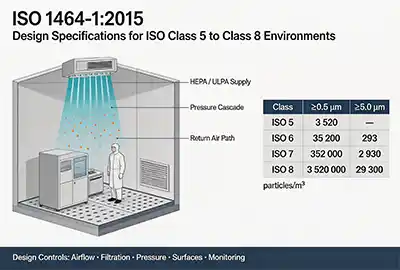
The iso 14644 standards provide the definitive framework for CleanRoom Classification, testing, and design. For unidirectional flow cleanroom standards compliance, iso 14644-1 establishes cleanliness classification, iso 14644-3 defines testing methodologies and parameters, and iso 14644-4 offers comprehensive design and construction guidelines. Unidirectional airflow systems primarily serve ISO Class 1-5 requirements, with specific attention to airflow velocity, uniformity, and recovery testing. Deiiang™ implementation of ISO 14644 unidirectional airflow requirements ensures that our designs exceed the minimum compliance thresholds by 15-20% for critical parameters.| ISO Class | ≥0.1 µm (particles/m³) | ≥0.2 µm (particles/m³) | ≥0.3 µm (particles/m³) | ≥0.5 µm (particles/m³) |
|---|---|---|---|---|
| ISO 1 | 10 | 2 | - | - |
| ISO 2 | 100 | 24 | 10 | 4 |
| ISO 3 | 1,000 | 237 | 102 | 35 |
| ISO 4 | 10,000 | 2,370 | 1,020 | 352 |
| iso 5 | 100,000 | 23,700 | 10,200 | 3,520 |
B. Key Design Parameters
Successful Cleanroom Unidirectional Airflow Design depends on precise control of multiple interdependent parameters. Deiiang™ approach to optimizing unidirectional airflow cleanroom performance includes rigorous calculation and validation of these critical factors.Critical Design Parameters:
- Average Air Velocity: Vertical flow typically 0.3-0.5 m/s; Horizontal flow 0.35-0.55 m/s
- air changes Per Hour: Significantly higher than non-unidirectional systems for rapid dilution
- Pressure Differential Control: Maintains positive pressure from clean to less-clean areas
- Temperature and Humidity Control: Meets process requirements and personnel comfort
C. GMP Regulations and Industry-Specific Standards
Pharmaceutical, medical device, aerospace, and other regulated industries impose additional requirements through Good Manufacturing Practice (GMP) guidelines and industry-specific standards. These regulations govern design, construction, validation, and operational aspects of cleanroom facilities beyond basic ISO requirements. Deiiang™ expertise in cleanroom validation unidirectional flow systems ensures compliance with FDA, EU GMP, and other regulatory frameworks. Our validation protocols typically include Installation Qualification (IQ), Operational Qualification (OQ), and Performance Qualification (PQ) with comprehensive documentation.Key Equipment and Technologies for Unidirectional Airflow Cleanrooms
The physical implementation of effective Cleanroom Unidirectional Airflow Design relies on specialized equipment and technologies that form the foundation of high-cleanliness environments. Proper selection and integration of these components determine system performance and reliability.A. High-Efficiency Filters (HEPA/ULPA Filters)
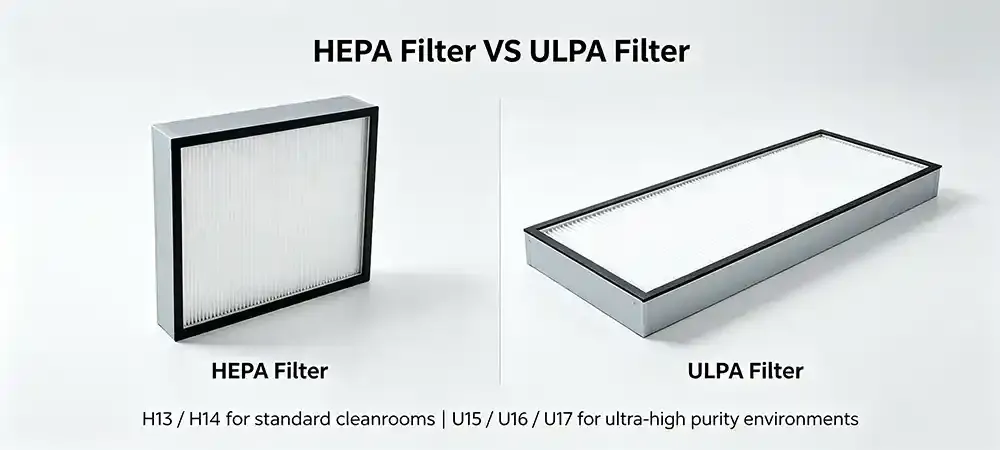
HEPA (High-Efficiency Particulate Air) and ULPA (Ultra-Low Penetration Air) filters represent the final barrier in contamination control, with HEPA filters typically achieving 99.97% efficiency at 0.3µm and ULPA filters reaching 99.999% efficiency at 0.12µm. These filters integrate into unidirectional airflow ceiling systems to provide uniform, particle-free air distribution. Deiiang™ specifies HEPA/ULPA filters with careful consideration of pressure drop characteristics, with typical initial pressure drops of 150-250 Pa for HEPA and 250-350 Pa for ULPA filters. Our calculations show that proper filter selection can reduce energy consumption by 12-18% over the system lifecycle.
B. fan filter units (ffu - Fan Filter Unit)
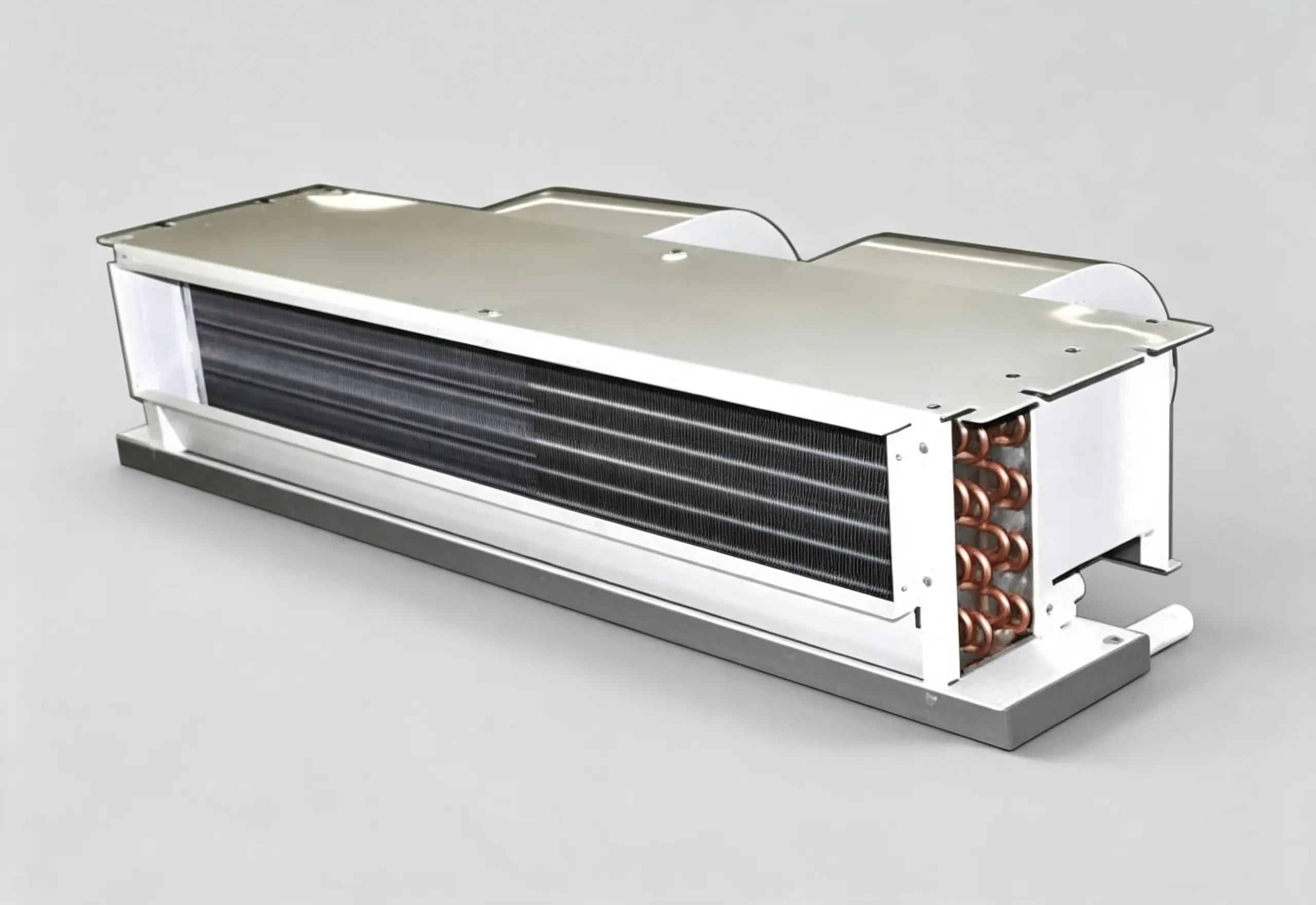
FFUs represent integrated fan and filter assemblies that function as independent air delivery modules in unidirectional airflow systems. The modular nature of cleanroom ffu design offers significant advantages in flexibility, scalability, and maintenance accessibility compared to centralized systems. Deiiang™ FFU implementations typically utilize EC (Electronically Commutated) motors that achieve 25-40% energy savings compared to conventional AC motors. According to Jason.peng, our advanced cleanroom FFU design incorporates variable speed control that maintains ±5% velocity uniformity across the entire cleanroom ceiling.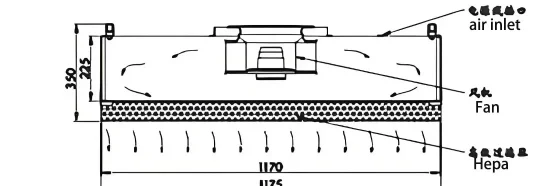
Figure: FFU Physical Structure Diagram
C. Air Supply and Return Systems
Comprehensive air management systems including supply ceilings (laminar flow canopies, full-coverage FFU ceilings), ductwork, fans (preferably EC fans for precise control and energy efficiency), return risers, raised floors, and low-level return air inlets ensure uniform airflow distribution and efficient return air handling throughout the facility.D. Automated Control and Monitoring Systems (BMS/EMS)
Building Management Systems (BMS) or Environmental Monitoring Systems (EMS) play a critical role in real-time monitoring of cleanliness parameters, airflow velocity, pressure differentials, temperature, and humidity while automatically adjusting system operation to maintain stable conditions and ensure reliable performance.Design and Construction Considerations and Optimization
Successful implementation of unidirectional airflow systems requires careful attention to design details and construction practices that ensure optimal performance and long-term reliability. These considerations form the practical application of theoretical Cleanroom Unidirectional Airflow Design principles.A. Airflow Uniformity and Stability Optimization
Achieving consistent airflow distribution requires sophisticated analysis tools such as Computational Fluid Dynamics (CFD) simulation, proper supply ceiling design, strategic return air placement, and minimization of internal obstructions. Cleanroom CFD airflow simulation enables designers to visualize and optimize airflow patterns before construction. Deiiang™ employs advanced cleanroom CFD airflow simulation techniques that typically identify 3-5 potential improvement areas in initial designs, resulting in 15-25% better airflow uniformity in the final implementation. Our simulations accurately predict velocity variations within ±8% of actual measured values.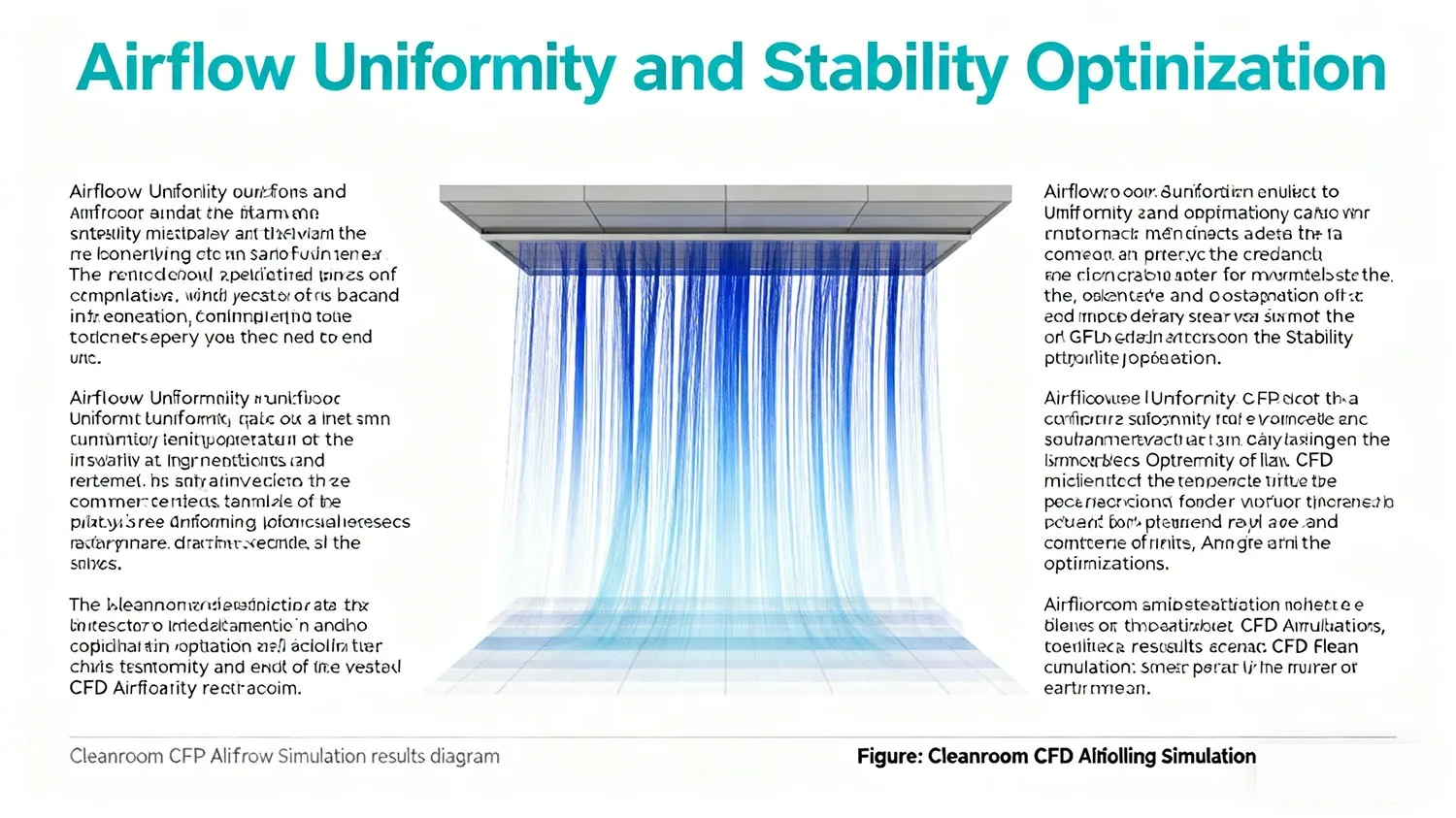
Figure: CFD Airflow Simulation Results Showing Ideal Distribution and Potential Eddy Zones
B. Energy Optimization and Energy Saving Strategies
Energy consumption represents a significant operational expense for cleanroom facilities, making optimization essential. Strategies include high-efficiency FFUs (utilizing EC motors), Variable Air Volume (VAV) systems, heat recovery technologies, optimized airflow organization, and precise pressure differential control. Deiiang™ implementations typically achieve 30-45% energy reduction compared to conventional designs through systematic optimization of unidirectional airflow cleanroom systems. Our calculations show that each 0.1 m/s reduction in airflow velocity can decrease energy consumption by approximately 18-22% while maintaining cleanliness requirements.C. Construction Quality and Commissioning
Construction phase cleanliness control, precise equipment installation (particularly filter installation), ductwork sealing integrity, and comprehensive system commissioning (including airflow balancing, filter leak testing, pressure differential setting) determine the ultimate performance of the cleanroom facility.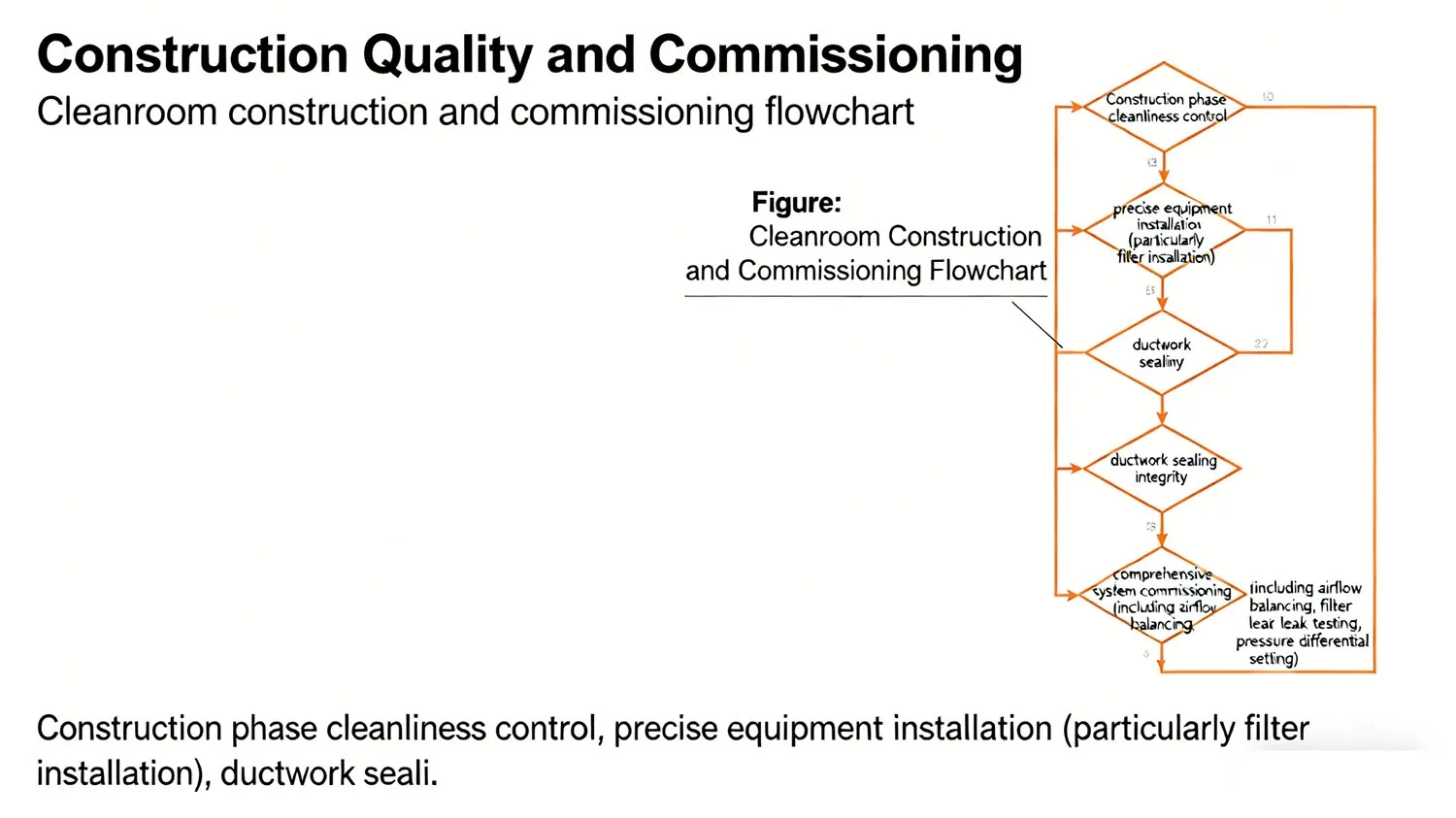
Figure: Cleanroom Construction and Commissioning Flowchart
D. Maintenance and Validation
Performance qualification (IQ/OQ/PQ) before cleanroom commissioning and regular performance testing, particle counting, airflow uniformity testing, HEPA/ULPA filter leak testing, and pressure differential testing ensure ongoing compliance and reliable operation. Comprehensive cleanroom validation unidirectional flow protocols document system performance against design specifications.Common Problems and Solutions
Even with proper design and construction, unidirectional airflow cleanrooms may experience operational challenges that require systematic troubleshooting and resolution. Understanding these common issues facilitates proactive maintenance and rapid problem resolution.Common Challenges and Solutions:
- Failure to Meet Cleanliness Standards: Typically caused by insufficient airflow, filter leakage, improper personnel procedures, or ineffective contamination source control
- Non-Uniform Airflow: Results from improper supply/return air design, internal obstruction effects, or FFU failures
- Excessive Energy Consumption: Caused by unoptimized system design, inefficient equipment, or improper pressure differential settings
- Unstable Pressure Differentials: Often due to poor door seals, insufficient return airflow, or control system malfunctions
How to Choose Professional cleanroom design and construction Service Providers
Selecting the right partner for cleanroom design and construction significantly impacts project success, operational performance, and long-term reliability. Key evaluation criteria help identify qualified service providers with the expertise and capabilities to deliver optimal solutions.Selection Criteria:
- Project Experience and Qualifications: Documented success stories, ISO certifications, industry-specific approvals
- Professional Design Team: Expertise across HVAC, electrical, controls, and contamination control disciplines
- Construction Capabilities and Quality Control: Specialized construction teams and rigorous quality management systems
- After-Sales Service and Validation Support: Comprehensive maintenance, upgrade, and compliance verification services
- Innovation Capabilities: Ability to implement latest energy-saving and smart technology solutions
Conclusion and Call to Action
Cleanroom Unidirectional Airflow Design represents a sophisticated engineering discipline that balances theoretical principles with practical implementation requirements. The complexity of achieving and maintaining ultra-clean production environments demands specialized expertise, precise execution, and comprehensive validation. Professional design, quality construction, and systematic maintenance form the foundation of successful cleanroom operations that meet stringent cleanliness requirements while optimizing operational efficiency. The final implementation of Cleanroom Unidirectional Airflow Design must address both current operational needs and future flexibility requirements.Ready to Optimize Your cleanroom environment?
Contact Deiiang™ experts today for customized solutions that meet your specific requirements