+86 13638632902
 Jason@cleanroomequips.com


 MENU
MENU
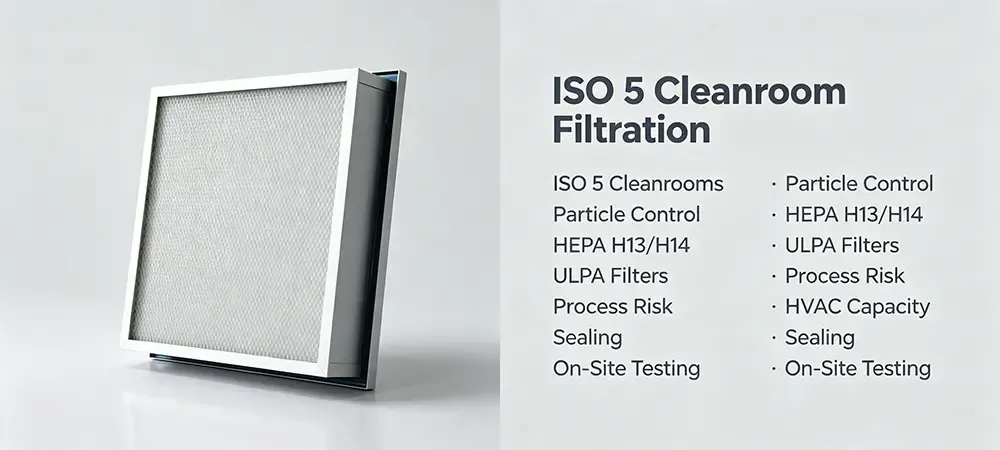
iso 5 cleanrooms require strict particle control. HEPA filters (H13/H14) are standard for most applications, while ULPA filters offer higher efficiency for ultra‑sensitive processes. Selection depends on process risk, HVAC capacity, and validation—not just efficiency numbers. Proper layout, sealing, and on‑site integrity testing are as critical as the filter media itself.
What Is an ISO 5 Cleanroom?
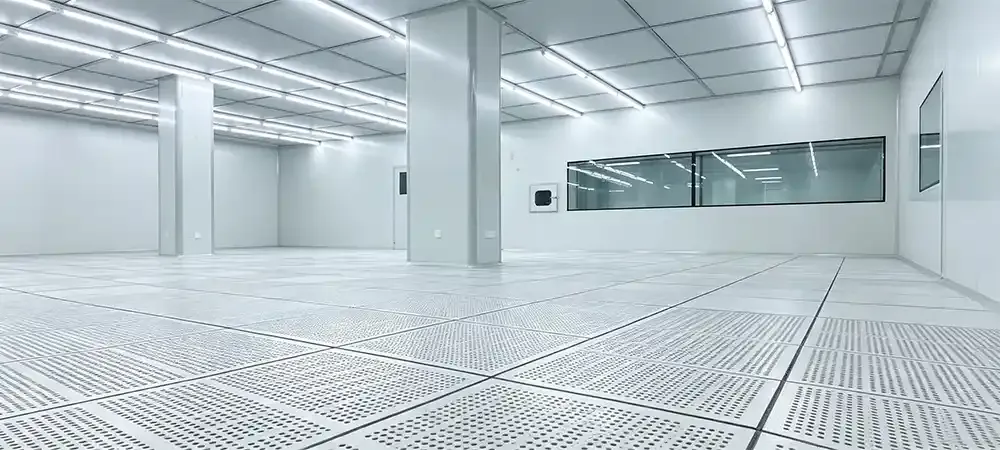
An ISO 5 cleanroom is a controlled environment as defined in iso 14644‑1 where airborne particles are strictly limited. For example, for particles ≥0.5 µm, there is a maximum of 3,520 particles/m³ of floor area, and for all particles ≥0.3 µm, there is a maximum of 10,200 particles/m³.
ISO 5 cleanrooms are not just a matter of using high efficiency filters. A complete system has to be developed. The hepa filter efficiency iso 5 has to be combined with sufficient airflow, a proper room design and appropriate work practices.
Understanding the ISO 5 Cleanroom Classification
ISO 5 is not a filter rating but rather the performance criterion for a cleanroom. The end clean level will depend on filter efficiency and air flow design as well as on room design, human behavior, transfer of material and of operational procedures.
💡 Key insight:A HEPA filter with 99.995% efficiency does not automatically guarantee an iso 5 environment. A HEPA filter is part of a complete system, comprising the filter, housing, ceiling grid, airflow, and even the seals. Measuring the particle count indicates the performance of the complete system.
Which Industries Use ISO 5 Cleanrooms?
ISO 5 cleanrooms are used in a variety of industries and each of these require a different mix of filter quality, airflow and validation.
Pharmaceutical & sterile manufacturing:H14 HEPA or ULPA filters, unidirectional air flow. These systems must be validated in accordance with GMP Annex 1.
Medical devices: H13/H14 typically used in moderate airflow situations to protect sensitive products.
Semiconductor & electronics: ULPA filters (U15 – U17) require high air-change rates (300+ ACH) and are strictly static controlled.
Optics manufacturing: Low particle number required. ULPA filters for iso5 are often used in optics manufacturing and require special frame sealings.
Biosafety laboratories – HEPA or ULPA filters for iso 5 – work within negative pressure contaminated areas and are provided with bag‑in/bag‑out housings.
Aerospace & precision assembly: HEPA filters in modular ffu’s to create clean areas of changing size and shape.
For example, in semiconductor fab clean rooms requiring ulpa filters to keep sub‑0.1 µm particles under control, H14 HEPA filters can be used in hospital operating rooms with unidirectional flow.
HEPA vs. ULPA Filters for ISO 5 Applications
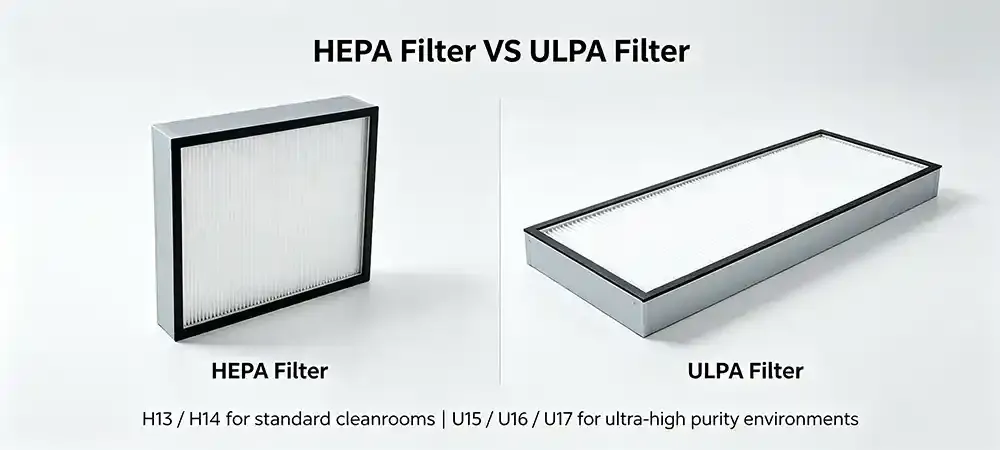
A number of factors must be taken into account when choosing between HEPA filters and ULPA filters for an ISO 5 cleanroom. Deciding on the basis of efficiency numbers is not sufficient. Process risk, available HVAC capacity and possibilities for validation are more important.
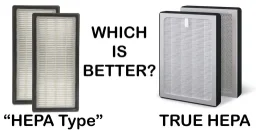
The hepa filter efficiency iso 5 (H13/H14) is sufficient for most applications but very sensitive processes might even require ulpa filters for iso 5.
How HEPA Filters for ISO 5 Work
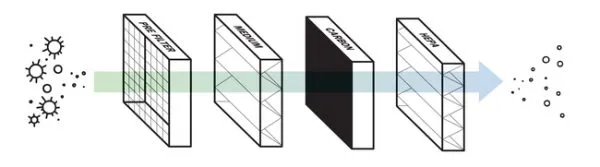
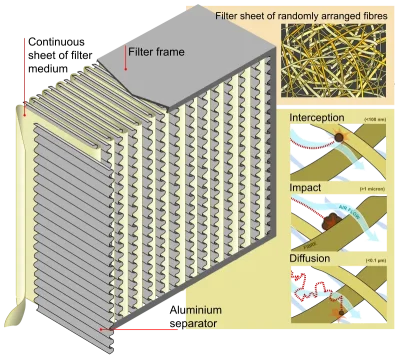
HEPA filters capture particles through four main mechanisms:
Inertial impaction – larger particles collide with fibres.
Interception – particles touch fibre surfaces while following airflow.
Diffusion – sub‑micron particles are driven by Brownian motion to fibre surfaces.
Electrostatic attraction – charged fibres are used to enhance capture in some filters.
How ULPA Filters for ISO 5 Work
ULPA (Ultra‑Low Penetration Air) filters use denser fibre matrices and smaller fibre diameters to capture particles down to 0.1–0.12 µm with efficiency ≥99.999%.
However, this higher performance brings trade‑offs:
Higher initial resistance – typically 20–30% more than HEPA.
Higher fan energy – due to increased pressure drop.
Higher procurement cost – often 1.5–2× the price of HEPA.
More demanding installation – tighter sealing and stricter field testing.
HEPA vs ULPA: Side‑by‑Side Comparison
The following comparison uses verified data from Deiiang™ product specifications. Efficiency values are based on MPPS (Most Penetrating Particle Size) testing per EN 1822 / ISO 29463.
| Comparison Item | HEPA (H13/H14) | ULPA (U15–U17) |
|---|---|---|
| Typical Application | Most ISO 5 cleanrooms (pharma, hospitals, electronics assembly) | Semiconductor lithography, advanced biotech, ISO 4–3 zones |
| Filter Efficiency | H13: ≥99.95% / H14: ≥99.995% @ 0.3 µm | U15: ≥99.9995% / U16: ≥99.99995% @ 0.1–0.3 µm |
| Initial Resistance | ≤200 Pa (at rated airflow) | Typically 20–40% higher |
| Cost (relative) | Economical | 1.5–2× higher |
| Test Standard | EN 1822 / ISO 29463 | EN 1822 / ISO 29463 |
Table 1: HEPA vs ULPA — core parameters based on Deiiang™ product data and EN 1822.
How to Choose Between HEPA and ULPA?
Selecting the right filter for an ISO 5 cleanroom should follow a risk‑first logic rather than defaulting to the highest efficiency number.
Is the process ultra‑sensitive to sub‑0.1 µm particles?
Does the regulatory standard (e.g., GMP, FDA) explicitly require ULPA?
Can the HVAC system handle the additional pressure drop?
Is there a strict energy budget that HEPA would better support?
Does the project have on‑site validation capability for ULPA‑grade testing?
For most ISO 5 applications, H14 HEPA filters provide the optimal balance of efficiency, cost, and energy consumption. Ulpa filters for iso 5 are reserved for specific high‑risk processes.
“A HEPA or ULPA filter can only perform as designed when the filter, housing, ceiling system, airflow pattern, and sealing details work as one system.”
How to Select HEPA and ULPA Filters for iso5
Selecting HEPA or ULPA filters for ISO 5 cleanrooms requires evaluating efficiency, dimensions, airflow, resistance, frame material, and sealing type.
Below is a verified product data card from Deiiang™ to guide your selection.
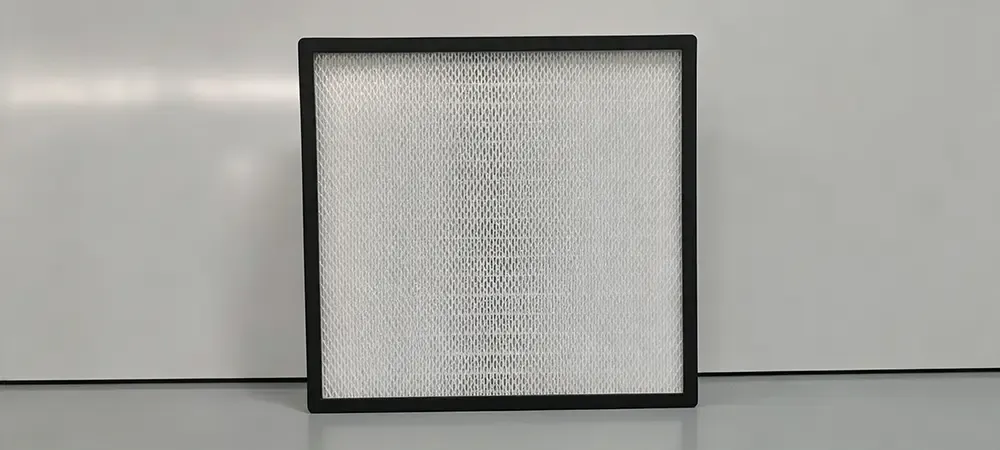
Deiiang™ Product Data — HEPA Filter (H14, Without Partition)
Filter type: HEPA, H14 (EN 1822)
Efficiency: 99.995% @ 0.3 µm
Rated airflow: 250–1,350 m³/h (size dependent)
Initial resistance: ≤200 Pa
Frame options: Aluminium / Galvanised / Stainless steel
Seal options: PU gel seal / EVA / Neoprene gasket
Available testing: Factory scan test + individual test report
Filter media: Microfiber glass paper
Product designer: Deiiang Jason.peng | Tested by: Deiiang joebo.Wang
Efficiency Grades and Test Standards
HEPA and ULPA filters for iso5are classified under EN 1822 and ISO 29463. Deiiang™ provides individual scan testing for every filter, with traceable serial numbers and test reports.
H13: ≥99.95% @ 0.3 µm — general high‑efficiency applications
H14: ≥99.995% @ 0.3 µm — hospitals, research labs, ISO 5 cleanrooms
U15: ≥99.9995% @ 0.1–0.3 µm — semiconductor cleanrooms
U16: ≥99.99995% — biotechnology, advanced pharmaceutical
For iso 5 cleanroom hepa filters, H14 is the most common grade, offering a good balance of efficiency and cost.
Dimensions, Airflow, and Initial Resistance
Deiiang™ offers both standard and custom sizes. The table below shows representative models:
| Size (W×H×D mm) | Airflow (m³/h) | Init. Res. (Pa) | Grade |
|---|---|---|---|
| 320×320×50 | 200 | ≤200 | H13/H14 |
| 484×484×50 | 450 | ≤200 | H13/H14 |
| 610×610×50 | 700 | ≤200 | H13/H14 |
| 1220×610×50 | 1,350 | ≤200 | H13/H14 |
Table 2: Deiiang™ hepa filter dimensions and airflow ratings.
Frame and Seal Options
Frame and seal selection directly impact installation integrity, leak tightness, and maintenance. Common options include:
Aluminium frame – lightweight, corrosion‑resistant, standard choice.
Galvanised steel – higher strength, suitable for large filters.
Stainless steel – for corrosive or high‑humidity environments.
Gel / liquid seal – provides the highest level of airtightness.
Dry seal (gasket) – easier installation, suitable for less critical areas.
Cleanroom HEPA Filter Layout and Airflow Design
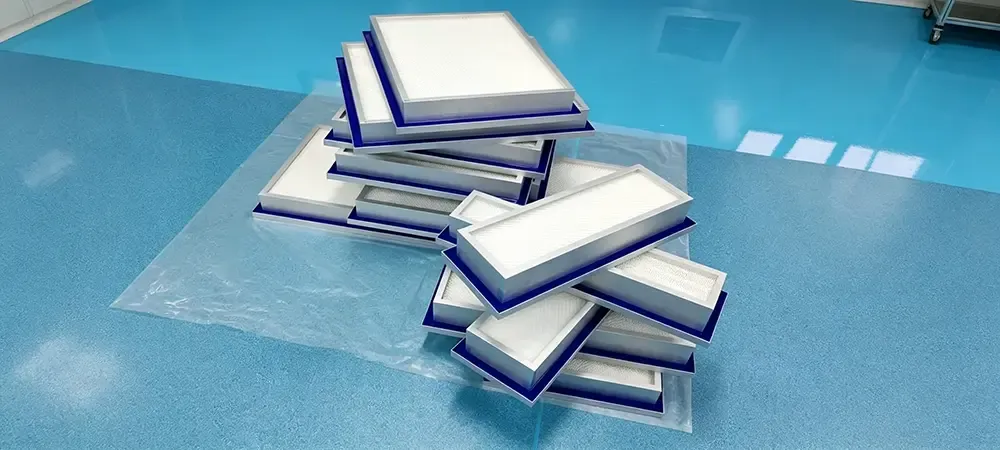
The filter layout of an ISO 5 cleanroom is equally as important to achieve the required cleanliness level as the number of filters. Uniform distribution, adequate coverage and a good integration with other components of the ceiling are equally important.
However, a poorly designed layout can create many problems, such as creating dead zones, allowing bypass leakage to occur and it may not achieve the desired hepa filter efficiency iso 5 even with the highest quality filters.
Common Filter Layout Approaches
Full ceiling HEPA filter layout: The full ceiling of filters creates unidirectional airflow throughout the space. This layout is typical for pharmaceutical filling and for semiconductor lithography.
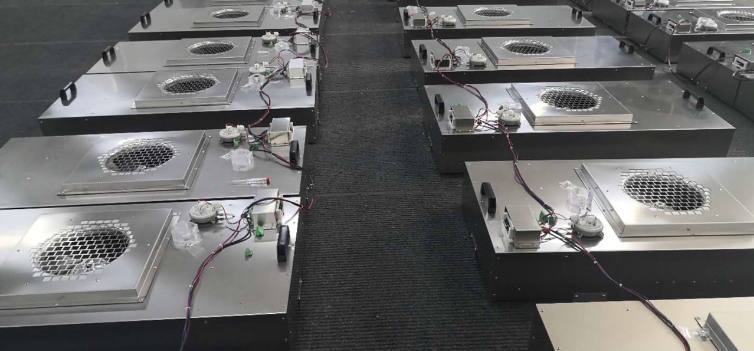
FFU modular layout: The FFU’s can be set up in a grid to allow for maximum flexibility, such as adding or relocating filters in cleanrooms classified ISO 5-8.
Local laminar flow / unidirectional zones: With local filters above workstations (FFUs), the areas immediately surrounding critical processes are kept at ISO 5 conditions while the remainder of the room is operated at higher classification levels, thus providing cost effective operation of very large cleanrooms.
Layout Is Not Just About Filter Count
A well‑designed layout must consider:
Room area and ceiling height
Equipment placement and heat sources
Personnel traffic patterns
Return air grille positions
Maintenance access and filter replacement pathways
Coordination with lights, sprinklers, and the ceiling grid
Room pressure cascade requirements
Common Layout Mistakes
Uneven filter distribution creating dead zones
Return air paths blocked by equipment
Bypass leakage around filter frames
Conflict between filters and light fixtures / sprinklers
Insufficient space for filter replacement
Calculating total airflow without verifying airflow uniformity
For example, a 200 m² ISO 5 cleanroom with 48 filters (each rated 700 m³/h) must ensure that the total airflow (33,600 m³/h) is evenly distributed across the entire ceiling grid.
Cleanroom Sealing and Filter Installation
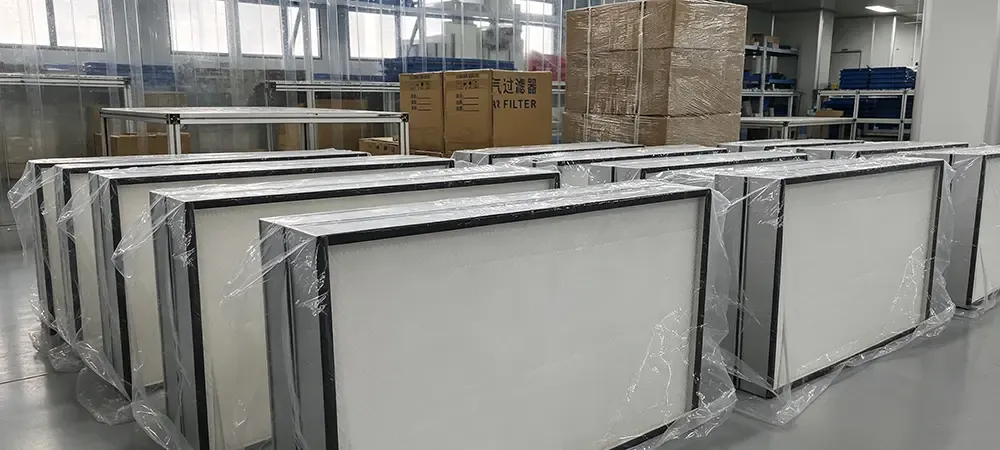
Sealing is where many ISO 5 cleanroom projects fail. A high‑efficiency filter is useless if air bypasses it through gaps in the frame, housing, or ceiling interface.
Even with iso 5 cleanroom hepa filters of H14 grade, bypass leakage can compromise the final particle count.
Why Sealing Matters as Much as Efficiency
Filter media performance ≠ installed system performance
Gaps between filter and housing create bypass leakage
Uneven sealant application causes localised leakage
Ceiling deformation reduces compression force over time
Common Cleanroom Sealing Materials
Gel / liquid seal – highest integrity, used in critical applications
Silicone – flexible, good temperature resistance
Polyurethane (PU) – durable, commonly used in filter frames
EPDM gasket – dry seal, easier installation
Fire‑rated sealants – for penetration sealing
Cleanroom Fireproofing Materials and Filter System Integration
Fireproofing is not a filter property—it relates to cleanroom enclosure, duct penetrations, and ceiling systems. Key considerations:
Fire‑rated wall and ceiling panels must maintain cleanroom integrity
Penetration seals (pipes, cables) must be both fire‑rated and airtight
Filter housing materials must be compatible with firestop systems
Fireproofing cannot compromise cleanroom pressure differentials
→ Related guide: Cleanroom Fireproofing Materials: A Practical Guide for Walls, Ceilings, and Service Penetrations
“The weakest point in a cleanroom filtration system is often not the filter media—it is the installation interface around the filter.”
How HEPA and ULPA Filters Are Tested
Testing ensures that HEPA and ULPA filters for ISO 5 cleanrooms perform as specified—both at the factory and after installation.
For ulpa filters for iso 5, testing is even more critical due to the higher risk of leakage at ultra‑high efficiencies.
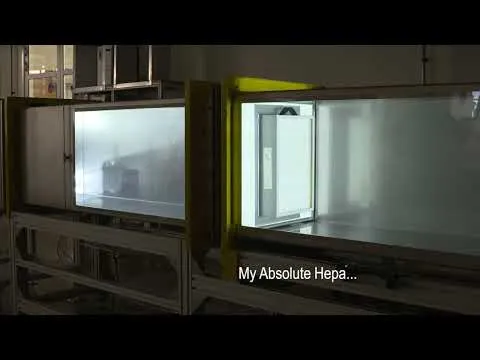
Factory Production Testing
Deiiang™ performs the following factory tests on every filter:
Individual scan testing – each filter is scanned for leaks
Airflow and resistance measurement – verifies rated performance
Appearance and dimension check
Packaging inspection – prevents damage during transit
Test report and traceability number – issued with all units.
On‑Site Integrity Testing
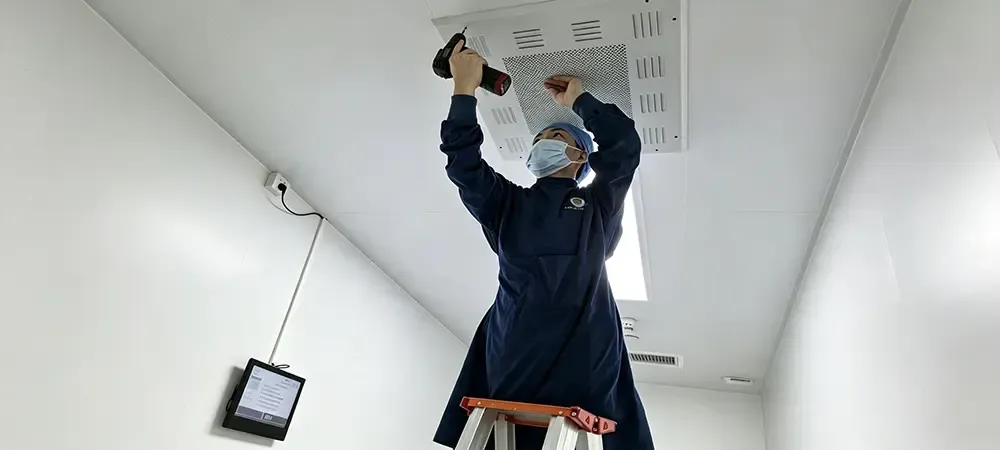
On‑site integrity testing (PAO/DOP method) verifies the installed system:
Check filter installation and sealing
Introduce test aerosol (PAO/DOP)
Scan with photometer or particle counter
Identify leak points
Repair seals or replace filter
Document and certify results
What Field Testing Must Verify
Field testing is not just about measuring filter efficiency—it must also verify:
Filter perimeter sealing
Frame and housing joints
Filter media surface (scanning)
Installation orientation (airflow direction)
Filter identification and location mapping
Environmental conditions during testing
For example, a typical leak test scans the filter face at a speed of 5 cm/s and identifies any penetration ≥0.01% of the upstream concentration.
 .
.Deiiang Case Study: ISO 5 Cleanroom Filtration Project
This case study demonstrates how Deiiang™ delivered a turnkey ISO 5 cleanroom filtration solution for a global lithium‑ion battery R&D facility.
Project Overview
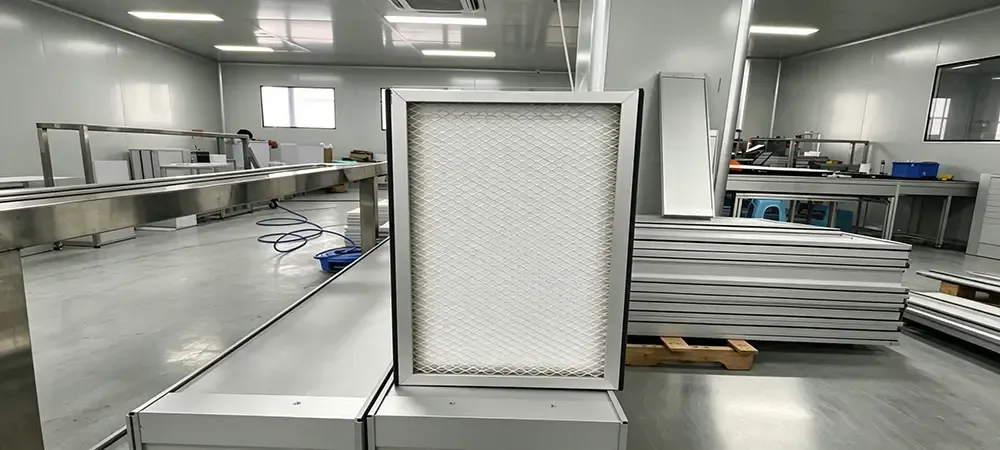
Location: Philippines | Industry: Lithium‑ion battery R&D | Cleanroom type: ISO 5 hardwall cleanroom | Area: 200 m² | Filters: 48 units of H14 HEPA filters (without partition) | Delivery: 8 weeks | Scope: Filter design, supply, installation guidance, and on‑site integrity testing.
Customer Requirements
Cleanliness stability – critical for solid‑state electrolyte research
Limited installation space – ceiling plenum height < 250 mm
Zero bypass leakage – strict leak test requirement
Custom dimensions – standard filters did not fit the ceiling grid.
Fire and seal requirements – this research needed fire‑rated materials and gel seal etc.
Project Challenges
Ceiling module dimensions did not match standard filter sizes
48 filters in a 200 m² area – dense FFU array required careful coordination
Complex return air path with equipment obstructions
Strict pressure drop limit – ≤200 Pa to meet energy budget
International shipping – robust packaging needed to prevent media damage
Deiiang Solution
Custom‑sized filters – adjusted dimensions to fit the existing ceiling grid
Optimised pleat spacing – increased filter area while maintaining ≤200 Pa resistance
Gel seal frame – ensured zero bypass leakage
Pre‑assigned location numbering – simplified installation and tracing
100% factory scan testing – each filter with individual test report
On‑site installation guidance – Deiiang™ technician supervised sealing and torquing
Assisted PAO integrity testing – achieved 100% pass rate on first attempt
Results
Particle count: Number of 0.3 µm particles <200/m³ (ISO 5: <3,520/m³)).
Integrity test: 100% pass rate – zero leaks detected
Air recovery time: 42 sec (iso 14644-3: ≤90 sec)
Energy savings: 41% reduction in HVAC energy consumption
Particle interference: reduced by 99.8%
Customer outcome: The project was accepted and the client has placed an order for Phase 2.
This project confirms that proper selection of iso 5 cleanroom hepa filters combined with meticulous sealing and testing yields reliable results.
A Typical Buyer Scenario
Persona: Project Engineer, pharmaceutical facility expansion
Pain points: Standard filters don’t fit ceiling modules | Need to control pressure drop and energy costs | Require complete test documentation | Installation team lacks HEPA sealing experience | Must pass integrity test on first attempt
Scenario: Project Engineer arrives at 8:00am and observes that several of the Ceiling Modules supplied for installation do not conform to the Filter Dimensional Requirements specified for the project. Revisiting Ceiling to rework would cause significant delay to Commissioning of project. Instead of supplying a simple off‑the‑shelf Filter only, Deiiang™ conducts a review of the Ceiling Grid to confirm Airflow Requirements and Sealing Requirements. Based on this review, Deiiang™ supplies a customized version of Ceiling with Filters pre‑assigned to specific locations within the Ceiling and accompanied with a detailed Installation Guide to minimize risk of poor coordination prior to the final Integrity Test.
Cleanroom Filtration Glossary
HEPA — High‑Efficiency Particulate air filter; removes ≥99.97% of particles ≥0.3 µm
ULPA — Ultra‑Low Penetration Air filter; removes ≥99.999% of particles ≥0.12 µm
ISO 5 — Cleanroom class per ISO 14644‑1: ≤3,520 particles/m³ (≥0.5 µm)
PAO/DOP Testing — On‑site integrity test using aerosol challenge
Filter Bypass Leakage — Air that bypasses the filter through frame or seal gaps
FFU — fan filter unit; integrates fan and filter in a modular housing
Frequently Asked Questions
Can HEPA filters be used in an ISO 5 cleanroom?
Yes, H13 and H14 HEPA filters can be used in an ISO 5 cleanroom, depending on the process risk, airflow design and required validation.
Is ULPA always better than HEPA?
Not necessarily. ULPA offers higher efficiency but comes with higher resistance, energy consumption, and cost. It should only be selected when the process or regulation demands it.
How many HEPA filters are needed for an ISO 5 cleanroom?
The quantity of filters is determined by more than just the area of the cleanroom, i.e. the height of the room, the designed ACH, the filtered air flow of the filter and a number of other factors such as the room layout. For iso5 cleanrooms a high density of FFU’s is often required to reach the required number of ACH (240–600 + ACH).
How are cleanroom HEPA filters for ISO 5 tested?
Tests conducted at the factory for filter class as per EN 1822, followed by on‑site tests using PAO/DOP for integrity after installation.
Why is cleanroom sealing important?
Even with high efficiency filters, leakage through gaps in frames, housings and at ceiling interfaces can render them ineffective.
Does Deiiang provide customised HEPA and ULPA filters for ISO 5?
Yes, Deiiang can make HEPA/ULPA filters of any size, using any frame, seal, etc material, at any airflow. For OEM/ODM work, Deiiang can also issue test reports for each filter.
Request a Cleanroom Filter Recommendation
Need help selecting HEPA or ULPA filters for an ISO 5 cleanroom?
Send us your room dimensions, airflow requirements, and ceiling layout. Deiiang™ can recommend a suitable filtration and sealing configuration for your project.
Cleanroom classification Room dimensions Filter type Filter quantity Filter dimensions Airflow requirement Frame material Seal type Project location Expected delivery
Cleanroom Filter Quantity Calculator
Use this tool to estimate the number of HEPA or ULPA filters needed for your ISO 5 cleanroom based on room size, air change rate, and filter specifications. It also compares annual energy costs between HEPA and ULPA options.
Calculation Results
Room Volume: - m³
Required Airflow: - m³/h
Theoretical Filter Count: - units
Recommended Count (10% margin): - units
Total Pressure Drop: - Pa
Annual Energy Cost Comparison
HEPA scenario: - USD/year
ULPA scenario: - USD/year
Difference (ULPA – HEPA): - USD/year
Assumption: ULPA pressure drop ≈ 1.3 × HEPA pressure drop. Fan efficiency = 70%.
This calculator provides preliminary estimates only. Final cleanroom design must be confirmed through airflow balancing, particle testing, recovery testing, and project‑specific validation requirements.
References
iso 14644-1:2015 — Cleanrooms and associated controlled environments, Part 1: Classification of air cleanliness
EN 1822-1:2019 — High efficiency air filters (EPA, HEPA and ULPA), Part 1: Classification
ISO 29463-1:2017 — High‑efficiency filters and filter media for removing particles in air
Deiiang™ product specification data — HEPA filter without partition, H14 (2025)
Deiiang™ cleanroom case study — ISO 5 electronics R&D facility
© 2026 Deiiang™ Cleanroom Solutions | Product Designer: Deiiang Jason.peng | Technical review: joebo.Wang, ISO 14644 Lead Auditor