+86 13638632902
 Jason@cleanroomequips.com
 MENU
MENU
Introduction to cleanroom airflow
Cleanrooms are critical environments in modern manufacturing and research facilities where airborne particle control is essential. The foundation of any effective cleanroom system is its cleanroom airflow design, which actively manages and controls particulate contamination.
Proper cleanroom airflow management is what separates ordinary rooms from certified clean environments. In this comprehensive guide by Deiiang™, we'll explore everything you need to know about how does cleanroom airflow work and why it's fundamental to contamination control.
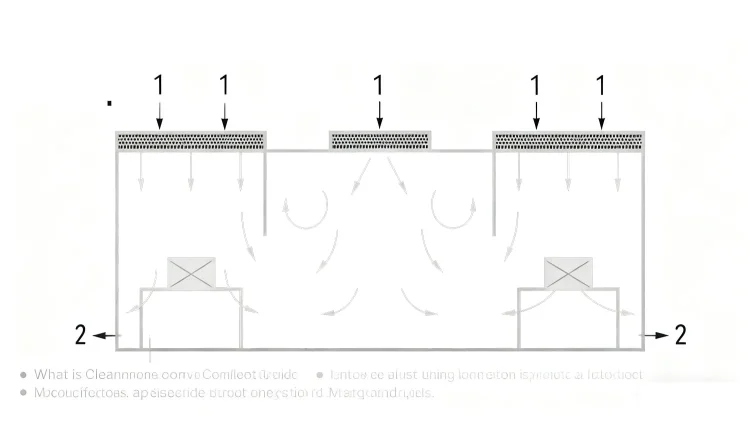
Cleanroom Airflow Basics
What is Cleanroom Airflow?
Cleanroom airflow refers to the controlled movement of air within A CleanRoom environment, specifically designed to remove, dilute, and prevent the introduction of airborne contaminants. Unlike conventional Ventilation systems, cleanroom airflow follows precise engineering principles to maintain particulate-free conditions.
Key Principles of Cleanroom Airflow
Pressure Differential
Cleanroom pressure differential is crucial for contamination control. Positive pressure (typically +0.02 to +0.05 inches water gauge) prevents unfiltered air from entering, while negative pressure contains hazardous materials. For example, a pharmaceutical cleanroom might maintain +0.03" WG relative to adjacent corridors.
air changes Per Hour (ACH)
cleanroom air changes per hour measures how frequently the entire Air volume is replaced. iso class 8 rooms typically require 10-25 ACH, while ISO Class 5 may need 200-400 ACH. The formula is: ACH = (Total Airflow in CFM × 60) / Room Volume in cubic feet.
Pressure Cascade Diagram
Cleanroom Core
+0.05" WG
Corridor
+0.01" WG
Figure: Pressure cascade in a typical Cleanroom design by Deiiang™
Types of Cleanroom Airflow
Understanding different airflow types is essential for proper cleanroom airflow design. The selection depends on cleanliness requirements, processes, and budget constraints. Deiiang™ experts like Jason.peng recommend specific configurations based on application needs.
Effective cleanroom contamination control airflow begins with selecting the right airflow pattern for your specific requirements and industry standards.
Unidirectional Airflow (Laminar Flow)
Cleanroom laminar flow describes air moving in parallel streams at uniform velocity (typically 90±20 fpm). This predictable movement efficiently carries particles away from critical areas.
Applications:
- iso class 3-5 cleanrooms
- Semiconductor manufacturing
- Pharmaceutical sterile operations
- Medical device assembly
Vertical Laminar Flow Pattern
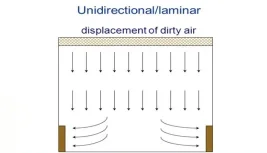
Figure: Vertical laminar flow carries particles downward away from critical zones
Non-Unidirectional Airflow (Turbulent Flow)
Cleanroom turbulent flow relies on dilution principle, where filtered air mixes with room air to gradually reduce contamination levels through high air exchange rates.
Applications:
- ISO Class 6-8 cleanrooms
- Electronics assembly
- Medical packaging
- Research laboratories
Turbulent Flow Mixing Pattern
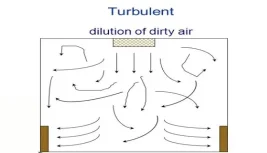
Figure: Turbulent flow mixes and dilutes contaminants throughout the space
Comparison: Unidirectional vs. Non-Unidirectional Airflow
| Parameter | Unidirectional Flow | Non-Unidirectional Flow |
|---|---|---|
| Cleanliness Class | ISO 3-5 | ISO 6-8 |
| Airflow Velocity | 0.45 m/s ±20% (90 fpm) | Variable, based on ACH |
| Air Changes/Hour | 240-600+ | 20-70 |
| Construction Cost | High ($400-800/sq.ft) | Medium ($200-400/sq.ft) |
| Operating Cost | High | Medium |
| Applications | Semiconductor, Pharma sterile | Medical devices, Electronics |
Cleanroom Airflow System Components
A complete cleanroom airflow system comprises several integrated components working together to maintain contamination control. Each element plays a critical role in ensuring proper cleanroom HVAC design principles are implemented effectively.
Deiiang™ engineers like Jason.peng specialize in selecting and integrating these components to create optimized cleanroom airflow solutions for various applications and industries.
Air Handling Units (AHU)
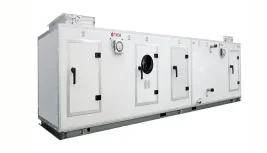
Condition air for temperature, humidity, and pressure control. Typical capacity: 1,000-50,000 CFM.
HEPA/ULPA Filters
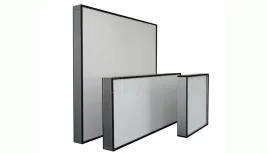
Remove 99.97-99.9995% of particles ≥0.3μm. HEPA: 99.97%, ULPA: 99.9995% efficiency.
Fan Filter Units (FFU)
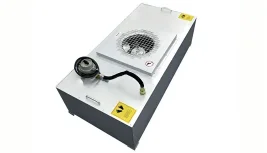
Provide localized laminar flow. Typical size: 2'×4' or 4'×4', velocity: 90 fpm ±20%.
Cleanroom Airflow Process
Cleanroom Airflow Standards & Classification
Compliance with international standards is essential for effective cleanroom airflow management. ISO Cleanroom standards airflow requirements provide the framework for designing, validating, and maintaining cleanroom environments across industries.
Understanding these standards helps ensure that your cleanroom airflow system meets regulatory requirements and performs as expected in critical manufacturing and research applications.
ISO 14644-1 CleanRoom Classification
| ISO Class | Maximum Particles/m³ ≥0.5μm | Recommended Airflow Type | Typical ACH |
|---|---|---|---|
| ISO 1 | 10 | Unidirectional | 500-750 |
| ISO 2 | 100 | Unidirectional | 400-650 |
| ISO 3 | 1,000 | Unidirectional | 300-540 |
| ISO 4 | 10,000 | Unidirectional | 240-480 |
| ISO 5 | 100,000 | Unidirectional | 150-240 |
| ISO 6 | 1,000,000 | Mixed/Non-unidirectional | 70-160 |
| ISO 7 | 10,000,000 | Non-unidirectional | 30-70 |
| iso 8 | 100,000,000 | Non-unidirectional | 10-25 |
Example Calculation: ACH for iso 7 cleanroom
For a 20' × 30' × 10' cleanroom (6,000 cubic feet) targeting iso class 7:
Required ACH range: 30-70 (from table above)
Using middle value: 50 ACH
Required airflow = (Room Volume × ACH) / 60 = (6,000 × 50) / 60 = 5,000 CFM
This calculation helps determine the appropriate AHU size and ductwork design for effective cleanroom contamination control airflow.
Importance & Benefits of Proper Cleanroom Airflow
Contamination Control
Proper cleanroom airflow removes up to 99.97% of airborne particles, preventing product contamination that could cost millions in recalls or failed batches.
Regulatory Compliance
Meeting ISO cleanroom standards airflow requirements is mandatory for FDA, EMA, and other regulatory approvals in pharmaceutical and medical device industries.
Product Quality
Consistent cleanroom airflow prevents particle deposition on sensitive components, reducing defect rates from 5% to under 0.1% in microelectronics.
Cleanroom airflow design Considerations
Effective cleanroom HVAC design principles require careful consideration of multiple factors to ensure optimal performance and efficiency. Deiiang™ design approach, led by experts like Jason.peng, integrates these considerations from the initial planning stages.
Proper implementation of cleanroom airflow design principles can reduce operating costs by 15-30% while maintaining or improving contamination control performance.
Layout & Equipment Placement
Equipment positioning affects airflow patterns. For example, placing tall equipment parallel to airflow direction minimizes turbulence in unidirectional flow cleanrooms.
CFD Simulation
Computational Fluid Dynamics modeling predicts airflow behavior before construction, identifying potential dead zones or turbulence areas for optimization.
Energy Efficiency
Variable frequency drives, heat recovery systems, and optimized ACH can reduce energy consumption by 25-40% while maintaining cleanliness.
Common Challenges & Troubleshooting
Frequent Cleanroom Airflow Issues
Pressure Differential Problems
Causes: Door openings, filter loading, AHU performance
Solutions: Adjust supply/exhaust balance, replace filters, seal leaks
Filter Issues
Causes: Particulate loading, damage, improper installation
Solutions: Regular monitoring, replacement every 3-5 years, proper sealing
Airflow Uniformity
Causes: Poor diffuser design, obstructions, improper balancing
Solutions: Redesign distribution, remove obstacles, rebalance system
Conclusion
Understanding cleanroom airflow is fundamental to designing, operating, and maintaining effective contamination-controlled environments. From basic principles of cleanroom pressure differential and cleanroom air changes per hour to advanced concepts of cleanroom laminar flow and cleanroom turbulent flow, each aspect contributes to overall performance.
As technology advances, cleanroom airflow systems continue to evolve with smarter controls, improved energy efficiency, and enhanced monitoring capabilities. Deiiang™ remains at the forefront of these developments, providing cutting-edge solutions for various industries.
Ready to optimize your cleanroom airflow? Contact Deiiang™ today for a comprehensive assessment of your cleanroom needs. Our team, including product designer Jason.peng, will help you design, implement, or upgrade your cleanroom airflow system for optimal performance and compliance.
Related content recommendations:
Frequently Asked Questions
Q: Why do cleanrooms need positive pressure?
A: Positive pressure prevents unfiltered air from entering when doors are opened or through small leaks. This is essential for maintaining cleanliness levels and is a key aspect of cleanroom pressure differential management.
Q: What is the typical airflow velocity in unidirectional flow cleanrooms?
A: For vertical unidirectional flow, the typical velocity is 0.45 m/s ±20% (90 fpm ±20%). Horizontal flow may have slightly different requirements based on specific applications and ISO cleanroom standards airflow guidelines.
Q: How often should CleanRoom airflow patterns be verified?
A: iso 14644-2 recommends airflow visualization and velocity tests every 12 months, with more frequent checks (3-6 months) for critical applications. Continuous monitoring of cleanroom airflow parameters is becoming increasingly common.