+86 18186671616
 Jason@cleanroomequips.com


 MENU

Just because a fan is running, and the sash is down doesn't mean you have a safe fume hood. Many myths and misconceptions regarding Fume Hoods can lead to false assurance and higher chances of exposure if the airflow, maintenance, and proper use are overlooked. So, are fume hoods safe? When properly chosen, installed, tested, and used, they can provide really valuable protection against airborne chemICal hazards. Here are seven common fume hood myths debunked so laboratory teams can understand their limitations and use them more safely.
The Current State of Lab Ventilation
In every college laboratory or pharmaceutical quality control division, you can see the series of fume hoods attACHed to the wall. The devices look sturdy. The motors are functioning. The curtains are moving up and down. Most laboratory administrators think that purchasing the device solves any issue regarding fume hood security, but it is not the case.
Having worked on more than a thousand ventilation projects, I can tell that the gap between installing the fume hood and having it fulfill its purpose is from where the safety accidents come from. Fume Hoods are known for being the safety measure of last resort and therefore should not be viewed as infallible safety features. The ANSI/ASSP Z9.5-2022 specifies that a fume hood works only as a part of a larger system. The presence of the fume hood is meaningless if all other components of the system are disregarded [1]. It has been reported in SEFA 2023 industry survey that 32% of functional fume hoods have failed ASHRAE 110 industrial testing because people did not operate them properly and not because of the problems with the equipment itself [3].
It should be noted that the article discusses only chemical fumes and nothing else such as biosafety cabinets, Laminar Flow Cabinets, or regular storage cabinets.
7 Fume Hood Myths against Engineering Reality
"If there is a running fan, everything is fine."
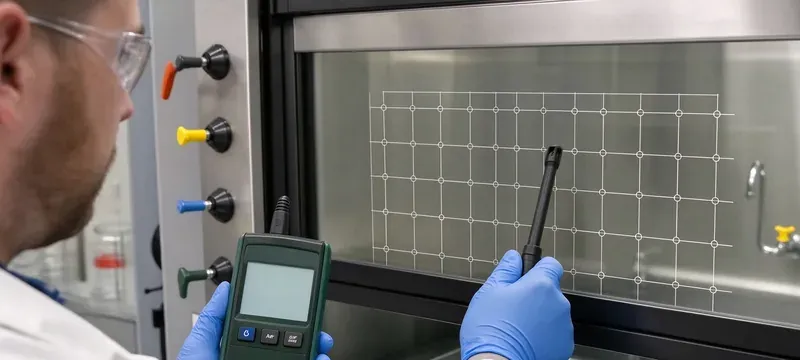
The face velocity is the only value that matters in this case. According to ANSI/ASHRAE 110-2016, a fume hood must have an average face velocity between 80–120 fpm (0.4–0.6 m/s), and no single point should drift by more than ±20% from this value [2]. That is to say, a fume hood operating at 55 fpm because of a malfunctioning damper is still on and its operation causes chemical fumes to be spread into the air.
"I can put any chemicals inside the fume hood."
Blocking the rear baffle openings with stacked containers and apparatus means the uniform flow of air is disrupted. According to SEFA 1-2023, the clutter creates dead spots where vapors accumulate [3]. Also, experts stress the importance of material compatibility: concentrated HCl severely corrode stainless steel 304, while trace metal laboratories ought to have their interiors made from polypropylene rather than stainless steel.
If you enter the laboratory of any university right after the semester ends, you will observe the fume hood filled with containers that are stacked almost to one's chest level. The limp solvent smell lingering about is hardly connected to such cluttered situations.
"If the sash is shut, I am entirely protected."
Although closing the sash can be helpful, steam entering the breathing zone can result from drafts coming from air supply outlets, door open/closing and one's arm movement. The peer-reviewed tracer gas test demonstrated that SF6 leakage occurred at 60 fpm while the air conditioning was on and made 1,326 ppb which was equivalent to an instant failure of delimitation. Under these conditions and air velocity reaching 100 fpm, the loss was only 2 ppb [4]. This gives a ratio of leakage that is equal to a 660-times difference due to the operation of air ventilation system.
This is the first cause of the failures of ventilation systems that are invisible to operators since they believe that the sash is an obstacle for fumes while they come out rather at the chest level and go unnoticed by people as they fail to see and smell fume.
"VAVs are always better than CAVs."
Although VAVs save energy, early designs of this type of equipment had one serious problem: during closed sash, the minimum inhalation rate of the air was too low to eliminate the vapor inside the hood. At the oil exploration laboratory project we observed, the VAV hood showed 100 fpm on the display but the stainless steel equipment inside went rust-red in two weeks. The core issue was discovered: on a closed-sash exhaust position, it was working only with 49 CFM (~1 air change per minute). The situation was solved instantly by opening a 4-inch bypass.
VAV is a great invention if it is designed properly. However, we found out that about 30% of VAV updates did not have a minimum-flow setpoint in their contract.
| Parameter | CAV | VAV |
|---|---|---|
| Airflow at full sash open | ~100 fpm | ~100 fpm (constant) |
| Efficiency for closed sash | ~480 CFM | ~150–200 CFM |
| Power consumption (annual) | ~$3,200 per year | ~$2,100 per year (or $1,500 if heat recovery is utilized) |
| Price | Lower | Higher (controller + damper + sensor) |
| Relative disadvantage | Energy wastage; bursts of speed | Damper drifting; minimum flow corrosion |
Full-open velocity: Both ~100 fpm
Closed-sash exhaust: CAV ~480 CFM / VAV ~150–200 CFM
Annual cost: CAV ~$3,200 / VAV ~$2,100
VAV risk: damper drifting; minimum flow corrosion
"Testing fume hoods is not necessary."
Fume hood can lose its performance. In some cases, clogging of the duct, breakage of the belt or jamming of the damper take place, resulting in loss of performance at the laboratory. The inspection at Al-Nahrain University showed that plastic bags and dead birds jammed the exhaust duct [6]. According to the regulations of OSHA 29 CFR 1910.1450, the performance should be verified every year. To establish blockage of the duct, the unity and velocity of the flow are not enough; this explains the presence of the whole test system ASHRAE 110.
"Higher face velocity means better containment."
The airflow velocity rate of above 120 feet per minute causes the appearance of turbulence, which brings back contaminated air towards the operator. The range of airflow velocity from 80 to 100 feet per minute has existed for many years because, below 60 feet per minute, there isn't any effective protection against harmful chemical substances, whereas more than 120 feet per minute uses excessive energy for disruption of contaminated air.
Only below 80 feet per minute, one cannot put into operation an active airflow curtain, while the situation above 120 feet per minute leads to the separation of air flow and to the appearance of other harmful effects in the work of the fume hood.
One cannot simply put a more powerful ventilator. We had customers using 150 feet per minute and finding themselves in an even worse situation in terms of fume hood efficiency.
"The alarm has never gone off, so everything is working properly."
This means that a recertification should include an alarm function test and not only a velocity test. Since sensor drift is so common, it is recommended that the sensor calibration occurs every 12 months even if the alarm remains green.
The Additional Myth: The Typical Category Error of Most Labs
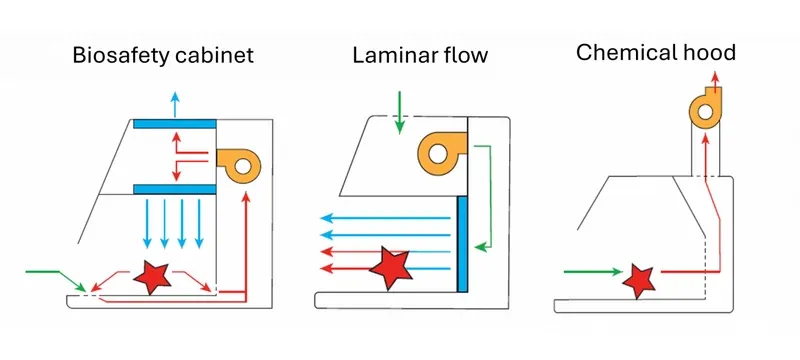
"A fume hood and a biosafety cabinet refer to the same thing."
The most prevalent and dangerous error concerning categories encountered during the inspections of different buildings.
Fume hoods are used to expel fumes from the workplace protecting the personnel and do not purify any gases thus being unable to protect from the contamination of any samples.
Biosafety cabinets purify the incoming air using HEPA filters thus protecting the operator and the sample from all biological aerosols through recirculating the filtered air in the lab atmosphere. If the BSC is used for working with volatile chemicals, the air will saturate the filter thereby releasing the vapors back into the atmosphere.
Jason's Field Note — What Technical Data Sheets Do Not Reveal
Having worked on lab commissioning for 15 years across Australia, Southeast Asia, and the Middle East, the results have always been the same: the fume hood works perfectly, what does not work is the system surrounding it.
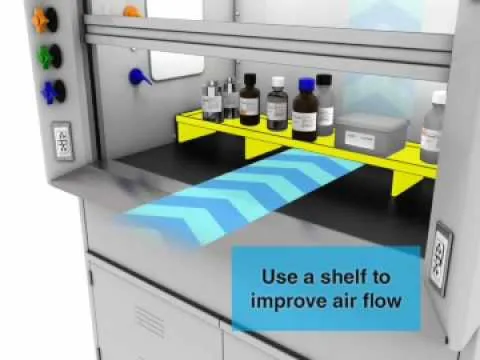
I have seen new hoods with all proper face velocity in laboratories where supply-air diffuser is very far from the fume hood and directs air at the sash. The installer didn't even know as no one asked him to carry out room air balance during TAB.
I have even seen 20-year-old hoods in a pharma laboratory in Singapore with passing ASHRAE 110 tests every year because the facilities crew is caring for them.
The discussion here revolves around the idea of ventilation as a living thing rather than equipment.
Do Fume Hoods Work? The Physics of Fume Hoods
It cannot be stated that fume hoods alone are "safe." They are an important component of a pressure chain which involves the supply air handler, the exhaust fan, the duct riser, a stack on the roof, and the pressure hierarchy in the laboratory. Fume hoods will work only when the whole system functions properly, and whenever there is a flaw in this chain, the air flow is irrelevant regardless of the CFM mentioned in the manual.
| What protects you | What defeats containment |
|---|---|
| Stable face velocity 80–100 fpm, proven quarterly | Face velocity at 55 fpm as a result of damper drift |
| Negative airflow in the laboratory (relative to corridor) | Positive airflow in the laboratory eliminates fumes outward |
| Airflow is introduced using ceiling diFFUsers positioned away from the fume hood | Ceiling diffusers positioned opposite the fume hood |
| Slots and ventilation space are kept clutter-free, nothing obstructing airflow | Company instruments and tubes blocking the slots |
| The height of the exhaust stack is ≥ 2 m above the roof and avoided from the incoming source air | The stack should be located within the same roof chase with the supply air duct |
| Annual tests conducted using the ASHRAE 110 technique | "We installed it in 2019 and haven't checked since." |
Stable 80–100 fpm · Lab negative pressure · Diffusers away from hood · Clear baffles · Proper stack separation · Annual ASHRAE 110 test
Velocity at 55 fpm · Positive lab pressure · Cross-draft diffusers · Blocked baffle slots · Re-entrainment at roof · No testing schedule
What is the best measurement of exhaust CFM?
It is common for chemical laboratories to operate between 6 and 10 ACH with 100% outside air according to ANSI Z9.5 standards [1]. For ventilation purpose, ACH can reduce to about 4. NFPA 45 regulations state that the minimum amount of CFM should be 25 for each square foot of surface area [8]. Hence, with the horizontal space of 5 feet, the hood must have an initial CFM of approximately 450.
People typically forget to think about the most important parameters: internal air change rate. For acidifier hoods, the optimal value is approximately 5.
Pre-Use Fume Hood Checklist
Make sure to print this checklist and keep it on the side of the fume hood. This is only 60 seconds every morning and covers most of the problems that you may experience.
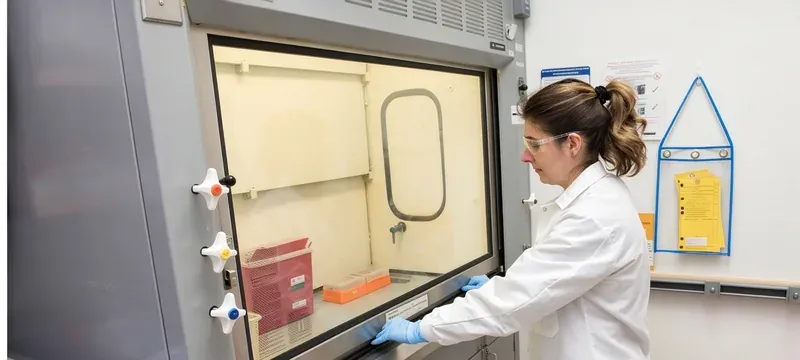
The Simplified Test (No Instruments Required)
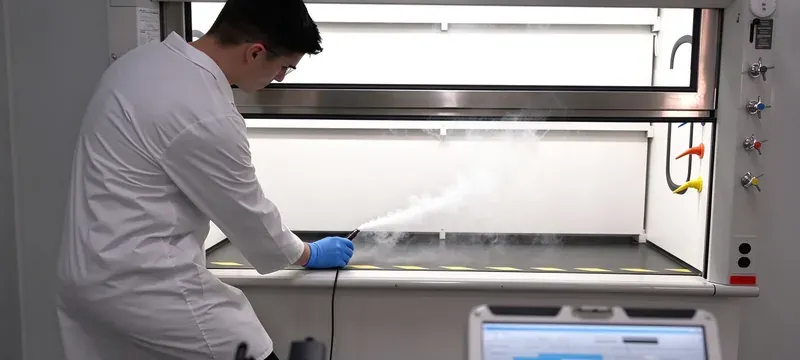
You do not need any sophisticated equipment to verify the loss of containment. The test should be performed on a weekly basis:
Procurement Mistakes I Keep Encountering During Every Third Project
These are common problems that we have encountered in the field and that we've had to fix after the contractor quit.
| Mistake Number | What can go wrong | How to fix it |
|---|---|---|
| Would otherwise have bought by CFM specification | The value of "600 CFM" provided by vendor is not clear under which conditions the reading was reported. Actual results show a 30% drop in the value. Several companies sweep under the rug the fact that their "high airflow" rates were registered at zero pressure indication. | Make sure to check the requirements for ASHRAE 110 certification tests that reflect actual sash height and hood size specifications. |
| Undersized exhaust fan | Engineer picks the fan assuming clean ductwork and after filtering for 2 years, high static pressure leads to face velocity dropping below 80 fpm. | Specify fan horsepower rating with a 25% safety factor. You may also use VAV with constant pressure mode. |
| Using stainless steel liner everywhere | Client ends up spending a fortune to have their general teaching laboratory with ethanol and acetone lined with 316 stainless steel. Money wasted, and it still gets corroded when HCl is spilled. Salespeople assure them that they need to upgrade to 316SS regardless of the need. | Use the liner material depending on your chemicals at hand. Use PP for acids production, phenolic for general use, and 316SS only for perchloric / radioactive work. |
| No minimum flow setpoint on VAV | Contractor chooses VAV for complete shutdown at fully closed sash. air changes inside the fume hood are reduced down to 1 ACPM. Acid vapor evaporates on the interior surfaces. Corrosion starts to take place in a few months. | It should be stated in the specification that airflow should not be less than 5 ACPM with closed sash. Not merely so-called "minimum face velocity at sash." |
| The positioning of the roof stack was disregarded | Architect mixed the exhaust stack with the fresh-air inlet in the same roof chase surrounded by fumes. The face velocity is observed to be alright, but the whole laboratory is infused with chemical odor. | Check the roof layout in the design stage. The stack must exceed 2 m over the roof surface and be placed at least 6 m away from the air inlet. Wind tunnel test recommended for high-rise buildings. |
| "We will check it during the commissioning stage." | Commissioning comes before the installation of lab furniture. After the furniture is installed, the airflow will vary because of the new direction of the aisles created in the laboratory. There will be no re-check at any point. | It has to be stipulated that post-occupancy ASHRAE 110 field testing will happen 3 months after the move-in. The only important indicator is that one given in reality. |
Vendor's "600 CFM" measured at zero static pressure. Real performance drops 30%. Fix: require ASHRAE 110 report for exact hood width and sash height.
Fan sized for clean ducts → velocity drops after 2 years. Fix: 25% static pressure safety margin, or VAV pressure-independent controls.
Wasted value on 316SS for testing purposes in ethanol and acetone laboratories. Use PP as cover for acids and only use 316SS when working with perchloric as well as radioisotope.
Fully Closed-sash exhaust has infringe too low to cause acid corrosion; specification states the presence of a minimum of 5 ACPM with fully closed sash instead of using only the minimum face velocity.
Intake as well as stack on the same roof chase, causing the fumes to be reused; solution is to keep the height up at least 2 meters above roof while having a minimum separation of 6 meters from the intake.
Commissioning while empty and the failure comes with the arrival of the furniture; solution is making the requirement of ASHRAE 110 retesting within three months after the moving.
Field Performance Evaluation: Real Examples from Practice
Case 1: Australian National University — Chemistry Teaching Lab Retrofit
Country/client: Australia — Australian National University (ANU), Research School of Chemistry, Canberra.
Project requirement: Bring 12 out-of-date bench fume hoods back to compliance with Australian WHS directives and ANSI/ASSP Z9.5 before the beginning of the new academic year. There was a strict deadline of 6 weeks available during the summer break.
Client pain point: Health, Safety and Environment inspection has revealed that face velocity readings show huge discrepancies between the several hoods combinations. The educational staff mentioned that vapors are present with certain lab experiments involving refluxing and acid digestion. The university was not able to implement complete ducting overhaul as the building was considered a heritage site.
Solution offered: Deiiang VAV retrofit option (series DZ-VC-06) was selected - frame hoods remain in place and current sensors installations will be equipped with VAV reheat boxes and digital controllers displaying sash position.
Acceptance and verification: After the testing, all 12 units were able to pass SF6 tracer gas testing at a level of 0.02 parts per million (the cutoff level being 0.10 ppm). That's a face velocity average of 84.7 feet per minute.

Some necessary numbers shown in the study are taken from on-site commissioning test records performed at Deiiang. Full report available on request.
Case 2: Stanford University — Cross-Draft Containment Remediation
Country / client: United States — Stanford University, Department of Chemistry.
Project requirements: Perform necessary work to remove the possibility of ongoing containment failures in a 20-fume-hood lab wing. The staff has been complaining about the smells coming from solvents through the fume hoods while being sure that the fume hood has nominal face velocity.
Client pain point: The fume hoods were reported to have been rebuilt 18 months prior which included installing new VAV hoods; the internal EHS could not produce any data to explain the odor complaints since every fume hood is consistently having rates of 90–100 fpm on its face velocity gauge.
Chosen options: Air balance adjustments and moving supply diffusers. Hood not switched out. Applied deflectors to the installation of grilles and re-balanced the pressure cascade of the laboratory.
Our solution: ASHRAE 110 testing showed the problems. The slots of diffusers opposite the hood were blowing air through the sash opening. The SF6 leaks reached 187 ppb, surpassing the 100 ppb allowed threshold. We moved the diffusers to the aisle side of the laboratory, adjusted the VAV and achieved 0.03 in w.g. pressure of the room relative to the corridor.
Results: After the implementation, SF6 readings of the hoods dropped down to the level of 3.8 ppb with supply air on, passing ANSI standards — a 98% reduction.
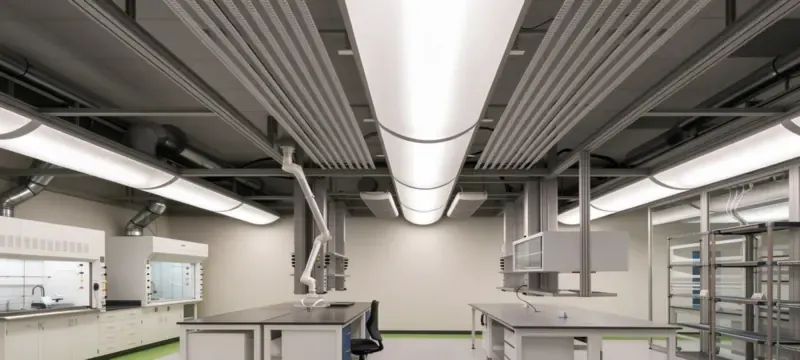
Case 3: Roof Re-Entrainment — Perchloric Acid Hood, New Construction
A new building with a perchloric hood which passed all velocity tests. However, during SF6 tests the mannequin showed rise in SF6 concentration in the neighbouring laboratories.
At first, we checked the roof where the architect had installed a metal curtain at the ventilating hole. The perchloric exhauster is located in front of the air-intake, thus taking fumes back into the building's air handling system.
Temporary solution was to switch off the air flow and proceed with the tests, which immediately passed. Permanent solution: the intake has been moved to a different roof area, six meters away from the exhaust. This is exactly the purpose of ASHRAE 110 field tests — one would never find out about this by only measuring face velocity.
Need fume hood performance assessment or upgrade?
We provide commissioning in accordance with SEFA 1 / EN 14175 / ASHRAE 110 standards worldwide. Contact us for a quote.
Special Application Notes
Standard hood rules do not apply to all hoods equally. Important issues for the most frequent special usages are:
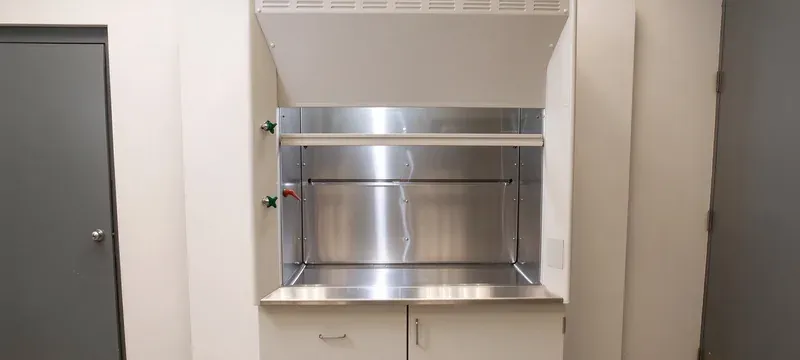
- Perchloric hoods: A welded 316SS lining, water-washdown system, and separate ducting are required. Using a standard hood made of stainless steel is unsafe when handling perchloric acid as the crystals may accumulate and explode.
- Ductless (filtered) hoods: Apply to a limited group of organic solvents only. Carbon filters can significantly wear off with time. The hoods are not made to operate with acids, mercury, and unknown mixtures.
- Walk-in / floor-mounted hoods: Installation of inner equipment has a much larger influence on airflow pattern. Big equipment may create wake and dead areas. Always do tracer gas tests with real inner equipment installed.
- Radioactive hoods: Both special seals and scrubbers are required. General purpose hoods are not designed to be used with radioactive substances.
Regional Standards Reference
Face velocity and testing requirements are different depending on regions. If you work across various regions, keep this in mind:
| Region | Standard | Face Velocity Range | Primary Test Method |
|---|---|---|---|
| North America | ANSI/ASSP Z9.5, SEFA 1 | 80–120 fpm | ASHRAE 110 (SF6 tracer gas at mannequin breathing zone) |
| European union | EN 14175-3 | 60–100 fpm (0.3–0.5 m/s) | EN 14175 (tracer gas + cabinet pressure leakage test) |
| China | GB/T 20819-2007 | 0.4–0.6 m/s (~80–120 fpm) | GB/T 20819 (face velocity + smoke visualization) |
ANSI/ASSP Z9.5, SEFA 1 · 80–120 fpm · ASHRAE 110
EN 14175-3 · 60–100 fpm · Tracer gas + pressure leakage test
GB/T 20819-2007 · 0.4–0.6 m/s · Face velocity + smoke visualization
The key difference: EN 14175 has been included in the positive pressure leakage tests conducted for cabinets while ASHRAE 110 does not require it, which means EN 14175 has set a much higher standard with regards to seal quality and construction tolerances of the cabinets.
FAQ: Questions on Safety of Fume Hoods
Are fume hoods safe in case of an alarm?
No. When the fume hood alarm goes off, it means it has crossed its maximum allowed safety limit. Therefore, all work has to be stopped immediately and it is essential to lower the sash and check what has caused the alarm to go off.
How often should a fume hood be tested?
At least once every year, a complete ASHRAE 110 test should be executed, along with visual and velocity check by lab staff each month. Fume hoods need to get a filter cartridge replacement on schedule, along with regular challenge tests.
Are Ductless Fume Hoods comparably safe to ducted fume hoods?
Ductless hoods/fume hoods can only provide protection from particular chemicals or vapors — until the carbon filter saturates and fails. For the mixed or unknown chemistry, ducted fume hoods that exhaust air outside are better. Ductless hoods need periodic filter replacements and challenge tests.
What is the essential aspect regarding containment?
The air balance and movement is the key to containment rather than fume hoods themselves. The research proves that the moment a supply air diffuser located just next to the fume hood is turned on, containment might suffer even if the fume hood has high face velocity. Thus, selecting laboratory devices with a proper diffuser design and a laboratory pressure is crucial to get the right results.
How many air exchanges per hour (ACH) are recommended for laboratories?
Standard chemistry laboratories should have 6-10 ACH (operating) with complete use of outside air and 4 ACH will suffice for unoccupied demand controlled air, according to ANSI Z9.5. Laboratories with hazardous processes (radioactive elements, perchloric acid, handling nanoparticles) should have 12-15 ACH. The risk assessment should be performed in order to comply with OSHA laboratory regulation.
Future of Industry — Outlook 2026
I can see three trends from the experiences we got from Europe, Australia and Southeast Asia during the last two years:
1. Low-flow VAV became the standard rather than an option. Five years ago customers were asking for it but were complaining about high price of the controller. Nowadays the energy codes in California, the EU EPBD Directive and Australian NCC 2022 made it a must. The hood has ceased to be an expensive piece of equipment now that controls together with commissioning services become much more costly.
2. Verification after moving in has finally caught up with the design verification. For years it has been only assumed that testing of fume hoods was limited to installation and considered complete. The information gained from PMC research suggests that while the form of the fume hood matters little in terms of containment, the air circulation in the room does. Smart laboratory programs will demand ASHRAE 110 testing three months after the hood is put in operation.
3. The popularity of ductless / filtered fume cupboards is increasing, but they should not be seen as a replacement. The advertising claims that "there is no ductwork, no elimination of hazardous substances, and security is the same," while in reality ductless hoods can only work with specific solvents and for a certain period of time, i.e., until the carbon filter has been exhausted. We have knowledge about situations when clients bought 20 ductless hoods with the aim of getting rid of ductwork only to find out they had to purchase new filters every three months, while still being unable to carry out acid operation. They are a solution for certain cases rather than being a universal one.
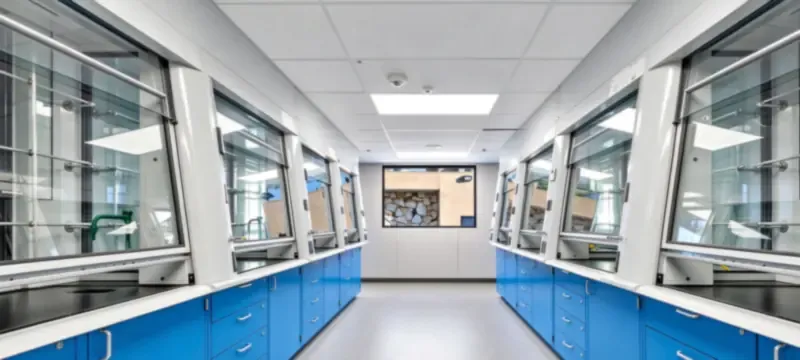
What I think: the next stage of laboratory safety is not related to enhancing the hood only but to seeing the lab as a whole system in terms of air movement — hood, air handling unit (AHU), exhaust fan, and pressure inside the room. The hood is something you can see, while the other three components are invisible.
References
- ANSI/ASSP Z9.5-2022, Laboratory Ventilation. American Society of Safety Professionals.
- ANSI/ASHRAE 110-2016, Methods of Testing Performance of Laboratory Fume Hoods. ASHRAE.
- SEFA 1-2023, Laboratory Fume Hoods — Recommended Practices. Scientific Equipment and Furniture Association.
- Heitbrink W.A. et al., Evaluation of Leakage from Fume Hoods Using the Tracer Gas Method, Tracer Particle Methodology, and Method of Calculating Nanoparticles' Movement.
- University of Illinois iCAP Program. "Fume Hoods Conversion from CAV to VAV" (energy model data).
- Al-Nahrain University. "Maintenance and Testing of Fume Cupboard." Journal of Biosciences and Medicines.
- University of Pennsylvania EHRS. Fume Hood and Exhaust System Specifications.
- NFPA 45. Standard for Fire Safety for Laboratories Using Chemicals.
- ASHRAE Handbook — HVAC Applications, Chapter 16, Laboratory System.
- iso 14644-1:2015, "clean rooms and related controlled environments."
- CDC / NIH BMBL — Biosafety in Microbiological and Biomedical Laboratories.
- GB/T 20819-2007, 通风柜安全与性能要求 (Chinese national standard).
- GB 50346-2011, 生物安全实验室建筑技术规范 (Chinese national standard).
Deiiang produces laboratory fume hoods and solutions for construction of cleanrooms. Our engineering team supports full lifecycle delivery: from initial layout and CFD airflow simulation to on-site commissioning, TAB testing, and long-term maintenance contracts. Contact: Jason Peng — Jason.peng@deiiang.com