+86 13638632902
 Jason@cleanroomequips.com


 MENU
MENU
No single device fulfils all four objectives. This article covers the fume hood vs BSC difference, the fume hood vs laminar flow distinction, and the glove box vs fume hood decision for high-containment work.
It ends with engineering specifications, cost logic, a Deiiang case study and a matrix for choosing between operator, sample and environment protection. For most buyers the fume hood vs BSC question is the first fork in the road.
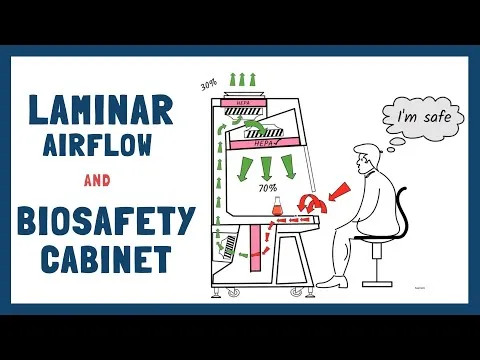
Protecting People and Products Understanding Containment
These devices matter because laboratories handle materials that are unsafe for people, damage samples or contaminate rooms. Whether you are weighing the fume hood vs BSC question or the fume hood vs laminar flow question, eACH device protects one particular object. The glove box vs fume hood decision appears only once dilution is no longer an acceptable control.
Risk assessment begins with two questions: is the material chemical or biological, and how volatile or infectious is it? A solvent evaporating at 500 mL/min needs exhaust; a bacterial culture needs HEPA filtration. The fume hood vs BSC choice follows from whether the hazard is a vapour or a bioaerosol.
Risk reduction is the correct engineering control matched to the exposure route: vapour, aerosol or surface. The fume hood vs laminar flow split comes down to which side of the work the air is protecting.
What Each Device Protects
A fume hood protects the operator and the room by drawing air across the sash and exhausting chemical vapour outside. It gives no product protection, because sterile air is not guarding the work zone.
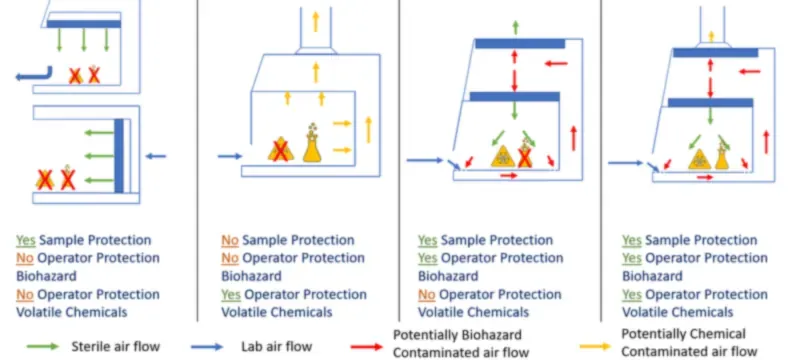
Figure 1: What each device class actually protects - a matrix of 4 cases against Fume hood, BSC, Laminar flow and Glove box.
The matrix compares the four containment devices side by side and shows which protection target each one reaches.
A BSC protects the operator, sample and environment. Class II cabinets HEPA-filter both the downflow and the exhaust air, giving triple protection [1].
A laminar flow hood offers only product safety. HEPA-filtered air is blown over the work surface, but hazardous substances are neither contained nor vented.
A glove box provides total isolation. It separates the material from its surroundings and keeps the user away from the substance.
Hazard Classes and Risk Assessment
Chemical hazards are defined by volatility, toxicity and exposure level. Materials with a low occupational exposure limit and high vapour pressure at room temperature require a fume hood.
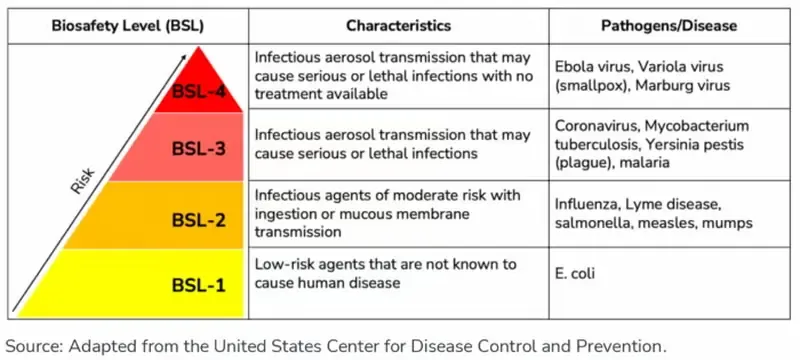
Figure 2: Containment tiers, from particle control to total isolation - 4 stacked stages (Tier 4 · Total isolation, Tier 3 · Biological containment, Tier 2 · Chemical fume control and Tier 1 · Particle control only), each listing the elements that belong to it.
The pyramid maps four tiers of materials to the containment device each tier requires.
Biological hazards follow biosafety levels. BSL-2 work with infectious agents requires a Class II BSC; BSL-3 requires BSC or glove box isolation.
Risk assessment standards require documented evaluation of material properties before equipment selection. An OEL of 0.01 mg/m³ behaves differently from one of 10 mg/m³ [9].
Fume Hood vs BSC Distinguishing Chemical and Biological Safety

The fume hood vs BSC comparison confuses people because both look alike. In practice, both are ventilated enclosures but work in different ways.
A fume hood vents chemical vapour to the environment [3], while the BSC filters biological air [1]. The two systems cannot be interchanged. The fume hood vs BSC trade-off is ultimately a question of exhaust against filtration.
Using a BSC for flammable solvent work concentrates vapour and can lead to ignition. Using a fume hood for infectious agents releases viable particles into the stack. The fume hood vs BSC boundary is also a regulatory one, because the two device classes sit under different standards.
Operational Differences
Fume hoods take air through the sash at roughly 0.5 m/s and send it into the exhaust duct. No HEPA filter is needed in that airflow path.
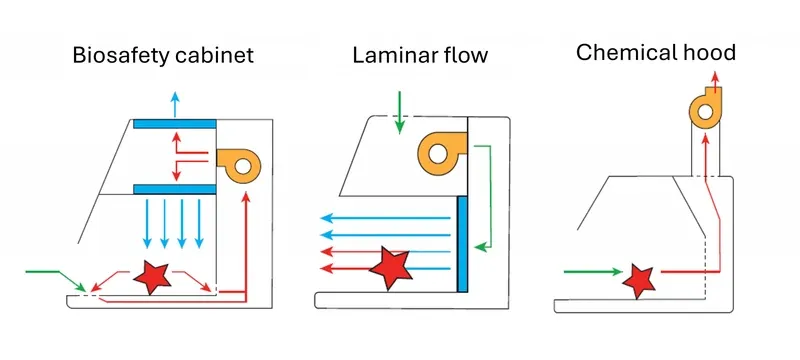
Figure 3: Air path: fume hood versus biological safety cabinet.
The diagram traces room air entering the fume hood sash and leaving by duct, against the BSC's front intake, HEPA downflow and filtered exhaust.
Table 1: Fume Hood vs BSC Operational Comparison
| Feature | Fume Hood | BSC (Class II) |
|---|---|---|
| Protection target | Operator and room | Operator, product, environment |
| Airflow direction | Room to sash to exhaust | Front intake to HEPA downflow to filtered exhaust |
| Filtration | None, or carbon for ductless | HEPA H13/H14 on downflow and exhaust |
| Exhaust destination | Building exhaust stack | Room or outside, HEPA-filtered |
| Chemical suitability | Yes, primary duty | Limited, risk-assessed only |
| Biological suitability | No | Yes, primary duty |
| Feature | Fume Hood | BSC (Class II) |
|---|---|---|
| Protection target | Operator and room | Operator, product, environment |
| Airflow direction | Room to sash to exhaust | Front intake to HEPA downflow |
| Filtration | None, or carbon | HEPA H13/H14 |
| Exhaust destination | Building stack | Room or outside, HEPA-filtered |
| Chemical suitability | Yes, primary duty | Limited, risk-assessed |
| Biological suitability | No | Yes, primary duty |
The BSC draws air in at the front inlet, HEPA-filters it, and sends sterile downflow to the work zone. Class II A2 recirculates about 70% and exhausts about 30% through HEPA [1].
The result is evident. A fume hood cannot keep a product sterile, and a BSC cannot contain a dangerous chemical agent effectively.
Standards and Applications
In Europe, fume hoods are regulated by EN 14175 [3] and assessed for containment through ASHRAE 110 [4]. In North America, laboratory fume hoods are covered by SEFA 1 [5].
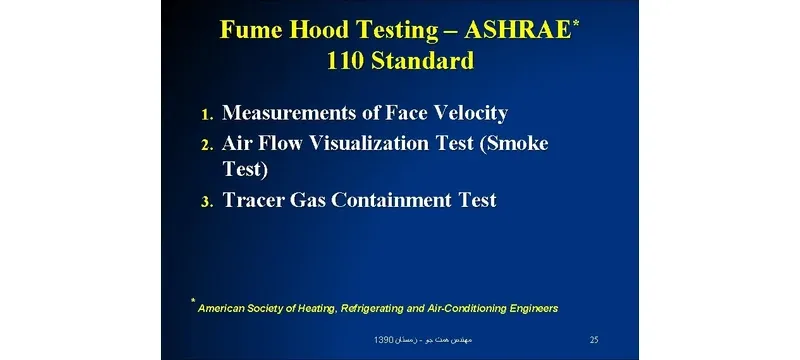
Figure 4: Standards that decide the choice - a hub diagram of the 6 factors involved: NSF/ANSI 49, EN 12469, EN 14175, ASHRAE 110, SEFA 1 / 9 and iso 14644-1.
The hub diagram groups the six standards that decide the choice and states what each one covers, from NSF/ANSI 49 for biosafety cabinets to ISO 14644-1 for air cleanliness class.
BSCs conform to NSF/ANSI 49 in North America [1] and EN 12469 in Europe [2]. The Class II A2 type is implemented under both standards.
Application mapping is straightforward. Chemistry labs use fume hoods; microbiology and cell-culture labs use BSCs; a BSL-2 facility depends on the BSC, not the fume hood.
Fume Hood vs Laminar Flow Contamination Control
The fume hood vs laminar flow comparison relies on one principle. The fume hood protects people from the material; the laminar flow hood protects the material from people.
A clean bench pushes HEPA-filtered air over the working area in one direction. A fume hood takes contaminated air away and expels it outside. In the fume hood vs laminar flow comparison the direction of the air path decides the outcome.
These operations are mutually exclusive. A laminar hood must never be used with hazardous or volatile substances, because it recirculates contaminated air into the operator's area. Within the fume hood vs laminar flow decision, filter type is secondary to airflow direction.
Airflow and Purpose
In a vertical laminar flow hood, HEPA-filtered air flows down from the top to the working surface and exits at the bottom. In a horizontal hood, air is filtered from the back forward. A buyer who understands the fume hood vs laminar flow split is already halfway to understanding the fume hood vs BSC one.
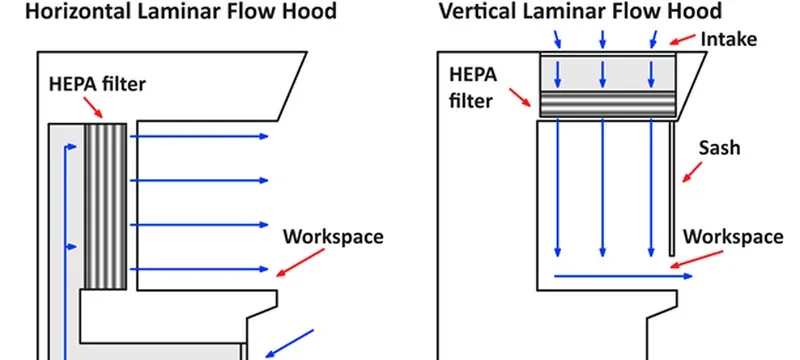
Figure 5: Air path: laminar flow hood versus fume hood.
One device introduces clean air to the sample; the other removes contaminated air from the operator's environment. The two cannot substitute for each other.
The fume hood reverses the clean-bench logic. Air enters from the front, sweeps the work surface and exits through a rear baffle into the exhaust channel.
The purpose is totally different. Laminar flow protects the sample; the fume hood protects the people handling harmful substances or gases.
Deiiang Solutions and Cleanroom Integration
Deiiang Cleanroom Technology Co., Ltd. builds vertical laminar flow hoods in 4 ft, 5 ft and 7 ft types. Catalogue airflow velocity is 0.3–0.5 m/s, with HEPA H14 (EN 1822) capturing ≥99.995% of particles ≥0.3 μm [6].

Figure 6: Deiiang laminar-flow cabinet range - 5 rows compared by value and note: 4 ft vertical, 5 ft vertical, 7 ft vertical, Horizontal hood and Clean bench / pass box.
The comparison sets the 4 ft, 5 ft and 7 ft vertical cabinets against the horizontal hood and the clean bench, with filter grade, face velocity and working width in one view.
Horizontal laminar flow hoods use the same filtration principle with a front-to-back path, typically delivering class 100 / iso 5 conditions when the room is reasonably clean [7].
Jason.peng’s Tip: keep a laminar flow hood at least 1.5 m from doors and walking paths. Air disturbance at walking positions is the main cause of contamination in clean-bench areas.
Table 2: Deiiang Vertical and Horizontal Laminar Flow Specifications (Catalogue Data)
| Parameter | Vertical (4/5/7 ft) | Horizontal |
|---|---|---|
| Airflow velocity | 0.3–0.5 m/s adjustable | 0.3–0.5 m/s |
| HEPA standard | H14 (EN 1822), ≥99.995% | H14, ≥99.995% |
| ULPA option | U15 / U16 | U15 / U16 |
| Noise at work position | ≤60 dB(A) | ≤60 dB(A) |
| Supply | 220 V / 50 Hz | 220 V / 50 Hz |
| Parameter | Vertical | Horizontal |
|---|---|---|
| Airflow velocity | 0.3–0.5 m/s | 0.3–0.5 m/s |
| HEPA standard | H14, ≥99.995% | H14, ≥99.995% |
| ULPA option | U15 / U16 | U15 / U16 |
| Noise at work position | ≤60 dB(A) | ≤60 dB(A) |
| Supply | 220 V / 50 Hz | 220 V / 50 Hz |
Glove Box vs Fume Hood High Level Containment
The glove box vs fume hood question arises when the substance is too hazardous, too reactive or too delicate for a fume hood or a BSC.
A fume hood dilutes and exhausts. A glove box completely isolates the contents. Dilution is not enough for pyrophoric substances, air-sensitive chemistry or high-potency APIs; the atmosphere itself must be controlled. In the glove box vs fume hood comparison the deciding variable is the atmosphere, not the airflow.
Enclosure and Pressure Regimes
A glove box is a gas-impermeable enclosure with gloves that lets the operator handle the material. Positive pressure protects the material from outside contamination; negative pressure protects the operator from exposure. The glove box vs fume hood boundary is crossed when the material becomes too toxic or too reactive to dilute.
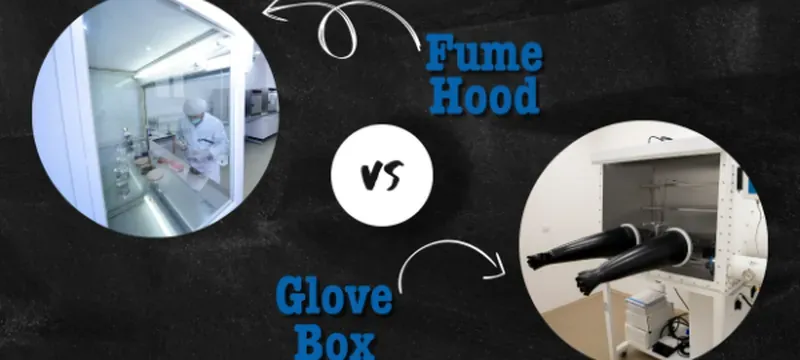
Figure 7: Pressure regime of each device class - 5 rows compared by value and note: Fume hood, BSC Class II A2, BSC Class II B2, BSC Class III and Glove box.
The table lines up all five device classes against their pressure regime, from the fume hood's open sash at negative pressure through to the glove box's sealed chamber at controlled pressure. Where the glove box vs fume hood answer is still open, a documented risk assessment should settle it.
A fume hood works at negative pressure relative to the room, but its sash opening is a deliberate gap. A glove box has no opening, so its integrity is assured within its specifications. The glove box vs fume hood comparison usually ends with the glove box once oxygen and moisture limits enter the specification.
The pressure type decides the failure mode. Under positive pressure a glove box leak releases contents outward; under negative pressure it draws air in.
When to Choose Isolation
Choose a glove box when the substance is pyrophoric, when moisture or oxygen must stay below 1 ppm, when the material is a high-potency API with an OEL below 0.1 μg/m³, or when the work involves radiopharmaceuticals.
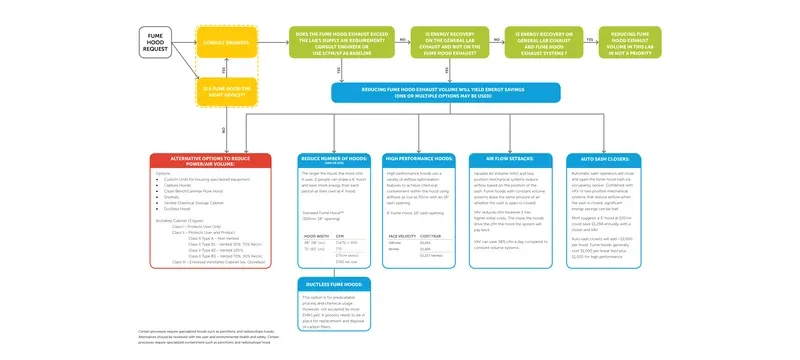
Figure 8: Reaching a glove box: the isolation decision - a 3-step sequence: Is the material chemical or biological?, Must the atmosphere be controlled? and Is the material pyrophoric or oxygen-sensitive?.
The three-step sequence asks whether the hazard is chemical, biological or both; whether the atmosphere must be controlled; and whether the material is pyrophoric or oxygen-sensitive. It ends at one device.
Choose a fume hood when the hazard is a vapour or fume that can be diluted and disposed of safely, and the work surface must stay accessible.
Choose a BSC when the hazard is biological, the sample must not be contaminated, and the work does not need a sealed compartment.
Engineering and Facility Requirements
A ducted fume hood is only as good as the facility around it. Exhaust, make-up air, control dampers and monitoring hardware decide whether face velocity holds near 0.5 m/s or drifts into less safe territory. Facility design changes sharply with the fume hood vs BSC outcome, because only one of the two needs ductwork.
Laboratory ventilation design gives six air changes per hour for wet labs and three for dry labs, with make-up air supplying roughly 90% of exhaust volume [8]. Room air balance is where the fume hood vs laminar flow difference turns into a cost item.
Deiiang supplies the exhaust-side hardware: control dampers, backdraft dampers, CAV valves, silencers, HEPA and carbon filters, differential-pressure transmitters and electric actuators. A glove box vs fume hood choice made early changes the service strategy for the whole room.
HVAC and Air Handling Needs
A ducted fume hood needs dedicated exhaust ductwork, a roof or wall fan, and make-up air sized to replace the exhausted volume without creating cross-draughts at the sash.
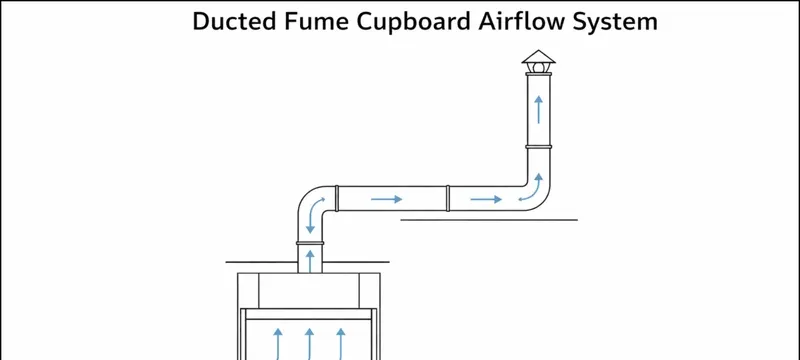
Figure 9: Make-up air and exhaust path of a ducted fume hood - a 5-stage flow: Supply diffuser, Hood sash, Baffle and duct collar, Backdraft damper and Roof exhaust fan.
The flow follows the air from the supply diffuser, through the hood sash, past the baffle and duct collar, through the backdraft damper and out at the roof exhaust fan. Airflow runs clean to dirty.
Total exhaust volume is Q = Vf × Asash. For a 1200 mm hood with Vf = 0.5 m/s and Asash = 0.3 m², Q = 0.5 × 0.3 = 0.15 m³/s, about 540 m³/h.
Six such hoods on a shared fan therefore need more than 3200 m³/h of tempered make-up air.
Deiiang backdraft dampers stop reverse flow when the fan shuts down. Counterweight pressure-relief dampers protect room pressure balance. Rectangular silencers sized under 800 mm on the plane side avoid acoustic guide vanes.
Monitoring and Alarm Systems
Face velocity is the primary safety indicator. A low-velocity alarm must trip before containment falls below the design limit.
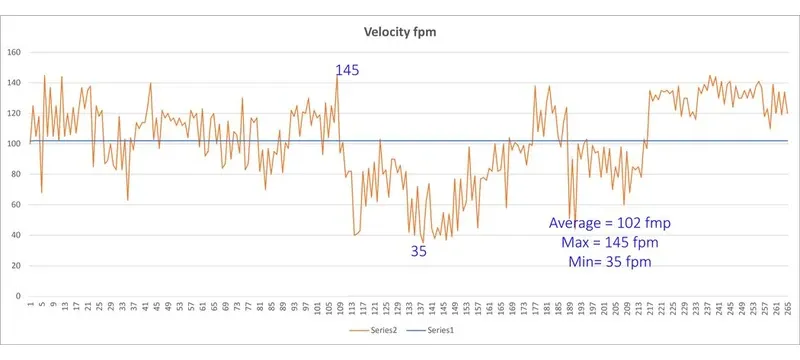
Figure 10: Face velocity held by the CCY11 transmitter and PLC - a chart of Hood branch 1, Hood branch 6 and Alarm threshold 0.40 m/s against Months in service.
The chart follows two hood branches over twelve months of service and plots both against the 0.40 m/s alarm threshold, so filter loading and the subsequent filter change stand out.
The Deiiang CCY11 transmitter uses a piezoresistive silicon chip with a range of -100 to 100 kPa, 0.25% FS accuracy, and 4–20 mA or RS485 output. Analogue response is ≤20 Hz.
Electric damper actuators deliver 30 N.m at AC 220 V in the standard unit, or 250 N.m at DC 24 V in the heavy unit, moving the control dampers on the transmitter signal.
Jason.peng’s Tip: the main cause of false alarms in FFU work is incorrect placement of the pressure measuring tubes. Keep the high-pressure tap at least three duct diameters from any bend.
A SIMATIC S7-200 SMART PLC sequences fan start and stop, damper position and alarm logic, and publishes interlock state to the BMS.
Installation Costs and Procurement
Capital cost is only one number to consider. Installation labour, energy use and filter changes drive the total cost over a ten-year life. Ten-year cost curves diverge as soon as the fume hood vs BSC decision changes the exhaust load.
A ducted fume hood needs ductwork, a fan, make-up air tempering and roof extraction. A ductless hood avoids those costs but adds carbon filter changes. The fume hood vs laminar flow cost gap is driven mostly by make-up air rather than by the cabinet itself.
Table 3: Cost Comparison Summary by Device Class
| Cost component | Ducted fume hood | Ductless fume hood | BSC (Class II) | Laminar flow hood | Glove box |
|---|---|---|---|---|---|
| Purchase price (relative) | High | Medium | High | Low | Very high |
| Installation labour | High (ducting) | Low | Medium | Low | Medium |
| Energy consumption | High (fan and make-up air) | Low | Medium (fan) | Low | Medium (gas system) |
| Maintenance | Medium | Low | Medium | Low | High |
| Filter replacement | Carbon if fitted | Carbon plus optional HEPA | HEPA annual | HEPA periodic | HEPA plus catalyst |
| Cost component | Ducted fume hood | Glove box |
|---|---|---|
| Purchase price (relative) | High | Very high |
| Installation labour | High (ducting) | Medium |
| Energy consumption | High | Medium |
| Maintenance | Medium | High |
| Filter replacement | Carbon if fitted | HEPA plus catalyst |
Total Cost of Ownership
Over ten years the energy cost of a ducted fume hood can exceed its purchase price. A hood running 24 hours consumes as much energy as about 3.5 ordinary households [8]. The glove box vs fume hood purchase route also differs, because only one of them needs gas-purification consumables.
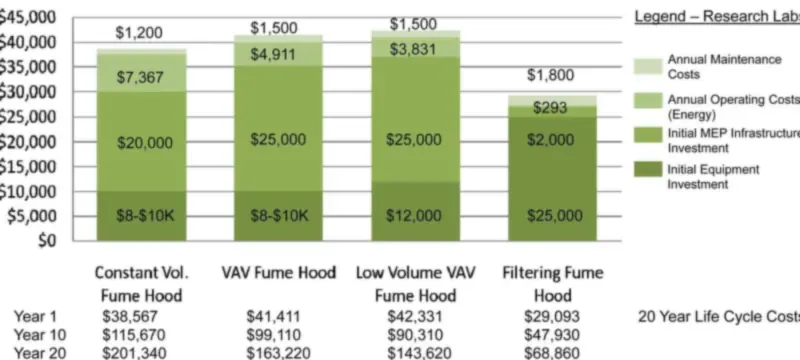
Figure 11: Ten-year cost shape by device class (ducted fume hood = 100) - a grouped bar chart of Ducted fume hood, Ductless hood, BSC Class II A2, Laminar flow hood and Glove box, one series per grade.
The grouped bars split purchase, installation and energy and service for each device class, and show that purchase price is the smallest segment for ducted hoods while energy dominates. For clean benches, purchase is the largest share.
A ductless recirculating hood removes make-up air conditioning, cutting annual energy cost by 60–80% depending on climate. Carbon filter replacement can cost 15–25% of hood price per year under heavy use.
A clean bench has the lowest TCO because it has no duct and no make-up air demand. A glove box has the highest, because of gas purification, catalyst regeneration and tightness testing.
Procurement for Lab Managers
Start by defining the hazard class, then the protection requirement, then the device class. Procurement follows the hazard assessment rather than preceding it.

Figure 12: Procurement checklist for laboratory containment - a 6-step sequence: Define the hazard, Name the protection goal, Fix the standard, Check the building, Model the lifecycle and Plan the growth.
The checklist runs from hazard definition through to scalability review, so each purchase traces back to a documented safety requirement rather than a price comparison.
The laboratory fume hood should comply with SEFA 1 guidelines [5].
Vendor validation should include factory containment test data and field certification records. For fume hoods, ASHRAE 110 tracer-gas testing gives the clearest performance picture [4].
Long-term support means filter availability, actuator and sensor replacement, and calibration of monitoring instruments.
Deiiang Performance and Case Study
Deiiang does not produce BSCs or glove boxes. The company builds fume hoods at the chemical end of the family, laminar flow cabinets at the clean-air end, and the exhaust, filtration and control hardware around both. Deiiang's position in the fume hood vs BSC market is deliberately one-sided, and the company supplies only the fume hood side.
That positioning is plain and practical: a Deiiang fume hood comes with the Deiiang dampers, transmitters and actuators that make it work as a system. The glove box vs fume hood question falls outside Deiiang's product range, so those enquiries are referred to a specialist supplier.
Engineering Standards in Practice
The Deiiang DFC series fume hood uses a 1 mm painted-steel cabinet with anti-static powder coating, a 5 mm tempered-glass sash, and a worktop in epoxy resin, phenolic resin or ceramic.
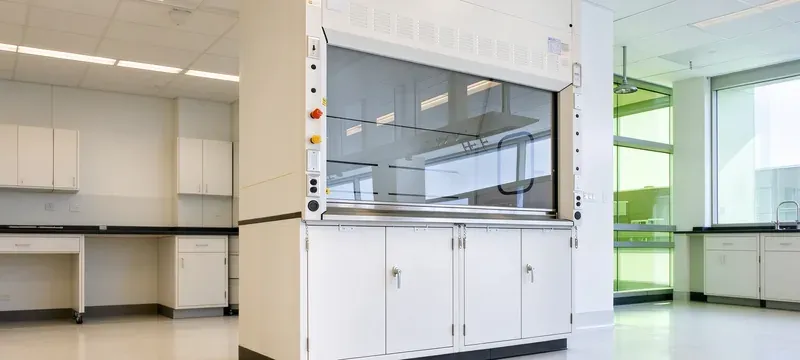
Figure 13: Deiiang DFC steel fume hood model range - 5 rows compared by value and note: DFC-1200, DFC-1500, DFC-1800, Common build and Air systems.
The table lists the DFC-1200, DFC-1500 and DFC-1800 against cabinet size, sash-door count and worktop material, with the shared build and air-system features on the last two rows.
Catalogue models include DFC-1200P at 1200×850×2350 mm with 2 doors and a phenolic worktop, DFC-1500C at 1500×850×1500 mm with 3 doors and a ceramic worktop, and DFC-1800E at 1800×850×2350 mm with 4 doors and an epoxy-resin worktop.
Damper leakage under JB/T 7228-94 is below 2% for standard dampers and below 0.5% for airtight dampers. Electric actuators provide 30 N.m standard or 250 N.m heavy duty. These are catalogue figures, not test results.
Project Reported Case Study
A university analytical-chemistry teaching laboratory operated six ducted benchtop fume hoods on a single roof-mounted fan.
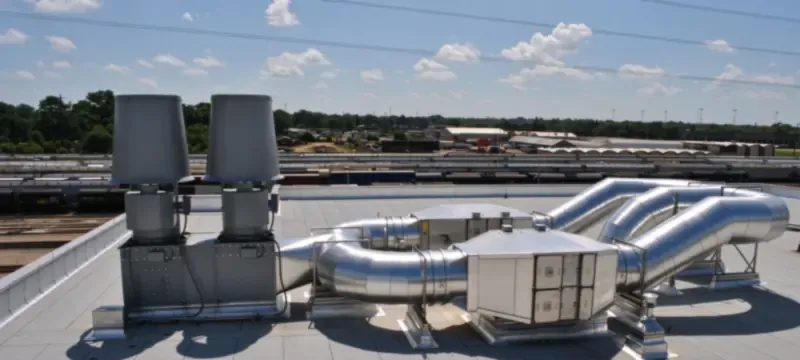
Figure 14: Illustrative photograph of a ducted rooftop exhaust installation - a representative view of the kind of shared exhaust fan, backdraft damper and insulated ductwork discussed above, rather than a record of one specific site.
The photograph shows the rooftop end of that installation: two rectangular air-handling units linked by insulated flexible ductwork, the kind of arrangement that carries hood exhaust above the roof line. The counterweight pressure-relief damper that protects room pressure is mounted downwind of the room airflow, outside the working-height band.
Reported problems included face velocity falling below the 0.5 m/s design value as filters and ducts loaded, cross-draughts from a nearby door, and rising dB(A) complaints at the operator position.
Deiiang supplied a backdraft damper at the fan, a counterweight pressure-relief damper, a CAV valve on each hood branch, a rectangular silencer sized under 800 mm on the plane side, and CCY11 transmitters on each hood duct.
An S7-200 SMART PLC drives the electric actuators and raises the low-flow alarm.
Table 4: Project-Reported Before and After Commissioning Metrics
| Metric | Before (reported) | After (reported) |
|---|---|---|
| Face velocity | 0.2–0.45 m/s, unstable | 0.48–0.52 m/s, stable |
| Branch volume deviation | Uncontrolled | Within a few percent of design |
| Alarm behaviour | None | Trips before face velocity leaves tolerance |
| Operator-position noise | 72 dB(A) | 58 dB(A) |
| Metric | Before | After |
|---|---|---|
| Face velocity | 0.2–0.45 m/s | 0.48–0.52 m/s |
| Branch volume deviation | Uncontrolled | Within a few percent |
| Alarm behaviour | None | Trips early |
| Operator-position noise | 72 dB(A) | 58 dB(A) |
Project-reported commissioning found the six branches holding their design volume within a few percent. The alarm tripped before face velocity left tolerance, and operator-position noise met the laboratory's dB(A) target.
The Decision Rule Choosing the Right Device
The procedure reduces to three inputs: the class of danger, the protection target, and the cost-performance trade-off. Apply them in that order. Work through the fume hood vs BSC question first, then move on to the remaining device classes.
A chemical danger with operator protection as the goal points to a fume hood. A biological danger requiring operator, product and environment protection points to a BSC. The fume hood vs laminar flow branch is reached only when the sample, rather than the operator, is the priority.
A particle-free sample with no operator danger points to a laminar flow hood. A material needing complete atmospheric control points to the glove box. The glove box vs fume hood branch is the last resort and the most expensive one.
Selection Matrix by Hazard
Table 5: Final Selection Matrix by Hazard and Protection Goal
| Hazard | Operator protection | Product protection | Environment protection | Recommended device | Cost band |
|---|---|---|---|---|---|
| Volatile chemical | Required | Not required | Required (exhaust) | Ducted fume hood | Medium to high |
| Volatile chemical, no ducting | Required | Not required | Carbon-filtered | Ductless fume hood | Medium |
| Bioaerosol (BSL-2) | Required | Required | Required | Class II BSC | High |
| Particle-sensitive sample | Not required | Required | Not required | Laminar flow hood | Low |
| Pyrophoric or oxygen-sensitive | Required | Required | Required (sealed) | Glove box | Very high |
| Hazard | Recommended device | Cost band |
|---|---|---|
| Volatile chemical | Ducted fume hood | Medium to high |
| Volatile chemical, no ducting | Ductless fume hood | Medium |
| Bioaerosol (BSL-2) | Class II BSC | High |
| Particle-sensitive sample | Laminar flow hood | Low |
| Pyrophoric or oxygen-sensitive | Glove box | Very high |
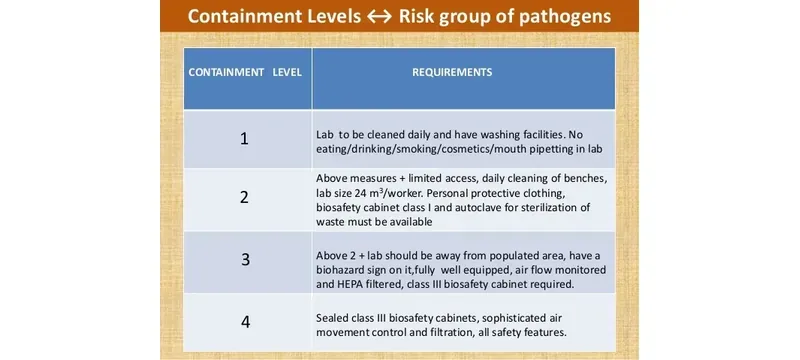
Figure 15: Selection matrix by material and duty - a matrix of 4 cases against Reactive chemical, Toxic vapour, Bioaerosol and Sterile product.
The matrix carries the four duties across the top and the four device classes down the side, marking each cell best fit, alternative, pooled with hood or not suitable, so a hazard maps to a device in one look.
Final Checklist for Buyers
Define the hazard class and the substance properties before calling any vendor.
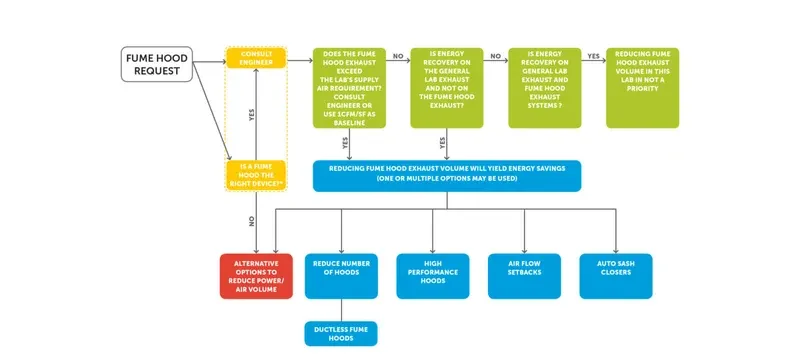
Figure 16: Three questions that pick the device - a 4-stage flow: Chemical or biological?, Is the atmosphere controlled?, Must the product stay sterile? and Device selected.
The four-stage flow compresses the whole comparison into a short run of yes-or-no questions, each leading to one device class. It is a first-pass tool before detailed engineering.
Frequently Asked Questions
Can a laminar flow cabinet handle hazardous chemicals
No. A laminar flow cabinet only protects the product from environmental contamination. It recirculates HEPA-filtered air into the operator's breathing area, so it must not be used for harmful or hazardous substances.
Why does a fume hood need high make up air
The fume hood expels room air at a standard face velocity of 0.5 m/s. That volume must be replaced to hold room pressure and prevent back-draughts at the sash. Make-up air supplies about 90% of the exhausted volume, tempered and filtered [8].
Are biosafety cabinets also fume hoods
No. A biosafety cabinet protects operators, product and environment from bioaerosols using HEPA filtration [1]. A fume hood protects against chemical vapours instead. A BSC therefore cannot be used for work with volatile chemicals.
What is the main difference between HEPA and ULPA
Table 6: HEPA and ULPA Filtration Grades to EN 1822 / ISO 29463
| Grade | Test particle size | Efficiency |
|---|---|---|
| H13 | 0.3 μm | 99.97–99.99% |
| H14 | 0.3 μm | 99.995–99.999% |
| U15 | 0.12 μm | 99.999–99.9995% |
| U16 | 0.12 μm | 99.9999–99.99995% |
| U17 | 0.12 μm | 99.9999–99.999995% |
| Grade | Test particle size | Efficiency |
|---|---|---|
| H13 | 0.3 μm | 99.97–99.99% |
| H14 | 0.3 μm | 99.995–99.999% |
| U15 | 0.12 μm | 99.999–99.9995% |
| U16 | 0.12 μm | 99.9999–99.99995% |
| U17 | 0.12 μm | 99.9999–99.999995% |
HEPA H14 removes ≥99.995% of particles at 0.3 μm, while ULPA U15 removes ≥99.9995% at 0.12 μm [6]. ULPA is specified when the contamination risk demands maximum particle removal.
How often must containment devices be certified
Fume hoods and BSCs are certified annually, and after relocation or major maintenance. Fume hood certification relies on ASHRAE 110 field testing [4]; BSC certification follows NSF/ANSI 49 or EN 12469 [1][2].
Do I need a glove box for BSL 3 labs
Not necessarily. BSL-3 labs use a Class II BSC inside a directional-airflow room. A glove box, the Class III equivalent, is required only when the risk assessment identifies a need for total atmospheric isolation.
References
- [1] NSF/ANSI 49 — Biosafety Cabinetry: Design, Construction, Performance and Field Certification.
- [2] EN 12469 — Biotechnology: Performance criteria for microbiological safety cabinets.
- [3] EN 14175-1 to -7 — Fume cupboards: Vocabulary, safety and performance requirements, type testing.
- [4] ANSI/ASHRAE 110 — Methods of Testing Performance of Laboratory Fume Hoods.
- [5] SEFA 1 — Laboratory Fume Hood Standard, Scientific Equipment and Furniture Association.
- [6] EN 1822 / ISO 29463 — High efficiency air filters (EPA, HEPA and ULPA): Classification and performance testing.
- [7] iso 14644-1 / -3 — Cleanrooms and associated controlled environments: Classification of air cleanliness and test methods.
- [8] ANSI/ASSP Z9.5 — Laboratory Ventilation.
- [9] OSHA 29 CFR 1910.1450 — Occupational Exposure to Hazardous Chemicals in Laboratories.