+86 13638632902
 Jason@cleanroomequips.com


 MENU
MENU
Pharmaceutical modular cleanrooms are pre-fabricated controlled environments specifically designed for pharmaceutical compounding and their appropriateness will depend on the activities carried out within them rather than merely relying on modular construction or ISO classification. In the U.S there are regulations regarding USP<797> and <800> which have to be planned into the project alongside other requirements related to the 503A or 503B status of the facility. This guide aims to help you understand how to transform these requirements in terms of room layouts and airflow, certification process while making sure that you can compare suppliers' offers to know compliance issues that have to be fixed prior to acquiring one.
Understanding Pharmacy modular clean room Concept
v4eIXV2HGnY
Generally speaking, the pharmacy Modular Clean Room is a controlled environment which is constructed from prefabricated components and is tailored according to the relevant operations taking place in that facility. As a result of the fact that the term "pharmacy" includes a number of processes with completely different environmental specifications, the clean room has to be defined on the basis of the procedures it supports rather than on a generic basis.
Use of modular clean rooms
Modular clean rooms can be used in hospitals, sterile compounding pharmacies, and some centralized compounding centers, and hazardous drug operations. There is significant variation in the enclosure requirements (HVAC, exhaust and engineering controls) from one application to another.
Meaning of the term "Modular"
The term modular means the use of prefabricated systems (walls and ceilings) and predetermined layouts for the construction of the facility, but modular systems can be installed in existing locations. Modular construction, as such, does not guarantee any time or cost savings; the success of modular construction depends on the scope of the project, site conditions, and technical requirements.
Limitations of Modular Clean Rooms
Modular Clean Rooms cannot, by themselves, dictate ISO class, pressure direction (relative to other cleanrooms), USP requirements, GMP requirements, sterility, or regulatory approvals. These industrial standards are determined by the cleanroom's specific applications, prevailing regulations, equipment, and procedures within the cleanroom.
Pharmacy Activities That Actually Require Controlled Environments
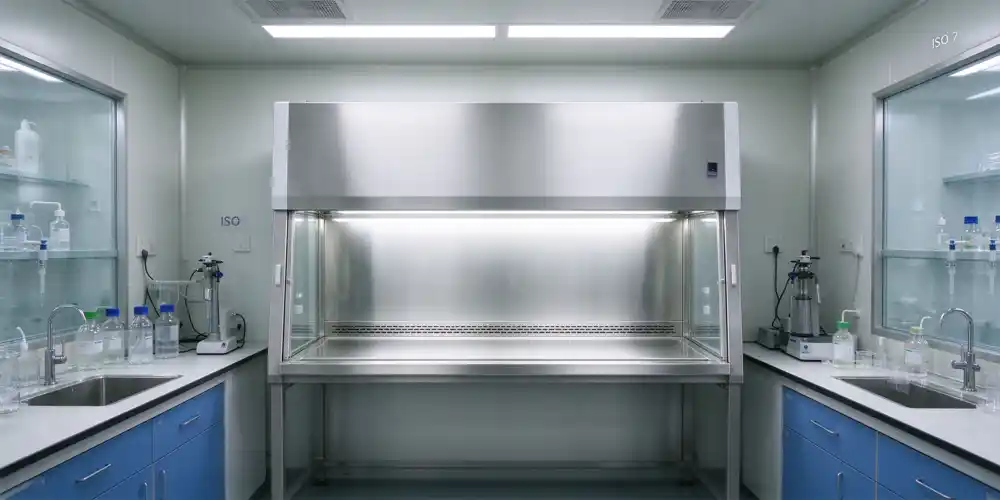
The requirements must be categorized according to activity rather than by the term pharmacy itself (i.e. hospital sterile compounding, dispensing pharmacy, 503B outsourcing). There are differing environmental requirements between these processes.
Sterile Compounding
Sterile preparation introduces the additional requirement of being contamination controlled beyond the requirements for regular dispensing. Any compounded sterile preparation must be protected from microbial contamination and particulate contaminants in a sterile environment.
Primary engineering control
Primary engineering control must be understood to consist of the equipment necessary for compounding: the laminar airflow workbench, the Class II, Class III biological safety cabinet, or the compounding aseptic isolator. The Class II or III biological safety cabinets will provide iso class 5 air quality used in sterile compounding. The Class I biological cabinet will be used only in compounding that does not involve sterile compounding. Laminar airflow workbenches shall not be utilized when hazardous drug containment is necessary. The primary engineering control does allow for iso class 5 or better air at the critical site without regard to the classification of the pharmacy in its entirety.
Secondary engineering control
The room housing the primary engineering control is the secondary engineering control. Given a typical nonhazardous cleanroom suite, the room may have iso class 7 buffering to the iso class 8 or better ante-room; however, this should not be expected universally. This facility set-up will depend on the category of CSP, the PEC, and the applicable standard. For example, the pharmaceutical isolator environment may vary from that of the compounding aseptic isolator or compounding aseptic containment isolator.
Nonsterile compounding
In the case of nonsterile compounding, the above does not mean that the cleanroom does not need to be iso classified. The USP <795> guidance on nonsterile compounding is based on cleanliness and proper equipment rather than particle classification. If a pharmacy compounding nonsterile preparations (not compounded sterile preparations) is to be a pharmacy compounding nonsterile preparations, then it should not be included in an iso 7 room without some clearly definable regulatory standard as to why it must be.
Hazardous-drug handling
When dealing with hazardous drug handling both worker and environmental containment are part of the goal. Sterile hazardous compounding will need to be accomplished using proper aseptic principles of product protection, containment.
Sterile hazardous compounding
The sterile hazardous compounding process must consider both issues simultaneously. By US procedures, a containment primary engineering control, like a Class II BioSafety Cabinet (BSC) or compounding aseptic containment isolator, is placed inside a negative pressure containment secondary engineering control. The Compounding (C-PEC) for sterile hazardous drug manipulation is required to vent outside and maintain air of ISO Class 5 or higher quality. The C-SEC must also vent outside and have a negative pressure environment.
Nonsterile hazardous drug compounding
Nonsterile hazardous drug compounding is required to take appropriate containment precautions but sterile compounding room requirements do not apply. The USP <800> risk assessment can only be utilized for medications listed in the chapter; all Hazardous Drug Active Ingredients (HD API) and agents requiring manipulation as listed in NIOSH Table 1 must comply with containment criteria. The Authorized Person is not responsible for controlling all hazardous drugs.
Regular dispensing/storage
Routine dispensing, storage, and distribution of conventionally manufactured medications normally do not require an ISO-classified compounding clean room. Such drugs may, however, require security measures, temperature control, and segregation of hazardous drugs.
Pharmacy cleanroom classification: Significance of ISO Class
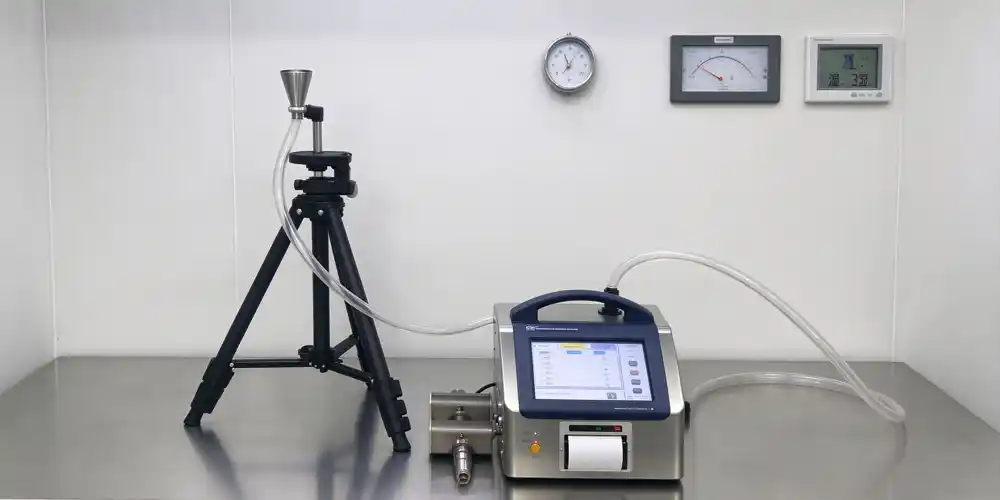
ISO classification refers to the degree of airborne particle cleanliness. It does not refer to sterility, chemical contamination, compliance with regulations, etc.
iso 14644-1 classification
iso 14644-1:2015 ranking classifies air quality according to the number of particles with sizes that range between 0.1µm to 5µm. An ISO 7 classified room satisfies the established particle limit under certain conditions but does not represent establishment of "compliance." ISO classification does not provide information about the nature of particles present in the air.
The ISO Class 5 Primary Engineering Controls
The PEC forms the necessary ISO Class 5 or equivalent environment for all required sterile compounding procedures around the sterile compounding area.
The ISO Class 7 and ISO Class 8 areas
In certain US USP <797> clean room suite setups, the buffer room gives the classified base environment in which the PEC is placed. The anteroom provides for entering, donning and the transition of supplies from the general pharmacy to the buffer room.
Occupants and operating conditions
iso 14644-3:2019 provides test methods for three occupancy conditions: as-built, at-rest, and operational. The project must determine which condition is applicable for its criteria for acceptance. Likewise, the USP <797> outlines specific certification test requirements for dynamic operation. The two should not be blended.
Classification is not sterility
Particle counts cannot be used to quantify microbial contamination, and adherence to aseptic technique or final product quality. The quality of sterile preparations is dependent upon all aspects of the facility, the engineering control systems, individuals involved, adherence to aseptic technique, and process controls.
United States pharmacy regulations: USP <797>, USP <800>, 503A, and 503B
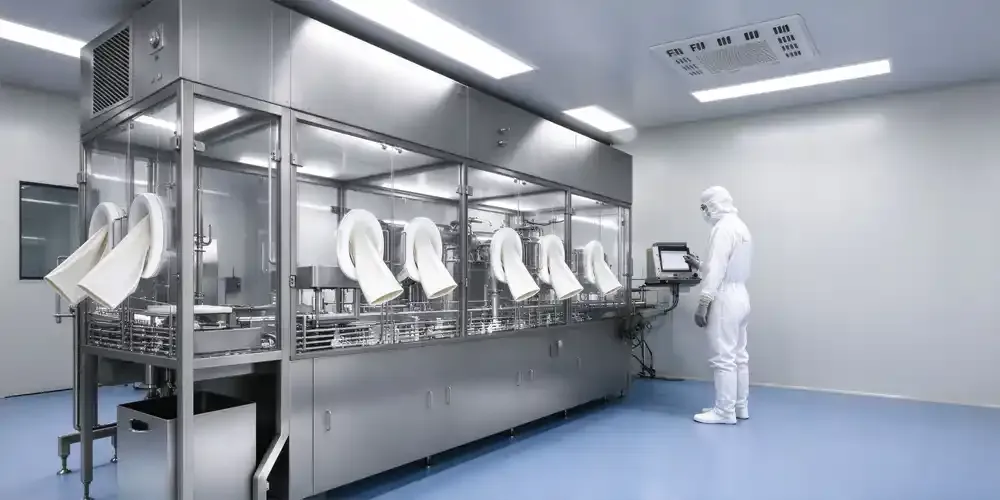
Pharmacy compounding law in the United States operates with multiple federal and state environments. The USP chapters are to define compounding standards; 503A and 503B are statutes that set forth specific regulations and legal implications.
USP <797> — sterile compounded preparations
The 2023 version of USP <797> went into effect on November 1, 2023, and sets forth minimum standards for the preparation of sterile compounded preparations. The standards and categories apply to Categories 1, 2, and 3.
Differentiating Between Cleanroom Suite and Segregated Compounding Area
A segregated compounding area is defined as an unclassified area, such as area in a hospital or pharmacy where compounding takes place, that has specific boundaries. It can be utilized only for Category 1 CSPs that meet specific guidelines. Cleanroom suite, with buffer room and anteroom, can be used for Category 2 and 3 CSPs that require classified environments and monitoring. A segregated compounding area is not a mini-cleanroom.
PEC, Anteroom, and Buffer Room
The PEC is a space where the ISO Class 5 operation is in a functional relationship. The buffer room houses the PEC and provides the classified environment. The anteroom transitions from the pharmacy setting to the buffer room in terms of functionality. These terms should be viewed as function-related terms of reference rather than measured dimensions.
Pressure and Monitoring
The operational requirements of USP <797> and <800> differ in terms of specific environmental and pressure needs. Risk assessments of a specific compounding operation cannot replace specific chapter requirements. There is no single standard ACH or pressure differential that applies to all pharmacy settings; the design must conform to current standards and equipment specifications.
USP <800> — Hazardous Drugs
USP <800> is concerned with protections during the handling of hazardous drugs in the health care environment. It is in total compliance since December 2019 and compendially effective after November 1, 2023.
Positive Pressure Compared to Negative Pressure
There is no universal rule that dictates that cleanroom areas must be in a positive pressure state. Cleanrooms filled with nonhazardous sterile compounding and those containing hazardous drugs may have differing pressure relationships. Those areas filled with hazardous drugs typically need to be in a negative pressure state to ensure airborne particles are retained within that space. Utilize the requirements of the specific area being utilized, rather than making blanket assumptions.
Hazardous drug process
USP <800> contains the procedures related to the receipt and storage as well as preparation, dispensing, administration and disposal of hazardous drugs. Risk evaluation is allowed only with the substances and dosage forms that are mentioned in the chapter, while hazardous active pharmaceutical ingredients and anti-neoplastic drugs that need manipulation should be elaborated according to the containment rules.
Section 503A compounding in pharmacy.
For pharmacy-based 503A compounding, it is associated with a valid prescription and with limitation for anticipatory compounding based on regulations. Section 503A may include the compounding by physicians with licenses as well. Usually, the state boards undertake supervising activities of pharmacies licensed; however, FDA still possesses the ability for inspections and monitoring.
Section 503B outsourcing facilities.
An outsourcing facility means the designated place for sterile compounding which is registered with FDA in compliance with the requirements concerning section 503B. The place is not supposed to be a licensed pharmacy, yet the compounding process has to be carried out by licensed pharmacist or under his/her supervision. The place might carry out the process of compounding without any written prescriptions and might compound the drugs that are nonsterile.
503B is not the same as larger 503A pharmacy.
The facilities operating under 503B rules should comply with the requirements concerning CGMP. FDA is responsible for the inspections of these facilities based on risk levels.
Requirements outside the United States.
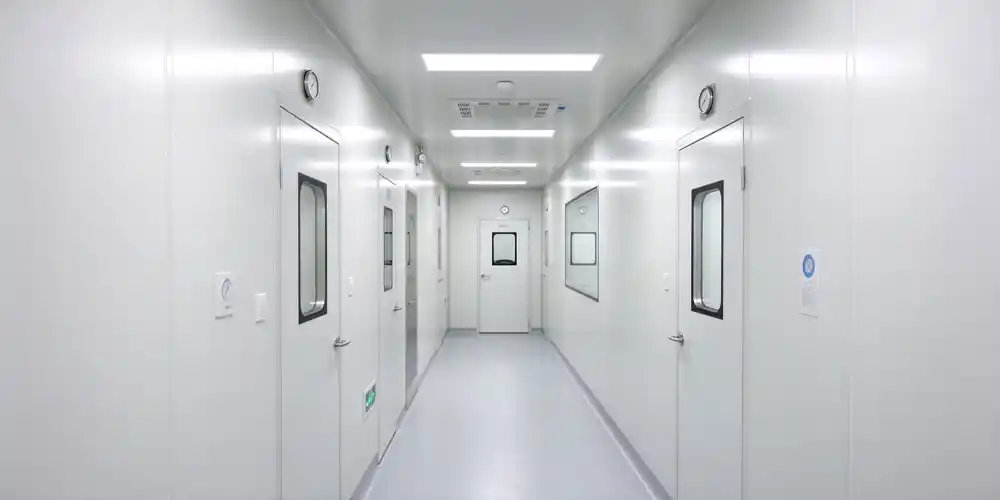
The regulations applied in the United States are not considered universal practice.
European union/EEA.
There are many regulations in the member states; however, pharmacy compounding regulations are based on national law, with variations in the specialties of regulations. This is not applicable to the chapters of USP.
When GMP conditions govern sterilized medicine production
In the case where GMP covers the manufacture of sterile medicine product as set out in EU GMP Annex 1, then the system of classification will consist of Grades A, B, C, and D, which bears relation to but cannot be replaced by ISO class numbers.
Discrepancy between Grade A/B/C/D to ISO class
gmp grades comply with the maximum allowed limits on the amount of allowed particles in sterile production processes while ISO 14644-1 is about the classification of air cleanliness pertaining to the amount of allowed particles in ISO 14644-1, thus it is advisable to use GMP tables that apply rather than general classification.
The case of Canada
NAPRA published its own model for standards for both sterile and non-sterile compounding procedures with different model standards regarding hazardous and non-hazardous medicines made with sterile compounds. Each province or territory within Canada and the Canadian Forces Pharmacy Regulatory Agency respectively implements these model standards. In addition, NAPRA is reviewing the respective model documents for compounding procedures, thus, current information in each respective territory and region should be verified before conducting the design.
Application of current provision in the locality
Different rules exist in each territory or province and before design is finalized verification of compliance with local laws should be completed.
The case of other countries
Pharmacy regulations for the individual country or territory must be reviewed before completion of the desired design or specifications stage.
Clean area specification requirements
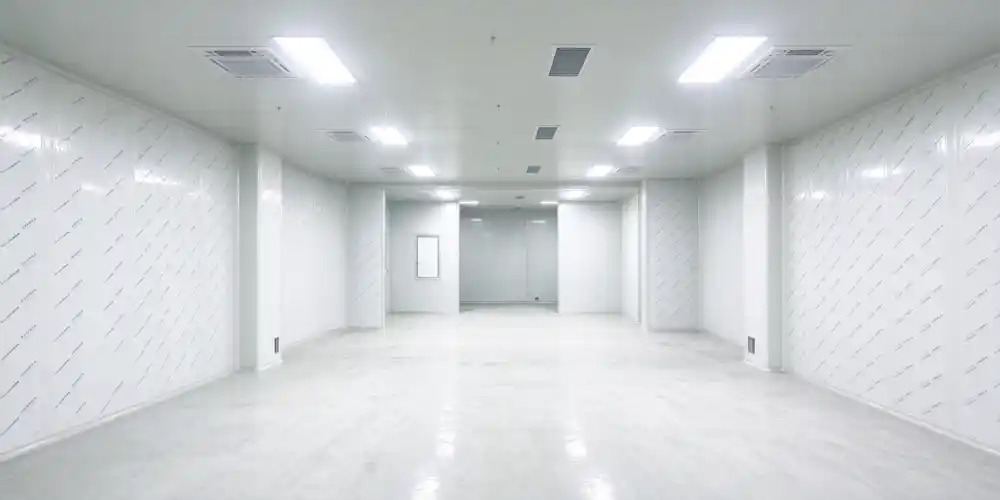
Designs begin with the processes and not the ISO class.
Process and risk identification
Determine the category of compounding performed, that is, if it is sterile or non-sterile, or if it contains hazardous drugs, as well as average volumes, workflows, and operational schedules according to the environmental requirements.
Room zoning and workflow
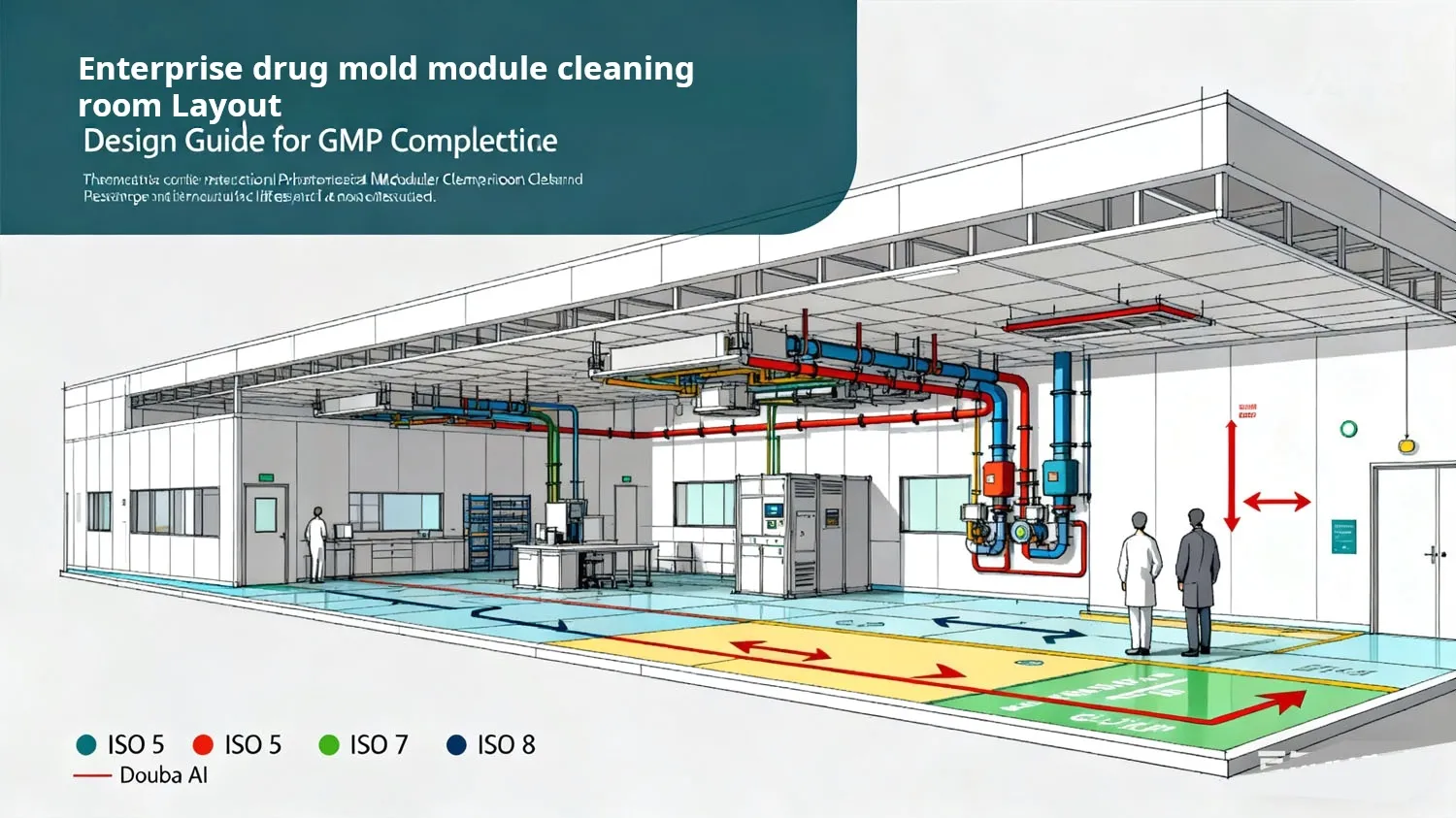
Define entry, gowning, and transitions that take place. The controlled progression from less-controlled areas to cleaner areas must be designed in such a manner that entry and material transfer does not lead to back-contamination of dirty surfaces or material.
In terms of material flow, it is important to specify how materials are introduced into a controlled space, how they will be cleaned/disinfected, and how discarded materials will be taken out of the area. It will be necessary to manage exit and waste routes of materials leaving the controlled space in such a way as to prevent contamination of surfaces or consumables.
The transitions from clean to less-clean should be designed in compliance with contamination control principles and practices. This involves the method of entry into the controlled space and exit in order to avoid back-contamination.
Pressure, temperature, humidity and finishes
The decision to apply positive or negative pressure to sterile cleanrooms and hazardous drug handling areas is dependent upon the pressure relationship needed in that area. PEC and SEC are different; the performance of PEC at ISO Class 5 is not synonymous with SEC room classification and regulation. Control the temperature and humidity within the pharmacy being designed based upon existing processes and equipment requirements. Pharmacies must have cleanable surfaces such as walls, partitions, ceilings, and floors that are compatible with cleaning/disinfection processes. Additional features associated with doors, pass-throughs, and lockout may or may not be required.
Controls of Engineering
Sterile Primary Engineering Controls include the need for laminar airflow workstations, suitable Class II or III biological safety cabinets, and compounding aseptic isolators. The choice of Engineering Control for handling hazardous products is determined in accordance with USP <800> guidelines. Their choice may comprise but not limited to BSCs, CACIs, or Containment Ventilated Enclosures.
ip5f5__R-fQ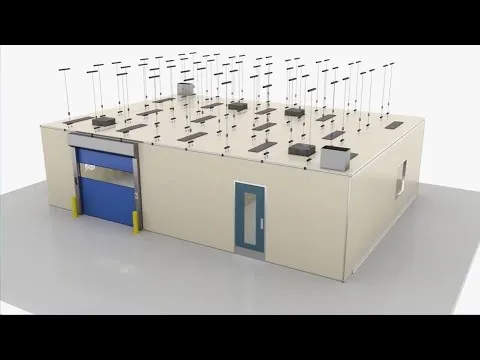
HVAC and Environmental system
The HVAC system may be fully exclusive to the cleanroom, be integrated within the main facility, or partly outside the modular manufacturer's purview. Care should be taken here to keep offer conditions clear from the outset.
HEPA filter specification
A component standard applies to the HEPA filter. The tests undertaken to classify the room validate whether the room satisfies the correct classification of cleanliness.
Utilities
Utilities and their requirements for power, data, process gases, and others, must be established prior to quoting. Unstated utility criteria can result in a redesign or change of scope and schedule.
Monitoring System
Distinguish sensor positions, alarm capabilities, data logs, and the need for any integration with an existing system. Make no assumptions regarding the requirements of monitoring without a reference to the corresponding standard.
How to Specify and Procure a Pharmacy Modular Clean Room
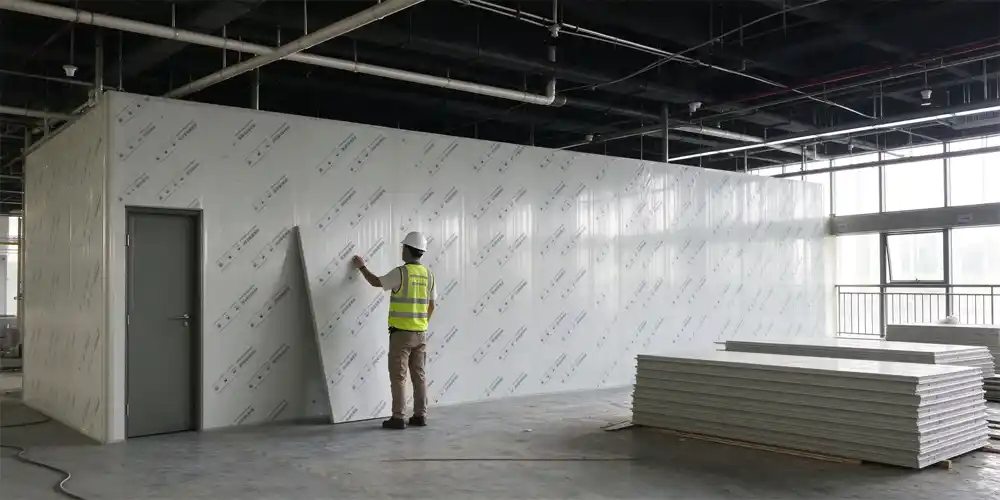
A specification aimed at producing uniform quotes must establish clear scopes.
Define pharmacy activity
Sterile or nonsterile, hazardous or nonhazardous, 503A or 503B, or another agency jurisdiction.
Define the basis for regulation
Fall within the various USP Chapters, FDA requirements, state board regulations, GMP guidelines, NAPRA guidelines, or through other nature of regulation.
Define arrangements for the room.
PEC, buffer room, anteroom, segregated compounding room, or hazardous compounding room, etc.
Define equipment interfaces
The required equipment interface will consist of parameters governing PEC sizes and utility requirements, the air conditioning systems and duct systems to be used for ventilation, electrical demand, and thermal load.
Define commercial scope
This will apply to equipment provision only or a commercial construct encompassing furnished supply, installation, commissioning, classification testing, and qualification related to equipment.
Quote comparison table
| Item | Supplier A | Supplier B | Required clarification |
|---|---|---|---|
| Room envelope scope | Includes panels, plenum slabs, doors and any necessary penetrations. | ||
| HVAC/exhaust | If applicable, either included or excluded will apply to HVAC. | ||
| PEC interface | Required dimensions, utilities specification and exhaust methods. | ||
| Installation | On-site labor and supervision, and project scheduling. | ||
| Testing | Classification of sites, PEC compliance, as well as all necessary documentation. | ||
| Documentation | Drawings of installations with acceptance tests summaries contained. | ||
| Freight and exclusions | Included in quotes is either standard delivery, off-loading, site conditions, etc. | ||
| Warranty | Determined by time period and coverage, response time, etc. |
Room envelope scope
Supplier A: Supplier B: Clarification: Includes panels, plenum slabs, doors and any necessary penetrations.
HVAC/exhaust
Supplier A: Supplier B: Clarification: If applicable, either included or excluded will apply to HVAC.
PEC interface
Supplier A: Supplier B: Clarification: Required dimensions, utilities specification and exhaust methods.
Installation
Supplier A: Supplier B: Clarification: On-site labor and supervision, and project scheduling.
Testing
Supplier A: Supplier B: Clarification: Classification of sites, PEC compliance, as well as all necessary documentation.
Documentation
Supplier A: Supplier B: Clarification: Drawings of installations with acceptance tests summaries contained.
Freight and exclusions
Supplier A: Supplier B: Clarification: Included in quotes is either standard delivery, off-loading, site conditions, etc.
Warranty
Supplier A: Supplier B: Clarification: Determined by time period and coverage, response time, etc.
Modular Construction: Where It Helps and Where It Does Not
Modular construction is an option in terms of project delivery versus compliance.
Potential fit
When working in existing hospitals and pharmacies for the renovation, phased work along the constrained sites, and any future alterations in layout can benefit from the modular construction.
Potential limitations
Small, complex exhaust systems, as well as the need for hazardous drug containment, structural restrictions or fire gains and utility restrictions could hinder the practicality of modular construction.
Expansion and relocation
Should relocation be desirable, this would lead to the need for re-commissioning and re-classification.
Installation and Commissioning
Cleanroom performance should not only be by virtue of the installation of panels.
Pre-installation site review
Confirmation will deal with dimensions, access routes, locations of utilities, HVAC and exhaust interfaces, and local code requirements.
Envelope installation
With regards to the installation of panels, you will need to address joints, ceiling grid and the door.
HVAC and PEC integration
As far as installation of HVAC and PEC integration goes, it is better to coordinate between both rather than treating them as independent activities.
Controls and monitoring setup
Be certain on the locations of sensors, alarm functions, and records.
Cleaning prior to testing
It is necessary that cleaning and preparation of construction be done before classification testing.
Testing, Certification, Qualification and Control
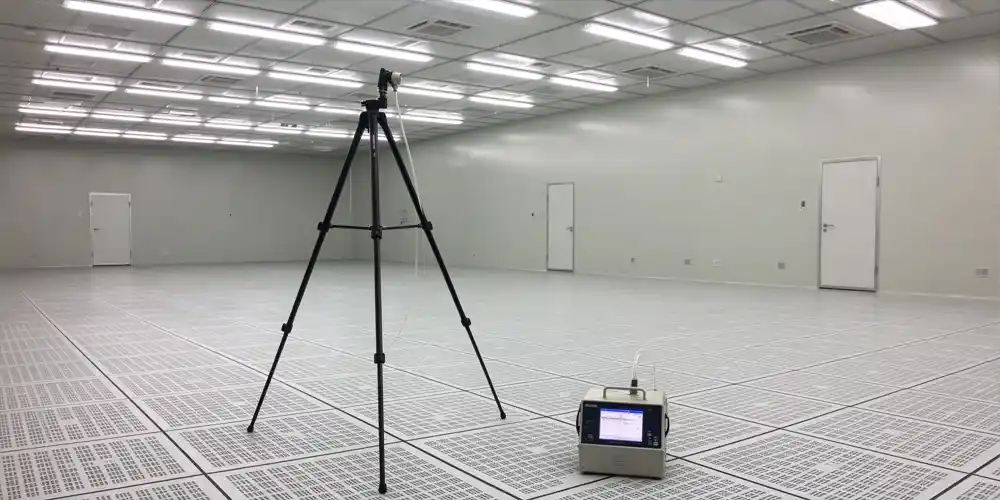
Testing terms are different in meaning. Classification, commissioning, certification and qualification are different processes.
Classification testing according to ISO
ISO 14644-1:2015 presents the technique for classification with particles. This is not "pharmacy certification."
Tests that support cleanrooms
iso 14644-3:2019 gives test methods for airflow, integrity of filters and other tests based on the acceptance plan.
PEC certification
Testing and certification for PEC are separate from whole room classification; both may be necessary.
USP certification of facilities
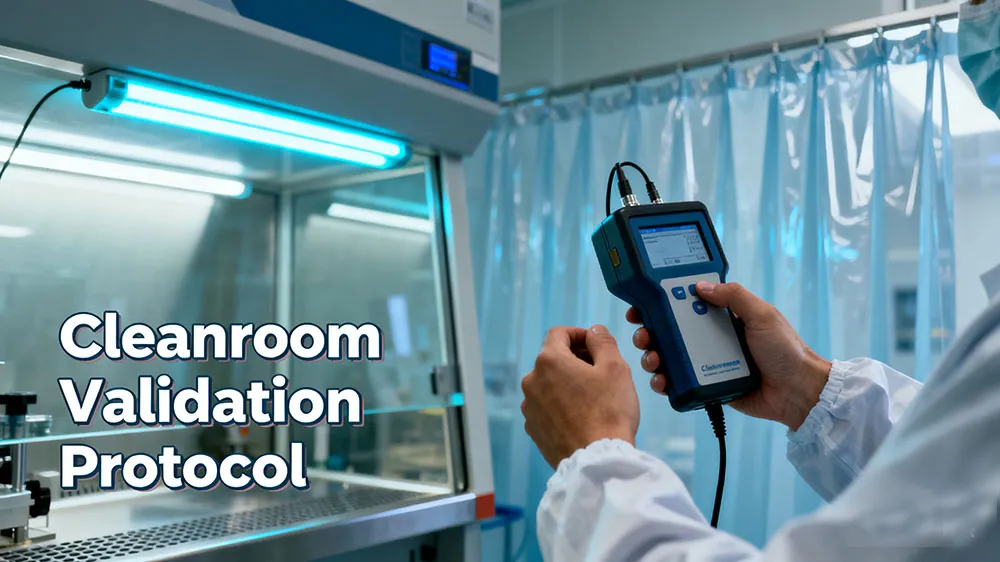
USP <797> requires that certification of the compounding area be done prior to using it according to the standards of the chapter used and the manufacturer specs. The certification documents show that the PEC and SEC areas are operating as necessary.
Environmental monitoring
Environmental monitoring is different from the initial classification. USP <797> requires the monitoring of surfaces at specific frequencies.
Requalification when changes are made
Any alteration to the room, the PEC, the HVAC, or workflow can require retesting or requalification under the guidelines provided by the regulations.
Documentation for the package
The documents can include drawings, equipment records, test results, calibration records, commissioning documents, manuals, agreed training materials, and accepted test protocols with acceptance criteria and the entity responsible for the test.
Deiiang Evidence Boundary for Pharmacy Applications
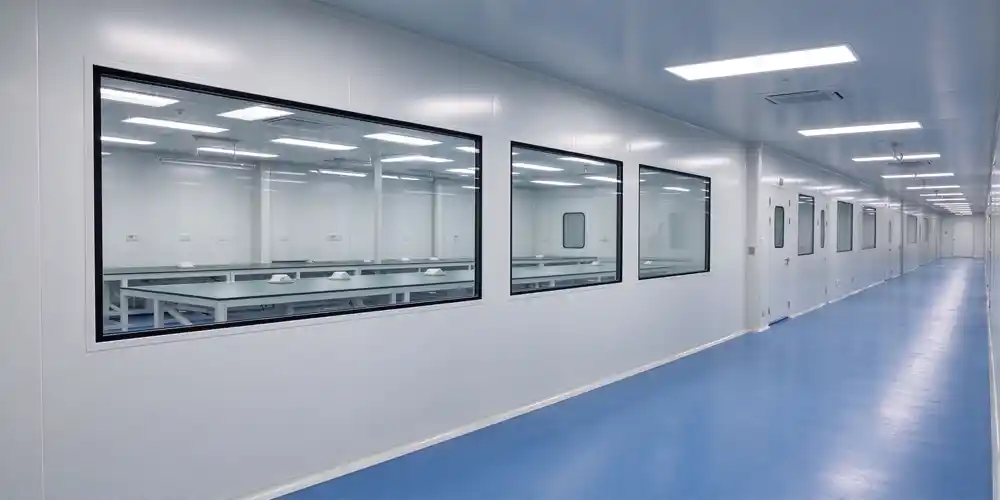
This segment utilizes only verified company data and distinguishes the absence of verified pharmaceutical-specific project data.
Company data
Deiiang has reports of modular cleanroom products for pharmaceutical purposes and how to assemble them. Assessment of suitability for pharmacy projects must consider project-related regulatory and engineering requirements.
Pharmacy project evidence
No valid public sterile compounding or pharmacy project is available and there is no way to confirm the existence of sterile compounding or pharmacy facility that meets requirements in this article.
Content that can't be copied
Numbers/figures from semiconductor facilities, pharmaceutical manufacturing, hospital applications, and any other application; no pharmacy evidence can be used.
Internal placeholder
[DEIIANG TO PROVIDE VERIFIED PHARMACY/STERILE COMPOUNDING PROJECT: country, type of pharmacy, regulatory basis, room design, classification, pressure strategy, connections with equipment, testing information, and pictures and publication permission.]
What Requires Information about Pharmacy Clean Room Quote
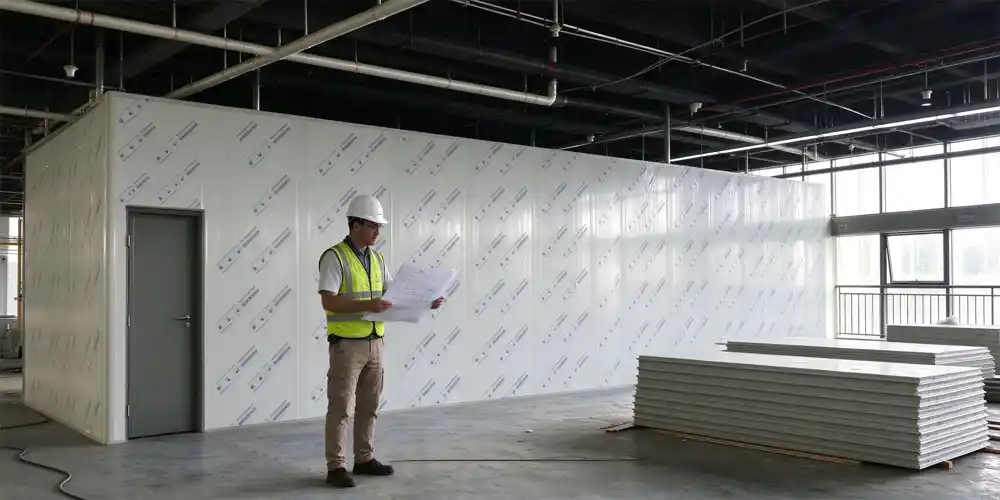
Straightforward RFQ checklist will assure suppliers can provide comparable offers.
Process-related details
Pharmacy type, preparation to be made, type of preparations, sterile/nonsterile, and hazardous.
Regulatory-related information requirements
Location, state/province, 503A or 503B (as applicable), USP, NAPRA, GMP, etc.
Facility-related details
Dimensions, clear height, host HVAC system ability, availability of electric power, existing structure, etc.
Technical aspects
Room setup/PEC type and location/classification/pressure/environmental controls, monitoring, etc.
Commercial specifications
Receiving site, installation responsibility, testing and certification, schedule, and many others.
Common specification mistakes
Using iso 7 cleanroom for all case
A pharmacy will require different requirements based on its specific compounding setting and appropriate standard.
Considering iso classification instead of USP compliance
ISO particulate performance is just one part of the pharmacy framework.
Employing positive pressure in every pharmacy
The containment of hazardous drugs requires employing negative pressure configuration.
Mistaking USP <797> for USP <800>
While the two may overlap in sterile hazardous compounding, they function to mitigate different risks.
Applying EU GMP Annex 1 to every pharmacy
Annex 1 should only be utilized when sterile medicinal product GMP applies to an activity or jurisdiction.
Purchasing the room without establishing PEC and exhaust
Before acquiring the room, the PEC and exhaust interfaces need to be established.
Using outdated CSP risk level terminology
Current USP <797> employs Risk Level 1, 2, and 3 terminology. The old risk level terms should be omitted from procurement documents.
Assuming an SCA is a small cleanroom
The SCA is an unclassified space and not an ISO 7 and iso 8 cleanroom.
Comparing incomplete quotes
Equally normalize HVAC, exhaust, installation, testing, documentation, and exclusions.
Frequently Asked Questions
Responses are limited with no new specifications introduced. Required site compliance reference current chapters and rules relevant to the area.
What is a pharmacy modular cleanroom?
A controlled environment constructed from prefabricated components intended for work in the pharmacy operations including sterile compounding when necessary.
Does every pharmacy require an ISO classified clean room?
No. Requirements vary based on type of compounding, preparation, hazardous drugs, area of work and pharmacy requirements.
What ISO class is required for sterile compounding?
An appropriate sterile PEC provides ISO Class 5 air or better at the critical sterile compounding area. The requirements for the rest of the room is based on the USP type of cleanroom and CSP category.
What is USP <797> and USP <800>?
USP <797> has to do with making compounded sterile drugs, whereas USP <800> talks about how to handle and control exposure to hazardous drugs. In some cases, both USP <797> and <800> apply simultaneously.
What is a 503A compounding pharmacy compared to a 503B outsourcing facility?
While 503A pharmacies usually must compound based on a specific patient's order and can take advantage of some CGMP exemptions, 503B outsourcing facilities must register with the FDA, can compound medications without orders for individual patients, and will still have to comply with CGMP.
Conclusion - Designing the Room Around the Pharmacy Activity
While a modular cleanroom can be designed for controlled compounding environments, the actual layout, classification, pressure and testing requirements must be designed based on what the pharmacy is preparing, the assessment of all the different risks involved, and jurisdictional requirements, and not simply because it's called a pharmacy. You must first determine what the pharmacy is doing, what regulations and standards apply, what type of engineering controls are needed, and from there determine how the modular cleanroom must be designed.
References
Primary Standards and Reference Sources
- USP General Chapter <795> — Pharmaceutical Compounding - NonSterile Preparations. https://www.usp.org/compounding/general-chapter-795
- USP General Chapter <797> — Pharmaceutical Compounding - Sterile Preparations. https://www.usp.org/compounding/general-chapter-797
- USP General Chapter <800> — Hazardous Drugs - Handling in Health Care Settings. https://www.usp.org/compounding/general-chapter-800
- FDA — Human Drug Compounding Laws, sections 503A and 503B. https://www.fda.gov/drugs/human-drug-compounding
- FDA — Prescription Requirement Under Section 503A of the Federal Food, Drug, and Cosmetic Act: Guidance for Industry. https://www.fda.gov/regulatory-information/search-fda-guidance-documents/prescription-requirement-under-section-503a-federal-food-drug-and-cosmetic-act-guidance-industry
- FDA — Information for Outsourcing Facilities / Section 503B. https://www.fda.gov/drugs/human-drug-compounding/information-outsourcing-facilities
- ISO 14644-1:2015 - Classification of air cleanliness by particle concentration. https://www.iso.org/standard/53394.html
- ISO 14644-3:2019 - Test methods. https://www.iso.org/standard/75028.html
- European Commission — EU GMP Annex 1: Manufacture of Sterile Medicinal Products. https://health.ec.europa.eu/medicinal-products/eudralex/eudralex-volume-4_en
- NAPRA — Model Standards for Pharmacy Compounding. https://www.napra.ca/
Official Explanatory References
- USP <797> FAQs - explanatory reference only, no formal interpretation. https://www.usp.org/compounding/general-chapter-797
- USP <800> FAQs - explanatory reference only. https://www.usp.org/compounding/general-chapter-800
Company Source
- Deiiang - Modular Cleanroom product information. https://www.deiiang.com/