+86 13638632902
 Jason@cleanroomequips.com


 MENU
MENU
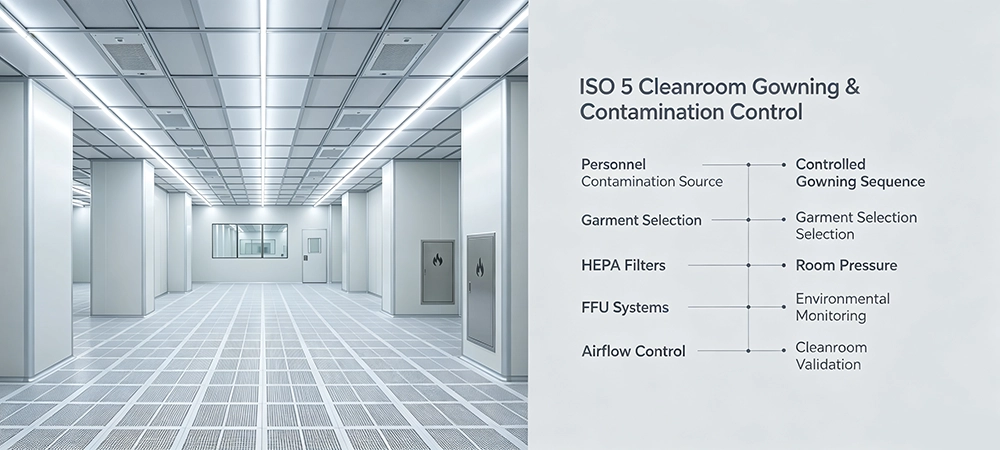
Personnel have been shown to be a significant source of contamination in the case of iso 5 cleanrooms. While specifically designed iso 5 gowning procedures help limit contamination, they are not enough to sustain iso 5 cleanroom standards on their own. Garment selection, personnel behavior, HEPA filters, airflow, room pressure, environmental control, and monitoring are all integral to sustaining iso 5 cleanrooms alongside gowning procedures.
This article addresses the gowning sequence associated with the iso 5 standards, some of the basic requirements for class 100 cleanroom garments, the relationship between personnel movement and particulate levels, gowning procedures and ffus, and HEPA filters, along with cleanroom structures, and the best approACHes to validating the monitoring process.
ISO 5: What Does It Mean?
The classification of ISO 5 is dependent on the cleanroom standards within iso 14644-1. While the classification of ‘ISO 5’ and ‘class 100’ are often used interchangeably, the latter stems from the former U.S. federal standard 209e. However, both standards define cleanroom environments that are essentially the same.
ISO 5 and Class 100
| Term | Meaning | General Use |
|---|---|---|
| ISO 5 | iso 14644-1 cleanroom classification | Pharmaceuticals, Medical, Electronics |
| Class 100 | Legacy Federal Standard 209e | Older specifications and project documents |
| Grade A | EU GMP high-risk zone | Sterile pharmaceutical operations |
The Focus of ISO 5 on Particle Control
ISO 5 cleanrooms require surveillance and monitoring of particles of different sizes: ≥0.1 μm, ≥0.2 μm, ≥0.3 μm, ≥0.5 μm, and ≥5.0 μm. Other standards and regulatory frameworks use different thresholds for the sizes of particles. The numerical limits in tables must always be accompanied by the standard version and the state of the control (at rest or in operation). Actual Acceptance should be achieved in line with the project URS, the validation protocol, and relevant legislation.
Why Personnel Are a Key Contamination Source
People are constantly responsible for the release of skin flakes, hair, fibers, microorganisms, oils, and moisture. Speaking and breathing release aerosols and particulates. Rapid movements—quick turns, patting clothing, rubbing cuffs, swinging arms, frequently opening doors, and shaking clothing when dressing—also increase particle shedding.
Sources of Human Particulate Contamination: Head: hair and breath. Face: mouth and nose aerosols. Hands: oils and contact contamination. Body: contamination from clothing fibers. Feet: contamination from shoes and flooring.
ISO 5 gowning area as a Contamination-Control Sequence
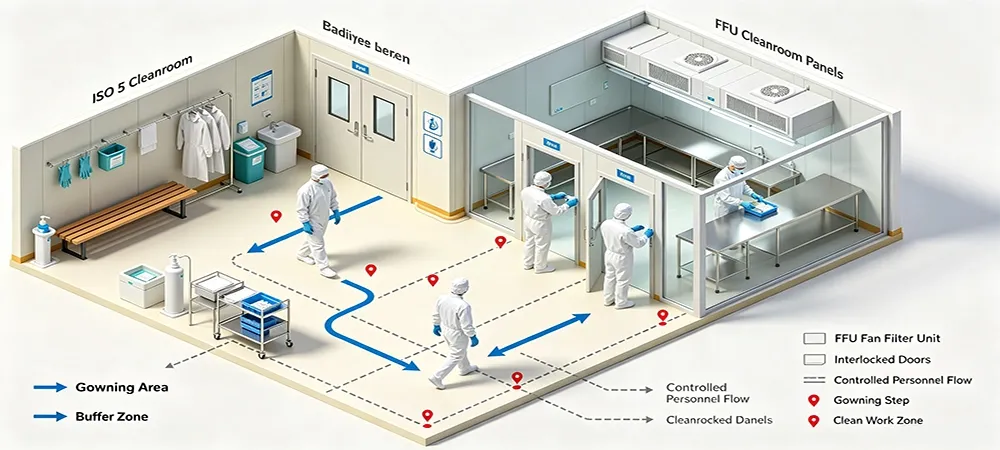
A gowning area is not a room, but an entire sequence of contamination-control steps. It must be designed to separate the clean from the dirty, eliminate cross flow and aid the sterile dressing sequence.
C8fAE54JaKM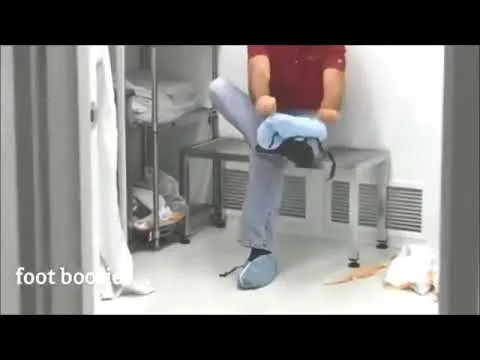
Typical Spatial Order of the Gowning Area
- Non-clean zone → First change room → Hand wash station → Shoe change room → Second change room → Clean gowning room → air shower or buffer → ISO 5 production area
- It is critical to maintain the separation of personnel and material, as well as the separation of clean and contaminated garments.
- Doors must be arranged such that they do not open at the same time.
- Zoning of the floors must be clearly indicated.
Pressure and Air Flow
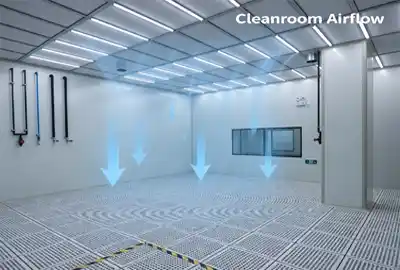
Clean air is meant to flow from less to more clean areas. When designed appropriately, doors and pressure differentials must maintain there is no significant reverse flow. Pressure must be set in the context of the functions of the rooms and the flow of personnel to and from the rooms.
ISO 5 Production +30 Pa → 2nd Change Room +20 Pa → 1st Change Room +10 Pa → Non-Clean Area 0 Pa
Proposed pressure cascade for iso 5 gowning sequence. Deiiang recommends 12–15 Pa between ISO 5 and the adjacent change room, to help mitigate door slamming and to promote smoother workflow.
The Role of ffu and HEPA Filtration in the Gowning Process
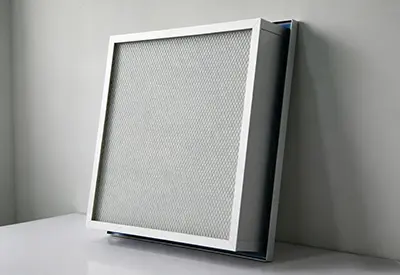
While FFUs are not classified as ‘gowning equipment’, they have a direct outcome on the performance of gowning. FFUs supply clean air through HEPA filters. An effective configuration minimizes particle沉降 and accumulation. An airflow imbalance may cause local dead zones. The sealing of the filter frame, along with the structure and maintenance alternatives, have a direct consequence on the risk of leakage. Deiiang™ FFUs come in standard sizes of 1175×575×350 mm and 575×575×350 mm, and have an airflow range of 500 m³/h to 2000 m³/h. HEPA H14 filters have an aerosol filtration efficiency of ≥99.995% of 0.3 μm particles. EC brushless DC motors have a significant improvement over AC motors, achieving >85% efficiency with >30% power savings.
Deiiang™ FFU typical specs: Air volume 500–2000 m³/h, noise 52–62 dB(A), pressure 200–290 Pa, power 170–240 W, galvanized housing, AC 1N 110/220V 50/60Hz.
Interactive Gowning Step-by-Step Wizard
Click each step, or use the navigation buttons below to walk through the complete process of the ISO 5 gowning sequence.
Step 1
Step 2
Step 3
Step 4
Step 5
Step 6
Step 7
Step 8
Step 9
Step 10
Step 1 — Remove Personal Items
Action: Remove jewelry, watches, and other personal electronics. Place items in the assigned location. Empty your pockets, as you may have personal items such as tissues, keys, etc.
Common Errors: Bringing phones into the gowning area, grooming hair during gowning, placing personal items on clean work surfaces.
Step 2 — Wash and Dry Hands
Action: Use the prescribed hand-washing procedure. Clean between fingers, nail edges, and wrists. Use disposable towels or validated drying methods. Avoid touching non-clean surfaces after washing.
Key point: Hand hygiene is not a substitute for gloves. It is the contamination-control step before glove application.
Step 3 — Put on Dedicated Cleanroom Footwear
Action: Sit on the cross-over bench or designated transition point. Remove outside shoes first. Avoid letting clean shoes touch the contaminated floor. Do not let shoe covers touch the floor.
Step 4 — Put on the Hair Cover
Action: Completely cover all hair. Long hair must be fully contained. Check for exposed hair near ears and the back of the neck. Avoid repeatedly adjusting the cover.
Step 5 — Put on the Face Mask
Action: Fit the mask over the nose bridge. Cover mouth and nose completely. Avoid touching the inside of the mask. replace if damp or contaminated.
Step 6 — Put on the Cleanroom Coverall
Action: Inspect the coverall for damage. Remove from packaging or storage container without touching the floor. Put on legs first, then arms. Slowly zip up. Confirm cuffs, ankles, and neck are closed.
Avoid: Letting the outer surface touch non-clean surfaces, shaking the garment in the air, or snapping the fabric. Single-use and reusable garments have different management requirements.
🔧 Insider Tip (80% wrist exposure risk): When raising arms, standard coverall cuffs often retract, exposing wrist skin. Always use coveralls with thumb loops or double cuffs to maintain full coverage during overhead movements.
Step 7 — Put on Cleanroom Gloves
Action: Choose the correct size. Do not let the outer glove surface touch bare skin. Glove cuffs must overlap the coverall sleeves. Double gloving is recommended; change outer gloves before entering critical areas.
⚡ ESD Grounding Verification: Before donning gloves, personnel must pass wrist strap and conductive shoe testers installed at the gowning entrance. Resistance should be < 109 Ω for ESD-safe environments.
Step 8 — Perform a Mirror and Buddy Check
Check items: Hair fully covered? Mask fitted? Zipper fully closed? Cuffs tight? Ankles covered? Gloves intact? Any tears, wrinkles, or exposed skin?
Green: acceptable | Red: requires correction
Step 9 — Enter the air shower or Final Airlock
Action: Stand in the designated position. Do not pat or rotate in the air shower. Do not touch walls. Wait for the full cycle before proceeding. Air shower duration alone is not a cleanliness indicator.
⚠️ Common pitfall: Air shower nozzles not adjusted to human body contours can cause particle resuspension at floor level. Deiiang recommends air velocity ≥20–25 m/s with dedicated bottom exhaust to prevent secondary entrainment.
Step 10 — Confirm Environmental Conditions Before Entry
Before entering the ISO 5 area, confirm: room status is normal, pressure differential is within range, particle monitoring shows no anomalies, door interlock is functional, FFU operation is normal, and all relevant alarms are cleared.
1 / 10
Degowning (Doffing) Reverse Procedure – Prevent Cross-Contamination
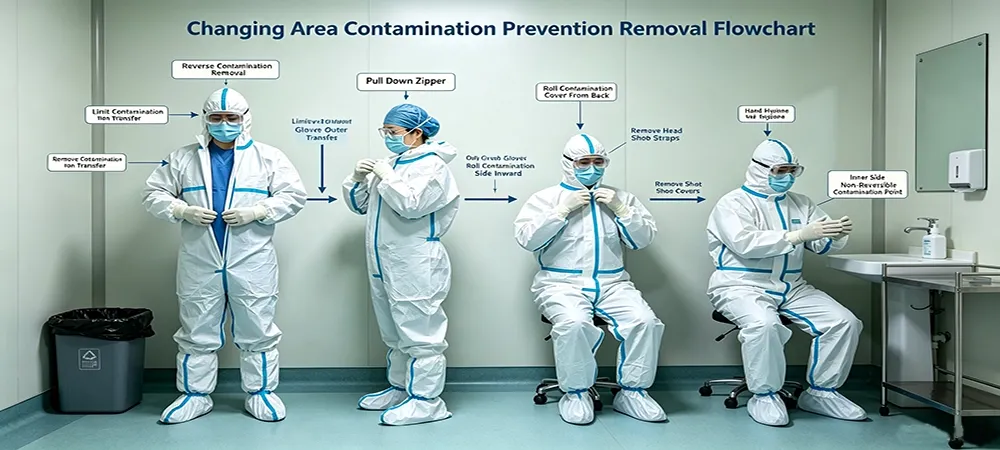
The reverse procedure contained the contaminants. The backward sequencing of removing contaminated clothing limits contaminated garment transfer through the gowning area.
- Peel off outer gloves without contacting bare skin and discard in a waste receptacle.
- Unzip the coverall. With the outer side of the coverall facing inwards, roll down the coverall from the shoulder and do not shake the coverall.
- Remove the mask by holding only the straps and do not touch the front of the mask.
- Remove hair cover from the back and peel forward.
- Sitting down, peel the shoe covers off without touching the outer sole.
- Perform hand hygiene and do not touch the inner side of the coverall as it is the irreversibly contaminated point. It is an irreversible contamination point, and the outer shoulder side of the coverall must be rolled on the outer side of the gloves.
🔴 Critical “irreversible contamination point”: Never touch the inner (clean) side of the coverall with contaminated gloves. Always roll the garment so that the contaminated outer surface is contained inside.
🚨 Emergency Evacuation Exception – Life First
The goal of safety is preservation of life; hence, during a fire alarm or a toxic gas alarm, clothes must be ungowned through the gowning room and the exit must be taken. The contaminated coverall must be disposed of or resterilized after the emergency.
👤 Visitor & Non-Operator Protocol
The gowning process is only performed in the vicinity of gowning for not more than 1.5 the standard allotted time per gowning. The gowning process is performed by a certified QA engineer, and visitors are not permitted to perform the process without a certified engineer. ESD and garment inspections are performed pre-entry.
Microbial Control – Settle Plates, Contact Plates & Air Samplers
Microbial limit testing techniques are just as important as particle testing methods in pharmaceutical and other sterile applications. Below is a sample comparison for ISO 5 / Grade A environments.
| Parameter | Limit |
|---|---|
| Particles (≥0.5 μm) at-rest | ≤3,520 / m³ |
| Particles (≥0.5 μm) operational | ≤3,520 / m³ |
| Settle plates (90 mm, 4h) | ≤1 CFU |
| Contact plates (55 mm) | ≤1 CFU |
| Active air sampler (1 m³) | ≤1 CFU |
Note: The limits are standard EU GMP Annex 1 and ISO 14644-1 requirements. Always check the specific validation protocols of your site.
ISO 5 Cleanroom Garment Standards
Cleanroom garment standards are not the same as普通 dust-proof garments. The principal aim of cleanroom garments is the prevention of contamination by personnel in the form of particles and fibers. Sterile garments must also be designed to prevent contamination by microbes and to be compatible with sterilization methods.
🧪 Deiiang Lab Data – ESD Degradation: After 50 cycles of 121°C steam sterilization, the surface resistivity of ultra-fine polyester + conductive fiber fabric rises to 10⁷ Ω which is 10⁹ Ω. This exceeds the ISO 5 ESD control limit. Deiiang Lab also recommends that garments contain RFID auto-count chips and that garments are permanently removed from circulation after 45 wash cycles.
Essential Metrics for Garment Selection
- Particle shedding
- Fiber shedding
- Filtration
- Electrostatics
- Abrasion
- Durability after washing
- Compatible with sterilization
- Type of seams
- Type of seals
- Comfort level
Garment Requirements by Application
| Application/Industry | Main Concern | Garment Considerations |
|---|---|---|
| Sterile pharmaceuticals | Control of microbes and particles | Fully encapsulated, non-shedding, sterilizable |
| Medical device manufacturing | Control of particles and fibers | Low-shedding fabric with controlled packaging |
| Semiconductor manufacturing | Control of particles and electrostatics | Low particle shedding fabrics with electrostatic dissipation |
| Laboratory cleanroom | Control of contaminants Flexible | Reusable or disposable depending on risk |
| Controlled environments | Basic particle control | Overall with hair cover and gloves |
Single-Use vs. Reusable Cleanroom Garments
The choice of single-use or reusable garments depends on the risk of contamination, production, and cleaning and sterilization capabilities, as well as the site Quality System. This includes the initial purchase cost, the cost of laundering, the stability of supply, the availability for sterilization, the impact on the environment, the consistency of quality, and the ease of detection of damage.
Impact of Human Behaviors on Particulate Generation
The speed of movement, posture, the density of personnel, the level of talking, and the consistency of training impact particle shedding. Rapid movements create turbulent airflow around garments, and frequent turning resuspends particles. Shaking garments during dressing causes fiber shedding along with residual particles.
Dg2bonGJnXg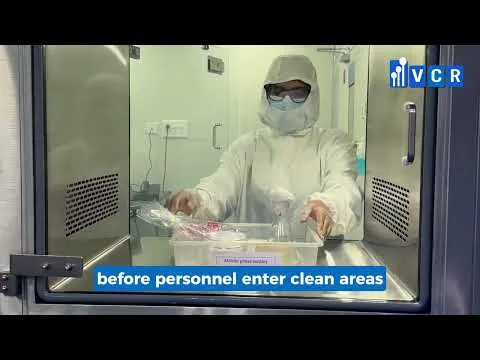
Movement Speed and Posture
- Fast movements cause a higher rate of particle generation.
- Frequent turning may resuspend particles.
- If seating is unavoidable, ensure the garment does not come into contact with the floor. Use the designated bench to change shoes.
- Avoid leaning against walls.
- Do not place gloves on the work surface.
- Avoid stepping across clean/dirty boundaries.
Talking and Personnel Density
More people increase the potential contamination load. Unnecessary conversations in the gowning area should be eliminated. Maximum simultaneous occupancy in each area should be controlled.
Consistency in Training
To maintain consistency in training, three levels are suggested: viewing a demonstration, practicing on-site, and performing tasks independently while being observed. A gowning compliance scorecard can include the following points:
- 20 points for hand hygiene
- 15 points for shoe changing
- 25 points for donning a garment
- 15 points for gloving
- 15 points for final check
- 10 points for behavioral standards
This scorecard represents the quality department's standard, but is not required by law.
Validating an ISO 5 Gown Procedure
Validation determines whether, and to what extent, gowning procedures, and the Class 100 gown system, are effective in the control of contamination. This is achieved via testing of personnel particle testing, testing of garment performance, and environmental testing.
Personnel Particle Testing
- Assessing particle counts pre- and post-movement of personnel
- Differences in static vs. dynamic particle counts
- Differences in counts due to the movement of personnel
- Differences in counts due to the movement of the personnel with respect to the garment
- Differences in counts due to the movement of personnel with respect to the garment in dynamic modes
Garment Performance Testing
- Testing of particle release from the garment
- Testing of the filtration performance of the garment
- Testing of the integrity of the seam of the garment
- Testing of the garment after it has been laundered
- Testing of the garment after it has been sterilized
- Testing of the electrical properties of the garment
Environmental Testing in Cleanrooms
- Testing of the airborne particle count in the cleanroom
- Testing of the integrity of the HEPA filter
- Testing of the air and measurement of the velocity and volume of the airflow in the cleanroom
- Testing of the airflow in the cleanroom
- Testing of the differential pressure in the cleanroom
- Testing and measurement of the temperature and humidity in the cleanroom
- Testing of the cleanroom recovery time
- Testing of the microbiological quality of the cleanroom environment
Results of the Testing of the Above
Even if the testing of the above is exhaustive and comprehensive and all tests are passed, control of the particulate count in the cleanroom is not guaranteed. Conversely, training personnel in cleanrooms on environmental testing is not sufficient to the
Deiiang Engineering Case Study
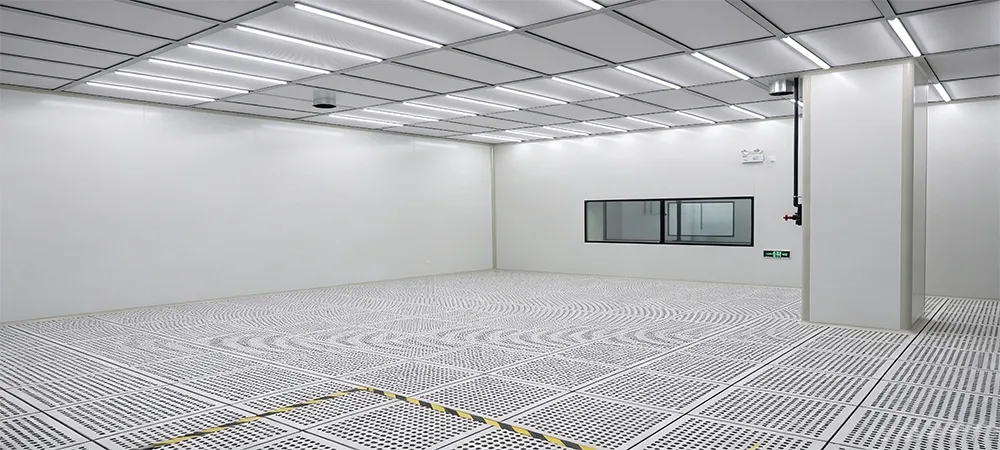
Deiiang™ has lots of experience working with ISO 5 cleanrooms. This includes the YWL Q8 production line in Jingmen, Hubei, China. This site constructs lithium-ion batteries and required ISO 5 cleanrooms for 40 production lines, with a footprint of 1,800 m². Deiiang developed the cleanroom and built the project for USD 1.98 million.
Real Pain Point – Particle Surge During People Movement
During the first tests of the lines, the cleanroom captured 0.3 μm particles at 2,800 particles/m³ and showed an instantaneous capture rate of about two thousand eight hundred particles per cubic meter when people in the production zone walked. The Deiiang team identified that there was no clean zone barrier along the gowning passage, and that air was streaming from the production zone into the gowning area.
Solution: A pressure differential barrier of at least fifteen Pascals was constructed along the gowning passage, and the critical FFUs were upgraded to U15 grade ULPA filters. Particle count fluctuation was reduced by 82% and was stabilized at a maximum of 500 particles/m³.
Project Results
- 99.8% reduction in particle interference
- 0.3 μm particles < 200/m³ (ISO 5 limit: 3,520)
- Air recovery time: 42 seconds (iso 14644-3 allows for air recovery time of <90s)
- 41% reduction in HVAC energy consumption, with GCC®️ EC motors
- 65% reduction in validation labor, with Deii®️ monitoring cloud
ISO 5 Gowning Room Airflow & FFU Calculator
Estimate the number of FFUs required to achieve the needed pressure differential for the gowning area based on room size, air changes, and occupancy.
Results:
Total airflow required: 600 m³/h
Recommended FFUs (1500 m³/h each): 1 units
Suggested pressure differential: 15 Pa (minimum)
Estimated gowning cycle time per person: ~3 minutes
* Calculator uses typical FFU airflow (1500 m³/h) and ISO 14644-3 guidance. Deiiang recommends 12–15 Pa between ISO 5 and change room for optimal operation.
Common Misconceptions About ISO 5 Gowning
Myth 1
Gowning Time Equals Cleanliness
Cleanliness is not a byproduct of time spent. Gowning performed in a hurried manner can even generate more particulates. The gowning protocol should rely on the quality and order of movements, which can be assessed by performing particle counts.
Myth 2
All Coveralls Comply with ISO 5
Every cleanroom coverall has a unique release and retention of particulates. Just because cleanroom coveralls are dustproof, doesn’t mean they comply with ISO 5. When choosing garments you should consider the risk of the process, the risk of the organisms and the validation requirements.
Myth 3
Gloves Remove All Contamination Concerns
Every surface is potentially contaminated and can be a source of contamination to the end product. Breaks in the glove, improperly donned gloves and infrequently changed gloves can lead to contamination concerns. Glove use does not remove the need of proper hand washing and behavioral controls.
Myth 4
Visual Cleanliness Equals ISO 5
Just because a cleanroom appears visually clean, does not mean it is ISO 5 compliant. Compliance with ISO 5 mandates that the cleanroom systems be verified with calibrated equipment. Compliance also requires the assessment of the dynamic aspects of the cleanroom.
Myth 5
Maintenance Free FFUs
FFUs filters have a finite life. Over time the filter can become less effective and the system may not meet the design requirements. The seals that hold the filter should be checked. A routine scheduled maintenance and validation should be performed.
ISO 5 Contamination Control Factors
Personnel Behavior
trained for movement, hand hygiene, and sequences for entering and exiting the controlled environment.
Garment Integrity
tests fabric strength, seam integrity, and ease of dimensional accuracy.
Airflow & Filtration
FFU layout, HEPA integrity, and pressure control
Gowning Compliance Checklist
Hand HygieneRequired
Hair and Face CoverageRequired
Coverall IntegrityRequired
Glove-to-Cuff OverlapRequired
Mirror/Buddy/Eye device CheckRequired
No alarms in Gown Off or Gown On positionRequired
Contamination Risk Levels
High Risk
Touching non-clean surfaces after glove application
Medium Risk
Rapid movement or repeated garment adjustment
Lower Risk
Slow and controlled movements. Garment integrity has been verified.
ISO 5 Gowning Checklist
Have
- All personal items removed
- Absences of visible illness or wounds
- Correct size garment chosen
- Gown package inspected for seal integrity
Then conduct
- Hand hygiene
- Shoe cover
- Hair covering
- Cover garment laid out flat on the ground
- Mask
- Garment contact with the ground is to be avoided, and shaking is to be avoided.
- Shoe covers
- Glove cuffs overlapping sleeve cuffs
Then complete
- Mirror Check, Buddy Check
- All zippers, cuffs, and ankles secured
- Normal status of the room
- Prior to enter the ISO 5 you must complete the air shower or airlock procedure
FAQ
Q1: What is the correct ISO 5 gowning sequence?
Hand hygiene, shoe cover, hair cover, mask, coverall, glove, final check, air shower, airlock, then enter the clean room. The approved SOP must be followed for the on site sequence.
Q2: Is ISO 5 the same as Class 100?
The standards ISO 5 and Class 100 describe similar clean environments but use different standardized systems. The project documents must state the standard version, the particle size, and the state of the tests.
Q3: What clothing should someone wear in an ISO 5 cleanroom?
Because ISO 5 cleanrooms are more sterile than cleanroom classes, the clothing worn there includes coveralls, hair covers, facemasks, shoecovers, and gloves. In addition, sterilization and microbial control are concerns for sterile production areas.
Q4: Are air showers a good substitute for gowning?
No. air showers are effective only for a small part of the control of contamination system. They cannot substitute for hand washing, gowning, garment selection, and behavior controls.
Q5: How frequently should garments used in cleanrooms be replaced?
It depends on the risk of contamination, damage, and the garment type and wash cycle, along with the site's SOP. Criteria for replacement should not be time but records of inspections along with performance validation.
Q6: What purpose does FFU serve in cleanrooms of ISO 5 grade?
FFU in ISO 5 cleanrooms is used to supply filtered air for clean class control and stable performance. However, the dropping performance level of the system depends on the quality of the filter, sealing and layout of the system, the air flow, design of the return air, and the maintenance that has been performed.
References
- iso 14644-1:2015 – Cleanrooms and associated controlled environments
- iso 14644-3:2019 – Test methods
- IEST-RP-CC012.3 – Garment System Considerations
- Deiiang™ Cleanroom Solutions – Product & Project Data
All referenced standards and project data are used for educational and reference purposes. Actual project validation must follow site-specific protocols and applicable regulations.
© 2026 Deiiang™ cleanroom engineering • All rights reserved.