+86 13638632902
 Jason@cleanroomequips.com


 MENU
MENU
iso 5 cleanrooms can be found in the most critical areas of pharmaceutical, biotech, medical device, and sterile manufacturing operations. Many use VHP (Vaporized Hydrogen Peroxide) for room sterilization and biocontamination. However, continual use of hydrogen peroxide vapor can degrade unsuitable wall panels, ceilings, sealants, door frames and fittings.
Improper material selection can result in surface discoloration and gloss loss, chalking, embrittlement, micro-cracking, and failure of joints. These problems do not necessarily result from the first sterilization. The negative impacts are cumulative. Therefore, the design of iso 5 cleanrooms must take into account not only the initial design control, but also the long-term impacts of exposure to VHP.
The cleanroom panel must also maintain surface quality, cleaning, and sealing performance after repeated VHP decontamination cycles.
Choosing the correct cleanroom panels resistant to VHP is the first step in sustainable compliance. In order to provide support for decision making for hydrogen peroxide decontamination environments, this article covers the mechanisms and principles of degradation and loss of important properties, a comparison of materials, and examples from practice.
What is VHP Decontamination?
Basic Principle of VHP
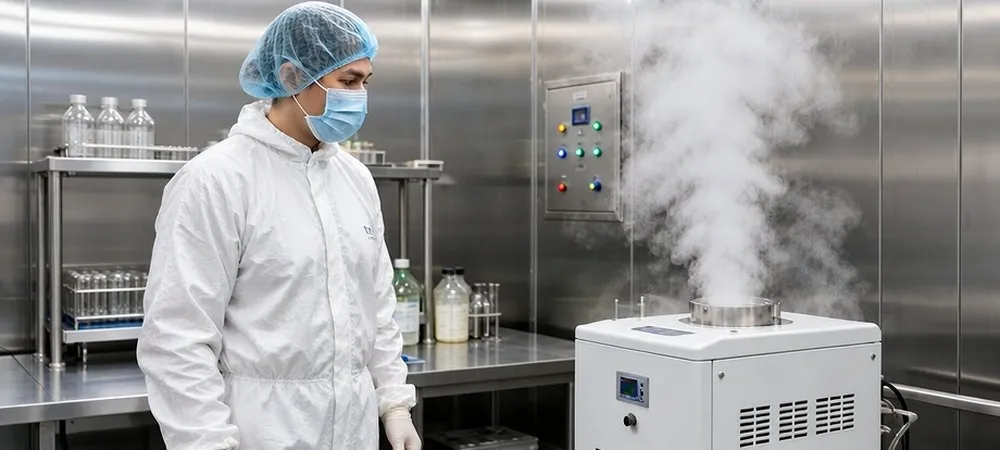
VHP Decontamination is one of the few gaseous sterilization methods. In this process, hydrogen peroxide is vaporized and introduced into the target location. With the use of controlled equipment, the vapor moves to infection of all the target microorganisms. The denatured proteins and nucleic acids of the microorganisms are then exposed to the oxidizing agent. Once the sterilization process is complete, the hydrogen peroxide is catalyzed to decompose into water and oxygen.
VHP vs. Routine Surface Disinfection
VHP performed as a gaseous decontaminating agent is not the same as wipe-down surface disinfection. VHP gaseous sterilization:
- Can penetrate completely to all surfaces and interiors of equipment.
- Requires controlled parameters such as concentration, humidity, temperature, and time.
- It requires substantially more stringent long-term compatibility of materials.
- It has a cumulative effect on wall panels, sealants, doors, viewports, and equipment housings.
A standard VHP cycle runs between 250–400 ppm H₂O₂, with contact times between 15–45 minutes at 20–30°C and 30–60% RH (relative humidity). Annual cycles can be in the dozens to the hundreds, depending on the production cadence and regulatory validation.
Airflow Dynamics and Concentration Uniformity in ISO 5
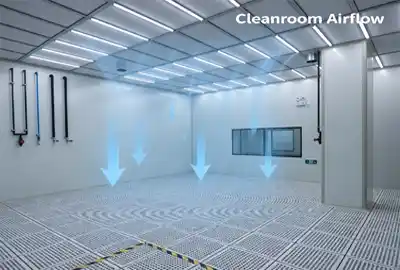
unidirectional airflow design in ISO 5 cleanrooms is usually vertical and set between 0.36 and 0.54 m/s. During VHP decontamination, the HVAC (Heating Ventilation and Air Conditioning) system is normally switched to low-velocity recirculation mode. Return air panels and chase dead zones are frequently subject to VHP concentrations of greater than 500 ppm, more than twice the concentration measured at the center of the room.
The concentration gradient results in a corrosion hotspot that is not visible. Because of the concentration of VHP, the corrosion is not localized and panels are subject to corrosion in the open air, and even more so at the joints and cut edges. It is the duty of the engineering group to design a solution to the problem by specifying materials that have protection of the edges that is adequate and selecting materials that have an appropriate level of corrosion resistance at concentrations greater than 500 ppm. The lack of attention to the airflow non-uniformity is the most frequent cause of failure of materials in the most critical areas.
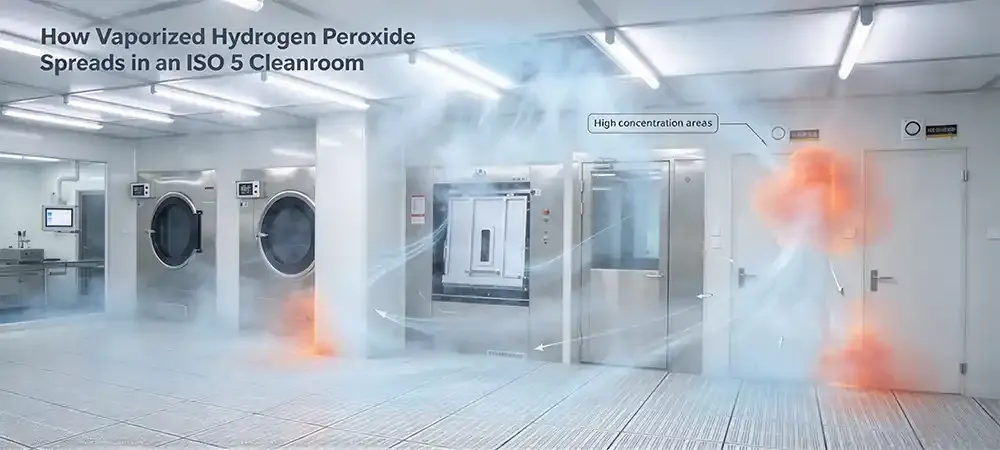
How Vaporized Hydrogen Peroxide Spreads in an ISO 5 Cleanroom – pay attention to high concentration areas around the return air grilles.
VHP-Compatible Materials in ISO 5 cleanroom construction
1LZTdmzv69U
Surface Specifications for ISO 5 Cleanrooms
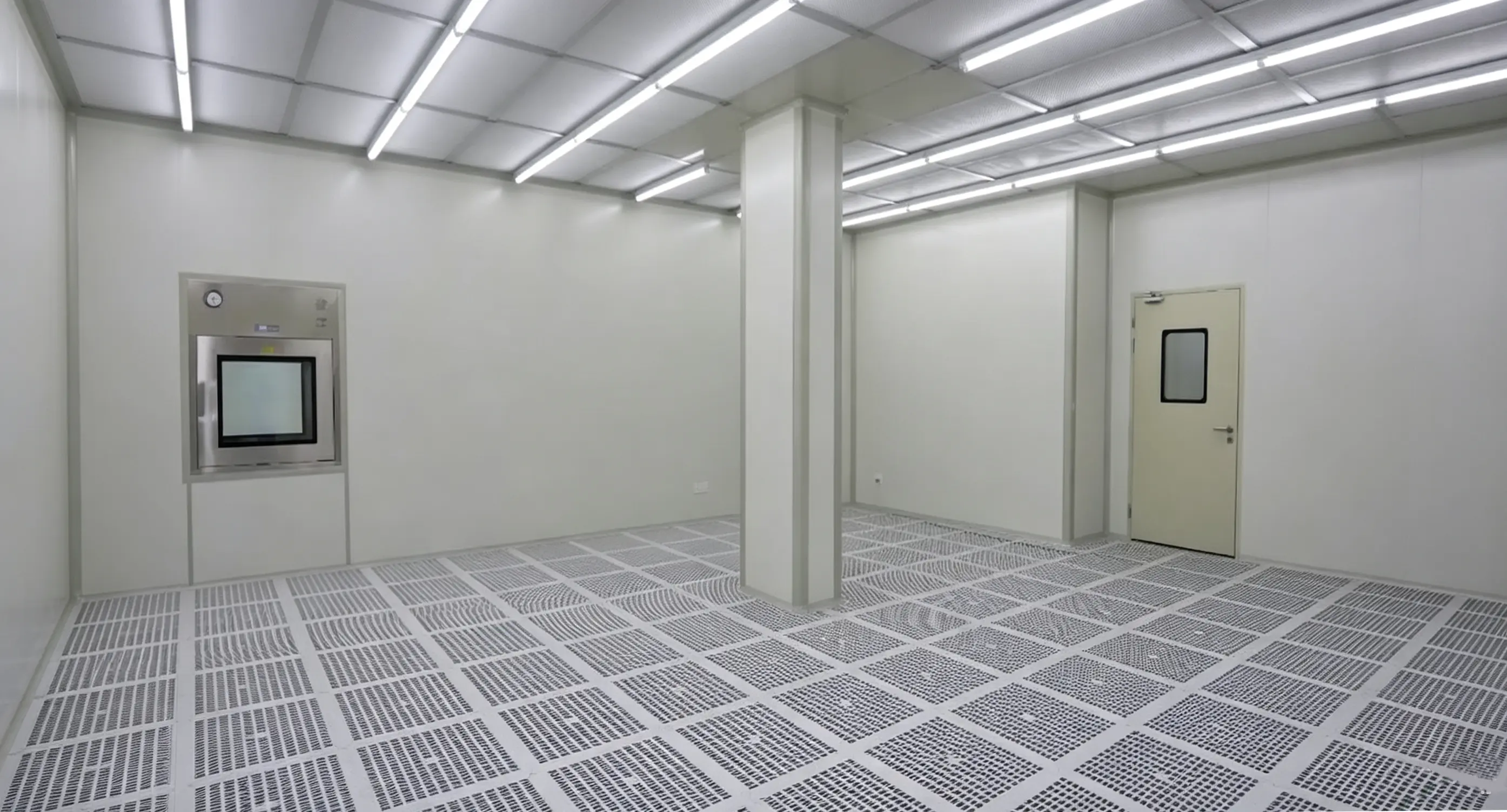
In ISO 5 cleanrooms, surfaces must be smooth and continuous, devoid of pores, indentations and any features that would make them difficult to clean. These surfaces should not shed particles, should be easy to clean and disinfect and should maintain strong seals between surfaces and panels, ceilings, floors, and doors. They should maintain their integrity long-term, and not just through the acceptance of the project.
The Effect of Surface Degradation on Cleanrooms
Once a surface starts degrading, a chain of cleanroom performance issues follows:
- Smoother surface leads to less retention of cleaning agents and disinfectants
- Improved adhesion of dust and other airborne microorganisms
- less frequent maintenance.
These lead to a significant increase in cleanroom maintenance and revalidation activities. These issues are of utmost importance for cleanroom surfaces: Surface integrity and surface degradation.
Effects of VHP on Cleanroom Panels Lacking Resistance
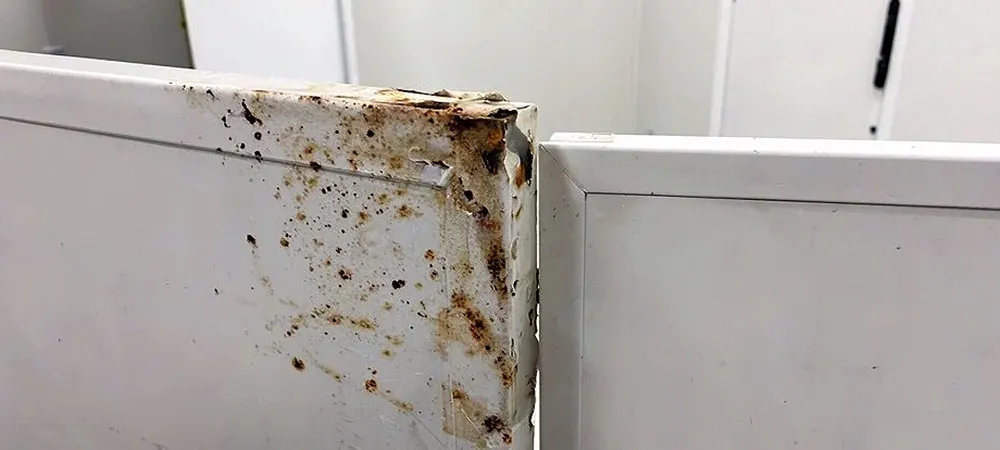
Gloss-Reduction and Surface Discoloration
Material surfaces may first become discolored and lose gloss. Some may even develop a whitish appearance. While these symptoms may not impact the surfaces' ability to function, they do signal the beginning of surface failure.
Polymer Chain Oxidation
Polymer chains may oxidize leading to the loss of flexibility. Oxidation may also trigger plasticizers to migrate and surface embrittlement. Standard Polyester coating may become discolored with VHP exposure after a period of 3-6 months.
Micro-Cracking
Due to the presence of micro-cracks, surfaces may become even more difficult to clean. While these micro-cracks may not be visible, during cleaning they may harbor microorganisms and particulate matter. Micro-Cracks pose greater risks for cleanroom surfaces than larger flaws.
Sealants, frames, and accessories must be considered
Don't analyze only the main panel. Other important factors include joint sealants, door frames, viewport edges, wall penetrations, outlet boxes, diffuser surrounds, cut panel edges, and ceiling-wall connectors. Damaged sealants result in VHP leakage, extend the aeration process, and decrease production efficiency.
Sealant Chemistry: Silicone, MS Polymer, and Cold Welding
Approximately 80% of joint integrity issues are due to joint failures. To a certain degree, sealants are not all the same under VHP.
- Neutral silicone sealants: They are commonly used but cause a little bit of outgassing and surface hardening after extended periods of VHP exposure, causing surface micro-cracking.
- MS polymer (Modified silane): Greater flexibility but adhesion at higher humidity may loosen, and surface preparation is critical.
- Low outgassing fluorosilicone: It is a special VHP formulation and retains adhesion and elasticity after 500+ cycles.
- Deiiang Cold-Weld compression strips: This is a mechanical sealing system, and since there is no chemical sealing system, it is a safe choice for critical joints in ISO 5 as well.
For most pharmaceutical applications, it is recommended to use low outgassing fluorosilicone or the Cold Weld strip system for joints that will experience repeated VHP exposure.
⚠️ PITFALL #1: Liquid Immersion Test ≠ Vaporized VHP Test
There are low cost suppliers that perform 24 hour immersion tests in 30% liquid hydrogen peroxide and call their product a vapor phase hydrogen peroxide (H2O2) vapor phase corrosion test. This is a liquid phase vs. vapor phase attack. This is the "corrosion resistance testing" report in the industry. Always ask about the test conditions.
⚠️ PITFALL #2: Cut-Edge Rust – The Quiet Yet Dangerous Threat
When cleanroom panels are cut on-site, if the cut edges are not completely encased in anti-corrosive edge sealing, VHP and increased humidity can result in base material corrosion within three to six months. This expunges the cleanroom and invites failing audits. Always specify full edge sealing on cut panels.
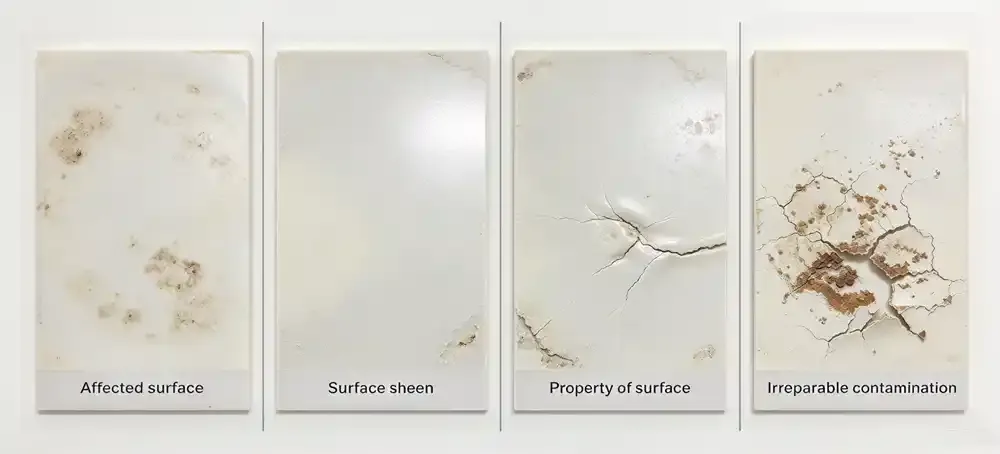
The four stages of material degradation due to VHP exposure are as follows: 1. Affected surface 2. Surface sheen 3. Property of surface 4. Irreparable contamination.
VHP-Resistant Cleanroom Panel Attributes
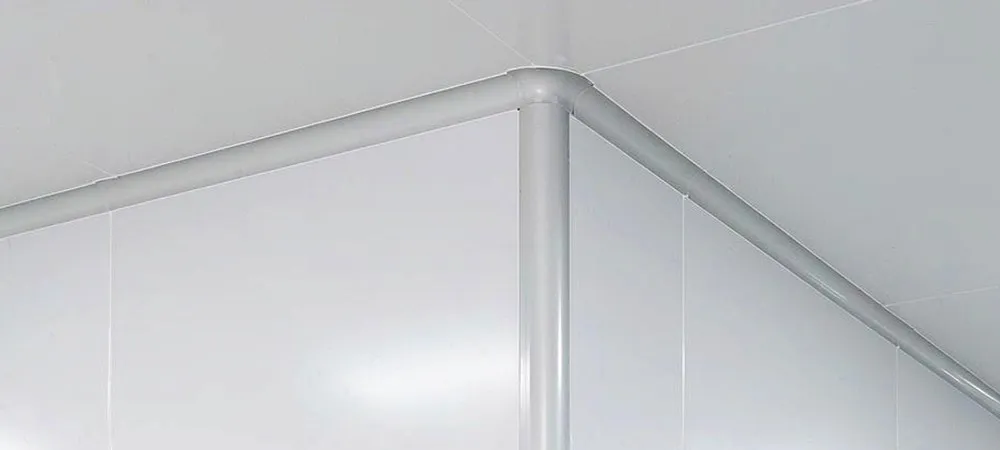
Resistance to Chemicals
The panels should remain intact when exposed to VHP, diluted H₂O₂, alcohol-based disinfectants, qac, acid and base cleaning agents, and extreme conditions of wet cleaning. You should not accept a claim of “general chemical resistance” or similar marketing tactic. You should request a 3rd party certification. It is important to understand the impact of dwell time of the cleaning agent and the number of cleaning cycles. For example, 316L stainless steel withstands pitting for >500 cycles at 4 mg/L H₂O₂, in comparison.
In some cases, cleanliness and the resultant surface integrity are long-term and labor intensive, but are most time and labor.
Low Particle Shed
Coatings should not break down and release particles when cleaning. Edge conditions and openings through panels require special consideration. Level of quality ACHieved is the same as panel quality.
Stability of Dimensions
VHP cycles can shift the internal temp. and humidity which can cause the panels to shift and cause filler stresses on door and window sums and shift gaps.
Joint and Sealant Compatibility
Where failures are likely occurring include panel joints, perimeter gaps, floor to ceiling joints, door perimeters, and at equipment penetrations. Therefore, VHP compatibility needs to be assessed as a system characteristic, rather than a single panel attribute.
Material Comparison Matrix – Visual Ratings
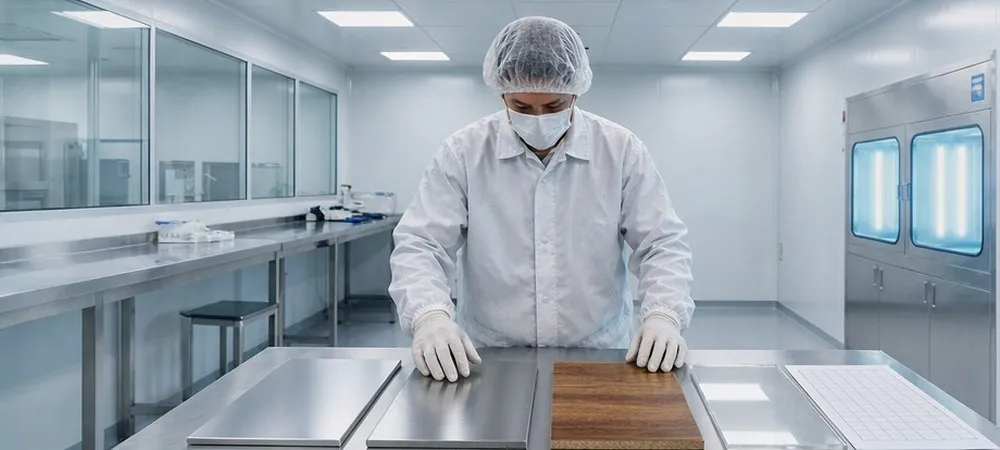
The table below uses color-coded ratings (Excellent / Good / Fair / Poor) to help you quickly assess each material’s suitability for VHP environments. Always cross-check with project-specific test data.
| Material Type | VHP Resistance | Edge Rust Risk | Cleanability | Cost Efficiency | Recommendation |
|---|---|---|---|---|---|
| Standard PVC | Non-ISO 5 General Areas | ||||
| Powder Coated Steel | Secondary Controlled Areas | ||||
| 316L Stainless Steel | High-Corrosion Zones | ||||
| Deiiang™ VHP-Pro Panel | ISO 5 Core Aseptic Areas |
| Material | VHP | Edge | Clean | Cost |
|---|---|---|---|---|
| Standard PVC | ||||
| Powder Steel | ||||
| 316L SS | ||||
| Deiiang™ Pro |
Material Structure & Surface Design
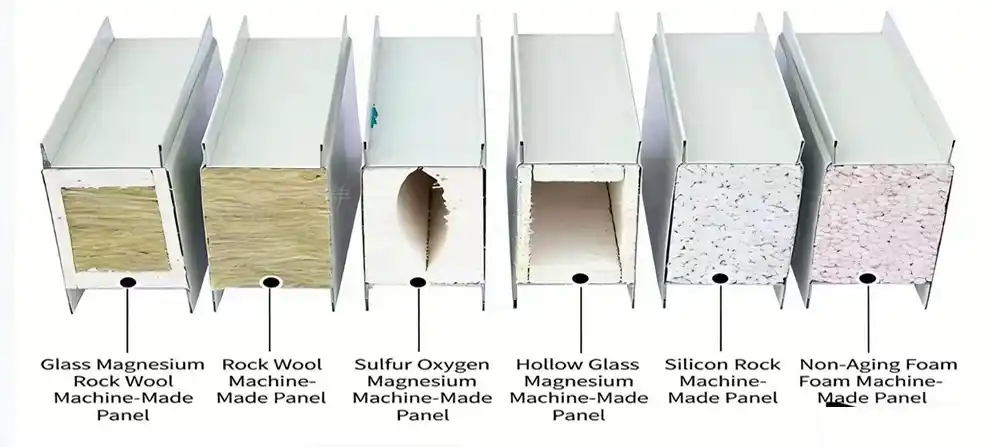
Deiiang™ provides a variety of cleanroom panels, including magnesium oxide, rock wool, coated manual boards, medical boards, and electrolytic sheets. Adjustments can be made to thicknesses, dimensions, coats, and core materials. Edge treatments facilitate modular installation. These panels comply with the stringent requirements of ISO 5.
Free Process: Double-Seal Edge Encapsulated System
Deiiang provides an exclusive patented encapsulation system of edges that have been cut for panels. This is a multi-layered anti-corrosive barrier that wraps every cut edge that prevents moisture and VHP permeation and protects the panel edge from all the corrosion that is associated with cut panels. Within the system is a primary sealant with a secondary protective coating of fluoropolymer. This system guarantees an extremely low edge corrosion even after more than 500 cycles.
Lab Accelerated Test Data (Real Measurement)
Independent tests were run under the worst simulated conditions of 400 ppm H2O2, at a temperature of 30 degrees centigrade, 50% relative humidity. 500 cycles of continuous use (5 years) were observed. The results were:
- Color difference (ΔE) = 1.1 (not visibly discolored to the eye)
- Gloss retention = 93.5% (surface integrity excellent)
- VOC emissions = < 0.02 mg/m3 (ISO 16000 standard compliance)
- Cross-cut test adhesion = Grade 0 (ASTM D3359 – highest rating)
Specifically designed for post VHP contact. Tested under set conditions. Verify for your project. Results are dependent on concentration, time and environmental conditions.
Lead product designer Jason.peng integrates material science with the joint engineering, and real field conditions to combine VHP contact as a design goal at the system level.
VHP Tolerance Assessment Calculator
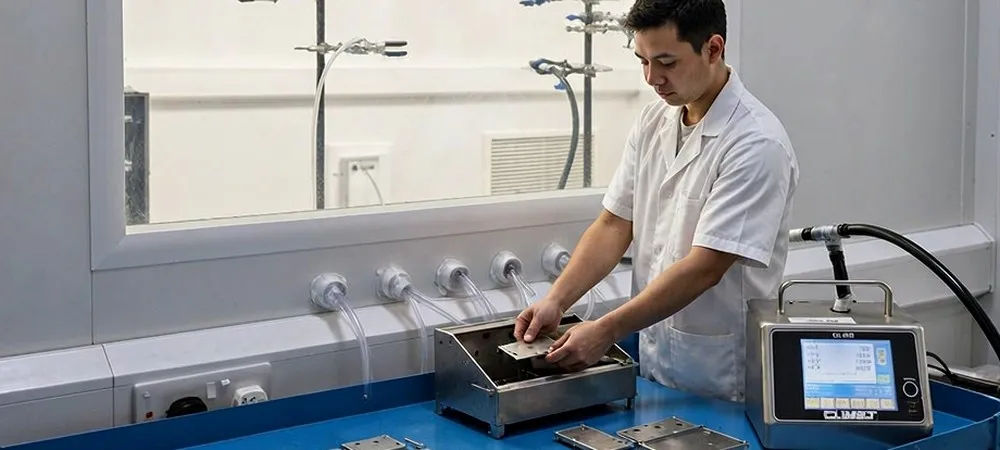
Select your process parameters below to get an instant recommendation for panel material, sealant type, and estimated service life.
Recommended Panel: Deiiang VHP-Pro Panel (Fluorocarbon coated)
Recommended Sealant: Deiiang VHP-grade silicone (low-permeability)
Estimated Service Life: > 5 years under these conditions
* Based on Deiiang internal accelerated test data. Actual life depends on installation quality and maintenance.
How to Confirm VHP Compatibility Pre Specification

Step 1: Identify Actual VHP Process Parameters
Request from the end-user the VHP generator specifications, target VHP concentration and exposure time, process temperature, relative humidity, fill/evacuate method, number of cycles per year, volume of the exposure room, and the locations of potential high concentration areas.
Step 2: Identify which Materials will be Tested
Testing needs to include more than just large surface areas. Testing should be performed on edges, cut faces, joints, sealants, door frames, viewports, surrounds, penetrations, connectors, and fasteners.
Step 3: Determine Baseline Conditions
Note the initial color and gloss of the surface. Document the condition of the surface and note the surface thickness and weight. Measure and document physical strength. Document the surface condition. Take clean and clear photographs. Use a microscope and document any surface residue.
Step 4: Perform Accelerated Testing
Assess the surface for changes including the loss of gloss, discoloration, cracking, and chalking. Assess the surface for changes including blistering and delaminating. Assess the surface for residues. Assess the sealant for shrinkage or loss of elasticity. Assess the sealant for shrining, and assess sealant for loss elasticity. Assess the ease of cleaning.
Step 5: Relate to Field Validation
Field validation will always be able to provide what lab testing cannot. In-room measurement and observation of VHP distribution; of the design; of the shielding; of dead volume; of the efficiency of the ventilation and the aeration time; and of the condition of the surfaces post-sterilization.
Validation Support Package (VSP) – Provided with Every Deiiang Panel System
For facility managers, like Alex, compliance does not mean the panel alone, but the complete traceable audit. Deiiang provides a complete VSP, including:
- DQ/IQ/OQ validation templates (Design Qualification, Installation Qualification, and Operational Qualification)
- Certificate of Analysis (CoA) for each batch with composition and physical property data including material composition, thickness, surface hardness
- 500-cycle VHP test report with full documentation at conditions of 400 ppm, 30° C, 50% RH, including before and after measurement data and photographic evidence.
- Installation and maintenance log sheets keep a chronological record of joint inspections, the condition of sealants, and the integrity of the panel surfaces.
- Regulatory cross-reference matrix – correlating test results with iso 14644, EU GMP Annex 1, and FDA guidance requisites.
This packet gives your audit team everything they need to show VHP compatibility, avoiding last-minute data omissions.
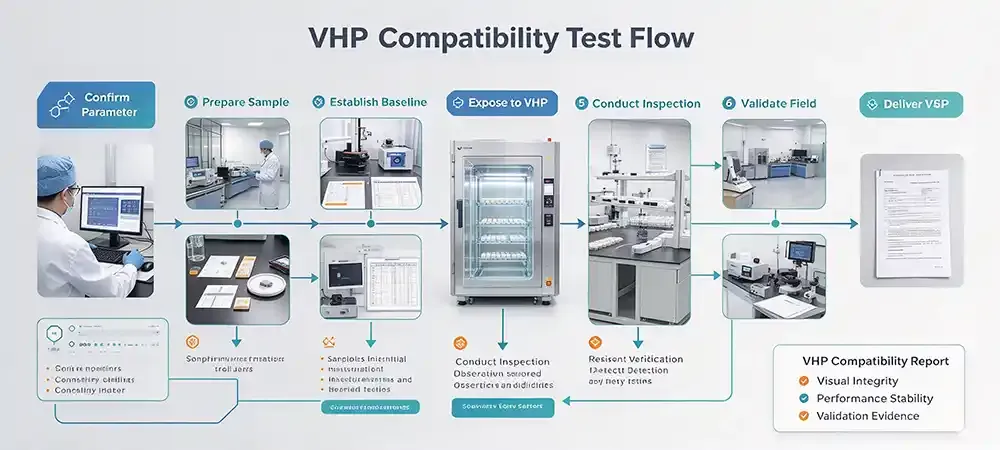
VHP Compatibility Test Flow: Confirm Parameter → Prepare Sample → Establish Baseline → Expose to VHP → Conduct Inspection → Validate Field → Deliver VSP
Case Study: Pharmaceutical Facility, VHP-Ready ISO 5 Cleanroom
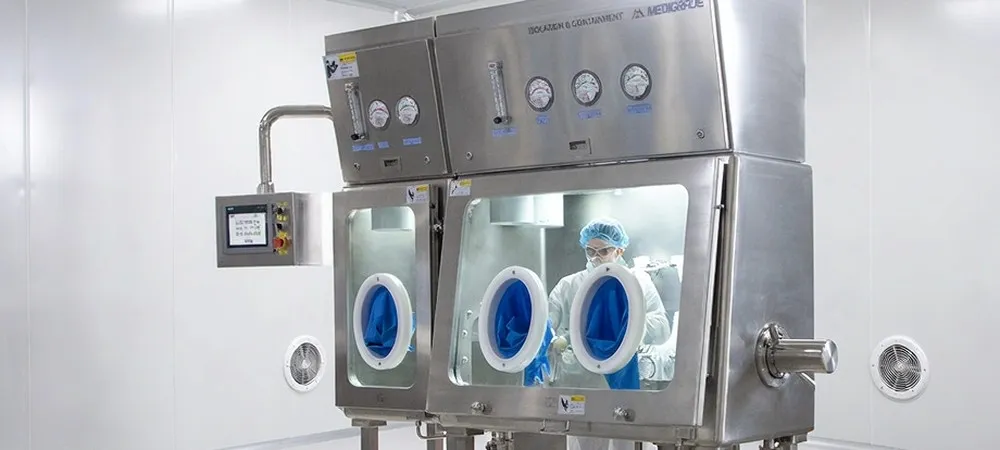
Project Description: Aseptic Filling Line Project
Customer: A Biologics Manufacturer
Country: China
Room Purpose: Aseptic Filling – cleanroom grade A
Cleanroom Class: ISO 5
Room Size: Approximately 120 m²
Panel Size: Approximately 480 m²
Construction Phase: 2nd Quarter 2025
VHP Configuration: Daily Full-Room Sterilization
Project Challenges
The client was looking for a solution for repeated VHP exposure, MedTech equipment with a complex layout and multiple panel penetrations, dead corners, spaces with no cross section, high cleaning requirements, and audit-ready documentation with minimal disruption to installation and downtime.
Order of Magnitude Challenges
- Challenge 1: Inconsistent Exposure – Equipment, Panels, and VHP Strainers caused Variations in Local VHP Concentrations
- Challenge 2: Framework – ISO 5 Spaces require the Integration of Panels, Ceilings, Doors, Viewports, and Equipment.
- Challenge 3: Balancing the need for on-site fabrication with the need for rapid assembly, precision, and sealing with joints and panel integrity for future maintenance.
- Challenge 4: The client required Specifications of the Materials; Reports of the Tests; Instructions for Cleaning and Maintaining; Instructions for Installation; Guarantees; and Field Delivery.
Deiiang's Solution
1. Material Selection: Deiiang™ provided pre-coated, inorganic, manual panels with a unique finish for enhanced resistance to oxidation by VHP. These panels were selected based on the client’s particular cycle parameters.
2. Systemized Joint Design: Design solutions for joint/edge closures between panel to ceiling, panel to floor, doors, viewports, equipment interface, wall penetrations, and panel edge closures.
3. Installation Quality Control: Assurance of proper assembly of the modules, control of the joints and corners, sealing of cut edges at the site, cleanliness, and inspection of the surfaces after construction.
4. Technical Documentation: Data sheets for the products, compatibility tests for VHP, instructions for placement, guidelines for cleaning and maintenance, records of material finished products, and documents for acceptance of the project.
Project Results
- Panel area installed - 480m²
- Installation: 15 Days
- VHP Cycles: 180 (August 2026)
- Surface: No gloss loss or discoloration
- Unscheduled Maintenance: None
- Client Testimonial: Passed GMP Annex 1 Audit
Persona: Alex, Facilities Manager
Alex (38-48) is the facilities manager of a company producing sterile pharmaceuticals. Prior to the yearly revalidation, he observed a reduction in gloss on the panels close to the equipment. Despite the particle count still being compliant, he noted an increase in the cleaning time for the joints.
Deiiang’s Methodology: Re-confirm the VHP parameters, inspect the materials and the sealing compounds, perform lab exposure tests on samples, tailor the joints, upgrade the panel system, and document the inspections. The solution evolved with the validation, eliminating the potential for a compliance issue.
VHP Cleanroom Panel Selection Checklist
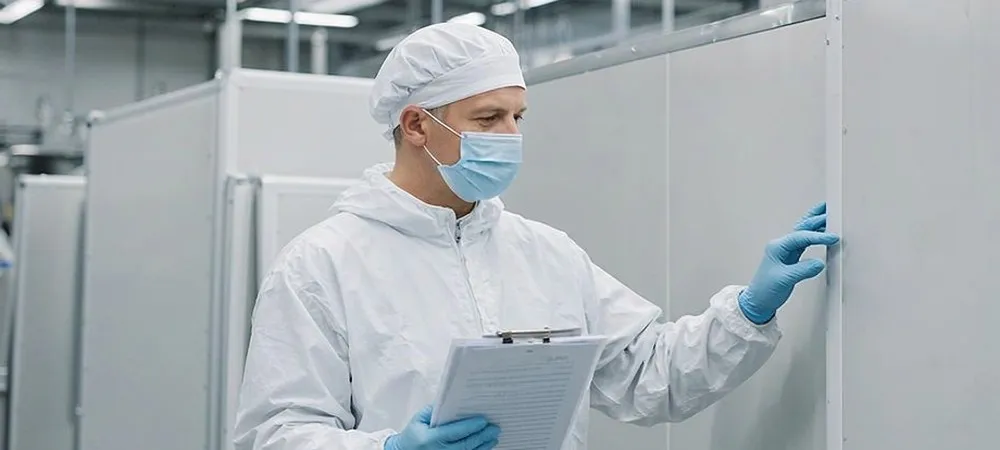
Determine the VHP concentration in relation to the exposure time and obtain the actual parameters of the VHP sterilization cycles from the end-user.
Take the conditions of the tests into consideration, not only the conclusions. Take the full test report and ask the end-user to include the cycle count and the conditions applied.
Consider the conditions and the treatment of the panel surfaces and edges. Make sure the panel edges are sealed and coated to prevent the absorption of moisture.
Consider the needs related to the joint systems of panels, and check the compatibility of the sealant with vaporized hydrogen peroxide and cleaning agents.
Make an inquiry into the cleaning and maintenance of the specific project to review the recommended cleaning agents and the frequency of maintenance.
Verify similar project references. Ask for information relating to the use of VHP and the performance of the related systems.
Check the warranty and what is covered during exposure to VHP.
Reference the lead time and replacement options. Be prepared for potential panel replacement in the future.
Frequently Asked Questions
What are VHP-resistant cleanroom panels?
VHP-resistant cleanroom panels are panels that protect the integrity of surfaces and the structural and cleanability of the panels under specified conditions of exposure to vaporized hydrogen peroxide.
Can cleanrooms constructed with standard PVC be used with VHP?
Not necessarily. The Surfaces, Treatments, and Cycles vary, and in some cases are consistent, with the use of VHP. Always ask for validation data for the specific products.
After VHP cycles, how often do cleanroom panels require an inspection?
The frequency of inspection is dependent upon the frequency of sterilization, the life/service of the item, and the type of material. Panels need to be inspected for surface, joint, seal, frame, and penetration integrity.
Can VHP damage sealants in cleanrooms?
VHP can cause hardening, discoloration, loss of elasticity, or shrinkage in certain sealants. Sealants, similar to panels, need to be tested in a full compatibility program.
What to include in VHP compatibility test report?
The test report should include the name of the material, description of the samples, test parameters, number of cycles, inspection techniques, photos of the sample before and after the test, description of appearance of sample, description of test performance, conclusion, date of the report, and lab accreditation.
Can VHP resistant panels be used in all type of ISO 5 cleanrooms?
No. The final decision should be based on the purpose of the room, sterilization methods, temperature and humidity, cleaning chemicals, and use of local regulations.
References
- iso 14644-1:2015 – Cleanrooms and associated controlled environments
- ASTM E2967-15 – Standard Test Method for Assessing the Ability of Materials to Withstand Repeated Vaporized Hydrogen Peroxide (VHP) Decontamination Cycles
- EU GMP Annex 1 – Manufacture of Sterile Medicinal Products
- FDA 21 CFR Part 11 – Electronic Records; Electronic Signatures
© 2026 Deiiang™ Cleanroom Solutions. Lead Designer: Jason.peng. All data based on internal testing and project records. Always verify compatibility against your specific process parameters.