+86 13638632902
 Jason@cleanroomequips.com


 MENU
MENU
cleanroom classification is the very first, most vital part of cleanroom design work. Of course, eACH upgrade in ISO cleanroom rating necessitates changes to the cleanroom design, equipment, and materials, which in turn affects the project budget.This iso classification, or cleanliness classification, basically makes or breaks your whole facility project.
Most cleanroom classification levels are typically: iso 5, ISO 6, ISO 7, and iso 8. iso 8 cleanliness standard, the air exchange rate is 20-25 times per hour. But iso 5 standards, the number of air exchanges per hour can be increased several times over.The number of air changes per minute is very important for the cleanliness level of a cleanroom.
IENbOfC4df8
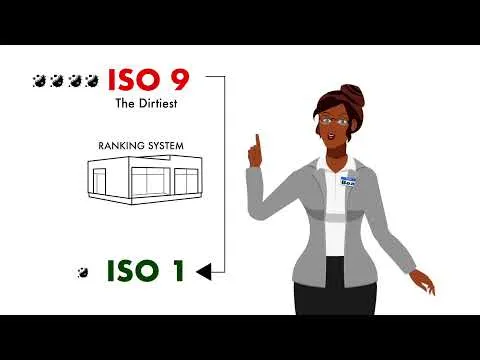
ISO 14644-1 Cleanroom Classification System Explained
iso 14644-1 Standard Overview
ISO 14644-1 is the international standard for classifying air cleanliness in cleanrooms and controlled environments. This globally recognized standard has replaced many regional classifications, creating a unified system for cleanroom specification.
Core Concept: Particle size and count per cubic meter. The standard defines specific limits for airborne particulate contamination, with classifications ranging from ISO Class 1 (cleanest) to ISO Class 9 (least clean).
Understanding Core Parameters of ISO Classification
Particle Sizes
0.1 µm (ultrafine particles)
0.3 µm (common testing size)
0.5 µm (standard reference size)
1.0 µm (visible with microscope)
5.0 µm (human hair is 50-70µm)
Particle Count per Cubic Meter
This is the fundamental basis for classification. The standard specifies maximum allowable concentrations for particles equal to and larger than the specified sizes.
ISO Classification Levels Reference Table
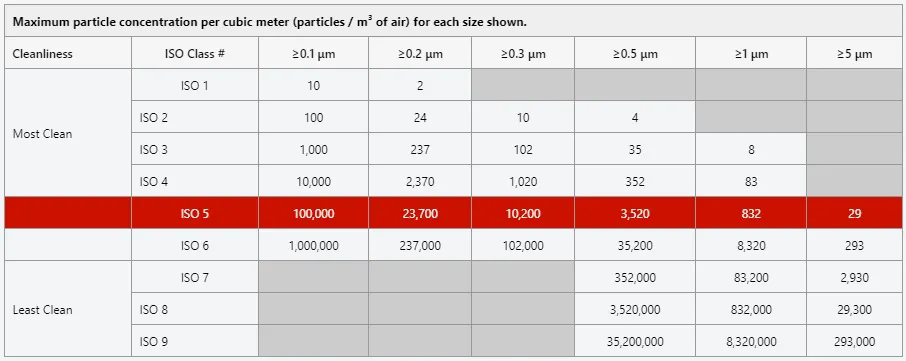
Table: Maximum allowable particle counts per cubic meter by particle size and ISO class
Particle Count Analysis Chart
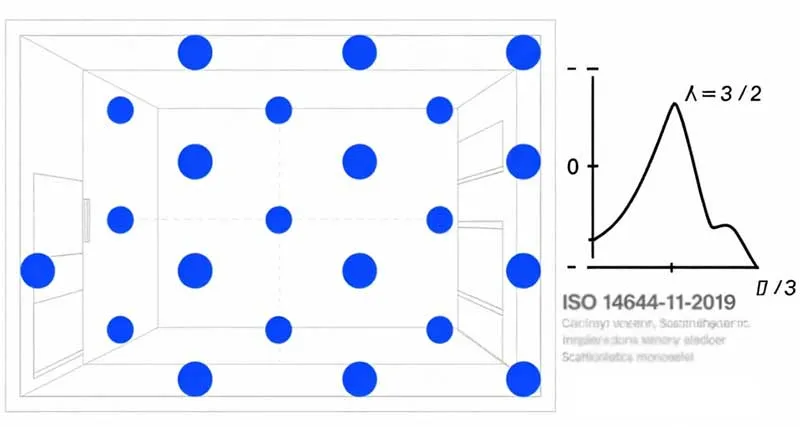
This visualization demonstrates how particle count limits decrease exponentially as ISO classification becomes stricter. For example, iso class 5 allows 3,520 particles ≥0.5µm per m³, while iso class 8 allows 3,520,000 - a 1,000x difference.
Key ISO cleanroom classes (ISO 5, ISO 6, ISO 7, iso 8) In-Depth Analysis
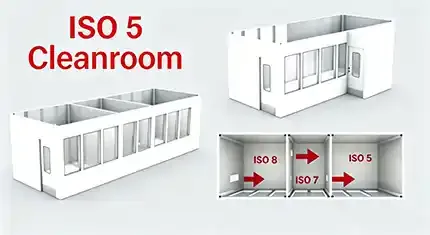
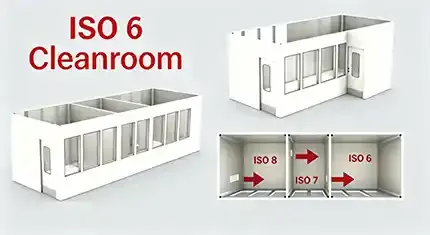
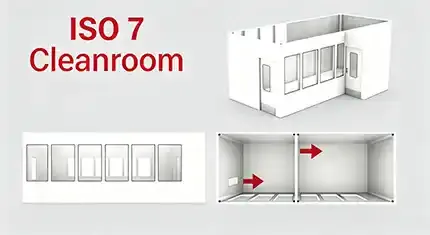
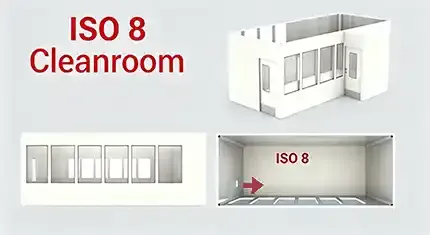
Critical Factors in cleanroom design and Operation
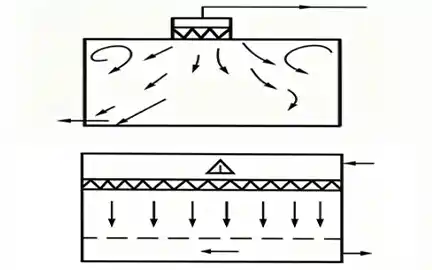
Cleanroom Airflow Patterns
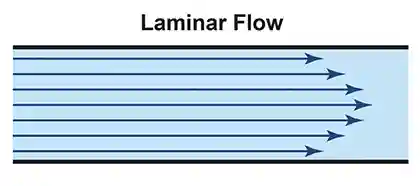
Unidirectional (Laminar) Flow
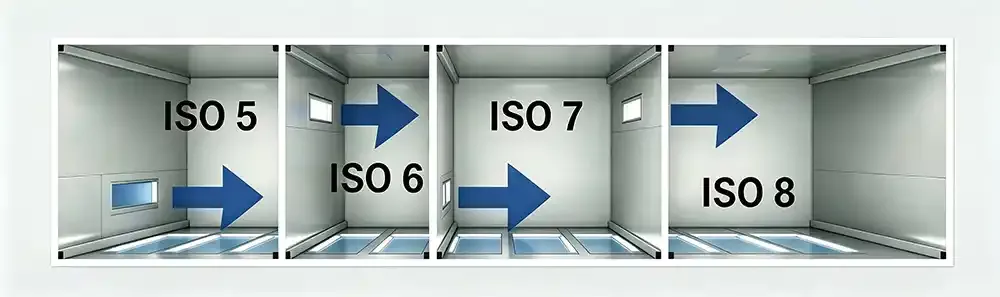
Used primarily in ISO 5 and higher classifications. Air moves in parallel streams with uniform velocity, typically at 0.45 m/s ±20%. This effectively sweeps particles away from critical processes.
Non-unidirectional (Turbulent) Flow
Used in ISO 6, ISO 7, and ISO 8 (and lower classifications). Air movement is less controlled but sufficient for less critical applications. Relies on dilution principle with adequate air changes.

Filtration Systems
HEPA filters
High Efficiency Particulate air filters remove 99.97% of particles ≥0.3µm. Essential for ISO 5-8 classifications. The utilizes specialized HEPA filtration to maintain food-grade purity standards in edible salt production.
ULPA Filters
Ultra Low Penetration air filters remove 99.999% of particles ≥0.12µm. Used in the most stringent applications beyond ISO 5 requirements.
Multi-Stage Filtration System
Most cleanrooms employ a multi-stage approach:
Pre-filters (MERV 8-13): Capture larger particles, extending HEPA lifespan
Intermediate filters (MERV 14-16): Additional protection for HEPA filters
Final filters (HEPA/ULPA): Provide the final cleanliness level
Pressure Differential Control
Positive Pressure
Maintains higher pressure inside cleanroom than surrounding areas. Prevents infiltration of contaminants. Typical differential: 10-15 Pascals.
Negative Pressure
Maintains lower pressure inside containment areas. Prevents escape of hazardous materials. Used in pharmaceutical compounding or biohazard labs.
Typically, a minimum pressure differential of 10-15 Pascals is required between an ISO 7 room and an ISO 8 corridor to prevent cross-contamination.
Air Changes Per Hour (ACH)
ACH measures how many times the total air volume in a room is replaced per hour. Calculated as:
ACH = (Total Airflow in m³/h) ÷ (Room Volume in m³)
Recommended ACH Ranges by ISO Class:
ISO 5: 240-600 ACH (typically 360 ACH for pharmaceutical applications)
ISO 6: 90-180 ACH
ISO 7: 30-60 ACH
ISO 8: 10-25 ACH
Example Calculation:
For an ISO 7 Cleanroom measuring 10m × 8m × 3m (240m³) with recommended 45 ACH:
Required airflow = 240m³ × 45 ACH = 10,800 m³/h
This translates to approximately 4,500 CFM (cubic feet per minute) for HVAC system design.
In my 15 years of R&D, I’ve seen many facility managers waste 30% on energy costs by over-specifying ACH. For an ISO 8 space, 15 ACH is often sufficient if the airflow pattern is correctly optimized.
Iso 14644-1 vs. federal standard 209e Comparison
Historical Context
Federal Standard 209E was the predominant cleanroom classification standard in the United States until its official cancellation in 2001. The international iso 14644-1 standard has since become the global benchmark, creating a unified classification system worldwide.
Key Differences
Measurement Units
fs 209e: Based on particles per cubic foot
iso 14644-1: Based on particles per cubic meter
Classification Method
FS 209e: Used "Class" designation (class 100, class 1000, etc.)
iso 14644-1: Uses "ISO Class" designation (ISO 5, ISO 6, etc.)
Comparison of ISO 14644-1 and federal standard 209e cleanroom Classifications
ISO 3
Highest level of cleanlinessClass 1
≥0.5µm Particles/m³
102
Suitable for environments requiring the highest levels of cleanliness, such as integrated circuit manufacturing and micro-machining.
ISO 4
federal standard 209e
Class 10
≥0.5µm Particles/m³
1,020
Suitable for applications requiring high levels of cleanliness, such as high-precision optical devices and microelectronic assembly.
ISO 5
Federal Standard 209e
Class 100
≥0.5µm Particles/m³
3,520
Suitable for sterile production in the pharmaceutical industry, biosafety laboratories, etc.
ISO 6
federal standard 209E
Class 1,000
≥0.5µm Particles/m³
35,200
Suitable for industries such as medical equipment manufacturing and food processing.
ISO 7
federal standard 209e
Class 10,000
≥0.5µm Particles/m³
352,000
Suitable for general electronic product assembly, precision machining, and other fields.
ISO 8
Federal Standard 209e
≥0.5µm Particles/m³
3,520,000
Suitable for general industrial manufacturing, packaging areas, laboratory preparation areas, etc.
Note: The "Class" numbers in the federal standard 209E refer to the maximum number of particles ≥0.5µm per cubic foot of air, while the ISO 14644-1 standard uses the number of particles per cubic meter of air.
How to Select the Appropriate ISO Cleanroom Class?
Industry Regulations and Standards
GMP
Pharmaceutical Manufacturing
FDA
Medical Devices
EU GMP Annex 1
Sterile Products
SEMI
Semiconductor Industry
Product and Process Considerations
Product Sensitivity
Evaluate how susceptible your product is to particulate or microbial contamination:
High sensitivity: Microchips, injectable drugs (ISO 5-6)
Medium sensitivity: Medical devices, topical products (ISO 7)
Low sensitivity: Packaging, assembly (ISO 8)
Process Requirements
Consider exposure time and contamination risk during manufacturing:
Open vs. closed processes
Manual vs. automated operations
Product exposure duration
How to Certify Your ISO Cleanroom: The Audit Essentials
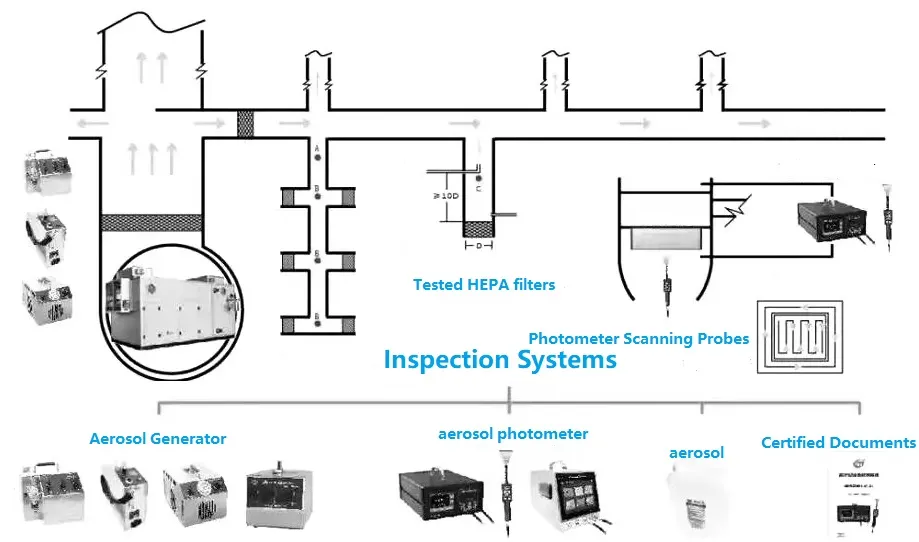
Certification is not a one-time event but a continuous validation of your environment's integrity. To comply with iso 14644-2, facilities must undergo regular particle count testing. The most critical "audit pain point" for our clients is understanding the three occupancy states defined by the standard.
1. As-Built & At-Rest (Static)
At-Rest testing occurs when the cleanroom is complete and equipment is running, but no personnel are present. This proves that the HVAC system and HEPA filtration are functioning correctly. For many electronics manufacturers, this is the primary baseline for performance.
2. Operational (Dynamic)
Operational testing is conducted during actual production with staff present. This is the toughest audit hurdle for Pharmaceutical (GMP) and Medical Device industries. Since humans are the largest source of contamination, operational testing validates that your gowning protocols and airflow patterns can handle real-world biological and particulate loads.
Jason’s Expert Advice: Always define your occupancy state in your User Requirement Specification (URS). An ISO 7 room "At-Rest" might fail to meet ISO 7 "Operational" limits if the air change rate (ACH) isn't designed for the specific number of operators on your shift.
Risk Assessment
Conduct a formal risk analysis based on product and process characteristics. According to Deiiang™ Product Designer Jason.peng, "A thorough risk assessment should consider both particulate and microbial risks, process criticality, and the potential impact of contamination on final product quality."
Call to Action
Unsure which cleanroom classification your project requires? Click here to contact Jason Peng for a free cleanroom design consultation.
Project Completion Gallery
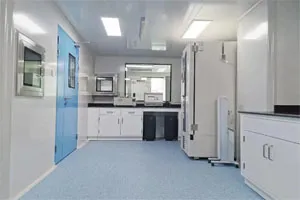
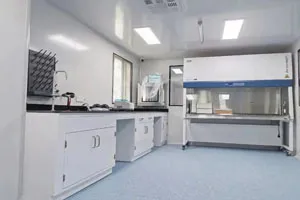
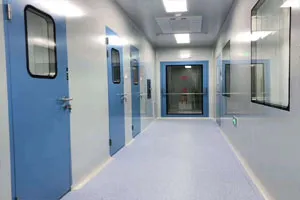
Wuhan University Cellular Laboratory Project
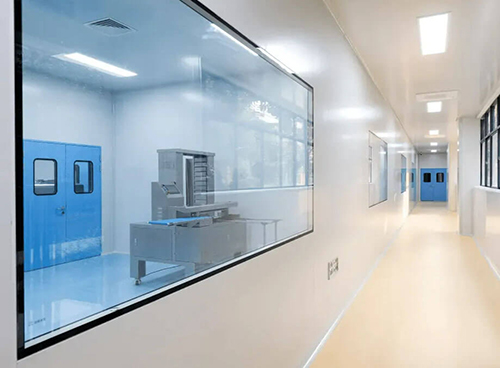
The completed 1000 square meter cell culture laboratory at Wuhan University, showcasing Deiiang™'s commitment to excellence in laboratory design and construction.
In the Wuhan University Cell Lab, we achieved a recovery time of less than 15 minutes, exceeding the iso 14644-3 recommendations.
Frequently Asked Questions
Q: What is the main difference between an ISO 7 and an ISO 8 cleanroom?
Answer: The primary differences are the particle count limits and the Air Change Rate (ACH).
Particle Count: ISO 7 is cleaner, allowing a maximum of 352,000 particles (≥0.5µm) per cubic meter, whereas ISO 8 allows 3,520,000 particles—ten times more.
Airflow: To maintain this cleanliness, ISO 7 typically requires 30–60 air changes per hour (ACH), while ISO 8 only requires 10–25 ACH.
Application: ISO 8 is often used for transitional areas or general packaging, while ISO 7 is standard for medical device assembly, pharmacy compounding, and electronics manufacturing.
Q: How do I decide which ISO Class my project needs?
Answer:Your classification requirements are usually dictated by industry regulations and product sensitivity.
Regulations: Pharmaceutical manufacturing must follow GMP guidelines, and medical devices often require FDA compliance. For example, sterile filling almost always requires ISO 5.
Risk: If a microscopic dust particle could ruin your product (like a semiconductor wafer), you need ISO 5 or 6. If you just need to prevent general contamination during packaging, ISO 8 is likely sufficient.
Tip: Always conduct a risk assessment or consult with a cleanroom engineer before finalizing your design to avoid over-engineering (wasting money) or under-compliance.
Q: What are the gowning requirements for an iso 5 cleanroom?
Answer: Since ISO 5 (formerly Class 100) is a critical environment, humans are the biggest source of contamination, so gowning protocols are extremely strict.
Required Gear: Personnel must typically wear a full cleanroom bunny suit (coverall), hood, knee-high boots, face mask, goggles, and sterile double gloves.
Zero Skin Exposure: In an ISO 5 zone, essentially no skin should be exposed to the air. All garments must be made of non-shedding, synthetic materials (like Tyvek/polyester) specifically designed for sterile environments.