+86 13638632902
 Jason@cleanroomequips.com


 MENU

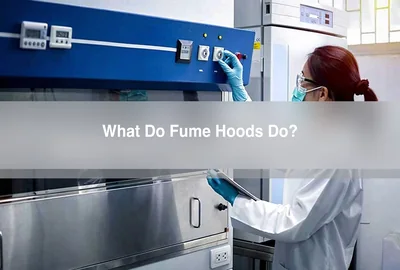
The fume hoods serve the objective of trapping and eliminating harmful and toxic vapors, gases, and particles from reACHing the operator's breathing zone. This is the most straightforward answer to the purpose of fume hoods.
This paper explores the operational aspect of fume hoods, use of fume hoods in laboratories, protective aspect of fume hoods, importance of fume hoods in ventilation, and the cleanroom fume hood purpose for professionals in the cleanroom and pharmaceutical industry.
This paper highlights requirements of the good manufacturing practice (GMP) and digits of ISO standards such as EU GMP Annex 1, iso 14644, EN 14175, and OSHA 29 CFR 1910.1450 [1][2][3][4].
As pointed out by Jason.peng, product designer of Deiiang Cleanroom Technology Co. Ltd., the room should be planned around the fume hood.
UonOHFUTAA8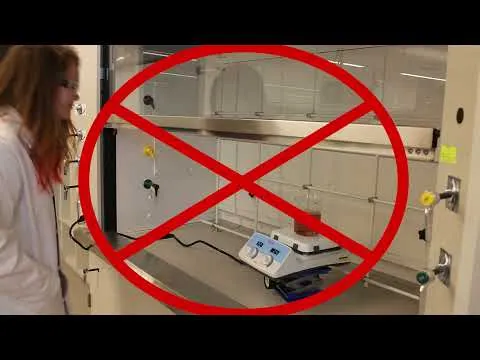
Core Fume Hood Functions: What Do Fume Hoods Actually Do
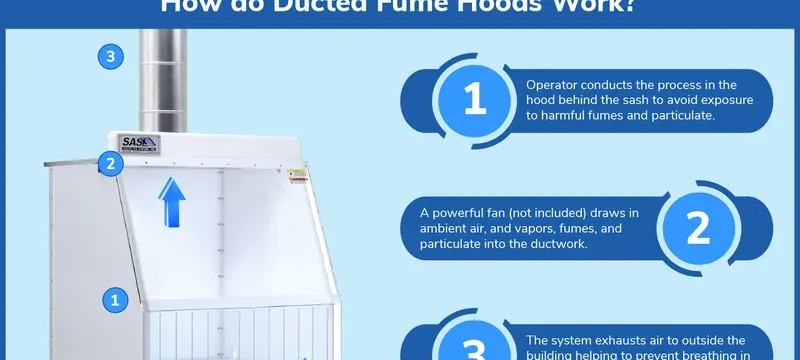
What do fume hoods do? They capture, dilute, and exhaust pollution from the place where it originates. The fume hood function is represented by primary containment and secondary barrier from the airflow.
The core purpose of the fume hoods is the control of the source of pollution, that is, preventing it from spreading through the room.
Both functions keep safe the environment, people, and materials. It is necessary to understand the fume hood function before choosing the fume hood for regulated work.
Primary Containment and Exhaust Function
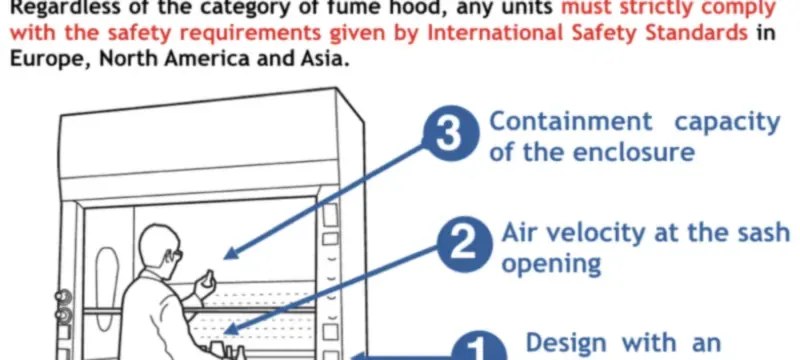
Primary containment refers to capturing vapors and fumes inside the hood. The exhaust fan then moves them by pipe systems to the outside.
For example, for the hood with the exhaust of 0.5 m3/s and face speed of 0.5 m/s, there is need for sash opening of about 1.0 m2.
- It helps in capturing all volatile hazardous substances in the area of work. Keep fumes from entering the laboratory setting.
- Channel exhausts away from recirculated air inputs.
- Ensure the pressure inside the hood remains negative.
Secondary Airflow Barrier and Shield Function
This secondary function creates an air barrier in the work area. Air from the room enters the hood working against the operator direction. The created air barrier efficiently counters uninvited air currents entering through the doors, windows or other equipment. The barrier also provides a protection against possible minor spills.
Stable working condition can only be assured with airflow above 0.4 m/s but if it drops below 0.2 m/s, mixture containment may be disturbed.
Laboratory Fume Hood Uses Across Regulated Industries
Laboratory fume hoods have various applications in different fields of activity including pharmaceutical industry, chemical industry, education and cleanrooms. Each industry sector has its own reasons to utilize laboratory hoods, so laboratory fume hood uses are never identical from one site to the next.
In pharmaceutical industry, the need for fume hood applications comes from the necessity of product and operator safety under the regulations of GMP. In chemical industry, it is due to the need for control over toxic and/or dangerous reagents, which is one more practical answer to why use fume hoods in labs.
Pharmaceutical QA/QC and Formulation Lab Applications
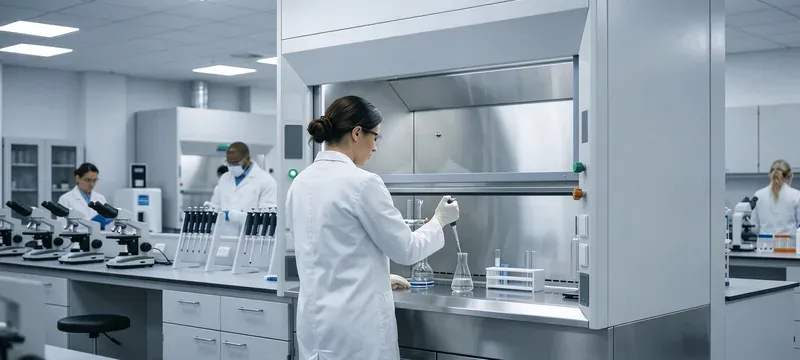
In pharmaceutical industry hoods are needed for weighing raw materials and active ingredients as well as carrying out solvent extraction and dissolution processes.
One laboratory hood with 1200 mm dimension and airflow of 0.5 m/s can be used by 2 people when the opening measures 300 mm.
- Support tests in accordance with USP <797> and <1116>.
- Carry out weighing of raw materials and active ingredients.
- Conduct solvent extraction.
- Follow ICH Q7 standards.
Chemical R&D and Analytical Laboratory Use Cases
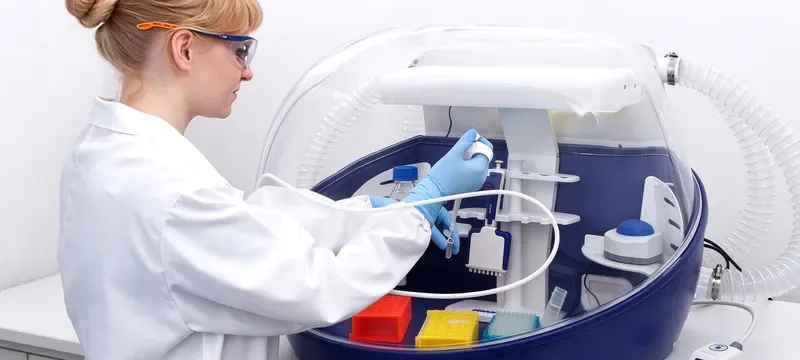
Chemical R&D sector deals with the use of chemical compounds of high corrosiveness and toxicity on a daily basis. All process of titration, synthesis and digestion after performed release fumes of acids and solvents.
Analytical laboratories utilize laboratory hoods for maintaining the purity of samples. Ambient dust or cross-contamination may interfere with trace measurements performed at ppb mediums.
In an academic example shared by project, six ducted laboratory hoods were sharing one central fan which does not provide stable airflow for hoods due to stiffness of their filters, which caused airflow to drop under designed speed of 0.5 m/s.
Deiiang provided the elements required for exhaust side, such as a backdraft damper, constant volume damper in every branch, a silencer and differential pressure transmitters.
S7-200 SMART PLC controlled electricity moving actuators and sounding alarm about low airflow. Commissioning showed small variation of airflow, not exceeding several percent.
Testing after commissioning showed that the airspeed in all six branches did not change during filter loading and it remained constant within ±3% around design value through full range of loading fulfilling requirements and criteria from EN 14175 [4].
Chemical Fume Hood Safety: Hazard Mitigation Design
Safety of chemical fume hoods is ensured when matching the kind of the fume hood with class of the hazard. Chemical fume hood safety therefore begins at the selection stage, not at the bench.
Acceptable parameters are provided in the regulations EN 14175, ASHRAE 110 and SEFA 1 [4][5][6]. OSHA 29 CFR 1910.1450 sets occupational exposure requirements [3].
Inhalation Hazard Control Rating Framework
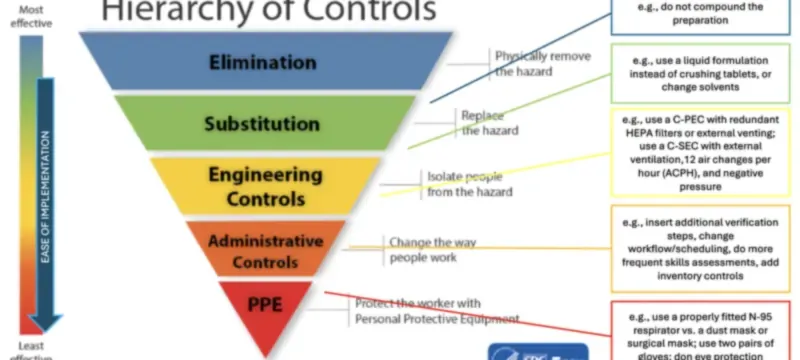
Table 1: Hazard class versus fume hood type, key specification, alarm requirement and verification frequency.
| Hazard category | Hood type | Standard usage | Specification | Nature of alarm | Verification timeline |
|---|---|---|---|---|---|
| Low | Bench top ductless hood | Water mixtures, diluted acids | Face speed 0.4–0.5 m/s | Audio alarm | Yearly verification session |
| Medium | Hood with bypass duct | Solvent vapors, hazardous powders | Face speed 0.5 m/s with alarm | Audio and video low flow alarm | Yearly verification with quarterly checks |
| High | Perchloric acid hood | Perchloric acid analysis | Water wash, dedicated ducts | Dedicated alarm and gas monitor | 3-month verification session |
| Radioisotope | Radioisotope hood | Radiotracer activity | HEPA filter with 99.995% efficiency at 0.3 µm | Dual HEPA filter and flow alarm | Semiannual verification and quarterly checks |
| Hazard category | Hood type | Specification |
|---|---|---|
| Low | Bench top ductless hood | Face speed 0.4–0.5 m/s; audio alarm; yearly verification |
| Medium | Hood with bypass duct | Face speed 0.5 m/s with alarm; yearly and quarterly checks |
| High | Perchloric acid hood | Water wash, dedicated ducts; dedicated alarm; 3-month session |
| Radioisotope | Radioisotope hood | HEPA 99.995% at 0.3 µm; dual alarm; semiannual and quarterly |
All types of hoods need to be verified every year and the flow needs to be tested. A specially designed device allows for approximate 99.995% of HEPA filtration at a certified level of 0.3 µm.
Ductless hoods work by using air filters instead of draining the fumes. They are designed for places where low or medium risks exist, however, there are no plans to use them for dangerous types of substances.
Spill, Splash and Fire Protection Features
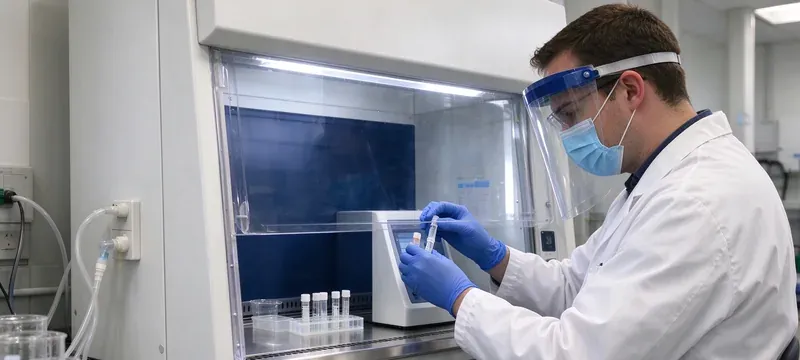
The equipment refers to secondary prevention measures. NFPA 45 presents fire safety regulations for the laboratories where any chemicals are used [7].
A spill lip that is 5 mm high is supposed to maintain approximately 1.5 L of liquid in the hood that is 1200 mm high.
Heat-resistant work surfaces, often epoxy resin or SUS304, resist thermal shock. Fire-resistant liners and optional suppression systems add further protection.
Fume Hood Ventilation Role in Performance and Compliance
46pmFt41gqM
In fume hoods, ventilation helps in air transfer from the room to the sash and then out the building. The fume hood ventilation role is also helpful in maintaining pressurization in the room.
Fume hoods may operate as CAV or VAV systems. CAV systems will always be working at the same exhaust amount no matter how the sash is closed or opened. On the contrary, VAV system will be working by manipulating the air flow amount depending on the sash position, thus saving some energy.
Face Velocity and air change rate Standards
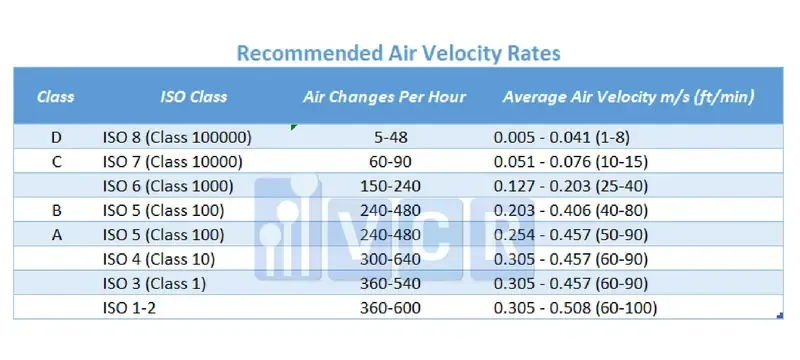
The face velocity is measured at the opening of the sash and is generally no more than 0.4–0.6 m/s, with a common number being 0.5 m/s.
Simple laboratories require around 6–12 changes in the air per hour. Clean rooms may reach ISO 14644-1 and reach iso 7, which would imply 30–60 changes of air [1].
The annual calibration must be done with some examinations being made on a quarterly basis to find out about the condition of the air filter before it is completely filled.
The face velocity means that this parameter should be measured at different points of the sash with the help of a thermal anemometer with the average figure compared to the design number following the methodology mentioned in ASHRAE 110 test [5]. It is usually measured at around 1.0–1.2 m from the floor.
Important thresholds: face velocity equals to 0.5 m/s, air changes amount reaches 6–12, annual calibration of fume hoods is a must.
Exhaust Filtration and Treatment Requirements
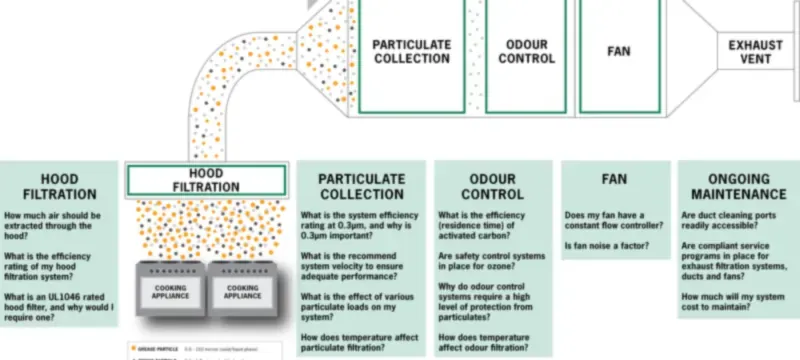
Exhaust filters are important for protection of the environment and duct systems. Usually, particulates filtering is done through prefiltering and HEPA filtration.
H14 HEPA filters are able to filter out around 99.995–99.999% of particles at about 0.3 micrometers (according to EN 1822 / ISO 29463) [8].
In case there are gases released to the air, there are scrubbers or filters made of activated carbon used for this purpose. According to Deiiang catalogue, the V-bank combined type of activated carbon filter has the power of 3700 m3/h.
Deiiang H14 filter: the size of the filter is 592 x 592 x 292 mm, it can handle 1900 m3/h of air, and the filtration area will be 15.03 m2 with an initial pressure drop of ≤220 Pa and a final pressure drop of 400–600 Pa.
Exhaust stacks need to be positioned and rated such that they are discharging their emissions at a distance that is higher than the roofline and at a sufficiently high velocity to allow for dilution. The exhaust stack must not be located less than 3 m horizontally from an air intake to avoid recirculation in the lab.
Fume hoods are one of the largest energy users in laboratory buildings since a 1.5 m VAV can save from 30 to 50% of energy as compared to CAV when the sash is closed.
Operator Protection and Contamination Control Outcomes
Fume hood operator protection and fume hood contamination control work hand in hand since both depend on stable air flow and operation procedures.
Dual protection is meant to protect both personnel and sampling simultaneously, which is very important in the pharmaceutical and cleanroom environments.
Fume Hood Operator Protection Mechanisms
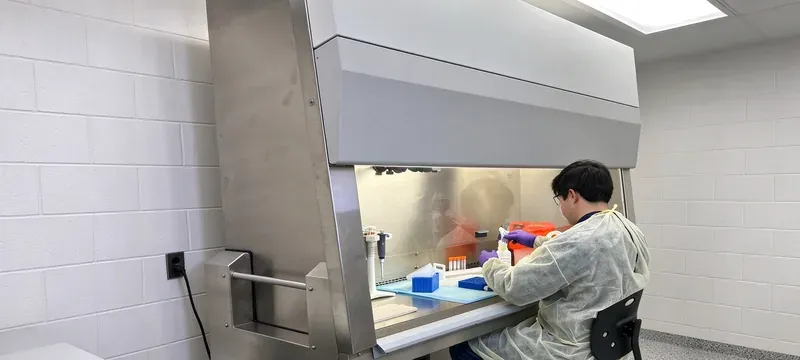
Increasing the sash height by 100 mm will decrease the face velocity by about 30%. This is the reason why sash usage should be respected.
- The hood should work at the recommended sash height of up to 300 mm.
- The air flow alarm should be checked before each use.
- Personal safety equipment must be worn: gloves, goggles, lab coat.
- Use standard operation methods.
A mechanical sash stop prevents the operator from raising the sash higher than the required height and losing the needed face velocity. This is a simple but effective part of fume hood operator protection.
Checklist before use every day:
Assure that a sash height sign is clear and not blocked.
Assess that airflow settings projector has electricity and works correctly.
Examine if a face velocity monitor (where installed) shows a number in limits.
Clear back baffles from junk or waste.
Examine working area for traces of previous spills.
Fume Hood Contamination Control for Samples
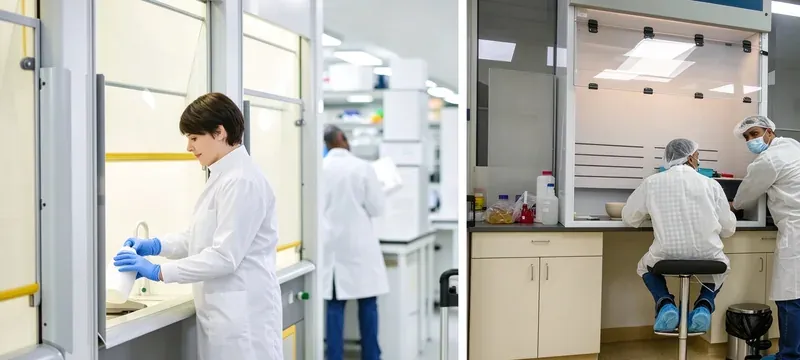
Control of contamination prevents outside dust coming into working zone. It helps to keep tested samples safe from impurities, which is the heart of fume hood contamination control.
Clean-room fume hood with H14 filtration allows achieving iso 5 or ISO 7 standards according to room classification rules [1].
- Plays the role of ensuring precise data for chemical analysis at ppb level.
- Meets standards described in USP <1116>.
- Minimizes risks of cross-contamination for samples.
- Keeps open Petri dishes and delicate tools safe.
Cleanroom Fume Hood Purpose: GMP Compliance Applications
The cleanroom fume hood purpose is the isolation of hazards without changing air purity of the clean-room.
According to EU GMP Annex 1 rules, processes must be controlled in sterile manufacture [2]. ISO 14644-1 defines class limits [1].
Regulatory Requirements for Cleanroom Fume Hoods
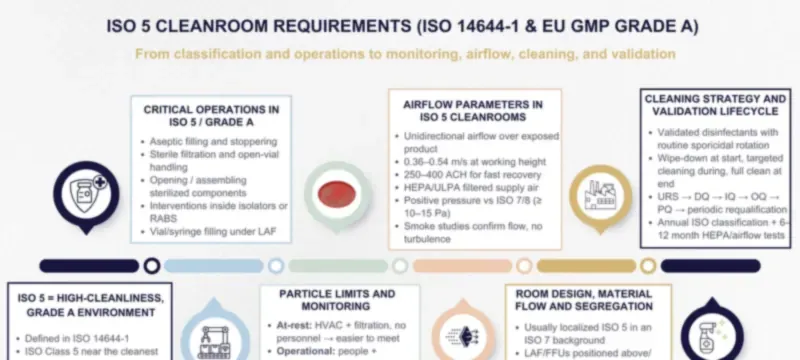
EU GMP Annex 1 implies rules of isolation for hazardous activities. FDA 21 CFR Part 211 presents equipment validation and flow data requirements [9].
iso 14644-3 presents tests for performance including airflow and filtering [10]. PIC/S GMP guide describes same requirements [11].
Deiiang Cleanroom Fume Hood Technical Benchmark
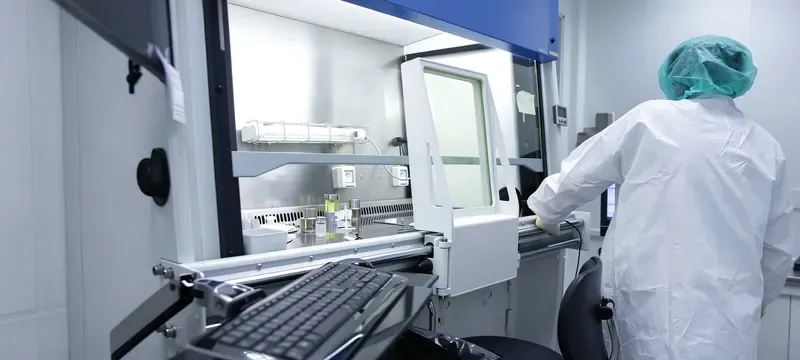
Table 2: Data from Deiiang catalogue on clean-room fume hood hardware.
| Width | Work surface | HEPA grade | Nominal face velocity | Typical airflow |
|---|---|---|---|---|
| 1200 mm | SUS304 stainless steel | H14 | 0.5 m/s | 800–1000 m3/h |
| 1500 mm | SUS304 stainless steel | H14 | 0.5 m/s | 1000–1300 m3/h |
| 1800 mm | SUS304 stainless steel | H14 | 0.5 m/s | 1300–1600 m3/h |
| Width | HEPA grade | Typical airflow |
|---|---|---|
| 1200 mm | H14 | 800–1000 m3/h |
| 1500 mm | H14 | 1000–1300 m3/h |
| 1800 mm | H14 | 1300–1600 m3/h |
The table shows that Deiiang makes components of fume hood filtration system. The company does not produce ready fume hoods.
This is a part of the Deiiang catalogue. The company does not manufacture fume hoods, but produces components like dampers, filters, transmitters, and PLC.
According to Jason.peng, a product engineer, there are three basic mistakes when using fume hoods: locating them within 1 meter of air supply diffusers, placing them near high-traffic doors, and employing undersized return ducts. These mistakes can lead to cross-drafts and disrupt fume containment.
Frequently Asked Questions
What is the main purpose of fume hoods in labs?
The main purpose of fume hoods is to eliminate dangerous airborne substances from the environment before they may enter the operator's breathing zone. In addition, they prevent samples from contamination and ensure compliance with regulations. If there is no proper source control, people may be exposed to constant inhalation and evaluation may fail during inspections.
How does fume hood ventilation work to protect users?
The air is drawn into the room due to suction ventilation system through the window. When the fan is turned on, it releases air through the outlet and establishes an air barrier. The inside of the hood is at a negative pressure as compared to the air pressure throughout the room.
Are fume hoods required in all chemical laboratories?
Under the OSHA 29 CFR 1910.1450 Regulation, the use of fume hoods by companies is compulsory whenever personnel do a procedure that may expose them to dangerous chemicals with a concentration above permitted levels [3]. A hazard assessment is done in order to determine the necessity of using the hood. Organizations might also opt for ventilated enclosures for low-risk tasks.
What differs cleanroom fume hoods from standard lab hoods?
Cleanroom fume hoods are manufactured according to the ISO 14644 cleanliness standards, using smooth materials. The filtration system in the cleanroom fume hoods is advanced and is usually either H14 HEPA or higher, which is integrated with cleanroom HVAC, heat recovery and ductless systems.
How often should fume hood performance be verified?
Calibration of the fume hood should be done once in 12 months. However, the process of verification should also be done after some changes are done to the hood due to repairs or relocation. Regular inspections that should be conducted every three months are recommended by the GB 50073 regulation [12].
Can fume hoods protect against chemical and biological hazards?
Chemical hoods only remove chemical vapors by means of chemical fume hoods. However, the Biological Hoods offer HEPA protection against the electrical and biological hazards.
References
- [1] iso 14644-1:2015, Cleanrooms and associated controlled environments—Part 1: Classification of air cleanliness by particle concentration. https://www.iso.org/standard/53394.html
- [2] EU GMP Annex 1, Manufacture of sterile medicinal products. (European Commission website; standard title cited per industry convention.) https://health.ec.europa.eu/content/eu-gmp-annex-1-manufacture-sterile-medicinal-products_en
- [3] OSHA 29 CFR 1910.1450, Occupational exposure to hazardous chemicals in laboratories. https://www.osha.gov/laws-regs/regulations/standardnumber/1910/1910.1450
- [4] EN 14175, Fume cupboards. (CEN website; standard title cited per industry convention.) https://www.cen.eu/standards.html
- [5] ASHRAE 110, Method of Testing Performance of Laboratory Fume Hoods. (ASHRAE website; standard title cited per industry convention.) https://www.ashrae.org/
- [6] SEFA 1, Laboratory Fume Hoods. (SEFA website; standard title cited per industry convention.) https://www.sefalabs.com/
- [7] NFPA 45, Standard on Fire Protection for Laboratories Using Chemicals. https://www.nfpa.org/codes-and-standards/all-codes-and-standards/list-of-codes-and-standards/detail?code=45
- [8] ISO 29463, High-efficiency filters and filter media for removing particles in air. https://www.iso.org/standard/57833.html
- [9] FDA 21 CFR Part 211, Current Good Manufacturing Practice. https://www.ecfr.gov/current/title-21/chapter-I/subchapter-C/part-211
- [10] iso 14644-3:2019, Test methods. https://www.iso.org/standard/75007.html
- [11] PIC/S GMP Guide. (PIC/S homepage; standard title cited per industry convention.) https://picscheme.org/
- [12] GB 50073, cleanroom design code. (MOHURD homepage; standard title cited per industry convention.) https://www.mohurd.gov.cn/