+86 13638632902
 Jason@cleanroomequips.com


 MENU
MENU
When selecting modular cleanroom accessories, the main concern should be the function rather than the equipment’s name. Each equipment in a cleanroom like a fan filter unit, pass box, and door interlock has its unique function. This guide is produced to help the procurement, engineering, and people involved in occupation of cleanrooms look at the functions, connections, information provided by suppliers and commissioning requirements of the accessory before sending an RFQ.
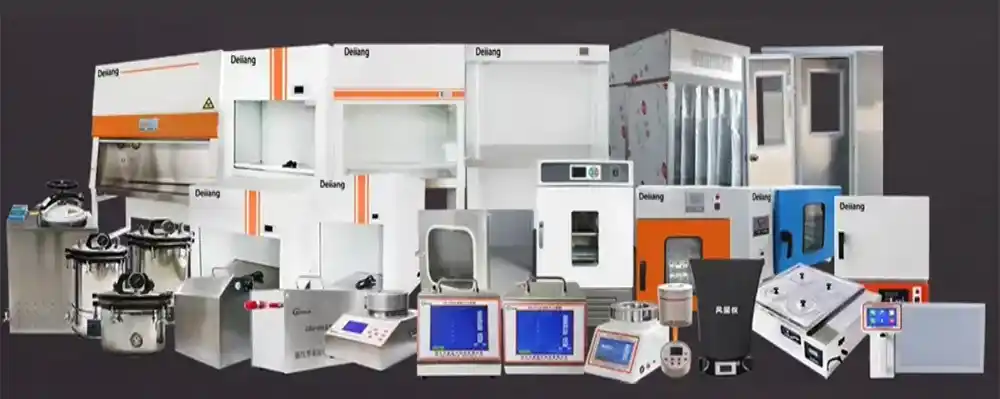
Modular Cleanroom Accessories List
| System Component | Usage Timing | Required Location | Proof to Present |
|---|---|---|---|
| Air filtration — Fan filter unit (ffu) | Recirculation-Installation with HEPA/ULPA | Hang ceiling, control and power | Filter type, air-flow data, test serial number |
| Filtration terminal — HEPA/ULPA enclosure | Ducted supply to critical zone | Duct, a hole on the ceiling | Filter regulation, gel-seal type, and test-station information |
| Prefilter — Particulate prefilter | Protect filter final | Returning air duct | Filter quality, dimensions, and pressure loss |
| Return air — Return-air grille | Balance airflow | Opening on a wall or floor | Free area, filter system, cleanliness |
| Air distribution — Diffuser | Distributing air ducts | Duct or plenum | Throw distance, construction materials, and cleanliness |
| Contamination control — Cleanroom shower | Entry of personnel to a contaminated zone | Openings on the wall | Air flow, operation time, data about HEPA filter |
| Material exchange — cleanroom pass box | Passing goods between the zones | Wall opening | Chamber quality, airflow, and purification |
| Personnel/material locks — Material lock | Passage of material with air pressure control | Door openings | Gradient of air pressure, interlock variety |
| Door lock — Cleanroom door interlock | None of the doors open | Door frames | Logic sequence, fail safe, alarm output |
| Controller or BMS | Range, accuracy, response time | - | - |
| Alarm and data — Cleanroom monitoring system | Continuous monitoring and data recording | Controller, BMS, networking system | Protocol, data recording, audit finding, alarm logic |
Air cleanliness — Fan filter unit (FFU). When required: recirculation with local HEPA/ULPA. Interface: false ceiling, supply, controls. Evidence: filter type, air flow diagram, serial no test done.
Terminal filtration — HEPA/ULPA filter housing. When required: providing ducted supply to critical area. Interface: duct, ceiling opening. Evidence: filter specification available, scanning test done, gel seal type.
Particulate prefilter — Prefilter. When required: protecting final filters. Interface: return duct or supply duct. Evidence: efficiency class, dimensions, pressure drop information.
Air return — Return air grille. When necessary: balancing airflow in room. Interface available: wall or floor opening. Evidence available: free area, filter type, cleaning access.
Air distribution — Diffuser. When necessary: distributing supply air. Interface available: duct or plenum. Evidence available: throw pattern, material, cleanability.
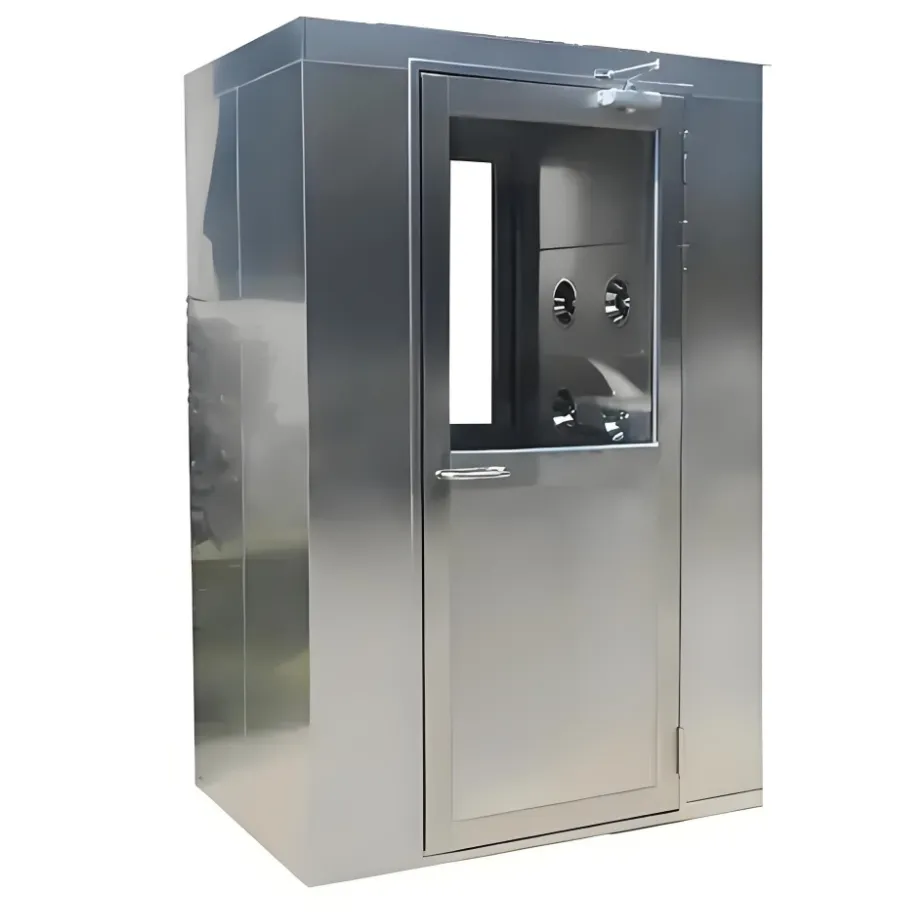
Contamination entry — Cleanroom air shower. When necessary: entry of personnel to classified area. Interface available: wall opening, door interlock. Evidence available: nozzle velocity, cycle timer, HEPA filter record.
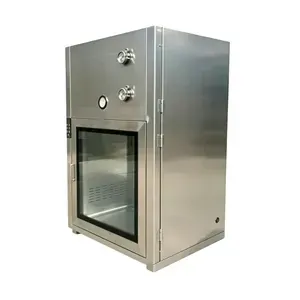
Material transfer — cleanroom pass box. When necessary: movement of goods between zones. Interface available: wall penetration, interlock. Evidence available: chamber class, airflow, purge cycle, seal.
Personnel/material lock — Material airlock. When necessary: bulk transfer with pressure control. Interface available: doors, pressure sensors. Evidence available: pressure differential, interlock logic, finish.
Door control system — Cleanroom door interlock. When necessary: preventing both doors from opening. Interface available: door frames, controller. Evidence of success: logic of sequence, fail-safe mode, alarm output.
Large access — Roll-up door or equipment door. When necessary: moving equipment in and out. Interface: structural openings, track system. Evidence: seal type, velocity, safety edge, ease of maintenance.
Gowning assist — shoe or protective bench. When relevant: sitting version of gowning step. Connection: floor, wall. Evidence: pattern, capacity, ease of maintenance.
Air quality monitoring — difference in pressure detector. When needed: filter loading monitoring plus cascade. Connection: wall port, controller. Evidence: range, accuracy, calibration certificate.
Particle monitoring system — airborne particle counter. When needed: caliber testing or monitoring of any particles concentration as needed. Connection: point of sampling plus data system. Evidence: channels, flow rate, calibration results, data requirements.
Environmental monitoring system — temperature/rh detector. On request: creation of products/processes. Connection: controller or BMS. Evidence: range, accuracy, response time.
Alarm and data system — cleanroom monitoring system. When needed — permanent control and registering. Connection: controller, BMS, network. Evidence: protocol, data storage, document trail, logic of alarms
1 essential rule in purchasing: accessories specs alone do not determine the grade of the cleanroom and how suitable the process would be. One has to check the whole installed system concerning the project goals.
Clean air and air quality elements
The cleaning machines deal with the impurities in the supply, circulation, cleaning, and returning to the environment processes. The most important devices when it comes to that include FFU, HEPA/ULPA terminal boxes, pre-filters, return-air grills, diffusers, as well as air flow regulators.
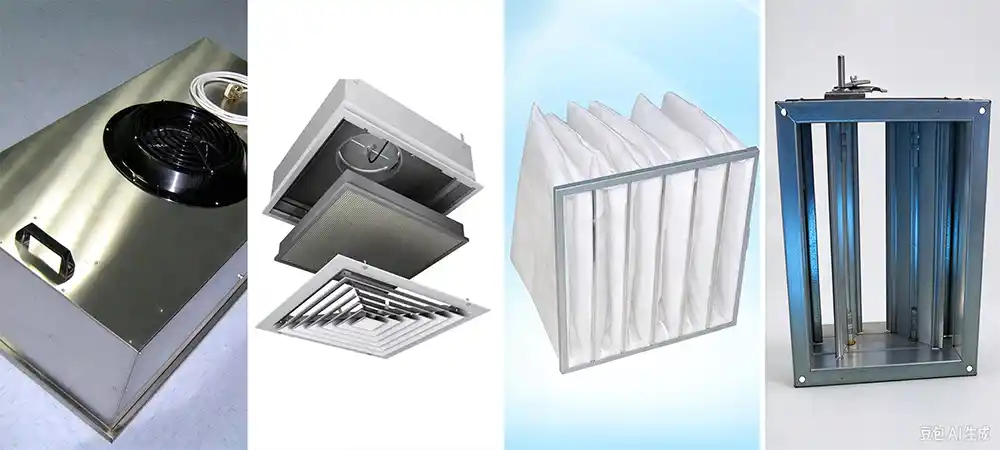
Concepts of Clean Air Quality and its Terms
Don’t accept “99.97% efficiency (at 0.3 microns)” statements for all HEPA filters. Instead, require clear specifications and reports demonstrating what grade of HEPA filter is used, and which standards are applied to tests.
What an FFU does and does not indicate
| An FFU does | An FFU does not indicate |
|---|---|
| Provides local filtered recirculation | That the room in which it is installed adheres to an ISO class |
| Can provide unidirectional airflow when properly configured | That the airflow in the entire ceiling is uniform |
| Can be provided with documentation from a test laboratory | That the installed filter/housing system passes the necessary on-site integrity test |
| Operates according to control signals | That particle counting is within acceptable limits |
Provides local filtered recirculation. Does not indicate that the room being tested adheres to an ISO class.
Can provide unidirectional airflow when properly configured. Does not indicate that the airflow in the entire ceiling is uniform.
Can be provided with documentation from a test laboratory. Does not mean that the filter/housing system passes the required on-site integrity test.
Operates according to control signals. Does not mean that particle counting is within acceptable limits.
Installed-room classification demonstrates the ISO class, just like the FFU label.
There are filters to include in the RFQ:
- Filter standard and class (ISO 29463 series or equivalent)
- Nominal dimensions and gasket/gel seal type
- Rated airflow and initial pressure drop
- Criteria for replacement defined by the manufacturer
- Motor, controller, and speed ranges
- Access side for checking and changing filters
- Existed test data confirming the factory efficiency
- Requirements and methods of test leake
These systems consist of personnel air showers, pass boxes and pass-throughs, material airlocks, door interlocks, roll doors or equipment doors and shoe/barrier benches.
The choice of system is dependent on the contamination-control strategy. For instance, a dynamic pass box may not necessarily be necessary in every application, and also, air showers cannot replace gowning practices.
| System | Typical Usage | Factors to Take into Account |
|---|---|---|
| personnel air shower | Entry point to controlled area | Nozzle velocity and cycle duration; cannot replace gowning process |
| Pass box / pass-through | Ensures transfer of small items | Static or dynamic operation; interlock. |
| Material airlock | Ensures larger or bulk transfer | Pressure cascade and door sequence of operation. |
| Door interlock | Prevention of simultaneous opening | process of safety |
| Roll-up door – appliance door | Used to transfer instruments | The effectiveness of the seal used and access for cleaning. |
| Shoe/barrier bench | Used as part of the gown | - |
Personnel air shower. Use: Entry point to controlled area. Consideration: Nozzle velocity and cycle duration; cannot replace gowning process.
Pass box / pass-through. Use: Ensures transfer of small items. Consideration: Static or dynamic operation; interlock.
Material airlock. Use: Ensures larger or bulk transfer. Consideration: Pressure cascade and door sequence of operation.
Door interlock. Use: Prevention of simultaneous opening. Consideration: process of safety.
Roll-up door – appliance door. Use: Used to transfer instruments. Consideration: The effectiveness of the seal used and access for cleaning.
Shoe/barrier bench. Use: Used as part of the gown.
Aspect
| Static Pass Box (Standard) | Dynamic Pass Box (Standard) |
|---|---|
| Transfer: Manual door sequencing | Transfer: Interdependent door sequencing using purge |
| Airflow/filtration: Generally without a specific active filtered-air system; confirm the actual design | Airflow/filtration: Generally involves the use of controlled filtered airflow or purging; particular setups depend on the maker and the contamination-control objective |
| Controls: Door interlock system may be provided | Controls: May have the door interlocking system, purge time, airflow/filter checking, and other controls based on the model. |
| Cleaning: Chamber surfaces | Cleaning: Cleaning of the chamber and filter access |
| Common verification issues: Interlock, cleanability, seals, transfer process | Common verification issues: The above issues in addition to airflow, integrity of the filter, performance of the purge/control if necessary |
| Negative points: Cannot actively safeguard the higher-grade side | Negative points: Costlier, maintenance requirements are higher. |
Transfer. Static: manual doors open-and-close. Dynamic: interlocked doors that also purge.
Airflow/filtration. Static: generally without a specific active filtered air system; check the design. Dynamic: usually involves the usage of controlled filtered airflow or purging; configuration depends on the manufacturer and contamination-control goal.
Controls. Static: door interlock may not be present. Dynamic: it may include a door interlock that morphs along with the purge time, as well as airflow/control monitoring.
Cleaning. Static: cleaning of the chamber surfaces. Dynamic: cleaning of the chamber and filter access.
Common points of verification. Static: interlock, cleanability, seals, and transfer process. Dynamic: as mentioned before while adding airflow, filter integrity, and purge conditions if necessary.
Negative points. Static: it has no active methods of safeguarding the higher-grade side. Dynamic: far more expensive, requires more upkeep.
The use of flowing air technology makes sense only if the transfer analysis reveals that a controlled purge is necessary. You should determine your choice based on the classifications of both stages, material contamination levels, and pressure strategy.
When an air shower is useful—and when other aspects are important
The air shower is aimed at reducing particulate contamination that is loosely attached on garments or other items before entering in the controlled area. It is most effective when the operator entering into the room is a significant source of the airborne particles and there is a clear classified entry level of the room.
It cannot serve to replace gowning or cleaning procedure, training of an operator, or discipline at the entry door. The standard iso 14644-5:2025 covers entering and exiting of the operators or materials to the operations control programme along with cleaning, maintenance, or monitoring of the room.
Asking the following questions: Are the airborne particle sources identified? Is the entry route managed? Is the gowning and entry discipline procedure well classified? If these questions get weak answers, it means that the air shower will not help.
Monitoring and alarms
There is a monitoring layer that allows turning sensors into decisions and records. It means that there are the following components involved: sensors – controller/BMS – alarm – response/SOP – record.
Typical parameters monitored include differential pressure, particle count, temperature/RH, airflow/FFU status, and the position of the door.
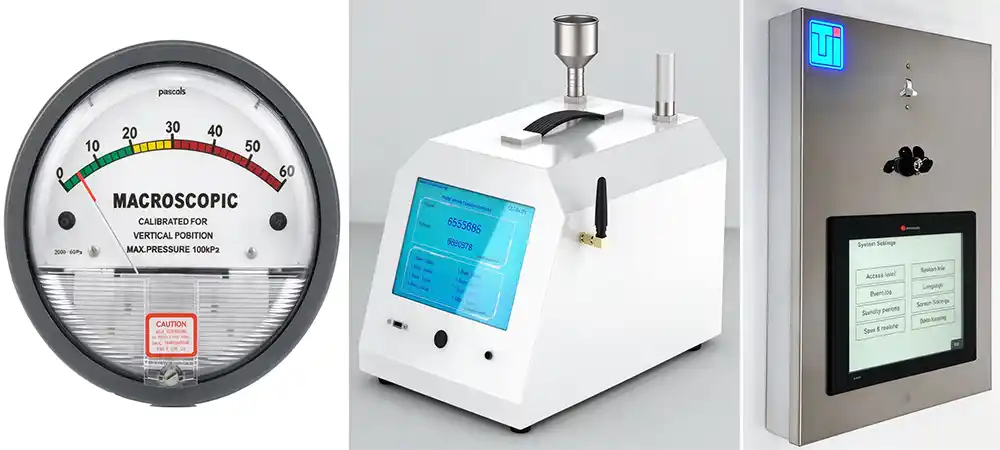
Classification tests vs monitoring
| Activity | Purpose | Reference |
|---|---|---|
| Classification | Verify ISO class at the chosen spot | ISO 14644-1 |
| Monitoring plan | Track parameters affecting airborne particle concentration | ISO 14644-2 |
| Test methods | Leak, airflow, pressure, and visualization | iso 14644-3 |
Classification. Purpose: Verify ISO class at the chosen spot. Reference: ISO 14644-1.
Monitoring plan. Purpose: Track parameters affecting airborne particle concentration. Reference: ISO 14644-2.
Test methods. Purpose: Leak, airflow, pressure, and visualization. Reference: ISO 14644-3.
Classification is aimed at checking the ISO class. Monitoring plan is about monitoring the different parameters, while the test methods cover leak tests only.
Make sure not to treat classification like monitoring and vice versa.
Concerns regarding calibration, data accuracy, and ownership of alarms
- What is the scope of functioning of the instrument and how accurate is it?
- What factor is responsible for selection of a certain location, and what danger is posed?
- Is the calibration traceable, and if so, at what interval?
- Can changes in the data be traced?
- What can be the time of alarm triggering to prevent false alarms but at the same time not to eliminate real ones?
- To whom the alarm comes and what happens after that?
- Is there an opportunity to obtain backup data?
- How the documentation will be stored and retrieved?
Electricity, light, communication, and utility equipment
Electricity, light, and utilities must be installed during cleanroom design, not later. Some of the usual accessories are emergency light, sockets, data points, intercom, service panels, utility drops, clock or display.
ISO 14644 does not replace existing building codes applicable for electrical, fire, and building. The project experts must find out local requirements for electrical, fire, structure, access, and building codes that must be respected.
Planning penetration before panel fabrication
An unexpected cut in the conduit may lead to sealing, cleaning, checking again, and based on the importance of the changes repeating the verification.
Service-panel penetration must be associated with the panel fabrication stage. Late changes require cutting conduits in the site, sealing them, cleaning, and verifying the room.
Gowning and cleaning accessories
Gowning and cleaning accessories ensure processes helping to keep the room in order. Plan them according to their specific zones:
- Pre-gown area: benches, lockers, shoe storage, mirrors
- Gowning room: garment storage, dispensers, waste bins
- Clean zone: cleaning tool storage, clean room-compatible carts
- Transfer zones: bins, carts, and storage corresponding to the pass box opening
Material and finish examinations
- Smoothness and cleanability of surfaces
- Particle emission and corrosion resistance
- Degrees of compatibility with approved disinfectants
- Joint and fastening systems design: crease-free where necessary
- Benches and carts load capacity
- Requirement of ESD and its validated scope and testing technique
Choose accessories based on the risk of the process
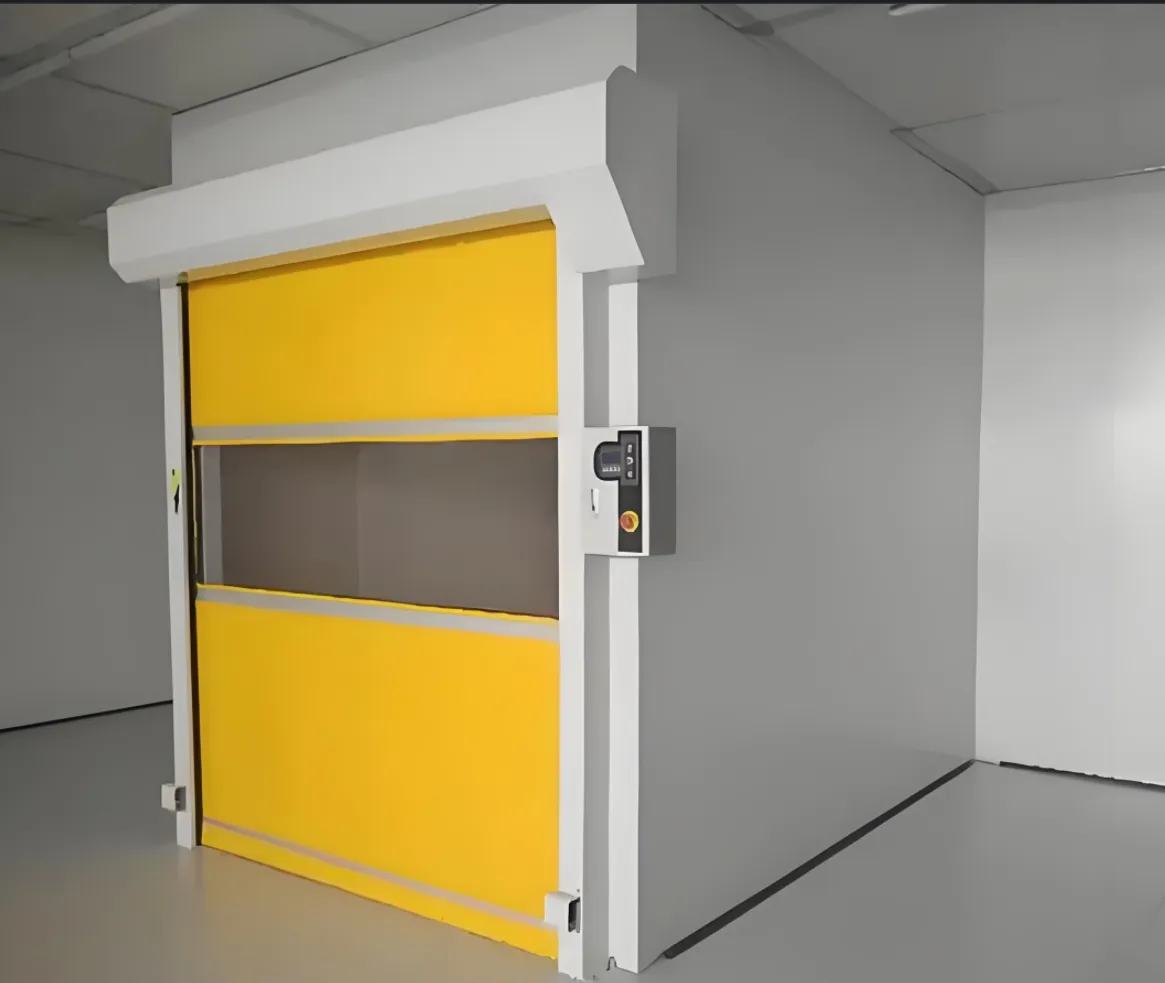
Electronic and precise assembly
- Particles and ESD
- Heat load from machines
- Equipment accessibility
- Room arrangement flexibility
Do not announce ESD efficiency without validated scope and testing technique.
Pharmaceutical, biotechnology, and medical appliances
- Washable surfaces
- Transfer containment and pressure cascades
- Controlling measurements depend on risk
- Compatibility with disinfecting chemicals
- Verification, commissioning, or qualification information according to process, quality management system, and required legislation
Connect FDA or EU GMP conditions only according to certain product and territory jurisdictions.
Laboratories and optics and aerospace and other regulated processes
Vibration, outgassing, chemical compatibility or exhaust or optics matters may be more relevant than a universal accessories set. Lab might require a different filter housing or sensor set than a comparable ISO cleanroom.
Compatibility assessments should be performed prior to ordering.
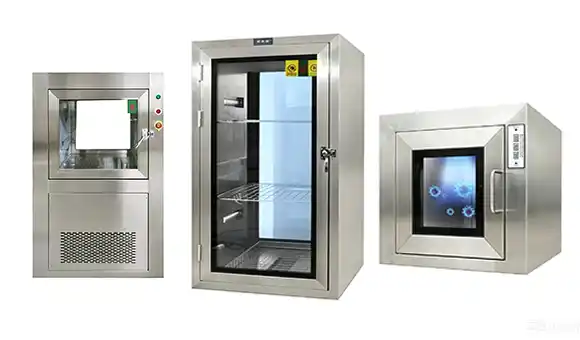
Mechanical connections, thickness of panels and ceiling grids, dimensions of openings and structural loadings, hinge mechanics as well as opening widths should be taken into account during the review of the room pressure and airflow. For example, the room measuring 6 m by 4 m by 2.7 m has a volume of 64.8 m³, though the airflow needs can’t be determined by that parameter alone.
Controls and electric connections
| Parameter | Info required |
|---|---|
| Voltage/frequency/phase | Should be consistent with supply on site |
| Load | Confirm capacity of circuit |
| Protocol | BACnet, Modbus, etc. |
| Dry contacts | Needed for connection |
| Location of controller | In clean or dirty zone |
| Fail-safe/fail-secure systems | Depending on type of system. |
Voltage/frequency/phase: Should be consistent with supply on site.
Load: Confirm capacity of circuit.
Protocol: BACnet, Modbus, etc.
Dry contacts: Needed for connection.
Location of controller: In clean or dirty zone.
Fail-safe/fail-secure systems: Depending on type of system.
It is very important to create a compatibility matrix: surface material/seal/glazing x agent used for disinfecting x concentration x amount of time x frequency x evidence.
It should be noted that just because one surface is compatible does not guarantee that all surfaces will be compatible with every disinfectant used in that cleanroom.
The following documents are mandatory for commissioning and acceptance:
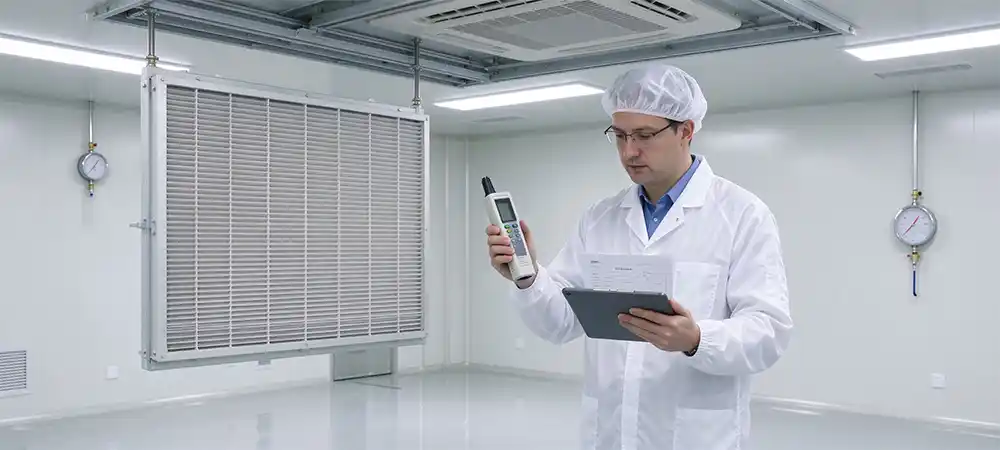
- Factory and shipping papers
- Approved illustrations and tabulation of elements
- Certificates and test results pertaining to the material which is subject to acquisition and scope of contract
- Manuals of operating and maintenance
- Schemes of wiring
- Certificates of calibration in case the installation of measuring devices takes place
- List of backup materials
- List of packaging
- Instructions concerning storage and preservation
- Tests of installed system and documents proving the correctness of conducting tests
Installed-system tests
| Test type | Function | Responsibility of an audited party | Adjustment criteria |
|---|---|---|---|
| HEPA leak test | - | - | - |
| Airflow volume | - | - | - |
| Airflow velocity | - | - | - |
| Pressure drop | - | - | - |
| Test for the time of recovery | - | - | - |
| Air flow testing | - | - | - |
| Particle classification | - | - | - |
The objective of pressure differential testing is to make sure that the flow is moving in the right way, and whether this is done by a qualified testing body or not, must be determined according to the construction criteria of the project.
The aim of the recovery test is to ascertain recovery from pollution of the area, which must be carried out by a competent testing organization, using ISO 14644- as well as other project requirements.
Airflow visualization testing must be conducted by a qualified testing body in compliance with ISO 14644-3 standards, whenever applicable and appropriate.
Regarding particle classification, the aim intends to gain ISO standard class of the project through testing, being conducted by the competent testing body, based on the project specifications.
It is worth mentioning the importance of reviewing iso 14644-3:2019 and other norms
Training and Maintenance Handover
- Operator training regarding entering, transferring and alarms
- Cleaning agents and compatibility
- Maintenance schedule for gasket, sensors, and doors
- Calibration intervals and records
- Procedure for changing filters and availability of spare parts
- Response mechanism for alarms
- The change procedure when alteration was done
The process of inquiry into modular accessories
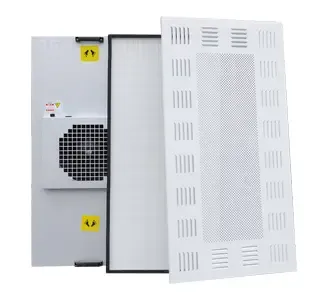
What information should be supplied by the buyers
- Description of processes and exposition of the products
- Plans with the borders of the rooms
- Standard ISO classification and current status of the room (plus rested or operational)
- Conditions of the country and the rules introduced in this country
- Flow of different materials and people
- Conditions of pressure.
- Temperature and humidity requirements
- Сonversation regarding required utility
- Design loads and access structures
- Conditions concerning site
- Electricity parameters: voltage, frequency, and phase
- The validation process of project completion
Schedule itemization required from suppliers
Mobile layout should present the information in the grouped cards, not as a table.
| Tag | Qty | Model | Dimensions | Material/Finish | Interface | Electrical | Standard/Test | Controls | Accessories | Spares | Lead Time | Warranty | Exclusions |
|---|---|---|---|---|---|---|---|---|---|---|---|---|---|
Identity: tag, quantity, and model.
Physical data: dimensions, material/finish, and interface.
Technical data: electrical, standard/control, and accessories.
Commercial data: spares, lead time, warranty, and exclusions.
Deiiang has been able to demonstrate its qualification in engineering successfully.
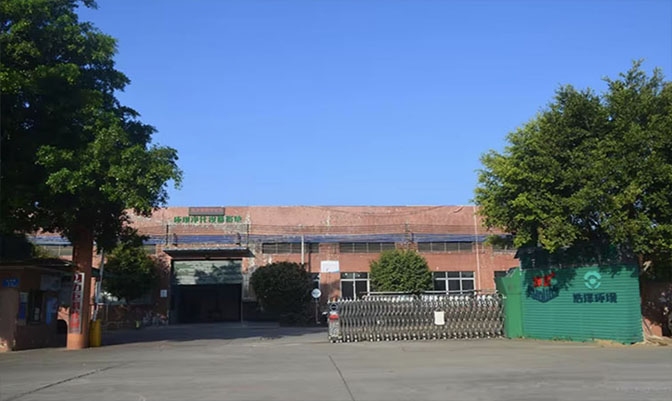
An example of successful completion of a project is Hubei Chunhui Technology Class 100 Clean Booth Project that covers an area of 180 square meters, while the class of the room is iso class 5. The temperature is 22 ± 2 degrees Celcius, the humidity index is 40-60 percent. Additionally, there are some important logistical details mentioned in the project.
The information provided in this document is just information published by Deiiang with no verification by any agency or organization. The case presented here is only for the illustration of the coordination of accessory interfaces. No claims are made regarding the numbers, results of tests, or dates of the quotations or the business results.
Why it is necessary for the accessories to have interfaces coordinated? The entrance of people has the air shower. The pass box is the place of crossing materials and environmental sensors having power, data, and location that must be in compliance with the critical zone. If the wall panels are manufactured before the interfaces are defined, it will cause the need for field modifications, resealing, and delays in commissioning.
| The project element published | Interface that the client has to freeze | Evidence required |
|---|---|---|
| Air shower | Opening, door design, power, control | GA drawing, interlock sequence |
| Pass box | Wall opening, chamber size, transfer side | Drawing, airflow/control specification |
| Environmental sensor | Location, power, signal/BMS | Calibration and data specification |
Air shower. Freeze: opening, door design, power, control. Evidence: GA drawing, interlock sequence.
Pass box. Freeze: wall opening, chamber size, transfer side. Evidence: drawing, airflow/control specification.
Environmental sensor. Freeze: location, power, signal/BMS. Evidence: calibration and data specification.
The approved site or accessory photos should be provided for publication. This version does not contain or invent case photos. The image of the company Deiiang™ might be used when necessary: Deiiang™ company image
Final selection checklist
Use this before the purchase order or contract. The checklist for RFQ above verifies the quoting stage.
- Functionality: Every accessory contributes to contamination control strategy
- Interoperability: confirmed mechanical, airflow, electrical and chemical interaction
- Cleanability: compatible surfaces, seals, and joints as per the approved means of cleaning
- Serviceability: filters, detectors, and movable components are accessible without the need to tear down the room
- Testing evidence: test procedures, criteria, accountability, and reports specified in agreement
- Control: defined procedures and alarm logic
- Availability of spare parts: critical filters, seals, and sensors identified
- Legislation: local electrical and fire codes observed
- Installation: installation plan, order of installation, and conditions discussed
The name of the qualification owner is stated in this checklist and that person is accountable for carrying out tests and documentation.
FAQs
Questions and answers: What accessories should be used in the modular cleanroom?
Accessories required depend on specific production processes used. The main categories of accessories could be air purification (i.e. FFUs or terminal housing), entrance regulation (doors, interlocks, and the devices used for gowning), contamination control (containers and airlocks), supervision (monitoring of air pressure, air particles or temperature), and utilization of electric energy. The optimal ratio of clean room modular accessories is dependent on the cleanroom contamination control process and its properties rather than on its popular accessory set.
Does a higher amount of FFU translate into better quality according to ISO standard?
No, because FFU allows for air recirculation in the clean room, which does not imply that clean room classification depends on air flow, pressure management, all air pollution sources, and air pollution measurement. An increase in the FFU number without proper project design, return flow path, and FFU performance testing can result in increased energy consumption while not achieving the required cleanroom quality.
What is the difference between static and dynamic airlocks?
The static airlock uses passive maneuvered doors instead of the active ventilation system. On the other hand, dynamic airlocks use air flow regulation and/or purging actions. It is very important to remember that there are numerous designs for both types of airlocks, so one should not consider only the name of airlock as an indicator of the future use.
Are air showers essential for all cleanrooms?
No, air showers are only required for cleanrooms with air showers capable of removing dust particles. They should not substitute gowns or personal hygiene procedures. Act iso 14644-5:2025 establishes cleanroom entry/exit procedures.
What equipment should be included in the cleanroom monitoring program?
The following types of monitoring instruments can be used in the cleanroom monitoring program based on the risk analysis conducted: differential pressure sensors, filter pressure gauges, particle counters, temperature and humidity sensors, air flow measuring devices, and door open/closed monitoring devices. However, it must be mentioned that having the ISO class of the cleanroom does not imply that the cleanroom should measure the air constantly.
What documents should be supplied with cleanroom accessories?
The required documents are dependent on the type of item ordered according to the contract requirements. Among supplied documents are approved designs, list of items included, certificates and reports, instructions for use and wiring diagrams, calibration certificates for devices delivered (if any), spare parts lists, and instructions for storage/shipping processes.
References