+86 13638632902
 Jason@cleanroomequips.com


 MENU
MENU
Many industries need controlled environments, but they control different contaminants. Modular construction can provide a configurable enclosure, yet contamination-control requirements still come from the process and applicable standards.
Why Do So Many Industries Use modular cleanrooms?
Contamination takes several forms, and each form affects products and processes differently. The categories below outline the main mechanisms that drive cleanroom design across industries.
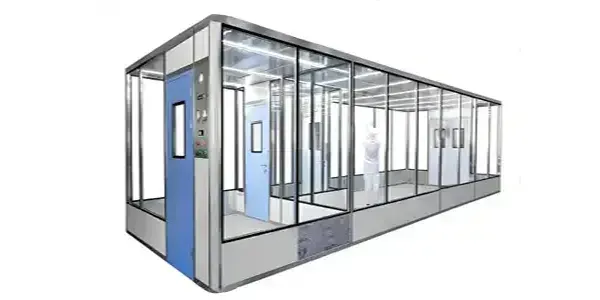
Contamination can affect products and processes differently
Airborne particles
Non-viable particles can cause defects in semiconductors, optics, and precision assemblies.
Microbial contamination
Viable particles may pose risks in pharmaceuticals, biotechnology, medical devices, and selected food applications.
Chemical and molecular contamination
Airborne molecular contamination can affect lithography, optics, and certain pharmaceutical processes; iso 14644-8 addresses chemical concentration.
Electrostatic and environmental conditions
ESD can damage electronics, semiconductors, and aerospace components where process steps are sensitive.
Why companies may choose modular construction
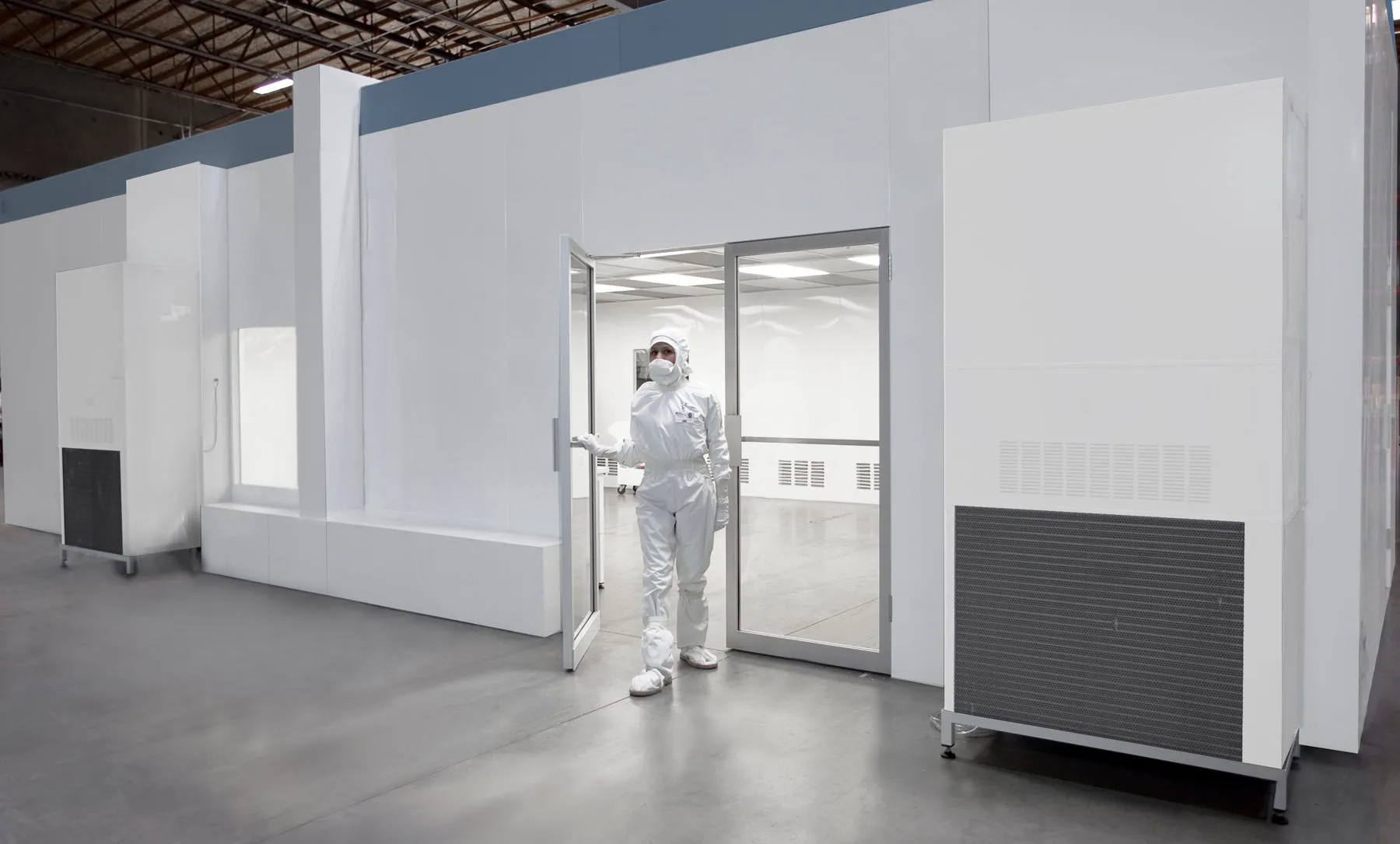
Modular construction may reduce site disruption in some projects, support phased expansion, and allow reconfiguration if designed for disassembly.
What modular construction does not determine
Modular construction is a delivery method, not a cleanliness level or regulatory status.
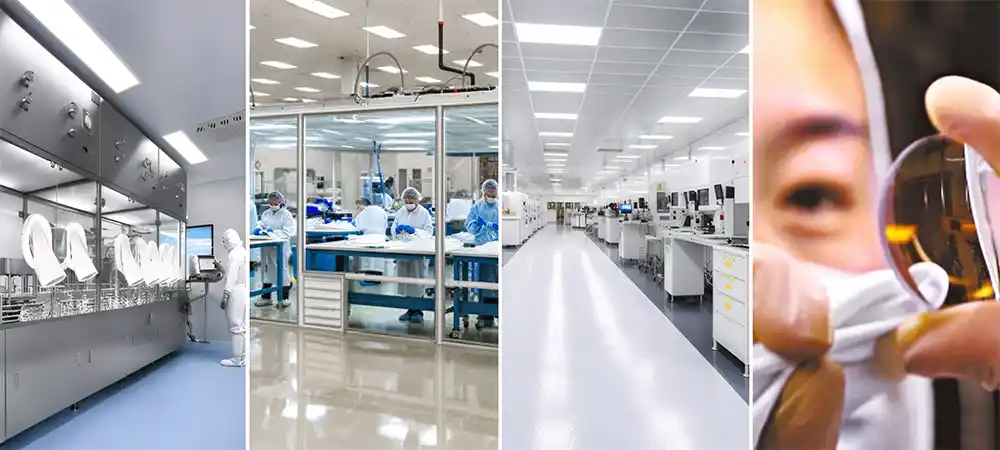
Industries That Use modular cleanrooms — Quick Comparison
The table is illustrative; each project requires its own assessment.
| Industry | Typical controlled process | Key controls to evaluate |
|---|---|---|
| Pharmaceuticals / Biotechnology | Aseptic processing, sterile manufacturing, selected laboratory operations | Applicable GMP grade, microbial contamination, personnel/material flows |
| Medical Devices | Implant assembly, catheter manufacturing, selected packaging | Product contamination risk, particulate/bioburden controls, applicable QMS requirements |
| Semiconductors | Wafer cleaning, lithography, thin-film deposition | Particles, molecular contamination, temperature/RH where critical, ESD |
| Electronics | SMT assembly, precision components | ESD, humidity, particulate contamination |
| Optics / Photonics | Lens assembly, laser alignment, fiber coupling | Particles, temperature stability, vibration where critical |
| Aerospace | Sensor assembly, precision instrumentation | Particles, ESD, environmental stability |
| Research / Laboratories | Pilot production, selected analytical work | Application-specific; flexibility can be an important design objective |
| Food / Beverage / Cosmetics | Selected filling, handling or packaging where contamination control is justified | Hygiene requirements, not necessarily ISO classification |
Pharmaceuticals / Biotechnology
Typical process: Aseptic processing, sterile manufacturing, selected laboratory operations.
Key controls: Applicable GMP grade, microbial contamination, personnel/material flows.
Medical Devices
Typical process: Implant assembly, catheter manufacturing, selected packaging.
Key controls: Product contamination risk, particulate/bioburden controls, applicable QMS requirements.
Semiconductors
Typical process: Wafer cleaning, lithography, thin-film deposition.
Key controls: Particles, molecular contamination, temperature/RH where critical, ESD.
Electronics
Typical process: SMT assembly, precision components.
Key controls: ESD, humidity, particulate contamination.
Optics / Photonics
Typical process: Lens assembly, laser alignment, fiber coupling.
Key controls: Particles, temperature stability, vibration where critical.
Aerospace
Typical process: Sensor assembly, precision instrumentation.
Key controls: Particles, ESD, environmental stability.
Research / Laboratories
Typical process: Pilot production, selected analytical work.
Key controls: Application-specific; flexibility can be an important design objective.
Food / Beverage / Cosmetics
Typical process: Selected filling, handling or packaging where contamination control is justified.
Key controls: Hygiene requirements, not necessarily ISO classification.
Pharmaceuticals and Biotechnology
For applicable sterile/GMP-regulated operations, controls may include microbial monitoring, personnel qualification, and cleaning validation. EU GMP Annex 1 defines Grades A–D for sterile medicinal-product manufacturing.
Where modular cleanrooms may be used
Modular cleanrooms may suit aseptic processing, sterile manufacturing, and selected laboratory operations.
What pharmaceutical buyers need to define
Product and process type
Contamination risk depends on whether the product is sterile, non-sterile, liquid, powder, or biologic.
Sterile versus non-sterile operation
For EU GMP sterile manufacture, RABS or isolators should be considered within the contamination control strategy; alternatives require justification.
Occupancy state and cleanliness requirement
Annex 1 requires classification in at-rest and in-operation states, with risk-based additional critical sampling locations.
Personnel and material flows
Transfer of materials and personnel is a major contamination source requiring controlled flows.
Environmental monitoring and documentation
For applicable sterile/GMP-controlled operations, a documented monitoring programme covering viable and non-viable particles is expected.
ISO classification is not the same as GMP compliance
iso 14644-1 classifies airborne particle concentration only; GMP adds microbial, personnel, documentation, qualification, and contamination-control strategy requirements.
Medical Device Manufacturing
Medical device cleanroom requirements vary by product sterility and process sensitivity. The FDA QMSR became effective February 2, 2026, and incorporates ISO 13485:2016 by reference.
Typical controlled-process applications
Applications include implantable device assembly, catheter manufacturing, sterile packaging, and component cleaning.
Requirements that may drive cleanroom design
Product contamination risk
Devices contacting sterile body sites have higher contamination-risk profiles.
Manufacturing and packaging process
Assembly, bonding, and packaging each present different contamination mechanisms.
Personnel/material movement
Personnel gowning, component transfer, and waste removal create contamination vectors.
Cleaning and monitoring programme
Where contamination control is required by device/process risk and the QMS, define appropriate cleaning and monitoring controls.
United States localization — current QMSR context
QMSR is a quality management system regulation; it does not itself prescribe a universal cleanroom ISO class.
Semiconductor and Microelectronics Manufacturing
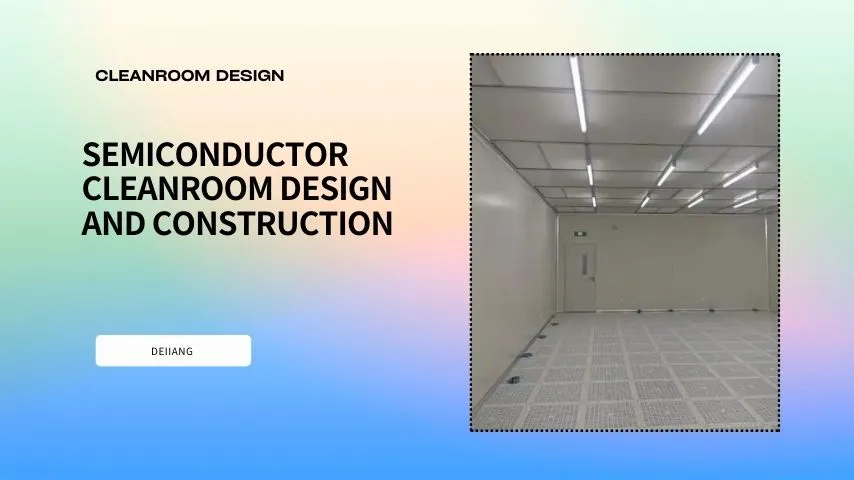
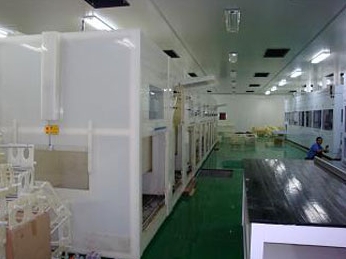
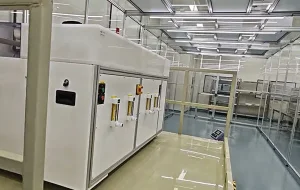
Semiconductor processes can be highly sensitive to particles at process-relevant sizes. The Deiiang company-published Jingxin case describes a cleanroom/clean-booth project for semiconductor wet-cleaning processes.
Typical applications
Controlled environments support wafer cleaning, lithography, deposition, etching, metrology, and packaging.
Controls beyond an ISO class
Particle control
Particle size and concentration requirements are defined by the project.
Temperature and relative humidity where process-critical
Temperature and humidity stability requirements vary by process step.
ESD considerations
ESD control can be critical for applicable devices and process steps.
Airflow around critical workstations
Localized unidirectional airflow may be specified where justified by the process.
Chemical/exhaust integration where required
Solvent, acid, or chemical processes may require exhaust integration affecting layout and pressure cascades.
Why modular cleanrooms can fit existing semiconductor facilities
Modular construction can be considered for localized upgrades within existing facilities; actual disruption depends on site integration.
Electronics and Precision Manufacturing
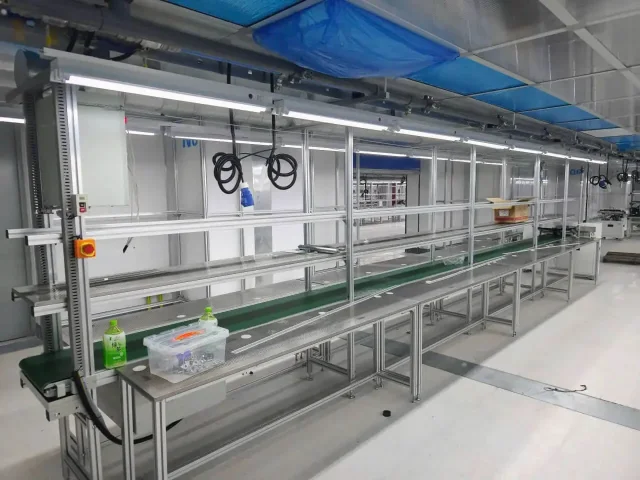
Electronics manufacturing includes PCB assembly, component fabrication, and product integration. Sensitive processes may benefit from controlled particulate and ESD environments.
Potential applications
Applications include SMT assembly, wire bonding, precision cleaning, coating, and final assembly.
Key design questions
Buyers should define ESD sensitivity, particle sensitivity, humidity needs, and chemical exposure.
Avoid automatic ISO-class assumptions
Electronics manufacturing does not have a single standard ISO class; the process defines the requirement.
Optics, Photonics and Laser Applications
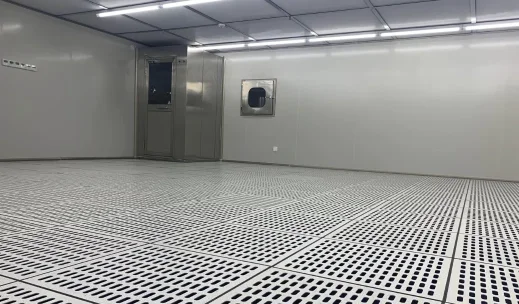
Optical manufacturing may require control of particles, temperature, humidity, and vibration. Surface contamination can degrade optical performance.
Example operations
Operations include lens polishing, optical coating, laser diode assembly, and fiber coupling.
Important specification variables
Particle sensitivity
Particles can affect scattering, absorption and optical performance.
Temperature stability where required
Precision optical alignment may require application-specific temperature stability.
Humidity requirements
Humidity control may be needed for process stability or condensation prevention.
Vibration or process-equipment interfaces
Optical assembly and metrology equipment may be vibration-sensitive.
Aerospace and Other High-Precision Manufacturing
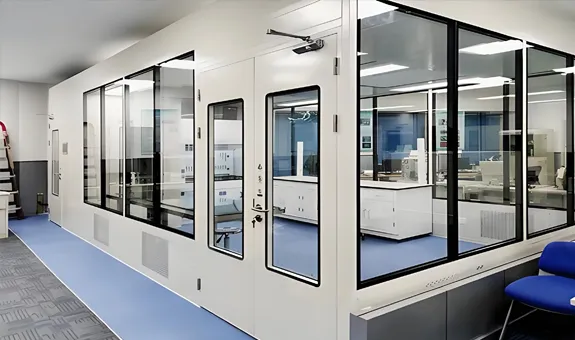
Aerospace manufacturing involves contamination-sensitive sensors, optics, electronics, and precision assemblies. Requirements are driven by component sensitivity and customer specifications.
Potential applications
Applications include inertial sensor assembly, optical payload integration, and flight-critical electronics.
Why requirements are project-specific
Aerospace components vary widely in contamination sensitivity; each project requires its own assessment.
Research, Laboratories and Pilot Production
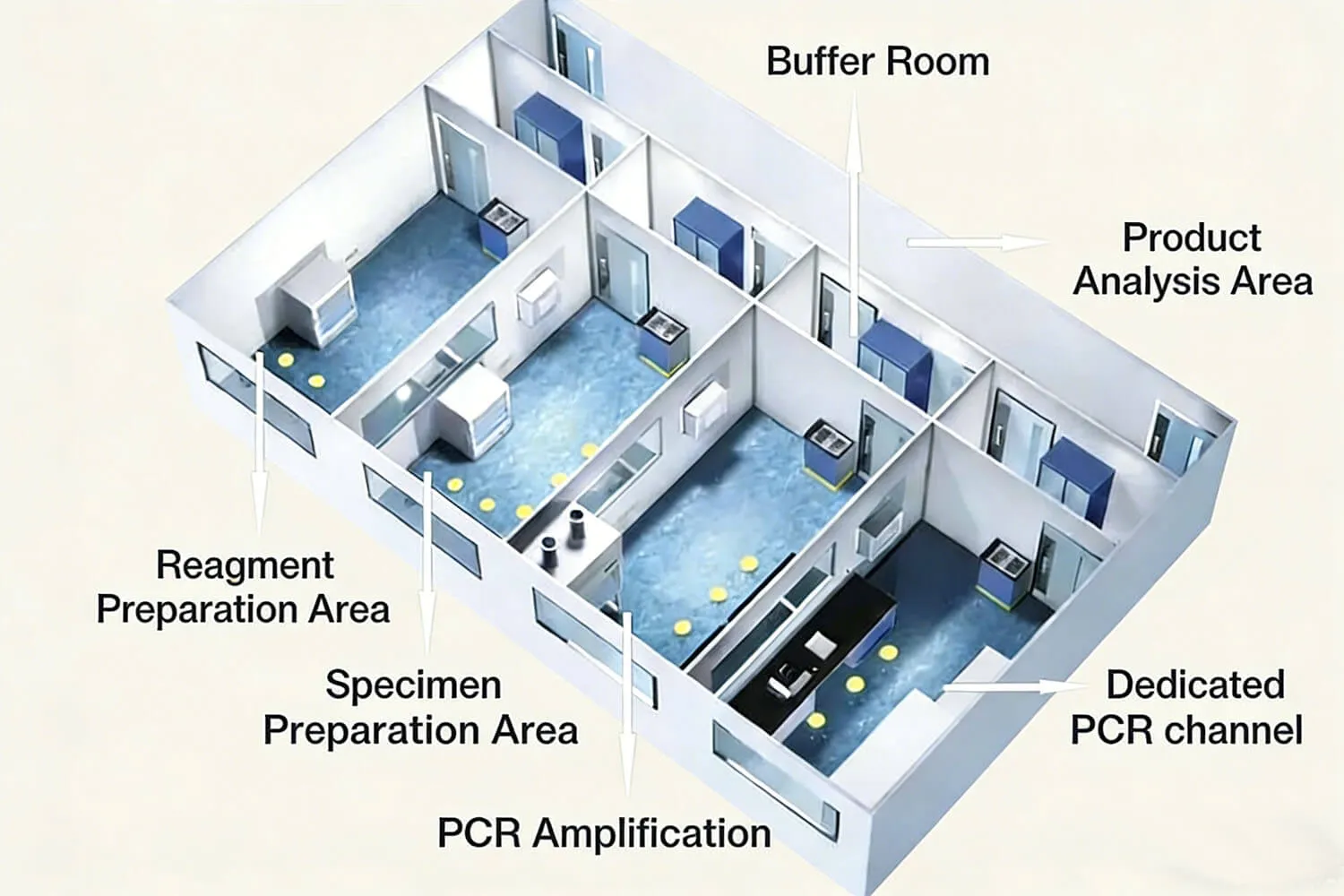
Research and pilot facilities often need controlled environments accommodating changing protocols and equipment. Flexibility can be an important design objective.
Typical use cases
Use cases include selected contamination-sensitive research, analytical laboratories, pilot bioprocessing, and prototype assembly.
When flexibility matters
Modular cleanrooms suit shifting research focus, equipment upgrades, or potential relocation.
Food, Beverage and Cosmetics
Food, beverage, and cosmetics manufacturing may use controlled environments for hygiene and product quality. In many food applications, hygiene and microbiological hazard control may be more relevant than ISO particle classification.
Possible applications
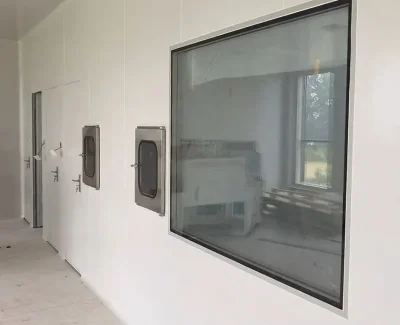
Applications include selected filling, handling or packaging processes where contamination control is justified.
Separate hygiene requirements from ISO particle classification
Codex General Principles of Food Hygiene CXC 1-1969 provides a GHP/HACCP framework, distinct from ISO 14644 particle classifications.
Evidence requirement
Documented cleaning, sanitation, microbial testing, and hygiene practices may be more relevant than particle counts.
How Cleanroom Requirements Differ Between Industries
Primary contaminant concerns shift by industry and process. A single industry label does not establish one universal requirement.
What contaminant needs to be controlled?
Non-viable airborne particles
Particle control is a common requirement across many contamination-sensitive processes, classified under ISO 14644-1.
Viable or microbial contamination
Microbial control may require cleaning, disinfection, gowning, and environmental monitoring depending on process and applicable requirements.
Molecular or chemical contamination
ISO 14644-8 addresses assessment of air cleanliness by chemical concentration where relevant.
Foreign material and ESD risks
Foreign material and ESD are distinct from ISO particulate cleanliness.
What environmental variables matter?
Airflow rate/pattern, pressure, temperature/RH, vibration or other parameters where process-critical.
What ISO class is required?
ISO class should be determined by process risk, product particle sensitivity, customer specification, regulatory framework, critical operation, and required occupancy state.
Which occupancy state is required?
The required occupancy state must be specified; ISO 14644 recognizes as-built, at-rest and operational conditions. EU GMP Annex 1 requires classification in at-rest and in-operation states.
What operational controls are required?
Gowning, cleaning, material transfer, and monitoring affect achieved cleanliness.
When Modular Construction May Be a Good Fit
Modular construction is not universally superior; it offers advantages in specific scenarios.
Existing facilities needing a localized controlled environment
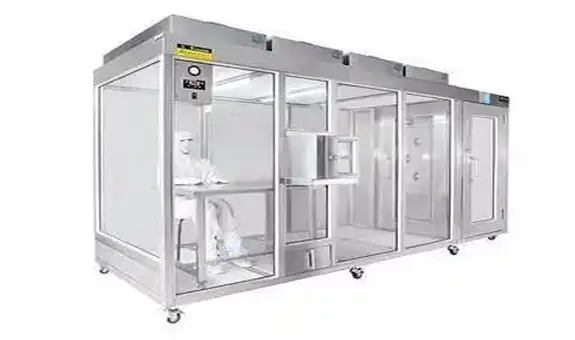
Modular construction may allow phased or localized construction, depending on site conditions and integration requirements.
Production processes expected to change
Some modular systems are designed for reconfiguration; actual ease depends on panels, HVAC, utilities and process equipment.
Localized higher-cleanliness processes
Stricter cleanliness within a larger area may use modular enclosures with localized filtered airflow.
Pilot lines and phased manufacturing
Pilot production often needs controlled environments without full-scale cleanroom commitment.
Facilities considering future relocation
Modular cleanrooms may be designed for disassembly and reuse; relocation typically requires recommissioning and reclassification.
When modular construction may not be the best fit
Stick-built construction may suit extensive building integration, large process equipment, complex exhaust/utilities, containment, or structural constraints.
Deiiang Semiconductor Case Example — Jingxin Semiconductor, Huangshi
The following figures are taken from a Deiiang company-published case page and are project-specific, not semiconductor industry defaults.
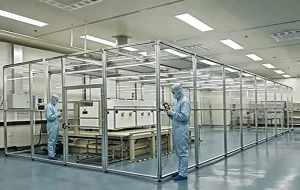
Company-published project facts
The company page reports published building/project area: 1,500 m²; ISO 6 core area; local iso 5 at critical workstations; 20–24°C; RH 45%±5%; MAU+ffu system; third-party at-rest and operational testing referencing ISO 14644 and IEST standards.
Application
The company page describes wet cleaning, surface treatment, and related front-end processes for 8-inch and 12-inch wafers.
Published project challenges
Existing-workshop airflow conditions
The company page states that CFD simulation was used to plan the FFU array layout.
Construction within an operating production environment
The company page describes segmented physical isolation and negative-pressure construction during ongoing production.
Published Deiiang solution
MAU + FFU airflow concept
The company page reports an MAU+FFU system.
Filtration arrangement
The company page reports a three-stage filtration system (primary, secondary, HEPA).
Local iso class 5 enhancement
The company page reports additional FFUs at critical workstations within the reported ISO 6 core area.
Airflow-layout engineering
The company page reports CFD-informed FFU layout for unidirectional laminar flow.
Testing and acceptance evidence
The company page states that an authorized third-party agency performed static/Dynamic testing including at-rest and operational particle verification, airflow velocity uniformity, filter integrity, temperature/humidity stability, and anti-static surface resistance.
Project photographs and diagrams
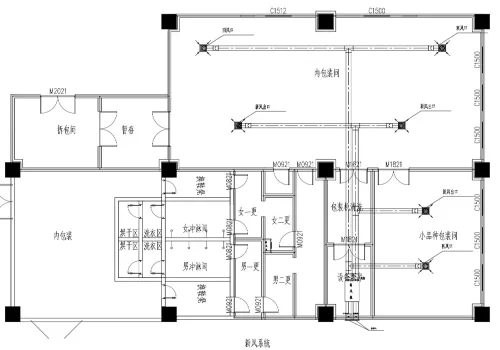
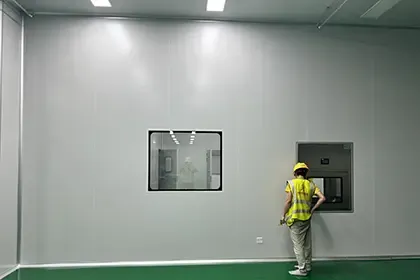
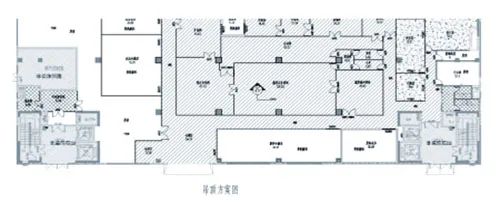
The company page includes a layout diagram; readers should refer to the original page.
What readers should learn from this case
This case illustrates one specific application; it does not establish requirements for other projects or industries.
Regional and Regulatory Context
ISO provides international cleanroom standards; FDA, EU GMP, and other frameworks impose sector-specific or regional requirements that cannot substitute for each other.
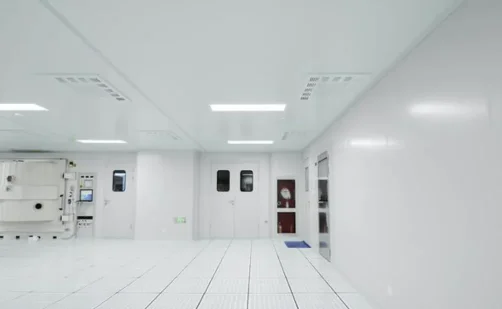
International — ISO 14644 framework
iso 14644-1:2015
Classification of air cleanliness by particle concentration.
iso 14644-3:2019
Test methods for cleanrooms and clean zones; three possible occupancy states are as-built, at-rest and operational.
iso 14644-4:2022
Specifies the cleanroom creation process from requirements through design, construction and start-up.
iso 14644-5:2025
Specifies requirements for an operations control programme covering personnel/material movement, cleaning, maintenance and monitoring.
United States
Pharmaceutical and sterile-drug applications
FDA aseptic processing guidance applies to applicable sterile drug and biological product manufacturing.
Medical devices
QMSR became effective February 2, 2026, incorporating ISO 13485:2016 by reference.
European union / EEA
Sterile medicinal products
For applicable EU sterile medicinal-product manufacture, Annex 1 defines Grades A–D and contamination control strategy requirements.
Other regions
Requirements vary by jurisdiction and product category; verify the applicable national authority or customer standard before design.
How to Specify a Modular Cleanroom for Your Industry
Start from the process and acceptance requirements, not from the industry label alone.

Define the process
Document operations, equipment, materials, personnel, and expected durations.
Define the required cleanliness condition
Specify ISO class, particle sizes, and whether microbial or chemical control is needed.
Define environmental conditions
Specify temperature, humidity, pressure, airflow, vibration, and acoustic constraints where process-critical.
Define facility constraints
Document space, ceiling height, structure, utilities, and access limitations.
Define enclosure and access requirements
Specify materials, doors, pass-throughs, viewing panels, and gowning areas.
Define monitoring and controls
Define required parameters, frequencies, alarms and records according to process, standard and risk.
Define testing and handover requirements
Distinguish ISO 14644-1 classification from applicable ISO 14644-3 supporting tests.
Define commercial scope
Clarify design, equipment, installation, testing, documentation, training, and warranty inclusions.
Modular Cleanroom Industry Selection Checklist
This is a pre-purchase screening aid; it does not replace engineering design.
Process checklist
- What operations will be performed?
- What contamination mechanisms matter?
- What is the product’s sensitivity?
Technical checklist
- What cleanliness classification or sector-specific grade, if applicable, is required?
- What temperature, humidity, and pressure conditions apply?
- What airflow pattern is needed?
- Are chemical, vibration, or acoustic requirements present?
Facility checklist
- Where will the cleanroom be located?
- What dimensional constraints exist?
- What utilities are available?
- Is installation within an operating facility?
Commercial checklist
- What is included in the quotation?
- What documentation and testing are provided?
- What are warranty and service terms?
- How will future expansion be accommodated?
Industry-to-Requirement Decision Guide
Use this sequence to translate process needs into a specification basis.
Step 1 — Identify the critical process
Define operations where contamination affects product quality or yield.
Step 2 — Identify the contamination mechanism
Determine whether particles, microbes, chemicals, ESD, or combinations pose risk.
Step 3 — Identify applicable standards or regulations
Identify applicable cleanroom standards, regulatory frameworks and customer requirements (e.g., ISO 14644; FDA CGMP/QMSR where applicable; EU GMP Annex 1 for applicable sterile manufacture).
Step 4 — Establish required environmental conditions
Define temperature, humidity, pressure, airflow, and special conditions.
Step 5 — Decide whole-room vs localized control
Determine whether full-room, localized clean zone, separative device, or no ISO cleanroom is justified.
Step 6 — Establish testing and acceptance criteria
Define tests, methods, and acceptance criteria.
Step 7 — Request normalized supplier proposals
Request proposals with defined scope, specifications, testing, and exclusions.
Common Mistakes When Selecting an Industry Cleanroom
These errors can distort specifications and procurement comparisons.
Choosing an ISO class from the industry name alone
Industry labels do not determine ISO class.
Assuming ISO classification equals regulatory compliance
ISO addresses particles; GMP adds microbial, validation, and documentation requirements.
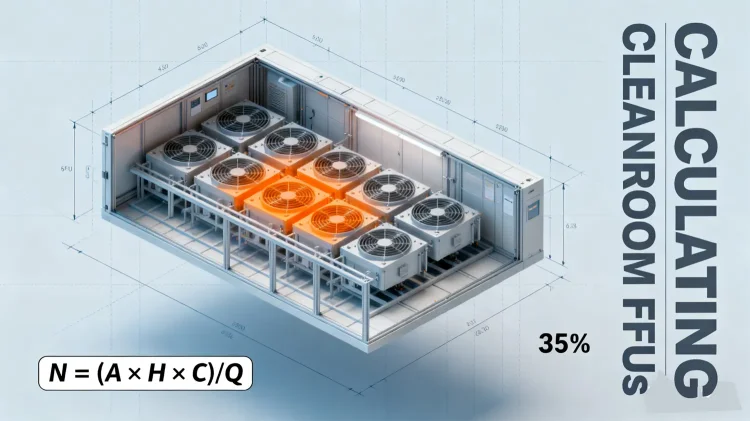
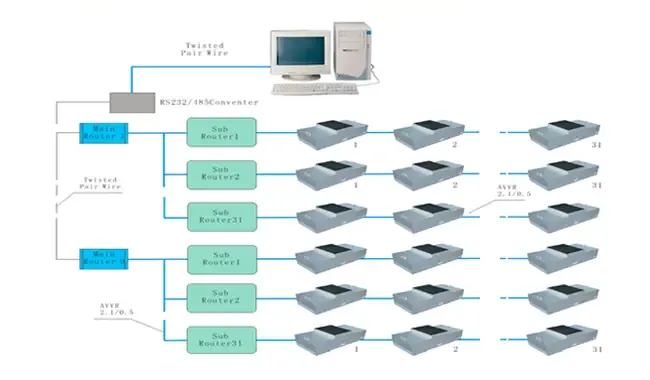
Using a universal ACH or FFU count
Air change rates and FFU quantities depend on room, heat load, and particle generation.
Ignoring temperature, humidity or equipment heat load
Equipment heat load affects cooling and airflow requirements.
Comparing equipment-only and turnkey quotations
Equipment-only quotations may exclude installation, testing, and documentation.
Assuming hardwall or softwall determines ISO class
Wall type is construction, not cleanliness determination.
Treating a company case as an industry standard
A published case describes one specific application only.
What Information Should You Send a Modular Cleanroom Supplier?
Early information helps suppliers respond with relevant scope rather than generic proposals.
Minimum RFQ information
- Intended process and operations
- Required cleanliness condition, if known
- Temperature and humidity requirements
- Room dimensions and ceiling height
- Utilities and location constraints
- Chemical, vibration, or ESD considerations
- Required testing and documentation
If the ISO class is not yet known
State product/process sensitivity, critical quality characteristics and contamination mechanisms; feature size may be relevant for semiconductor applications.
Information Deiiang should verify before publishing a recommendation
Deiiang should verify process requirements, applicable standards, facility constraints, and acceptance criteria before recommending project-specific ISO class, airflow, FFU count, setpoints, materials, or performance guarantees.
FAQs
What industries commonly use modular cleanrooms?
Pharmaceuticals, biotechnology, medical devices, semiconductors, electronics, optics, aerospace, and selected food and cosmetic applications.
Do all industries require the same ISO cleanroom class?
No. iso class depends on product sensitivity and process steps.
Why do semiconductor manufacturers use modular cleanrooms?
Localized clean zones, integration with existing facilities, and possible future reconfiguration may be relevant.
Why are cleanrooms used in electronics manufacturing?
Controlled environments can protect sensitive components from particles and ESD.
Are modular cleanrooms suitable for pharmaceutical manufacturing?
They can be used when the complete facility, process, controls, monitoring and qualification programme meet applicable requirements.
Are modular cleanrooms used for medical-device manufacturing?
Yes, for selected processes where particulate, bioburden or other contamination control is justified.
Can modular cleanrooms be used in aerospace and optics?
Yes, for selected contamination-sensitive applications.
Do food and cosmetic manufacturers need ISO-classified cleanrooms?
Not necessarily. Hygiene and microbiological hazard control may be more relevant.
Is a modular cleanroom always cheaper than a traditional cleanroom?
No. Cost depends on scope, specifications, and site conditions.
Are modular cleanrooms easier to expand or relocate?
Some systems are designed for reconfiguration, expansion or reuse, but feasibility depends on many factors.
Does a modular cleanroom automatically meet ISO requirements?
No. The installed cleanroom must be classified against agreed ISO 14644-1 criteria in the specified occupancy state.
How do I choose a modular cleanroom for my industry?
Define process, contamination risks, environmental requirements, and applicable standards.
Conclusion — The Industry Matters, but the Process Defines the Cleanroom
Industries share a need for controlled environments, but requirements diverge widely. The process determines the cleanroom specification; industry labels provide context only. Before requesting a quote, define the contamination-sensitive process, acceptance criteria and site scope rather than selecting a cleanroom from an industry label alone.
Request a Modular Cleanroom Technical Review
A technical review can help translate process needs into a specification basis.
Information to prepare before requesting a quotation
- Process/application
- Dimensions
- Target cleanliness condition
- Environmental conditions
- Equipment/heat load
- Site/location
- Delivery/install/testing scope
CTA
Contact Deiiang for a technical review of your modular cleanroom requirements. No price, schedule, or performance commitment is implied.
Claims to avoid
Do not assume automatic ISO, GMP, or regulatory compliance without design, testing, and validation.
References
- ISO 14644-1:2015 — Classification of air cleanliness by particle concentration
- FDA — Quality Management System Regulation (QMSR)
- FDA — Sterile Drug Products Produced by Aseptic Processing: Current Good Manufacturing Practice
- EU — EudraLex Volume 4: Good Manufacturing Practice (including Annex 1)
- Deiiang — Jingxin Semiconductor, Huangshi cleanroom/clean-booth project (company-published case)
- FAO/WHO — Codex General Principles of Food Hygiene CXC 1-1969