+86 18186671616
 Jason@cleanroomequips.com


 MENU

If you are qualifying a grade b cleanroom, the first swab an auditor takes is rarely on the floor — it is on the door. A smooth surface cleanroom door is not something you get by painting the leaf; it is where personnel, carts and materials cross between pressure zones, and every recess becomes a settlement plate for particles and microbes. EACH time the leaf opens, a puff of room air escapes; particles then settle into hinge gaps, the frame-to-wall junction and the internal corners a mop cannot reach. Per EU GMP Annex 1, the door surface must present no gaps where contamination can collect [1][11].

Understanding Cleanroom door Coving Requirements
Engineering Coving Radii: 25mm vs 50mm
The question buyers ask most often: what radius should cleanroom door coving have? The short answer is that Annex 1 does not give a dimension — it gives a criterion. I searched the 2022 final text and the words “radius”, “coving” and “cleanable” do not appear. In practice, R25–R50 is the conventional band; R25 is the floor of tool reach, R50 is the audit-friendly pick for high-traffic sterile doorways. Why R25 is the lower limit: a typical swab holder or squeegee blade is roughly 20–25 mm across; below that radius the tool bridges the corner and leaves a dead band no wipe reaches.
| Radius (mm) | Application Type | Primary Industry | Cleaning Efficiency |
|---|---|---|---|
| R25 | Frame-to-wall junction, light footfall | Pharma entrance, iso 7/8 labs | Baseline — squeegee reaches the corner |
| R38 | Airlock entry, moderate traffic | Biotech, electronics | Good — swab holder travels freely |
| R50 | High-use doorways with trolley / cage traffic | Sterile filling, Grade B | High — audit-friendly, tool reaches fully |
| R50–R150 | Floor–wall and wall–ceiling coving | All gmp cleanrooms | Matched at the frame base |
Application: Frame-to-wall junction, light footfall
Industry: Pharma entrance, ISO 7/8 labs
Cleaning: Baseline — squeegee reaches the corner
Application: Airlock entry, moderate traffic
Industry: Biotech, electronics
Cleaning: Good — swab holder travels freely
Application: High-use doorways with trolley / cage traffic
Industry: Sterile filling, Grade B
Cleaning: High — audit-friendly, tool reaches fully
Application: Floor–wall and wall–ceiling coving
Industry: All gmp cleanrooms
Cleaning: Matched at the frame base
Table 1. Common coving radii by application — practice values set in project URS, not Annex 1 minimums.
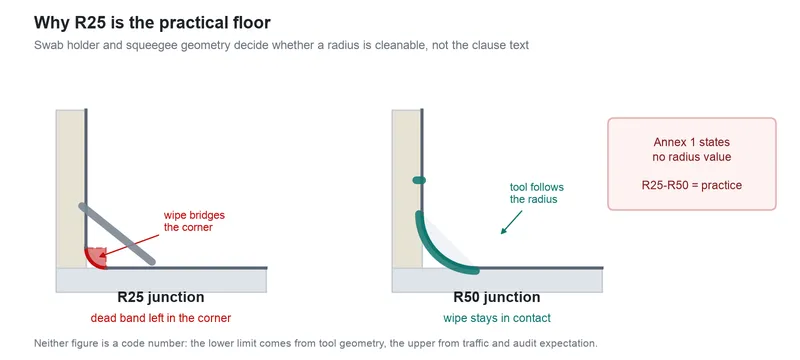
Figure 2. R25 versus R50 frame junction, showing where a wipe bridges the corner.
Molded vs. Silicone-Sealed Coving Joints
Once the radius is decided, the next question is how to form it: an integrally moulded coving that flows from frame to wall, or a square corner sealed with a silicone bead. The bead looks cheaper at handover, but under repeated VHP cycles neutral silicone hardens, outgasses slightly and develops micro-cracks. Around 80% of joint-integrity failures we trace in the field come back to the sealant — see our VHP compatibility field notes for what actually accelerates the breakdown.
The same logic drives our line of cleanroom doors with moulded coving options for frame-to-wall and wall-to-ceiling junctions; section drawings are collected in the Deiiang door selection brochure.
Smooth Surface Standards for Cleanroom Doors
Measuring Smoothness: Ra Values and Surface Finish
Annex 1 §4.5, verbatim: “In cleanrooms and critical zones, all exposed surfaces should be smooth, impervious and unbroken in order to minimize the shedding or accumulation of particles or micro-organisms.” The three words carry different weight: smooth is the feel, impervious means no liquid uptake, unbroken means it has not cracked years later.
This is where spec sheets go wrong. Ra ≤ 0.8 µm (or ≤ 0.4 µm for the most critical contact) is the accepted threshold for product-contact surfaces — vessels and pipework under 3-A, ASME BPE and EHEDG — not a door leaf. Per ISPE’s particulate-cleanliness guidance [8], a door leaf is judged on coating integrity, porosity and whether a cleanroom door easy clean surface lets a wipe reach every point. The difference between a compliant smooth cleanroom door and a cosmetic one is not the gloss reading at handover; it is whether the coating starts peeling three years later. Ra is quoted on leaves only when the customer’s URS explicitly demands it. Our product designer says the number-one field issue is a leaf that passed on gloss, then blistered at year three.
Material Selection: Stainless Steel, HPL and Electrolytic Polishing
Material choice sits on §4.7, a durability clause: “Materials used in cleanrooms… should be selected to minimize generation of particles and to permit the repeated application of cleaning, disinfectant and sporicidal agents where used.” The word repeated is the one to underline. As Ljungqvist and Reinmüller note on cleanroom surface materials [13], the service life under repeated chemicals — not the first-day finish — decides the choice. The practical hierarchy: powder-coated galvanised steel is the workhorse; 304 brushed satin survives sporicidals; 316L electropolished resists pitting after 500+ VHP cycles at 4 mg/L H<sub>2</sub>O<sub>2</sub> (field notes).
Deiiang builds integrally formed leaves at 50 mm on a galvanised shell (frame 1.2 mm / leaf 0.8 mm), or on 304 stainless with a brushed satin finish (frame 1.0 mm / leaf 1.2 mm); section drawings for both builds appear in the Deiiang door catalog.
| Material Type | Chemical Resistance | Scratch Resistance | VHP Tolerance |
|---|---|---|---|
| Powder-coated galvanised steel (0.8 / 1.2 mm) | Good (routine disinfectants) | Moderate | Good — verify film thickness |
| 304 stainless, brushed satin | Good | Good | Good |
| 316L electropolished | Excellent | Excellent | Excellent — 500+ cycles |
| HPL laminate | Good | Fair | Moderate — assess edge banding |
Chemical: Good (routine disinfectants)
Scratch: Moderate
VHP: Good — verify film thickness
Chemical: Good
Scratch: Good
VHP: Good
Chemical: Excellent
Scratch: Excellent
VHP: Excellent — 500+ cycles
Chemical: Good
Scratch: Fair
VHP: Moderate — assess edge banding
Table 2. Surface materials for cleanroom door leaves — qualitative ratings; cycle counts per supplier data.
Rule of thumb: Grade A/B filling and VHP suites → electropolished 316L or powder-coated 304; ISO 7/8 packaging and corridors → powder-coated galvanised steel; HPL only in non-VHP, dry areas.
Important Design Points Beyond the Door Leaf

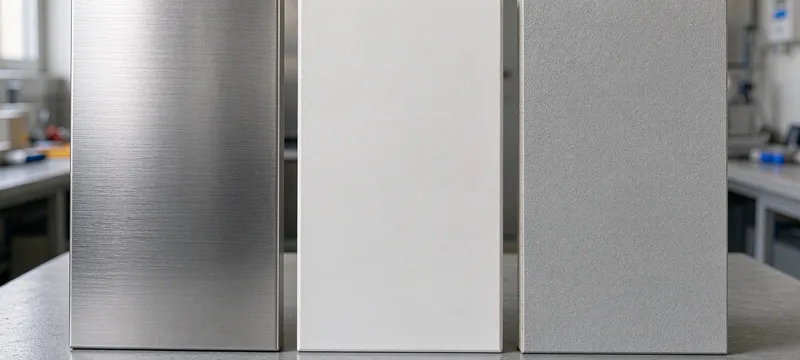
Figure 5. Brushed stainless steel, powder-coated steel and HPL samples compared.
Flush-Mounted Hardware and Frame Connection
§4.6 is the door clause, word for word: “To reduce accumulation of dust and to facilitate cleaning there should be no recesses that are difficult to clean effectively, therefore projecting ledges, shelves, cupboards and equipment should be kept to a minimum. Doors should be designed to avoid recesses that cannot be cleaned. Sliding doors may be undesirable for this reason.” Read the last line carefully — “may be undesirable,” not “are banned.”
Proud hinge plates, exposed bolt heads and protruding knobs are ledges that catch dirt; flush or concealed hardware removes the shelf. On a Deiiang set the vision glass sits flush with the leaf behind a 20 mm silk-screen border (standard 600 × 400 mm double glazing), and the frame joins the wall on a centre-T aluminium profile that finishes flush on both sides across 50–100 mm sandwich panel.
Deiiang supplies 304 stainless split-lever, integrated-lever, compression-latch and panic-exit hardware with detachable or concealed hinges; the full set is listed in the Deiiang hardware schedule.
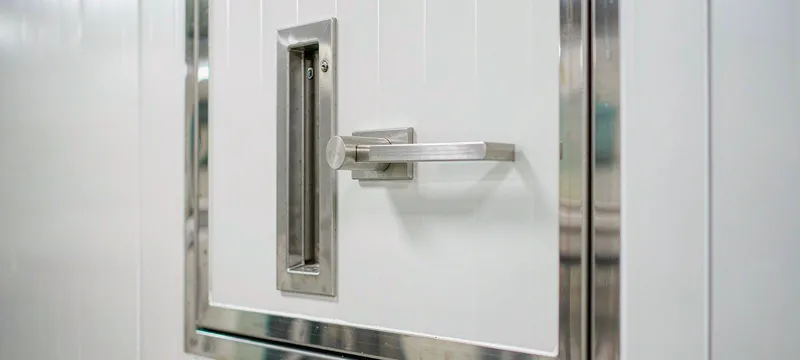
Figure 6. Flush lever handle and concealed hinge with the frame level with the wall.
Sealing Systems and Automatic Drop Seals
The leaf is only half the seal. The bottom edge is where most doors leak: heavy foot and cart traffic sweeps past, and the gap under the leaf is a horizontal slot dust falls straight into. Three-sided edge seals plus an automatic bottom drop seal solve it — on closing a flexible rubber bulb drops onto the floor, on opening it retracts. Side seals are machine-dispensed rather than hand-beaded, because hand beads are exactly where silicone starts.
Deiiang fits machine-applied wear-resistant seals on three sides combined with an automatic bottom drop seal; the profiles and shut heights are set out in the Deiiang sealing-system brochure.
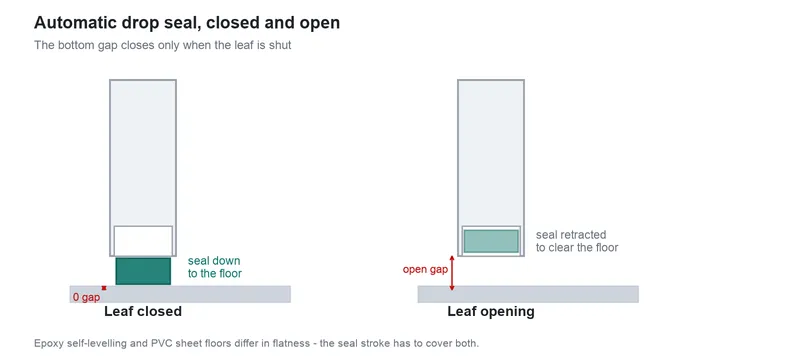
Figure 7. Automatic drop seal shown closed against the floor and retracted.
Compliance and Regulatory Frameworks
Navigating EU GMP Annex 1 and iso 14644
The sterility-side rules and the construction-side rules converge on the same intent, even though they come from different directions. iso 14644-4:2022 sets out the overall principles of cleanroom design and construction; iso 14644-1:2015 maps Grade A–D onto iso classes 5–8. Across the major regimes, WHO TRS 961 and FDA aseptic cGMP reach the same conclusion — no dirty corners. A short decision list:
- Pharmaceutical sterile suites — Annex 1 §4.5–4.7 is the design intent; your validation team writes the acceptance numbers.
- Electronics / ISO 7–8 rooms — ISO 14644-4 governs; coving is specified in the project book.
- Industry-cited construction tolerance for joint recess is < 0.5 mm, often quoted under the iso 14644-5 operations context.
On the acceptance side, IEST-RP-CC006 is the test-methods reference for cleanroom qualification. In China, GB 50073-2013 is the cleanroom design code, and GB 50591-2010 covers construction and acceptance, including that wall connectors should not present a right-angle corner. Treat EU GMP and GB as two parallel frameworks; a door built to one is not automatically audited to the other without a bridge review.
Conformance and Field Inspection Checklist
Step-by-Step Installation Verification
Verification is where design intent meets real joints. Run it in this order, testing the points with the highest contamination risk first:
- Pre-clean the installed set; check leaf thickness, seals and that the vision glass is flush.
- Sweep every internal frame corner with a gloved finger — feel for recesses.
- Look for the triangular gap where a square structure meets rounded coving.
- Measure the visible gap between leaf and frame — common door-manufacturer practice keeps it ≤ 2 mm.
- Close the leaf and confirm the bottom drop seal seats full width.
When PIC/S PI 006-3 asks for aseptic-process validation evidence, this record — visual, UV and swab — is what you hand over. For third-party witnessing, CETA CAG-002 sets the isolator/cleaning-test reference.
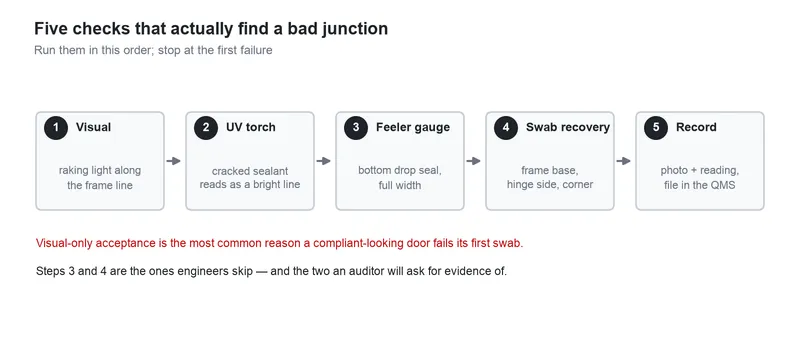
Figure 10. Five field checks in sequence, from visual to swab recovery.
Advanced Testing: From UV Lights to Swab Sampling
Your eyes miss what a black light does not. Inspect in dim conditions under long-wave UV: a seam leak or handling oil glows. Then swab the known trouble spots — frame base, hinge recess, vision-window border. The common mistake is treating a visual pass as a clean pass; record both as separate data points.
- Never use an abrasive scouring pad on powder coat — it cuts the film and seeds rust.
- Wipe with the grain, never across brushed stainless lines.
- Confirm every detergent is VHP-compatible before swapping disinfectant.
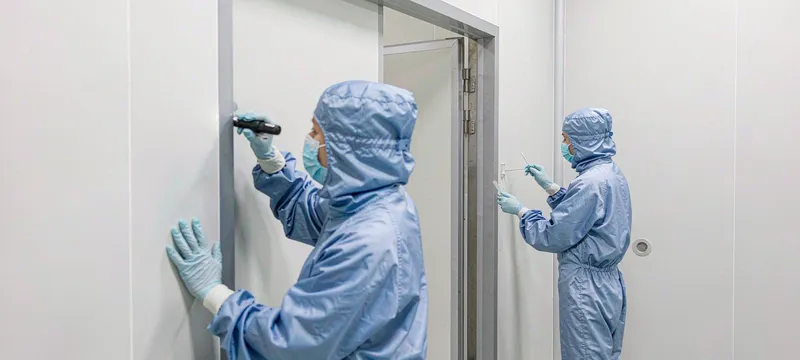
Figure 11. UV torch inspection and surface swab recovery on a door frame.
Addressing Common Mistakes in Design Projects
Common Issues in Renovation Projects
You would be surprised how often a renovation swaps the leaves and forgets the inside of the frame. When you pull an old door, look behind it: the frame-to-wall cavity is the dust reservoir nobody sealed. The second miss is the floor-to-frame junction — the floor crew pours R50 coving, the door crew lands a square frame on it, and the intersection is a triangular cavity a mop cannot enter. Field-cut panels with an unsealed edge can rust within 3–6 months under VHP and humidity (field notes).
Deiiang retrofit work keeps returning to those same two details, and the installation drawings are collected in the Deiiang installation-detail brochure.
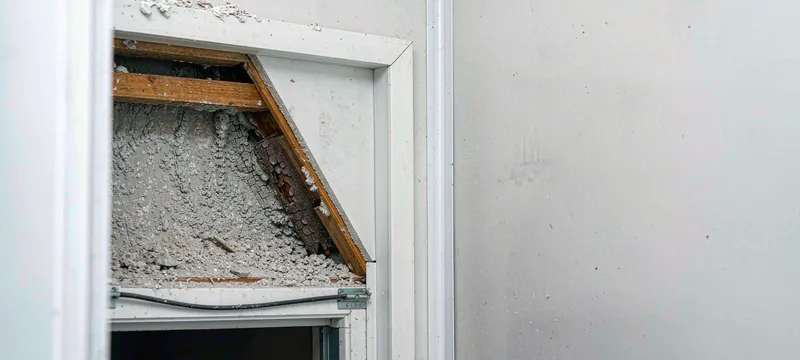
Figure 12. The cavity exposed when an old square frame is removed.
Handling VHP Cycles and Sterilization Stresses
A door is a consumable in a VHP suite. The edge seals, the bottom bulb and the coating age on every cycle, and the audit looks at you when they fail. Inspect on a schedule tied to your sterilization frequency, not the calendar.
| Component | Inspection Frequency | Failure Indicator | Maintenance Action |
|---|---|---|---|
| Edge silicone / fluoro-silicone seal | Quarterly or per 100 VHP cycles | Hardening, micro-cracks, chalky feel | Re-seal or switch to a mechanical compression seal |
| Automatic bottom drop mechanism | Monthly | Incomplete seating, cracked bulb | Adjust travel or replace the bulb |
| Flush hardware & hinges | Every 6 months | Play, proud screw heads, dry lube | Tighten, re-grease, replace |
| Powder coat / stainless surface | Annually | Blisters, pitting, film loss | Touch up; re-passivate electropolished faces |
When: Quarterly or per 100 VHP cycles
Signs: Hardening, micro-cracks, chalky feel
Action: Re-seal or switch to mechanical compression seal
When: Monthly
Signs: Incomplete seating, cracked bulb
Action: Adjust travel or replace the bulb
When: Every 6 months
Signs: Play, proud screw heads, dry lube
Action: Tighten, re-grease, replace
When: Annually
Signs: Blisters, pitting, film loss
Action: Touch up; re-passivate electropolished faces
Table 3. Maintenance cycle and failure criteria — adjust intervals to your actual VHP frequency.
Case Study: GMP-Compliant Door Integration
Project Profile and Challenges
On a Grade B sterile-fill retrofit in Saudi Arabia, the original square-corner swing doors and silicone-bead frame joints repeatedly failed surface swab recovery at requalification, and the auditor flagged the sliding transfer door as a deviation under Annex 1 §4.6. The brief was to replace leaves and frames without rebuilding the wall, and to pass the next aseptic requalification.
- Pain points: proud handles and square internal corners held bioburden; the silicone bead had crazed after VHP cycles; the frame-to-wall junction was never sealed.
- Solution: integrally formed R50 solid coving, flush 304 stainless hardware, a flush 600 × 400 vision window in the door profile in place of the silicone bead, and a mechanical bottom drop seal.
- The sliding-door call: we kept the existing automated sliding set but documented the risk rationale in the validation file rather than hiding it.
- Result: the suite passed the next requalification with no frame-to-wall rebuild.
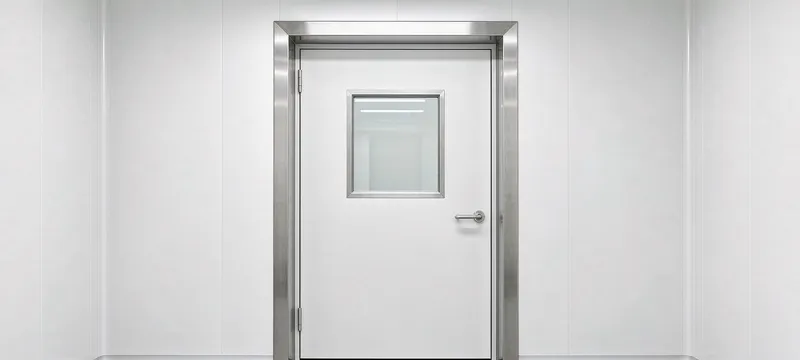
Figure 14. A completed Grade B installation with integrally coved frame.
Solution Implementation and Results
Here is the point I make to every buyer: you do not have to choose between a cleanable corner and a cheap bead — you specify the radius in your URS, and the door should come moulded, not glued. §8.123, effective 25 August 2024, pushes the same logic further: “Lyophilizers and associated product transfer and loading/unloading areas should be designed to minimize operator intervention as far as possible…” The door at the lyo loading chute is the highest-intervention opening in the suite.
Send your URS and wall type — we size the radius, hardware and seal set for your grade.
Request a Quote for Your Project
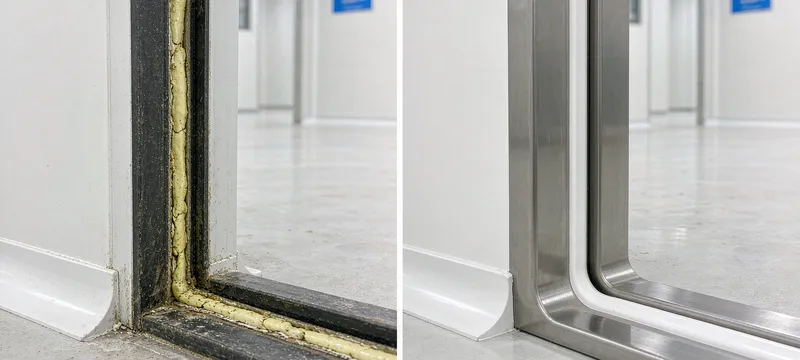
Figure 15. The same doorway before and after coving remediation.
The through-line: Annex 1 tells you what to achieve — smooth, impervious, unbroken, no uncleanable recesses — and leaves the radius, Ra threshold and seal type to your URS. Build a smooth surface cleanroom door around continuous coving, flush hardware and a mechanical bottom seal, and it will stay wipeable through every VHP cycle.
Frequently Asked Questions
What is the minimum recommended coving radius for Grade A/B cleanrooms?
There is no legal minimum in Annex 1. In practice R50 and above is commonly specified for Grade A/B doorways, with R25 as the lower limit where a cleaning tool can still reach. Put it in your URS.
Why do silicone-sealed joints fail in VHP-sterilized environments?
Neutral silicone hardens and micro-cracks under repeated H<sub>2</sub>O<sub>2</sub> vapour; around 80% of joint failures trace back to the sealant. The better solution is a low-outgassing fluoro-silicone or a mechanical compression seal.
How does surface roughness (Ra) affect the effectiveness of disinfectant wiping?
Ra 0.8 / 0.4 µm thresholds apply to product-contact surfaces, not door leaves. On a door, judge coating integrity and cleanability; apply an Ra number only if the customer’s URS requires it.
Are flush-mount door handles mandatory for ISO 7 environments?
Not by a specific ISO sentence, but §4.6 pushes toward flush or concealed hardware in any grade; in ISO 7 it is expected best practice.
What is the most reliable method for checking the sealing performance of a cleanroom door?
Combine a UV leak inspection, a swab recovery test at the frame base and hinges, and a feeler-gauge check of the bottom drop seal. Visual-only is not sufficient.
Can standard stainless steel doors be retrofitted to meet modern GMP surface requirements?
Often yes for leaves and hardware, but only if the frame-to-wall coving and floor junction are also addressed. A new leaf on an old square frame leaves the triangular cavity — a smooth surface cleanroom door is only as compliant as the 50 mm of frame around it.
Leaf builds, hardware options, vision-window sizes and seal types.