+86 13638632902
 Jason@cleanroomequips.com
 MENU
MENU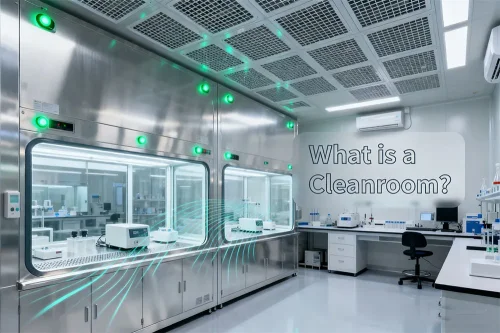
How to obtain cleanroom validation and certification
The construction and operation of cleanrooms is critical to many industries, particularly in the food, pharmaceutical and medical testing sectors. Upon completi...

Author:Jason Peng
Cleanroom Engineering Technology Manager of Deiiang Company.
Product R&D Manager of GDC Inc. Cleanroom Equipment Manufacturing Company.
Executive Director of Guangdong Cleanroom Industry Association of China.
Engaged in R&D of related products for 15 years, with rich relevant technical experience
In industries where contamination control is critical, do you truly understand the essential role of CleanRoom Validation and Cleanroom Certification? These processes ensure that controlled environments consistently meet stringent cleanliness standards, protecting product quality and regulatory compliance.
Proper CleanRoom Validation provides documented evidence that your facility operates as intended, while Cleanroom Certification offers formal recognition of compliance with international standards. Together, they form the foundation of contamination control strategies in pharmaceuticals, biotechnology, medical devices, microElectronics, and other precision-dependent industries.
This comprehensive guide will explore the complete process, standards, and business benefits of professional Cleanroom Validation and Cleanroom Certification services, helping you make informed decisions about your controlled environment management.
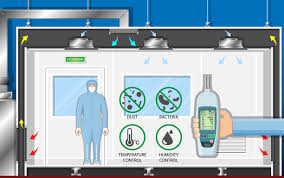
A CleanRoom is a controlled environment where pollutants like dust, airborne microbes, and aerosol particles are filtered out to provide the cleanest area possible. Cleanrooms maintain specific environmental conditions including temperature, humidity, and pressure to prevent contamination.
Modern cleanroom with controlled airflow and filtration systems
Cleanroom Validation is the documented process of proving that a cleanroom consistently operates within specified parameters and meets predefined quality attributes. It's a systematic approach that provides evidence the cleanroom:
For example, a pharmaceutical company implementing Cleanroom Validation for their iso class 7 facility would conduct extensive testing to ensure particle counts remain below 352,000 particles (≥0.5μm) per cubic meter during operational conditions.
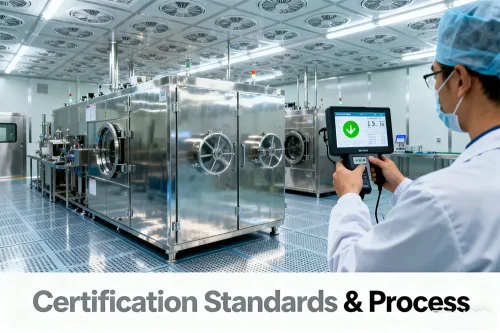
Cleanroom Certification is the formal process of assessing and confirming that A CleanRoom meets specific classification standards and regulatory requirements. This official recognition is typically performed by third-party experts and includes comprehensive testing and documentation review.
While Cleanroom Validation focuses on proving the cleanroom performs as intended, Cleanroom Certification provides the official confirmation that it meets established standards. Both processes are essential for regulatory compliance and quality assurance.
| Aspect | Cleanroom Validation | Cleanroom Certification |
|---|---|---|
| Purpose | Prove the cleanroom operates as intended | Confirm compliance with standards |
| Focus | Process and performance | Standards and classification |
| Frequency | Initial and after significant changes | Typically annual |
| Documentation | Validation protocols and reports | Certification certificate |
The relationship between Cleanroom Validation and Cleanroom Certification is complementary - validation provides the evidence needed for certification, while certification offers formal recognition of compliance. Both processes are essential components of an effective quality system for controlled environments.
When implementing a comprehensive quality program, companies should consider both Cleanroom Validation and Cleanroom Certification as interdependent activities that together ensure environmental control and regulatory compliance.
Various industries face stringent regulatory requirements mandating proper Cleanroom Validation and Cleanroom Certification. Regulatory bodies including the FDA, EMA, and other national authorities require documented evidence of environmental control.
For pharmaceutical Manufacturers, EU GMP Annex 1 specifically mandates formal Cleanroom Certification and ongoing Cleanroom Validation to ensure product safety. Non-compliance can result in product recalls, manufacturing shutdowns, and significant financial penalties.
Effective Cleanroom Validation directly impacts product quality by preventing contamination that could compromise product purity, efficacy, and safety. In sterile product manufacturing, proper Cleanroom Certification ensures that microbial and particulate contamination risks are minimized.
A study of pharmaceutical recalls found that approximately 25% were related to environmental control issues, highlighting the critical importance of robust Cleanroom Validation programs.
While initial Cleanroom Validation requires investment, it delivers significant long-term cost savings by preventing contamination-related losses, reducing batch failures, and minimizing downtime. Properly validated Cleanrooms operate more efficiently with optimized airflow and filtration systems.
Companies that implement comprehensive Cleanroom Certification programs typically report 15-30% reductions in contamination-related incidents and corresponding improvements in production yield.
Formal Cleanroom Certification demonstrates commitment to quality and provides competitive advantage when bidding for contracts or attracting business partners. Many clients specifically require suppliers to have current Cleanroom Validation documentation as a condition of doing business.
In the medical device industry, proper Cleanroom Certification is often a prerequisite for regulatory approvals in international markets, directly impacting market access and business growth.
Failure to maintain proper Cleanroom Validation and Cleanroom Certification exposes organizations to significant risks including regulatory actions, product recalls, reputational damage, and liability claims. The average cost of a pharmaceutical recall exceeds $600 million when accounting for direct costs, stock impact, and remediation expenses.
Recent enforcement actions have highlighted regulatory focus on data integrity in Cleanroom Validation activities, with several companies receiving Warning Letters specifically citing inadequate environmental monitoring and validation practices.
Implementing a robust program for Cleanroom Validation and maintaining current Cleanroom Certification is not merely a regulatory requirement - it's a strategic business decision that protects product quality, reduces operational risks, and enhances market position.
The ISO 14644 series provides the international framework for Cleanroom Validation and Cleanroom Certification. Key standards include:
| iso class | Maximum Particles/m³ (≥0.5μm) | Typical Applications | Recommended air changes/Hour |
|---|---|---|---|
| iso 5 | 3,520 | Critical processes, aseptic filling | 240-600+ |
| iso 7 | 352,000 | Pharmaceutical preparation areas | 30-70 |
| iso 8 | 3,520,000 | Component preparation, gowning areas | 10-25 |
The calculation for minimum sampling locations according to iso 14644-1 is derived from the formula: NL = √A, where A is the cleanroom area in m². For example, a 100m² cleanroom requires at least 10 sampling locations (√100 = 10).
Good Manufacturing Practice (GMP) regulations impose specific requirements for Cleanroom Validation and environmental monitoring. Key GMP aspects include:
EU GMP Annex 1 (Manufacture of Sterile Medicinal Products) specifically requires initial Cleanroom Certification followed by regular revalidation to demonstrate continued compliance with classification standards.
Additional standards that impact Cleanroom Validation and Cleanroom Certification include:
Understanding the specific standards applicable to your industry is essential for developing an effective Cleanroom Validation strategy and achieving successful Cleanroom Certification.
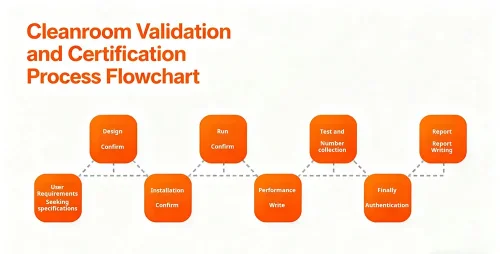
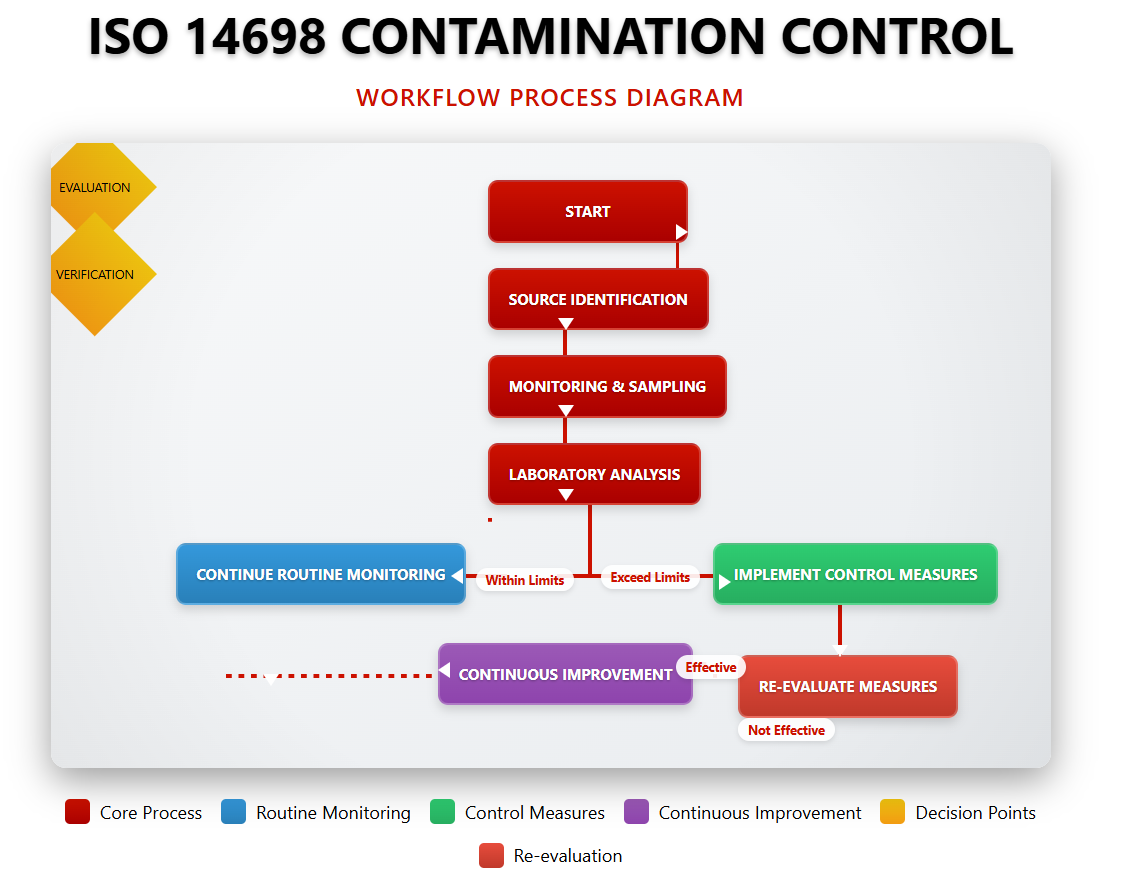
Visual representation of the cleanroom validation and certification workflow
The Cleanroom Validation process begins with defining user requirements and conducting design qualification (DQ). This involves documenting operational needs, intended use, and confirming that the design meets all specifications and regulatory requirements before construction begins.
For example, a medical device manufacturer might specify requirements for iso class 7 classification, temperature control of 20±2°C, and Relative humidity of 45±5% RH. The Deiiang™ team would then verify that the proposed design can meet these parameters.
Installation Qualification (IQ) verifies that all cleanroom components are correctly installed according to design specifications and manufacturer recommendations. This includes documentation of:
IQ provides the foundation for subsequent Cleanroom Validation activities by confirming proper installation before operational testing begins.
Operational Qualification (OQ) demonstrates that the cleanroom operates as intended across all anticipated operating ranges. Testing includes:
OQ confirms that the cleanroom performs correctly under static conditions (without personnel or equipment operation), establishing baseline performance for subsequent performance qualification.
Performance Qualification (PQ) demonstrates that the cleanroom consistently maintains specified classification and environmental conditions under simulated operational conditions. This phase includes:
PQ typically involves three phases over an extended period to demonstrate consistent performance, providing the evidence needed for formal Cleanroom Certification.
Upon successful completion of all testing, a comprehensive validation report is prepared documenting all activities, results, and conclusions. This report forms the basis for issuing the formal Cleanroom Certification certificate.
The certification confirms that the cleanroom meets specified classification standards and is typically valid for 12 months, after which revalidation and recertification are required.
Measures airborne particle concentration to verify CleanRoom Classification according to ISO 14644-1 standards. This fundamental test is essential for Cleanroom Certification.
Measures airflow at multiple locations to verify proper ventilation and identify potential dead zones or turbulence issues that could affect contamination control.
Calculates how frequently the air within the cleanroom is replaced, a critical parameter for maintaining cleanliness. Typical rates range from 10-25 changes/hour for iso 8 to 240-600+ for ISO 5.
Verifies proper pressure cascades between adjacent areas to prevent cross-contamination. Typical differentials range from 10-15 Pascals between classification zones.
Measures how quickly the cleanroom returns to specified cleanliness levels after a contamination event, indicating the effectiveness of the Ventilation system.
Verifies HEPA/ULPA filter installation integrity using discrete particle counters or aerosol photometers to detect leaks that could compromise cleanliness.
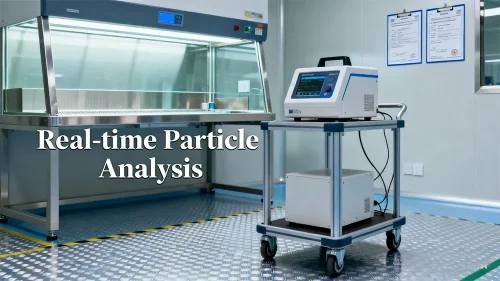
Laser particle counter for Cleanroom Testing
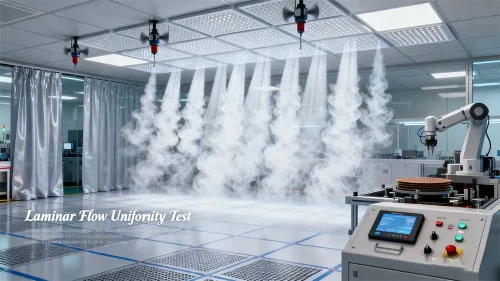
Smoke study for airflow visualization
The comprehensive approach to Cleanroom Validation ensures that all aspects of Cleanroom performance are thoroughly evaluated before formal Cleanroom Certification is granted. This systematic process provides confidence in the controlled environment's ability to maintain required conditions for product quality and regulatory compliance.
Engaging experienced professionals for Cleanroom Validation and Cleanroom Certification provides several significant advantages over internal approaches:
The Deiiang™ team brings decades of combined experience in Cleanroom Validation across multiple industries, ensuring that your facility meets all requirements for successful Cleanroom Certification.
Verify the provider's experience with facilities similar to yours in size, classification, and industry. Look for specific expertise in your regulatory environment (FDA, EMA, etc.) and request references from comparable projects.
Deiiang™ consultants average 15+ years of experience in Cleanroom Validation across pharmaceutical, medical device, and biotechnology sectors.
Ensure the provider maintains properly calibrated equipment for all required tests and follows established methodologies. Verify their understanding of statistical sampling requirements and data integrity principles.
Our Deiiang™ laboratories maintain ISO 17025 accreditation for calibration, ensuring measurement traceability for all Cleanroom Certification activities.
The provider should demonstrate current knowledge of relevant standards (ISO 14644, GMP, etc.) and regulatory expectations. Inquire about their experience during regulatory inspections and their ability to support clients during audits.
Deiiang™ regularly participates in industry working groups and standards development, ensuring our approaches reflect current regulatory thinking.
Review sample reports to assess clarity, completeness, and compliance with regulatory expectations. Proper documentation is essential for successful Cleanroom Certification and regulatory submissions.
Deiiang™ validation reports are designed to meet global regulatory requirements, with clear data presentation and comprehensive summary conclusions.
Selecting the right partner for Cleanroom Validation is a critical decision that impacts both regulatory compliance and operational efficiency. The Deiiang™ team combines technical expertise with practical industry experience to deliver Cleanroom Certification services that meet the highest standards of quality and reliability.
Cleanroom Validation and initial Cleanroom Certification establish baseline performance, but ongoing monitoring is essential to ensure continued compliance. Cleanroom conditions can change due to:
Continuous monitoring provides real-time data on critical parameters including particle counts, pressure differentials, temperature, and humidity. This proactive approach allows for timely intervention before conditions deviate from specifications.
For example, a gradual increase in particle counts might indicate filter loading or developing integrity issues, allowing for planned maintenance before classification is compromised.
iso 14644-2 specifies that cleanrooms should be recertified at intervals not exceeding 12 months to verify continued compliance with classification requirements. Additional recertification may be required following:
The reCertification Process typically includes many of the same tests performed during initial Cleanroom Certification, though the scope may be adjusted based on historical data and risk assessment.
Maintaining current Cleanroom Certification requires both continuous monitoring and periodic formal reassessment. This comprehensive approach ensures that cleanrooms continue to provide the controlled environments necessary for product quality and regulatory compliance throughout their operational lifecycle.
The Deiiang™ team offers ongoing support programs that combine continuous monitoring solutions with scheduled recertification services, providing complete Cleanroom Validation lifecycle management for our clients.
A1: For regulated industries such as pharmaceuticals, medical devices, and biotechnology, Cleanroom Validation and Cleanroom Certification are typically mandatory requirements. Regulatory bodies including the FDA and EMA require documented evidence of controlled environments for product manufacturing. Even in non-regulated industries, certification demonstrates commitment to quality and may be required by customers or industry standards.
A2: The timeline for Cleanroom Validation varies based on facility size, complexity, and classification. A typical iso class 7 pharmaceutical cleanroom might require 2-4 weeks for initial validation, including protocol development, testing, and report generation. More complex facilities or those requiring extensive performance qualification may require 6-8 weeks. The Deiiang™ team works efficiently to minimize disruption while ensuring comprehensive assessment.
A3: Costs for Cleanroom Validation and Cleanroom Certification depend on multiple factors including cleanroom size, classification, industry requirements, and geographic location. A basic ISO Class 8 Cleanroom might range from $2,000-$5,000 for initial certification, while complex pharmaceutical iso class 5 facilities can exceed $15,000-$25,000. Contact Deiiang™ for a detailed quotation based on your specific requirements.
A4: Industries with the greatest need for Cleanroom Validation and Cleanroom Certification include pharmaceuticals, biotechnology, medical devices, sterile compounding, microElectronics, aerospace, and certain food manufacturing sectors. Any industry where product quality can be affected by environmental contamination benefits from proper cleanroom validation and certification.
A5: iso 14644-2 requires cleanroom recertification at maximum intervals of 12 months. Additional recertification may be needed following significant modifications, changes in operational procedures, or after major maintenance activities. Some industries or regulatory frameworks may require more frequent assessment based on risk evaluation.
Cleanroom validation and certification are essential processes that ensure controlled environments meet stringent quality standards, protect product integrity, and maintain regulatory compliance. From initial design qualification through ongoing monitoring and periodic recertification, these activities form the foundation of effective contamination control strategies across multiple industries.
Deiiang™ Cleanroom Validation Services
The construction and operation of cleanrooms is critical to many industries, particularly in the food, pharmaceutical and medical testing sectors. Upon completi...
Expert breakdown of international cleanroom standards for pharmaceutical and man
Successful cleanroom projects require meticulous integration of technical expert
AbstractThis article presents innovative data validation strategies designed to

IntroductionWhen a global lithium-ion battery developer required ISO Class 5 cle
Many companies make the same costly mistake when purchasing equipment: th
Dust-free Workshop Design Program Comprehensive Discussion Cleanrooms are engin
In industries where contamination control is critical, do you truly understand t